

As mentioned in a previous Power Tools column about the Electro-Harmonix Electric Mistress flanger, the introduction of low-cost bucket-brigade device (BBD) integrated circuits kicked off a revolutionary period for the guitar-effects marketplace.
Dozens of companies introduced new chorus, flanger and analog delay pedals all around the same time in 1976, which makes it nearly impossible to determine which product came first. Like the Electric Mistress, the Electro-Harmonix Memory Man can’t be verified as being the very first analog delay pedal on the market, but it was certainly among the first.
The original 1976 Memory Man was a basic analog delay effect featuring three controls and a maximum 300ms delay time. In 1977, EHX rolled out the first version of the Deluxe Memory Man with four knobs (a Level control was added) and a slightly increased delay time. The model that really put the Deluxe Memory Man on the map was the five-knob version (generally known as the EH-7850, then EH-1343B, then EH-7850C) introduced in late 1978 that added a chorus/vibrato effect and individual wet and dry outputs.
With its maximum delay time increased to about 550ms, this version of the Deluxe Memory Man provided almost twice the maximum delay time of more expensive competitors like the MXR M-118, which topped out at 300ms.
Thanks to its affordable price and expanded features, the five-knob Deluxe Memory Man became an instant hit. Its modulated delay sounds quickly made the pedal irresistible to numerous pros in the studio and on stage for crafting warm, lush textures and complex rhythms.
The preamp is also a key element of the Deluxe Memory Man’s sonic personality, adding sumptuous grit and body to the sound when the Level control is cranked up far enough to make the overload LED illuminate. Many players, including Adrian Belew, Geordie Walker, Robert Smith and (most notably) the Edge, used the box as a cornerstone of their signature sounds during the early Eighties and beyond.

The Deluxe Memory Man virtually vanished from guitarists’ thoughts when Electro-Harmonix temporarily went out of business in 1984 and digital delay pedals started gaining popularity. However, the original “big box” version made a comeback as the reissue EH-2000 and EH-2002 versions produced between 1996-2007.
With the exception of a few modifications like true bypass switching and an external 24vdc adapter, the reissues offered an accurate reproduction of the original unit that even looked like the real thing. This version was promptly embraced by a new generation of grunge and alternative artists seeking retro tones.
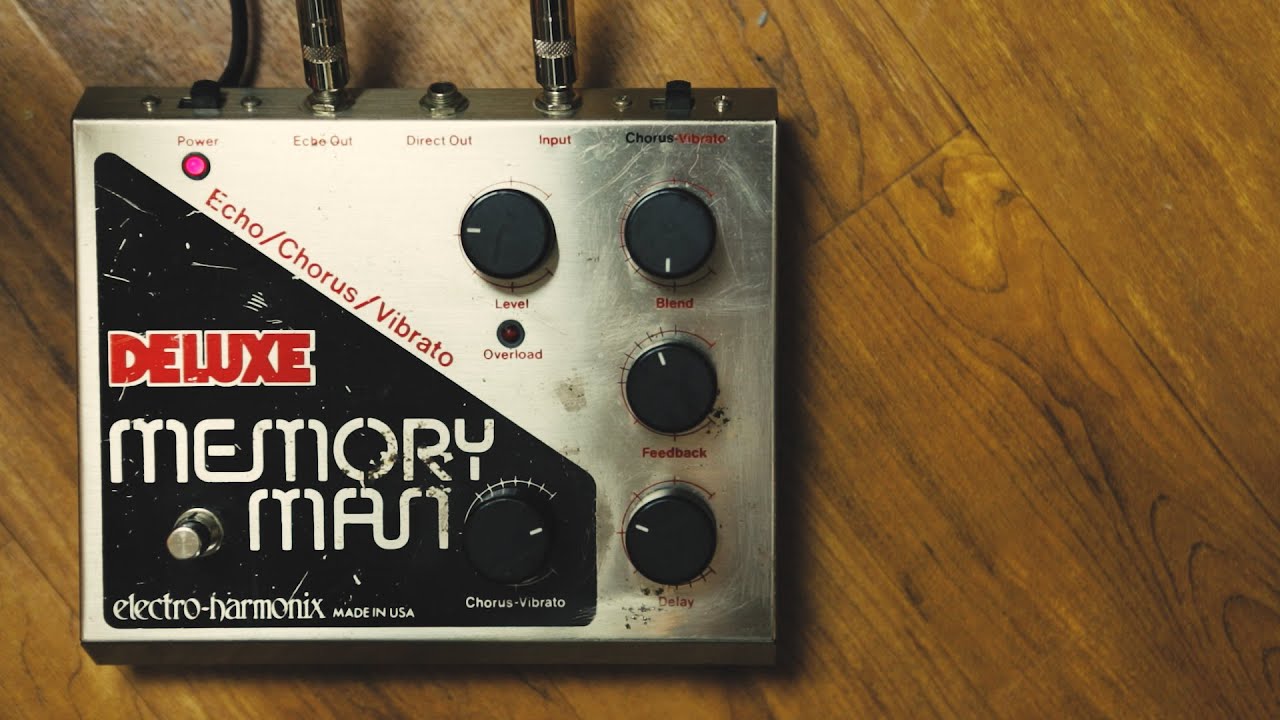
Initially the reissue even used the same pair of Matsushita MN3005 BBD chips as the earlier version. Online forums are filled with varying opinions about whether the dual MN3005 configuration sounds better than the quad MN3008 circuit and whether the Xvive MN3005 reproductions featured in the current pedals sound as good as the originals.
As with any musical gear, users should let their own ears be the guiding force. It’s worth noting that a properly calibrated original or reissue is going to sound much better regardless of what type of chips it has inside.
Anyone looking for a 2007 or earlier unit should also replace the electrolytic capacitors, which also can improve sound and performance considerably.
- This article first appeared in Guitar World. Subscribe and save.

