


This feature was originally published in the January 1995 issue of Guitar World.
The successful implementation of a revolution requires two things: thinkers and thugs. Individually, these groups are powerless. But put them together and you've got a mighty fighting machine: the thinkers set the agenda and the thugs put in the boot.
Luckily, the primordial New York punk scene was blessed with its share of both species. So, odd as it might seem, the first “punk” gig was a poetry reading. In February of 1971, Patti Smith gave her debut reading in Manhattan, with Lenny Kaye backing her on guitar. From this one-off art happening, the Patti Smith Group eventually developed into a full-fledged rock band.
Meanwhile, Smith’s friend Tom Miller was also exploring the connection between rock and poetry. He changed his named to Tom Verlaine, in honor of the French symbolist poet Paul Verlaine, and went on to start Television. He’d played in a band with Richard Meyers, who later became Richard Hell, frontman for the Voidoids.
Television, the Voidoids and the Patti Smith Group were prominent among the bands that in 1973 regularly played a new bar on Manhattan's Bowery, CBGB’s. Before that, amazingly enough, there had been no place in New York City for original, unsigned rock bands to play. They even barely had CBGB’s, which was originally intended as a venue for different kinds of music – the club’s initials stand for Country, Bluegrass and Blues.
As Television guitarist Richard Lloyd recalls, the venue had to be persuaded to present rock bands: “Mainly, [club owner] Hilly Kristal was afraid that the Hell’s Angels [whose headquarters are still nearby] might come down to the club.”
Reportedly, Kristal relented when it was discovered that the bar’s cash intake was much higher on nights when rock bands played than on country, bluegrass or blues nights. “We brought people into the club who actually spent money at the bar,” Lloyd says with a laugh.
If Television, Patti Smith, Richard Hell, and Talking Heads represent the more cerebral side of what was going on at CBGB’s, the “thug” element made a strong showing too. The Dead Boys and Dictators would come in time, but first and foremost there were the Ramones: the rock band as cartoon gang.
They were four guys from Queens in matching black leather motorcycle jackets and nearly matching bowl haircuts. The little one on the right would yell “one-two-three-four” and the jackets would commence pounding out amazingly short, fast, loud, and tight rock songs with lyrical hooks like “now I wanna sniff some glue” and “beat on the brat with a baseball bat.”
“When we started off, we thought we were a bubblegum band,” Johnny Ramone explains. “The Bay City Rollers were out at the time and we thought, ‘All right, this is our competition.’ But we were a little too warped to be like that.
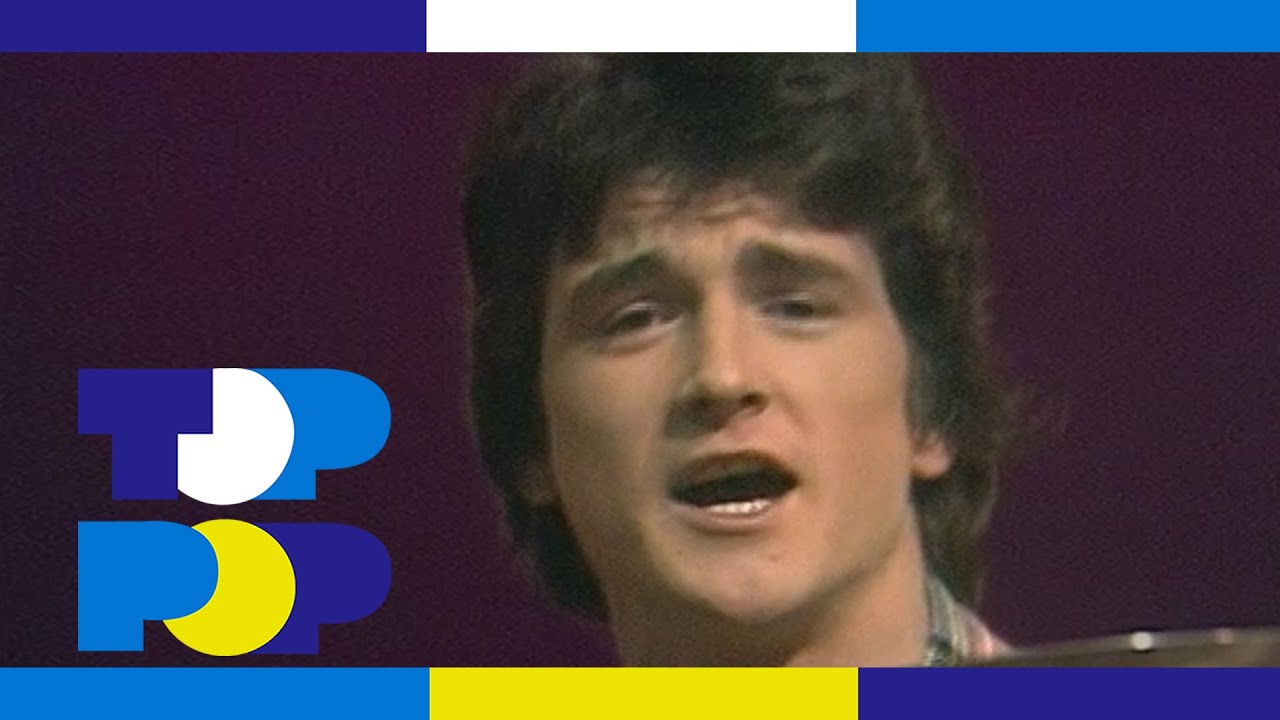
“We heard Saturday Night by the Bay City Rollers, and we went and wrote Blitzkrieg Bop because we wanted a chant in one of our songs. But we didn’t know we were doing something that was warped; we were singing about stuff that it was natural for us to sing about – sniffing glue and things like that.
“We didn’t think anything was unusual about it. We weren’t trying to be unusual. That’s what happened later on – bands would try to write about sick things. That’s the difference between us and them.”
Ramone bought his first guitar in 1974. It was a Mosrite Ventures II – the same model he uses to this day. The MC5’s Fred “Sonic” Smith had played a Mosrite, but Ramone says he got his mainly because he confused a salesman at Manny’s Music in New York by asking the price of just about every cheap used guitar in the place.
The second time he asked about the Mosrite, the clerk quoted a price that was $20 cheaper than the first time. So for the princely sum of $50 bucks a punk rock legend was born.

“Right when I started with the Ramones is when I bought a guitar and learned how to play,” says Johnny. “So I didn’t have any influences insofar as learning how to play. The first song I learned to play was a Ramones song.”
This touches upon what is perhaps the most important point about punk: ideas came first, technique second. A cartoon of the time showed three crudely drawn chord diagrams, representing A, E, and G chords. “This is a chord,” was written next to the first diagram. Then, “This is another. This is a third. Now form a band.”
In the early ’70s, technique had become a bully. Lots of very creative people were scared away from rock because they couldn’t play 32nd note triplets as fast as the Mahavishnu Orchestra. Punk brought them.
“All those bands at CBGB’s were there because there was no place else for them to go,” says Smith’s colleague Lenny Kaye. “Tom Verlaine always describes it as, ‘Each of them was a little idea.’”
Luckily the electric guitar served those llittle ideas very well. “I think what we were trying to do was bring it back to more of a rhythmic thing,” Kaye explains.
“Even though my favorites were Jimi Hendrix and Jeff Beck, I probably took more influence from someone like Pete Townshend, where you were dealing with really hard rhythms – being able to move the music like that.”
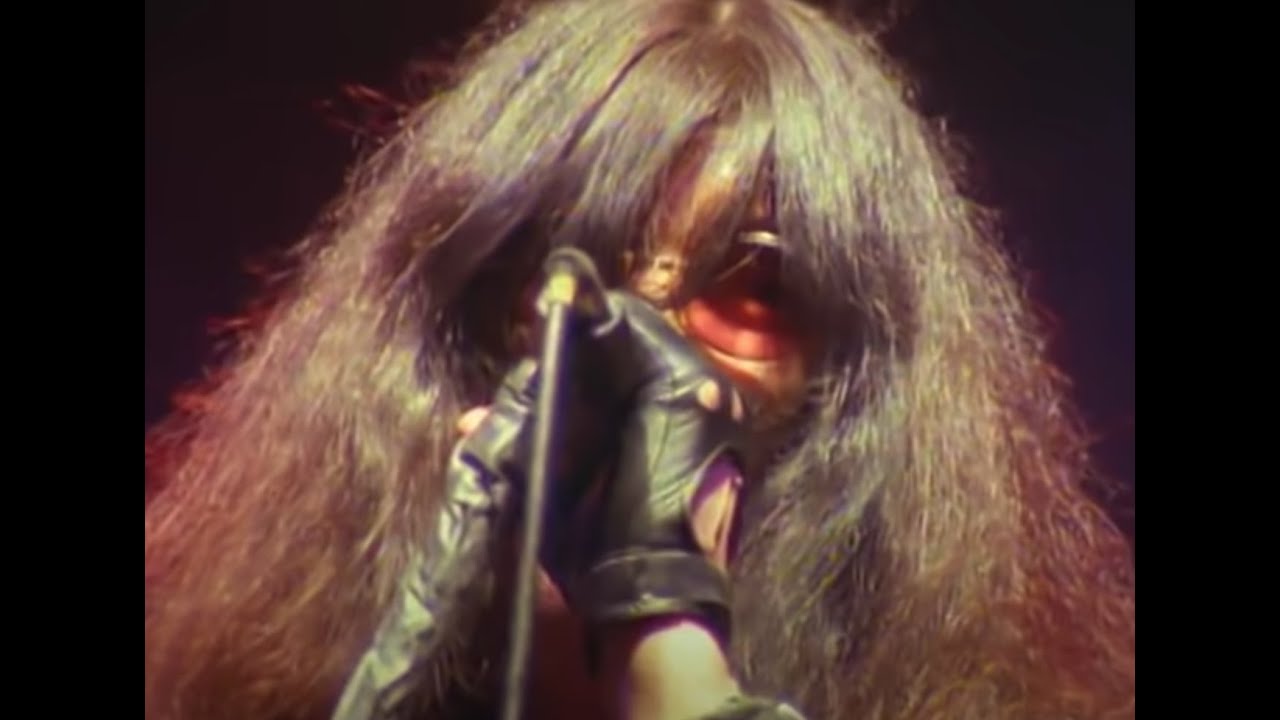
In its own way, Johnny Ramone’s relentless down-picking was every bit as revolutionary as Charlie Christian’s horn-like solo lines had been in the ’30s. Christian’s demonstration of the guitar’s potential as a single-note melody instrument was a critical juncture in the instrument's history.
In the ’70s, punk artists’ reassertion of the guitar’s rhythmic power was, in its own way, equally significant. Rhythm is what has always made rock the powerful, primal, tribal, sexual force that it is.
When I first started playing, down-picking was a way of keeping time
Johnny Ramone
Interestingly – like many developments of similarly cosmic import – Ramone’s speed-machine down-picking initially grew out of purely practical considerations: “When I first started playing, it was a way of keeping time, and a way of being able to count out the parts: ‘One, two, three, four... next chord!’”
The Ramones have never ceased to value simplicity. Then, as now, Johnny recorded with his Mosrite plugged straight into two Marshall heads feeding two 4x12 Marshall cabinets. The band have kept their songcraft basic and powerful too. At first this also was a matter of necessity.

“We knew we had to play competently and tight,” says Johnny, “because audiences were used to seeing a certain level of competence from the established major bands. We knew we couldn’t try to play something we weren’t capable of playing. We stuck to simpler things, so that it would sound like we were playing well.
“I had noticed something like that when I saw Slade play live. They were limited in what they could play, but the songs were great and they sounded so good. You could really see that, within their capabilities, they could do what they did very well.”
When the Ramones first played CBGBs in August 1974, there still was no official name to describe what they were doing. The ranks of similar bands were swelling rapidly and would soon include Tuff Darts, Blondie, the Mumps, Mink DeVille and the Speedies.
A word for the phenomenon finally crystallized in December 1975, when John Holstrom and Legs McNeil published the first issue of Punk magazine, one of the very earliest zines.
“Punk” ultimately came to mean not only a type of music, but a lifestyle which valued the pillars of “lowbrow” culture – junk food, sitcoms, cheesy little garage bands. What is today – in an era of swap meets and Nick at Nite – absolutely mainstream was new, exciting and “outside” in 1975.

Without such a receptive environment, the Ramones might have been forced to learn to play guitar solos and ended up sounding like Foghat. Then again, if not for the Ramones, the knotty poetry and tortured, stark guitar-based probings of artists like Television, Smith and Hell would probably never have made it out of lower Manhattan. A revolution requires both thinkers and thugs.
It was to prove as true in London as it had been in New York. By the time the Ramones went to England in 1976, they were the best shock troopers any revolution ever had. Something about their speed, economy, and tunefulness – not to mention their prickly blend of humor and menace – hit a large, hyper-sensitive cultural nerve. To a certain type of mid ’70s rock fan, punk was absolutely irresistible.

