




This feature was originally published in the January 1995 issue of Guitar World.
Punk lore has it that British punk began on the 4th of July, 1976, when the Ramones played the Roundhouse in London. They shared the bill with the Flamin’ Groovies; the Stranglers were the opening act.
The following night Joey, Johnny, Dee Dee, and Tommy played another London rock club, Dingwalls. It’s been said, only half in jest, that everyone who went on to be in a major London punk band was at one of those two shows. Steve Jones certainly has fond memories of the shows: “The Ramones were rocking. It was great!”
“We met all these kids there afterwards,” Johnny Ramone recalls, “and they said, ‘Oh, we’re starting our band this week. We just formed, but we haven’t rehearsed yet. We were waiting to see you guys.’ And it was the Damned and the Clash.
“We thought it was cool that all these kids were forming bands. I think one of the Damned said, ‘You want to go back to the Sex Pistols’ loft? They’ll play for you.’ We said, ‘Oh no, we can’t do that. We don’t wanna.’ We thought kids would be asking us this everywhere we went. We didn’t know they were gonna be famous or anything. We just thought they all looked cool. They looked like little kids to us.”
There was also a dark side to this leather-jacketed children’s crusade. The London bands, recalls Johnny, “all hated each other. Like, the Damned hated the Sex Pistols, and they all hated the Clash. They all hated each other, like little tiny gangs.”

It was the second night, at Dingwalls, says Johnny Ramone, that he first encountered Sex Pistols frontman Johnny Rotten. “He comes up to me and says, ‘You know, I think Patti Smith sucks.’ I go, ‘I don't give a shit. I don’t like her either.’ And he goes, ‘Oh you don’t?’
“He was trying at first to be, you know, like, nasty. And when he heard what I had to say, he was all friendly. I guess he wanted to get a reaction out of me with that stuff about Patti Smith or something. Like I cared.”
Actually, British punk rock had begun to develop long before the Ramones arrived in 1976. In the early ‘70s, a growing pub rock scene had resulted in a “back to basics” vibe in British music.
In 1974 Malcolm McLaren had taken on the management of the Faces copy band that the kleptomaniac Steve Jones had formed with his friend, drummer Paul Cook. Together with Vivienne Westwood, McLaren ran the Sex shop on London's fashionable King's Road, selling bondage gear and underground designer wear.
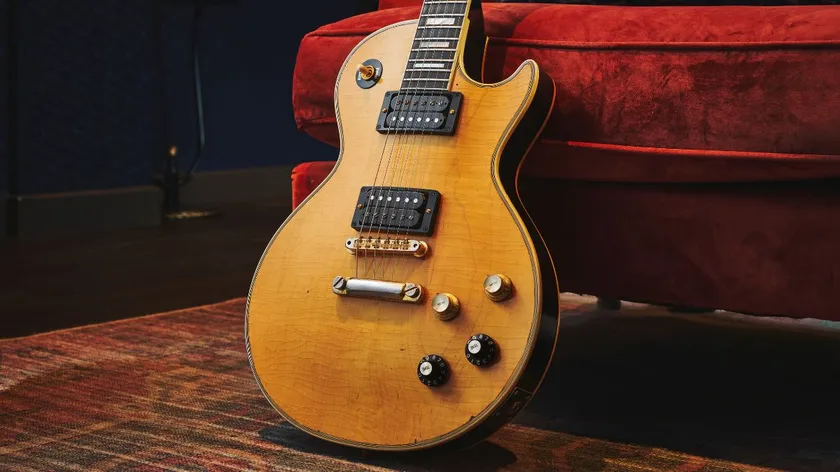
McLaren had also had a brief stint managing the New York Dolls at the end of their career. He returned to London with a white Gibson Les Paul that had belonged to the Dolls’ Syl Sylvain. In what retrospectively seems a heavily symbolic gesture, the instrument was passed on to Steve Jones. Originally the group’s singer, Jones was to become the definitive punk guitar stylist.
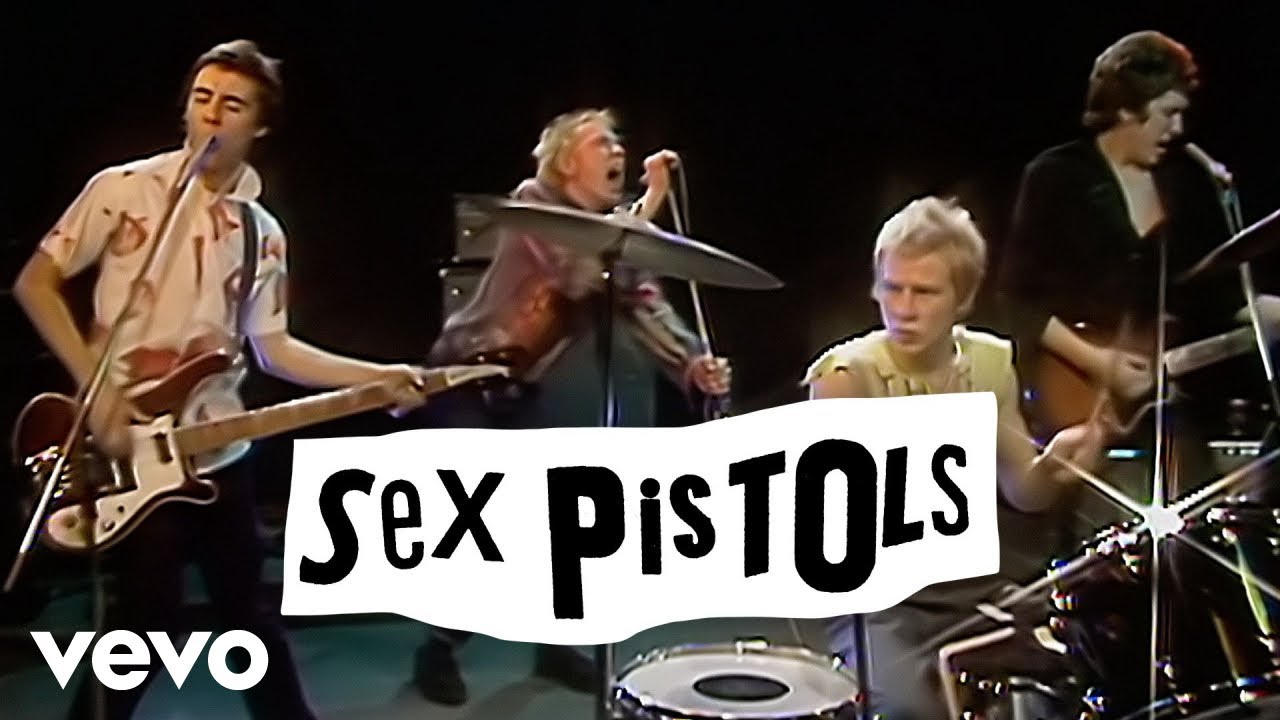
By 1975, the name and original lineup of the Sex Pistols had fallen into place. Musically, Cook and Jones didn’t have too much in common with the two new Pistols. Singer Johnny Rotten had wide-ranging tastes – everything from reggae to Captain Beefheart to experimental ‘70s German groups like Can.
Bassist Glen Matlock was an avid pop fan. His love for the Beatles was to prove a constant source of conflict with the others. As his main guitar influences, Jones lists Ron Wood, James Williamson, Johnny Thunders, and Free’s Paul Kossoff.
The pub rock scene had given rise to acts like the Stranglers, Eddie And The Hot Rods and the 101ers – whose singer, Joe Strummer, would eventually go on to lead the Clash. These acts would later become more associated with punk; but Jones maintains that the Sex Pistols’ sound and approach developed independently of any outside groups or punk “agenda.”
“I just thought of the Sex Pistols as a rock band. When we started, we didn't say, ‘Okay, we're gonna call ourselves “punk” and it’s gonna sound like this…’ I just couldn't play very well and John couldn’t sing. And that’s the sound it created – purely by accident, I guess.”

“I’d only been playing for like three or four months before we did our first show. All I could do was just play a barre chord and move it up and down the fretboard. One chord, you know. It wasn’t until about a year later, until we did Never Mind The Bollocks, that I loosened up a bit.”
Judging from the incredibly powerful guitar work on Bollocks, Jones developed very quickly. So quickly that it was widely rumored that guitar veteran Chris Spedding actually played on some or – depending on who’s telling the story – all of the tracks. But if that’s true, then Jones learned to imitate Spedding’s work awfully well later on.
Sid got hepatitis and had to go into the hospital for a few weeks. It was a perfect opportunity for me to play the bass. God bless him
Jones has his own explanation of how his bruising, rhythmically precise chordal style developed so quickly: “It's ‘cause I was doing a lot of speed at the time. I would just practice for hours and hours, literally over and over again. I’d practice to records and all of that – wake up, take me little Black Beauty and just play for 12 hours.”
The interplay between Jones and Cook is another factor in the Sex Pistols’ tremendous power. Together they took the Ramones’ muted, down-picked eighth-note feel and somehow made it sound 10 times larger. “I think it came from masturbating too much,” Jones suggests.
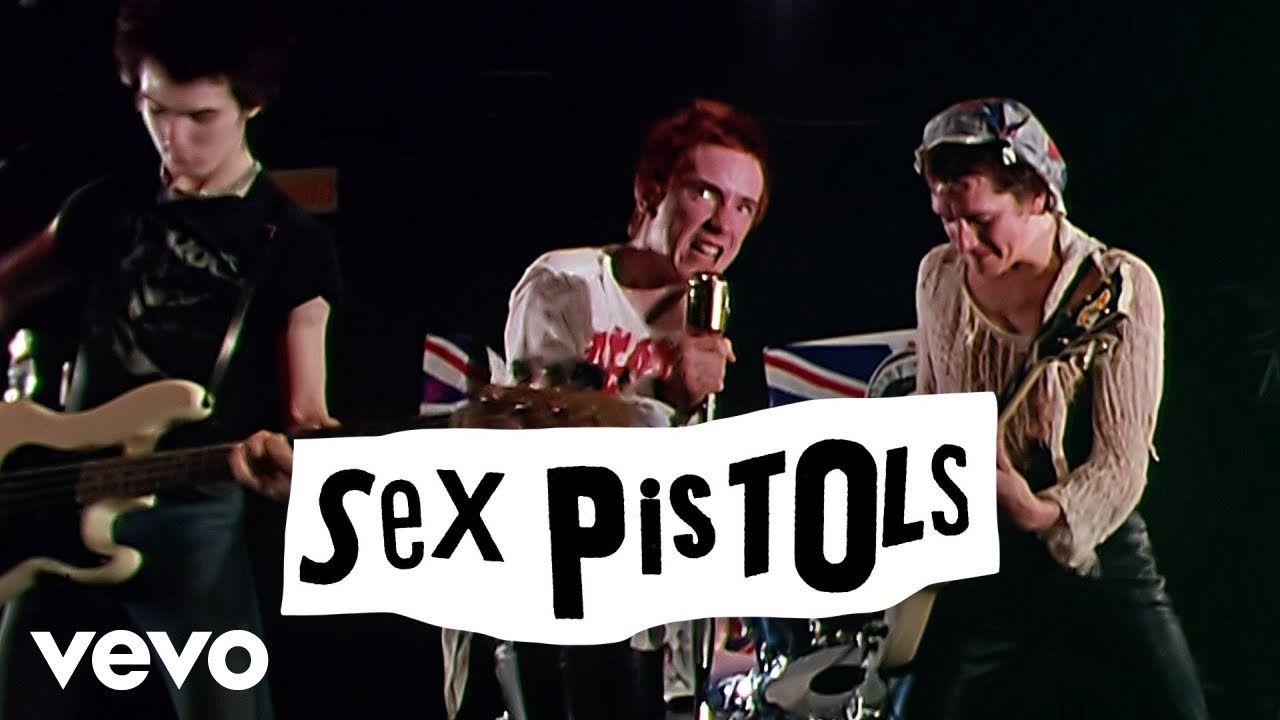
Jones and Cook never really seemed to need a bass player. When the two of them played together – whether in the Sex Pistols or, later on, in the Professionals – they instantly got that sound. And, like the Patti Smith Group, the Sex Pistols were without a bassist at certain critical formative stages in the band’s career. Musical differences with Glen Matlock led to his expulsion just as sessions for Never Mind The Bollocks were getting under way.
“He was into the Beatles too much,” Jones says. “He kept trying to teach me these weird, funny chords and it just didn’t sound good. He kept saying, ‘Play a B7,’ And I didn’t know what the fuck he was talking about.”
Matlock’s replacement was Rotten’s friend, John Ritchie, who took on the name Sid Vicious. Selected mainly for his look and his compatibility with Lydon, Vicious couldn’t actually play the bass when he joined. As a result, for most of Never Mind The Bollocks, says Jones, “whenever we put tracks down, it was just me and Paul. We didn’t have a bassist playing with us; it was just guitar and drums.
“Except for Anarchy In The U.K. – Glen Matlock was still around for that one, and he played bass with us at the same time we put down guitar and drums. But on the rest of the songs, it was just me and Paul, and I would put the bass on afterwards.

“Sid wasn’t around and he couldn’t play anyway. He was in the hospital or always fucked up. Which was a godsend, really, because he kept wanting to play on the record, and we were trying to think of ways to get him out of the studio. He was just making a fucking mess. And then he got hepatitis and had to go into the hospital for a few weeks. So it was a perfect opportunity for me to play the bass. God bless him.”
Yet another reason why the Bollocks tracks are so tight and have such devastating economy of arrangement is that they were heavily demoed. Each of the songs was recorded numerous times in various studios. As the Pistols and McLaren led the British media on a mad chase, getting booted off major record labels more quickly than they’d been signed, there was ample time to polish the tracks.
I was using was one Fender Twin Reverb, which I stole off Bob Marley at the Hammersmith Odeon
But Jones bristles at the suggestion that he overindulged in guitar overdubs on the final version of the album. (Rotten used the phrase “21 tracks of guitar” to describe the venture.) “Lies!” Jones cries. “What the fuck does he know, anyway?
“I mean, there are guitar overdubs on there – like on Anarchy In The U.K., there’s mainly two guitars doing the rhythm with some kind of flange or phase on them. And then there’s one playing chords here and there; not throughout the whole song, but coming in at certain places. There’s one doing a feedback thing near the end, and another doing power chords at the end. I would say there were about six guitars on there. A far cry from 21!”
Most people assume that Jones got his wall of guitar sound by plugging his Les Paul into one or more Marshalls. But he’s keen to set the record straight on that point as well. “All I was using was one Fender Twin Reverb, which I stole off Bob Marley at the Hammersmith Odeon.
“It was an older one with a silver front. I put Gauss speakers in, which took away the real trebly Fender sound and gave it a lot of midrange. It was a nice, warm sound, but it had a lot of distortion on it. I just had it turned up to 10 the whole time.”
Jones complains that latterday guitarists are clueless when it comes to playing punk. “A lot of people just don’t know; they get it completely wrong. They say, ‘Okay, we’re going to do a Sex Pistols song.’ And they play it three times faster than the actual song was.

“But that’s where the power is – when it’s slowed down, when it’s paced. Everyone thinks punk has got to be fast and stupid. They get it all wrong.”
The artists and crazies within McLaren’s social circle created a bold new visual style around the Pistols and punk itself, including a style of album graphics that’s now routinely taught in university art history courses.
McLaren made the Pistols the center of a media circus that was much like a performance art piece in its own right. But the whole thing wouldn’t have meant doodley-squat if the Pistols hadn’t been an absolutely great rock ’n’ roll band.
- This article first appeared in Guitar World. Subscribe and save.

