


Last week, Cesar Gueikian announced he would be stepping down from his role as Gibson CEO.
He certainly made his mark at the firm. When it comes time to write the 21st-century history of the Nashville-based gear giant, there will be a Before Cesar and After Cesar. His appointment as CEO in 2023 was a pivotal moment for the company.
Because was a very different kind of CEO. "Do epic shit" was his managerial credo – and he approached the role from the POV of a player.
Assuming the role of Gibson’s hype man, his social media feed was a window into everyday operations at Gibson, taking us to the factory floor, to his office where he’d demo yet-to-be-released guitar, to the stage where he’d actually step up and play with Gibson artists.
We say ‘factory’ but he insisted on calling it the ‘craftory’.
“I labelled our factories craftories from the very beginning because I couldn’t get my head around the name factory,” he told MusicRadar.
That term of art didn’t take on outside the walls of the Nashville HQ but that’s okay. He had bigger fish to fry.

Having been CMO under CEO James ‘JC’ Curleigh, Gueikian made his intentions quite clear when he took the top job, arguing that under the company’s previous ownership it had been “losing focus” of what the brand was about, “which is making the best guitars ever made”. He was going to rectify that.
Quality is still not just about the way the guitars are built, it is also what we are making
Gibson quality control had long been a bugbear. There was a sense it was an analog company struggling to make sense of itself in a digital world. Failed experiments like the self-tuning electric guitar had landed with an unceremonious thud, then crushed under the caterpillar treads of heavy machinery. Gueikian set out to change all that.
Did he succeed? Well, he leaves the brand in a far stronger place than it was before, and here are 5 ways that he has transformed the brand.
1. Quality control needed to improve and… It did
Take yourself to YouTube and you’ll find no shortage of videos complaining about Gibson QC. It’s a genre unto itself, and now that it is, there will always be examples put in front of a camera to prove that something somewhere isn’t right – and when there is a Gibson USA guitar that has finish issues, or any kind of problem, that’s a story.
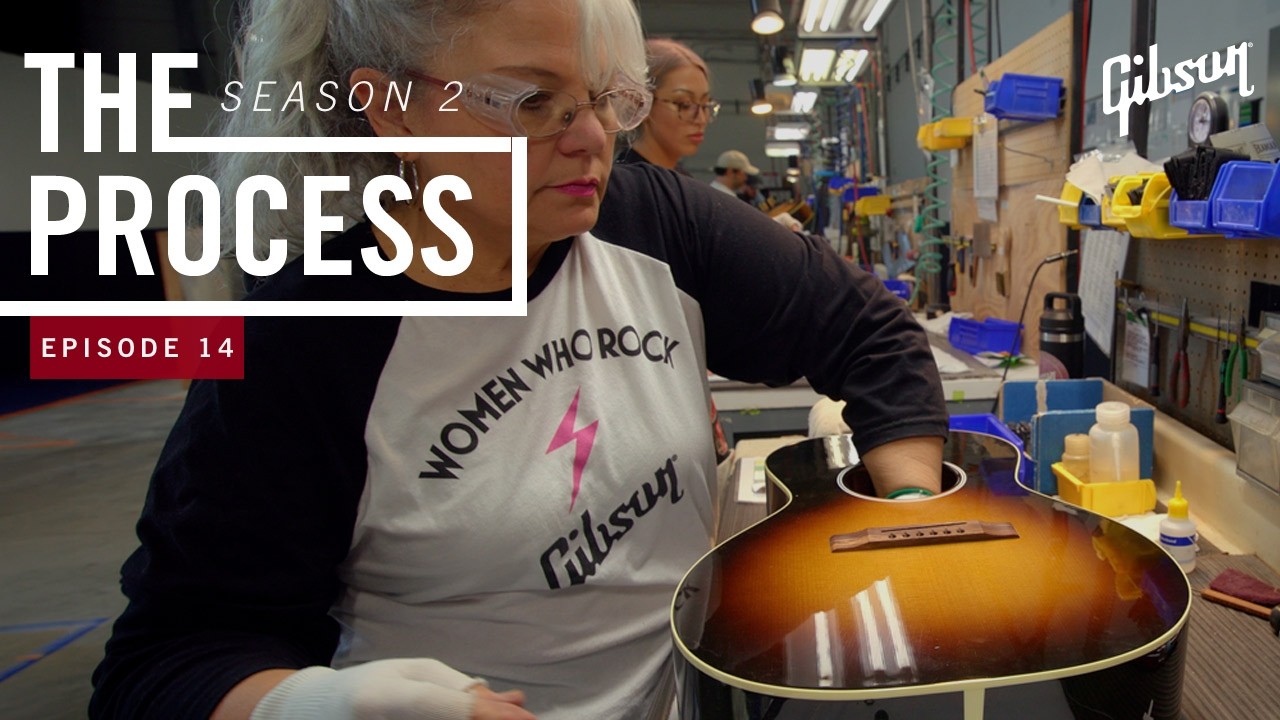
QC had been a long-standing issue, especially under Henry Juszkiewicz and David H. Berryman’s ownership. In 2019, soon after taking over as CEO, James ‘JC’ Curleigh said Gibson’s new leadership team had “declared a war on dust” in the factory and duly rolled out various measures to improve things.
Under Gueikian’s watch, a lot of investment went into strengthening quality control. Jeremy Freckleton was hired as a “manufacturing production expert”, the quality control team was centralized, working across Gibson USA’s Nashville factory and Custom Shop, its acoustic guitar facility in Bozeman, Montana, and with its partners in China for Epiphone guitars.

“That quality team is now in service to every brand, to every category, to every collection, and has the quality-check at every step of the process of making a guitar,” Gueikian told Guitarist in 2022.
A training center was set up and involved input from master luthiers Jim DeCola, Keith Medley and Tom Murphy. His era ends with Gibson more trusted on QC.
Interestingly, Gueikian defined quality control not just in quotidian QC procedures but in the actual catalog itself, which brings us to the next point.
2. He restored Gibson’s identity
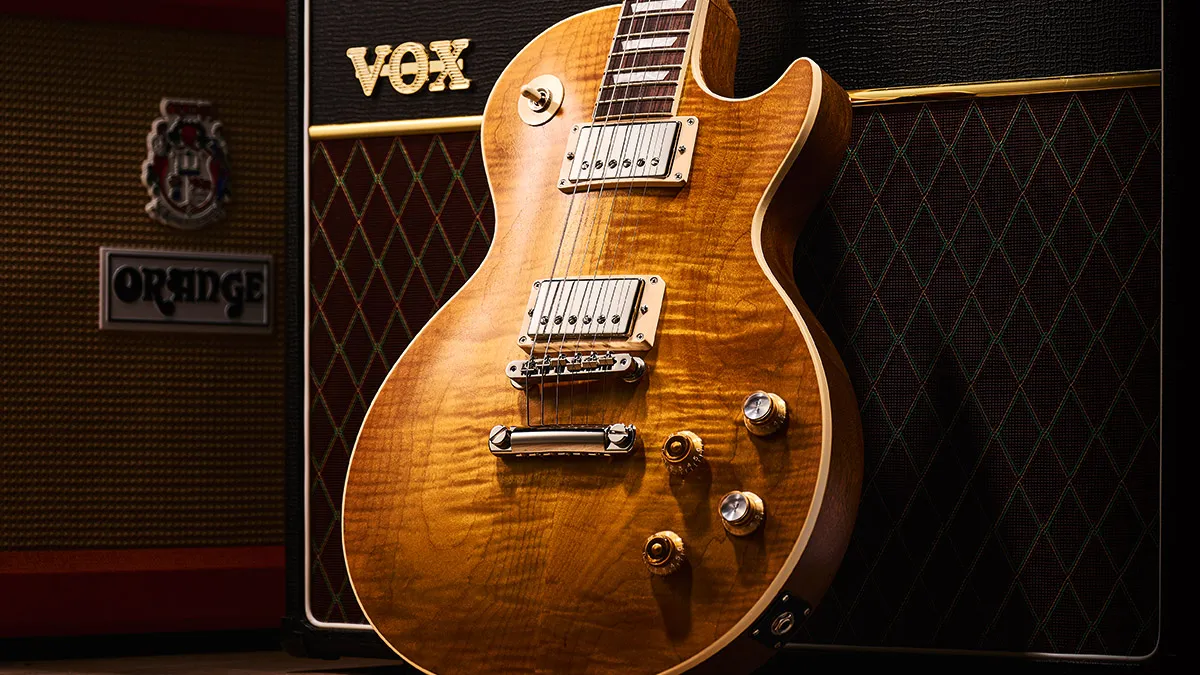
Gueikian understood Gibson’s history and the value of that in taking the company forward.
“Quality is still not just about the way the guitars are built, it is also what we are making,” Gueikian told Guitarist. “Making the guitars in the right collections, with the right set of features that make it a Les Paul Standard, for example.”
The lineup was simplified, with Gibson USA lineup arranged into the Original Collection, Modern Collection and Artist Collection. The Custom Shop range follows a similar logic. Guitars that were lost to history, such as the Victory, were brought back, or in the case of the Theodore, were finally put into production from an old schematic.
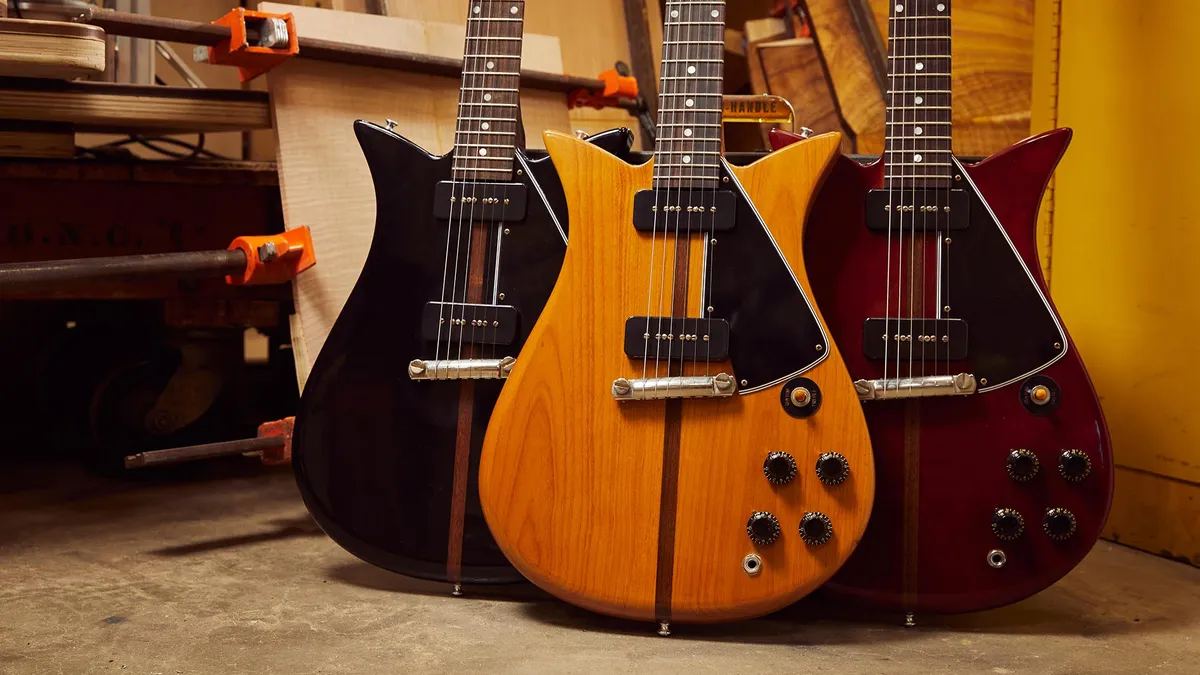
That the Theodore was a fine instrument was good enough, but there was a poetry to its back story that felt like a metaphor for the company itself. Gibson was making Gibson guitars that people wanted to play. The ES-330 is back!
And in the expansion of the Murphy Lab project, particularly with its limited-edition runs of classic artist models, proved that there was not only a market for brand-new collectible high-end guitars, but there was a lot of headroom at the upper limits of the price range.
Too rich for most of us? Sure. But then the entry level Gibson USA lineup was similarly expanded, and the transformation in Epiphone – the open-book headstocks, the Inspired by Gibson Custom lineup – offered that brand experience at a lower price point.
3. He strengthened Gibson’s artist relationships

Under Gueikian’s stewardship, more than ever, Gibson’s artists become an extension of the brand. There were more signature guitars. Gibson launched its own record label, with Slash, its first signing.
The input from Gibson artists give the brand a wellspring of design inspiration that filtered through the catalog.
Collaborations with the likes of Slash, Adam Jones, Kirk Hammett and Jerry Cantrell were deeper, offering Custom Shop replicas of their signature instruments, then more affordable Gibson USA versions, and Epiphone versions for younger players and those on a budget.

“When I first met Cesar, I was blown away by his knowledge and deep commitment to music," said Jones.
“Truly, Cesar’s soul drips with integrity and passion, and his dedication to Gibson’s quality and legacy is beyond reproach. I feel very proud to know him. We have developed an amazing working relationship but beyond that, I now consider Cesar a close friend.”
4. Under Gueikian, Gibson learned how to tell its story

This is a story about a CEO. So let’s defer for a moment to Wall Street, to quote Leonardo Di Caprio’s Jordan Belfort in The Wolf of Wall Street, on the phone selling some junk stock to some poor schmuck. “I never ask my clients to judge me on my winners. I ask them to judge me on my losers, because I have so few.”
We could apply this critique to Gueikian’s media strategy at Gibson. His game has largely been a triumph, a full-court press across the Gibson Gazette editorial presence, his social media feed, the GibsonTV YouTube channel that has long-running serials that take you behind the scenes at the brand, talks to artists, gear tips, interviews, et cetera.

Gibson even took it out of the digital space and into the high street, opening Garages in Nashville, London and announcing one for Miami. All of this has been a success.
But there was one exception: the infamous Play Authentic video. And in fairness Gueikian admitted Play Authentic was a mistake. With hindsight, that would have been played differently.
At a time when the market is saturated with guitar products – the attention economy a glut of information and distraction – the power of a compelling narrative has never been more important.
From the long-form video content, to the easter egg teasers in his Instagram feed, and the campaign to find Marty McFly’s lost ES-355 from the Back to the Future prom scene (and then the launch of replica models), Gueikian’s Gibson understood how those stories could connect.
5. He taught himself to build guitars

Some brand CEOs start out as guitar makers then learn how to be a CEO as they build their business. Gueikian was the other way around. Maybe it was an excuse to get away from all the suits in the boardroom on a Friday morning, a few hours to touch grass, but it was also a good opportunity to learn from his team.
“Neck fitting was really challenging,” he told Guitar World in 2025. “That’s one of the processes where, if that’s not done properly, then the guitar won’t be playable. Beyond that, there's so many steps of sanding.
“I knew about all these processes and how long they took, because I spent a lot of time in the craftories before. But once I really started making them, then I had a very different level of appreciation of how difficult it is.”

This venture was not without its costs. One painful lesson was learned after Les Paul flew off the buffing wheel and broke its headstock.
One of the coolest Gibson SGs in recent years was the SG CEO#4 that Gueikian built from scratch and lent to Metallica’s Kirk Hammett to play at Back to the Beginning, before auctioning it off for more than $76,000 at auction for the Gibson Gives charity foundation.
It was finished in Ghost Burst – a name Adam Jones gave to it – and we might well see it as an option in future. If it makes the production line, it would make a fitting tribute to a CEO who truly gave the company his all.
Whoever follows in his footsteps has big boots to fill. And a lot of epic shit to do.

