


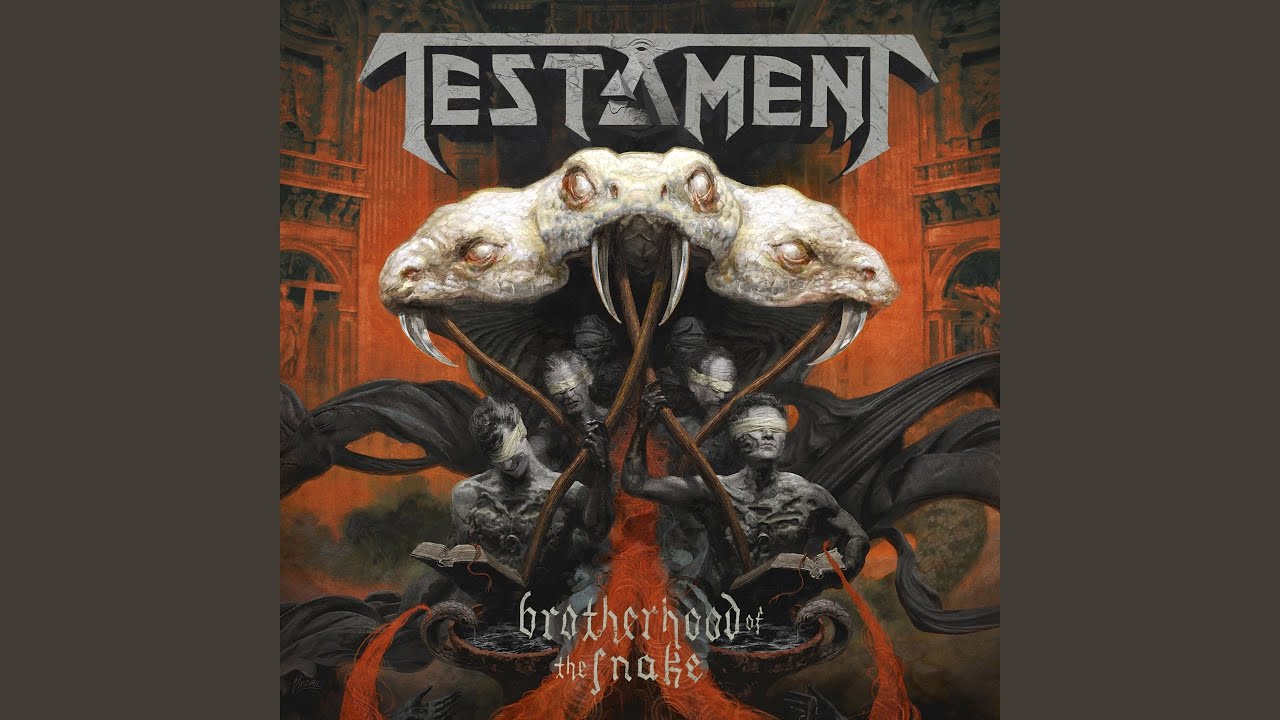
According to Steve DiGiorgio, recording Testament’s 2016 metal masterstroke, Brotherhood of the Snake, was a quick studio session, but it wasn’t the easiest.
“There was some suffering,” he told Bass Player back in 2017. “I don't mean that in too profound of a way – some of the guys wanted to work on it and live with it, but there just wasn’t any time.
“Some people are used to taking their time and trying unlimited ideas, and they were a little out of their element. It caused a lot of tension.”
Along with the addition of DiGiorgio – who re-joined in 2013 – that tension translated into Testament's most muscular-sounding effort in years.
Ripping heads off straight out of the gate on the opening title track, and following through with tunes like The Pale King and Seven Seals, Testament’s no-holds-barred brand of classic, old-school thrash runs rampant throughout Brotherhood of the Snake. And DiGiorgio was clearly in his element.
His fierce bass playing and gutsy tone tie together the bombastic elements of the band’s virtuosic lineup (Alex Skolnick and Eric Peterson on guitars, Gene Hoglan on drums, and lead singer Chuck Billy) in a tight and unified way.

It is the result of DiGiorgio's conscious effort to set aside his own personal sound in favor of what he dubs the “Testament bass sound.”
“When we recorded The Gathering in 1998, we didn’t really know each other well, and I showed up with my fretless Carvin 5-string and just played the way I play. We got through the session, and the band was happy.
“This time I decided, like any good session player should, to assimilate to the project – that old chameleon type of thing where you change your color to match your surroundings. I decided my challenge was going to be, ‘How can I fit in even better?’ I wanted to play that Testament bass role.”

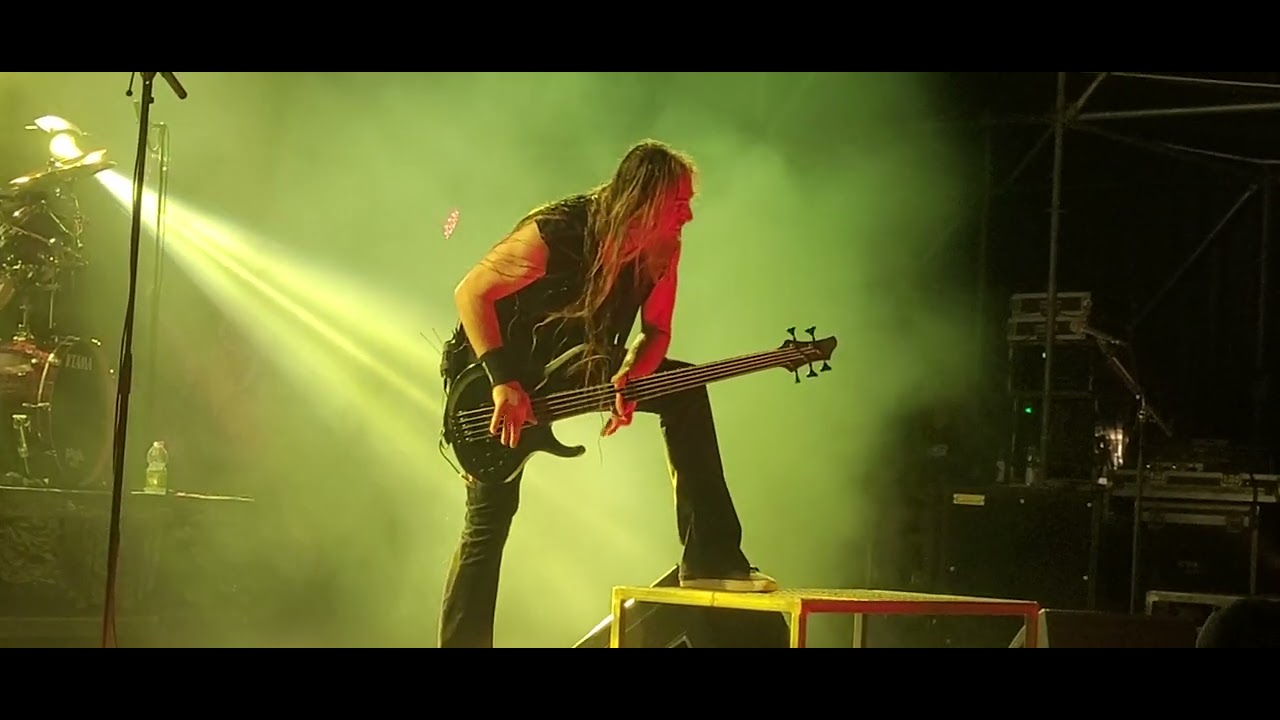
Wielding little more than a stock Rickenbacker 4001, DiGiorgio challenged himself with assimilating into the Testament sound with a more nuanced, straight-ahead approach that favoured groove over glissando.
“I got out all of my bass guitars in my little studio, plugged in one right after another, and played the same riff on each bass with all these separate tracks going down in a line. Then I listened back to how each one reacted within a song.
“I decided on this 1978 Rickenbacker 4001 – completely stock. There's not one modification on this bass. It’s a totally passive, regular fretted 4-string. But its tone had the right amount of pop and enough meat in the middle to fill in.”

Brotherhood of the Snake proved to be another milestone in Testament’s decades-long career – but for DiGiorgio, the album marked a significant shift in his own philosophy, which was all about going back to basics.
You've been a session player for decades. Was it challenging to cut a record in such a short time frame?
I was in my element. Showing up and learning somebody’s material, recording it and getting a great take, adding your own flavor to make it sound interesting, and doing it all in a convincing way to make it sound like you've known it for years, is a trait of a session guy.
Were any of the songs particularly challenging?
Not technically. There’s nothing over the top that’s challenging physically to play. My challenge was in getting the proper tone and finding that pocket that I describe as the Testament bass sound.
Did you adapt your playing as well, or was it just about the bass?
My problem, a lot of the time, is spiking out the sound wave when I’m recording. In the old days, when you could crush a needle it was no big deal, but I’m a heavy hitter, so I had to calm down my attack to get a nice, solid wave. In the studio we nicknamed it “self-compressing.”
Being a studio guy, that sounds like something you would have already figured out.
The technique is just about getting it done. Whereas with Testament, there are long passages of riffs that aren’t so difficult to play in a technical sense, but they are difficult to play convincingly, and that’s what I mean by playing the Testament bass role – having the right attack, the right tone, and the pocket.
Did you record direct or through an amp?
We had two direct signals. We kept one completely plain for any opportunity to re-amp, and one was dirty with a Darkglass B7K to give it that grind. I also have this little EBS MultiComp that I love to record with.

The recording engineer also ran it through a Kemper so that we could mess with the EQ for a room sound. Overall, I got a nice, passive bass guitar sound with a controlled attack, but it took a while to get there.
Do you employ two- or three-finger plucking-hand technique?
I would say I'm a three-finger player. I only know because of my calluses! But really, it’s like a four-barrel carburettor; if I don’t need the other fingers, I don’t use them. I just use one, and when I need to shift a gear, I’ll use two, and so on.
I don’t play slap bass, but I also use the side of my thumb to punch out accents while the other fingers are going. Sometimes it’s better if you just let nature take its course. Just play and let it come out.
You were influenced by Jethro Tull’s Dave Pegg. That seems unconventional.
It's funny because if you look at his entire body of work, someone might be like, ‘I don’t get it.’ The music is cool and you can tell he’s proficient, but his playing with Tull on A and Broadsword and the Beast is amazing.
Most people cite Jaco when it comes to fretless.
I’m a latecomer to Jaco – I didn’t start there. Dave Pegg was my main fretless influence in a context that you wouldn’t really expect to hear it. When you hear Gary Willis or Percy Jones, their playing is 20 times better than Pegg’s on those Tull albums – it’s killer, but it belongs there. With Pegg, it was unexpected, and that’s what drew me in.
Playing fretless in metal bands gives you a distinct flavor.
Early on I realized it’s pointless to try to be the best at anything, because there’s no such thing. But you can always be different in some way. You can always have some small identifying factor. I’m always looking for something to keep me a little different from the regular flow of everyone else.
Who are some of your other influences?
I listened to Stanley Clarke a lot, right before my friends turned me on to metal. I’d listen to Return To Forever, take off my headphones, pick up my bass, and start playing Sadus riffs to thrash beats. You have to be a sponge and soak up all the drops of these different players.

You mostly play an unlined fretless bass. Has that helped you develop your intonation?
Obviously when you’re working on your intonation, your ear is developing automatically. I don’t wrap around and look at the front of the fingerboard too much. I rely on the side markers visually.
I guess you rely on the ear for intonation, and sight to check yourself?
Yes, but the one thing that applies overall is muscle memory. When you do something so many times, the stuff just ends up in the right place.
It's the oldest, most boring cliché, but it always goes back to practice, practice, practice. When you do something so many times, you just get better at it, and you can't replace experience with anything else.
