


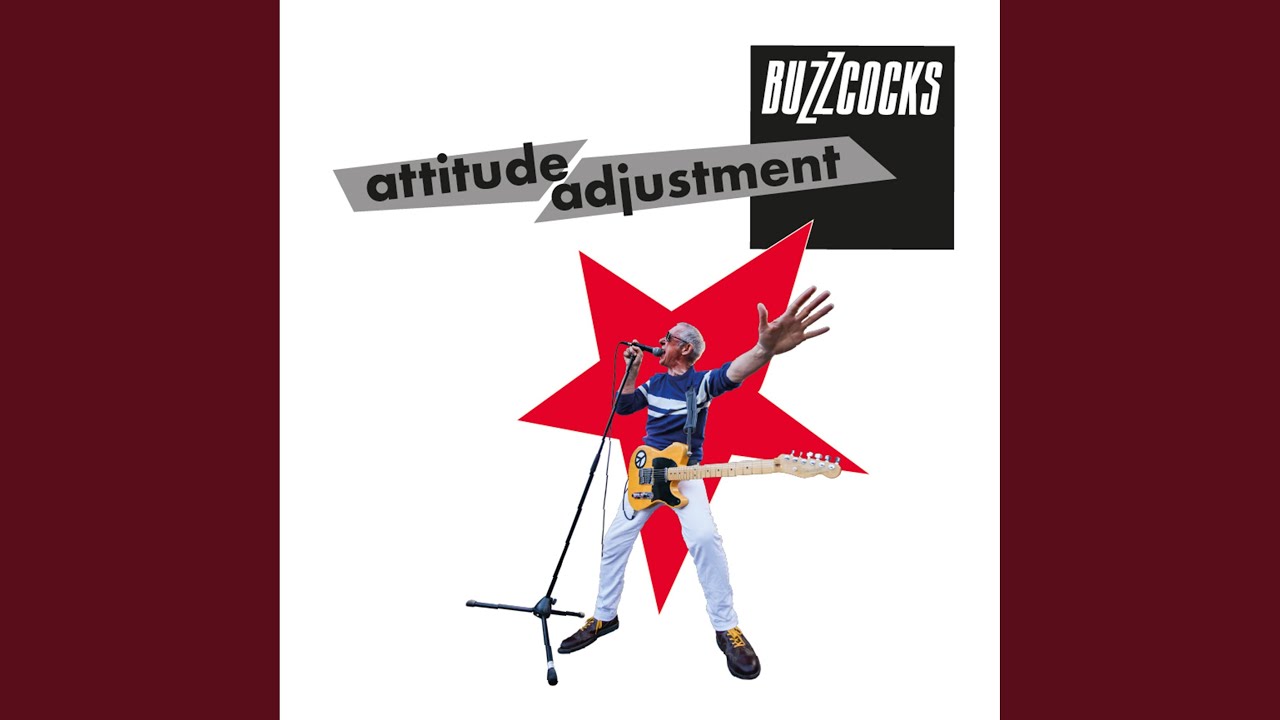
“While we’ve still got our Buzzcocks identity there, I’ve tried to take the music to a couple of different areas along the way,” says Buzzcocks guitarist Steve Diggle about Attitude Adjustment, the U.K. punk heroes’ new studio album. The band – which formed in 1976, punk’s “year zero” – continues to buck the trend of what constitutes the sound of punk rock.
“We were part of that whole Manchester punk explosion,” Diggle says. “But while there was this exciting, glamorous thing to the Sex Pistols and the Clash, we were quite avant garde compared to what they were doing.”
Since the 2018 passing of founding frontman and guitarist Pete Shelley, Diggle has remained the group’s lynchpin, keeping the Buzzcocks’ musical spirit alive by writing, recording and touring. His punk ethos remains as strong as ever, as showcased on the new album.
“It is always good to be spontaneous and work quickly,” he says. “If you overthink it, you’ll get too involved and lose that spontaneity. We’ve always recorded quickly like they did in the old days.
“For this album, I rehearsed the bass and drums for two days – with 14 songs – and then it took two days to record the bass and drums. So, seven tracks per day. Then I went back in and did all the guitars and vocals over a week and a half. It was done very quickly.”
When it comes to defining the Buzzcocks sound, Diggle spotlights two primary elements: a Fender Telecaster and an HH 2x12 Studio 100-watt combo amp.
“When you plug into the HH, it’s like, ‘That’s the Buzzcocks!’” he says. “That amp must be 50 years old, as it’s the one I used on all the early Buzzcocks recordings. I brought that into the sessions for this album because it gave us our definitive sound.”
“I have quite a few Telecasters,” Diggle explains, “which I also play live, mainly because they’re light. In the studio, I’d run the guide guitar, the Telecaster, with the band because it’s just quick and easy to use, especially when you’re doing guide tracks. Quite often, the guides are buried in the mix because it brings an element of live-ness to the finished tracks.”
Wanting to add some color to his sonic template on Attitude Adjustment, Diggle brought in some additional gear.
“I had a Marshall and a Vox AC30,” he says. “I also brought along two Les Paul Juniors, a couple of Les Pauls, an SG and six- and 12-string Rickenbackers. For effects, I used a Boss distortion, a Boss delay and a wah.
“Guitars are scattered throughout the album. On Poetic Machine Gun, I used the 12-string Rickenbacker on the jangly middle eight, while the riff was played with a SG going through the Marshall.”
Diggle believes that simplicity – which is part of the foundation of all punk rock – allows for a much more boutique approach during the creative process, something that shines through on Poetic Machine Gun.
The amount of people from hardcore bands I’ve met that have been influenced by the Buzzcocks is incredible
“A string broke on the 12-string, and I didn’t have time to find a spare,” he says. “I left it as an 11-string. But you won’t be able to tell because that string wasn’t being used so much. There was enough jangle to do what it had to do. I think those types of limitations work for us in a less-is-more kind of way.
“Knowing you could use your limitations is a good thing when you’re starting out too, because you get straight to the point. It’s like when I’m coming up with riffs. I never know what riffs I’m going to put down in the studio. I’d do some takes, but by the third take I’d have a definite riff that wasn’t just kind of a blues riff to fill in the space, but was part of the tune.”
2026 is the band’s 50-year anniversary. Diggle is pleased that his group have etched a lasting legacy, in particular their immense influence on American hardcore.
“We almost have become a ‘band’s band,’” he says. “Though there have been bands that have been influenced by the Buzzcocks, it’s not something we set out to do. The riffs we did and our idiosyncratic approach wasn’t conventional; we’d just go in and make records and that was our message to the world at that time.
“The amount of people from hardcore bands I’ve met that have been influenced by the Buzzcocks is incredible.”
- Attitude Adjustment is out now via Cherry Red.
- This article first appeared in Guitar World. Subscribe and save.

