


David Bowie, who left us on January 10, 2016, was a highly accomplished singer, songwriter, performer and actor, and a fine musician too, although he knew his limitations when it came to musical virtuosity.
As he told Guitar Player’s Joe Gore in 1997, “My guitar playing hasn’t moved with the times at all. I use the same chords as always, but I do know a lot of them, and I’m able to put them together in interesting juxtapositions. Any time I did spend being disciplined was learning how chords work together.”
Make no mistake, Bowie knew his way around a fretboard, as a number of stellar guitarists explain to us below – but he had bigger goals in mind than being a virtuoso axeman.
In his 54 years as a recording and performing artist, he managed to redefine the role of the theatrical musician, refining the art of the alter-ego, touring the world in several incarnations and making an impact on the worlds of cinema and finance (remember those 1990s Bowie Bonds?) along the way. To help him achieve those objectives, he recruited some of the most fiendishly talented guitar players in the world.
You’ll already know most, if not all, of the names on the roster. For his first three years as a bona fide star, after he blew the minds of a generation with 1970’s The Man Who Sold the World, Bowie’s guitar partner was Mick Ronson, who also played so memorably on Hunky Dory (1971), The Rise and Fall of Ziggy Stardust and the Spiders from Mars (1972), Aladdin Sane and Pin Ups (both 1973), as well as performing on the Ziggy Stardust World Tour.
Listen to the metallic solo on The Width of a Circle, from The Man…, the acoustic textures on Oh! You Pretty Things from Hunky Dory, and the all-out wall of sound on Suffragette City for a taste of Ronson’s magical approach. Sadly, he died in 1993 at age 46, or we’d be talking to him today about that unmatched early catalog.
After the unsung session hero Alan Parker helped out on 1974’s Diamond Dogs, assisting Bowie on the unforgettable main riff of Rebel Rebel, Earl Slick and Carlos Alomar, the latter Bowie’s longest-serving guitarist by some distance, stepped up to the plate for his next five and 13 studio albums respectively.
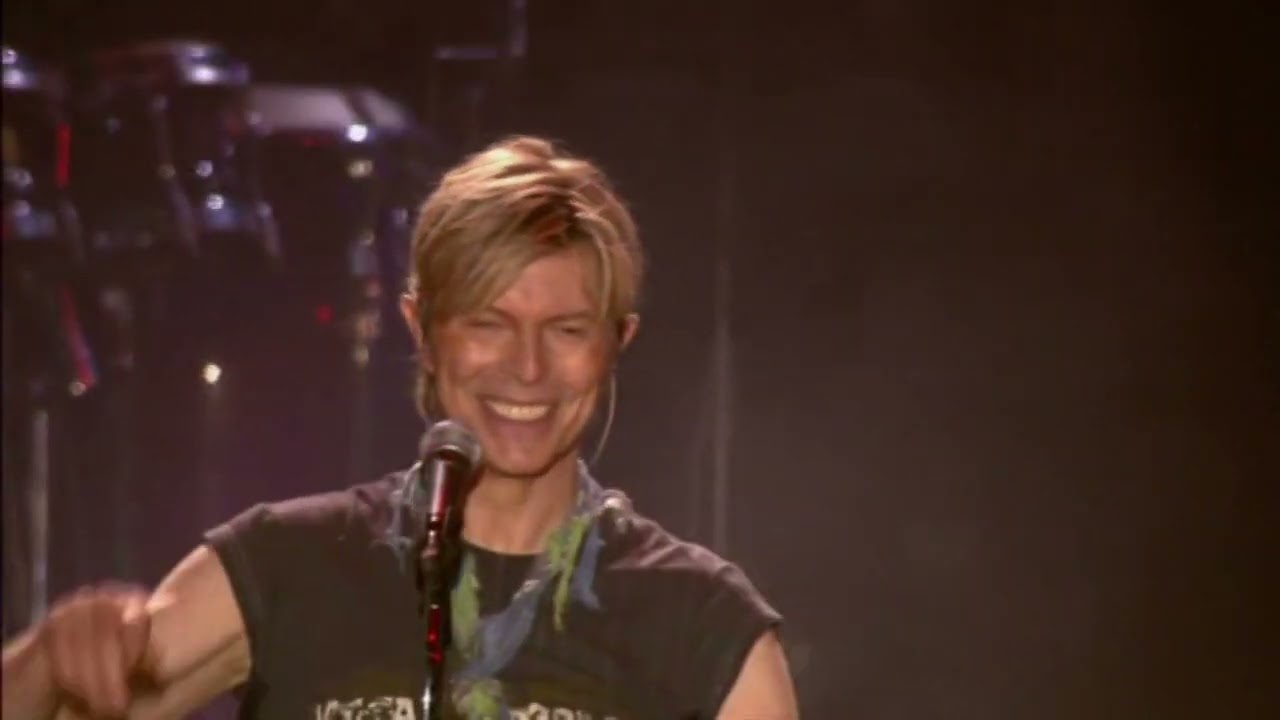
Both men recorded away from Bowie in extended breaks from his band, but they’re the most prolific of his sidemen by a long shot. Where to start? Check Slick’s performance on 1975’s Young Americans and Alomar’s sterling work on Bowie’s Berlin-recorded landmark, Low (1977), which also featured the late Ricky Gardiner, or any of the early-2000s albums that kept Bowie in the millennial bloodstream.
Let’s not forget the guitarists who played with Bowie’s live band, of course, even if they didn’t record album sessions; these include Stacy Heydon, who held it down on the Isolar Tour 1976; the great Adrian Belew, who graduated from Frank Zappa’s band in time for the Stage live album in 1978 and returned 12 years later as musical director of the Sound + Vision Tour; and the equally great Peter Frampton, who came alive on the Glass Spider Tour in ’87.
It says much about Bowie that many of his guitar players were superstars themselves. Take King Crimson’s Robert Fripp, who recorded Bowie’s best-known lead line on Heroes in 1977; Stevie Ray Vaughan, who guested on Let’s Dance in 1983; and Nile Rodgers of Chic, who played on and co-produced the same album.
Lesser-known session stalwarts played their part, too, notably Chuck Hammer, who played guitar synth on Scary Monsters (and Super Creeps) in 1980. That album also featured a notable guest slot by Pete Townshend of the Who.

In 1988 Bowie took a four-year sidestep off the main drag with Tin Machine, the heavy rock quartet in which Reeves Gabrels carried most of the weight, guitar-wise.
Live, he was assisted by Eric Schermerhorn, who went on to work with Iggy Pop after Tin Machine called it quits; Gabrels later played on Outside (1995), Earthling (1997) and Hours... (1999). In the 2000s, Gerry Leonard played textural guitar on Heathen (2002) and Reality (2003) and on the accompanying tours, joined on those albums by Mark Plati, also an acclaimed producer and multi-instrumentalist who had previously worked with Prince.
Slick, Leonard, David Torn, producer Tony Visconti and Bowie himself recorded guitar for The Next Day in 2013, and for his valiant, multifaceted final curtain, 2016’s still-astonishing Blackstar, jazz guitarist Ben Monder was recruited.
So what memories do these musicians have of their late employer – and what did they think of Bowie as a guitar player? Let’s find out. Belew, Schermerhorn, Leonard, Plati, Frampton and Alomar are grilled on that subject below (Fripp gave us such an expansive interview that we’ve given him his own feature, coming soon).
As for the much-missed Vaughan and Ronson, they’ve been jamming away in the sky since 1990 and 1993, respectively, but we’ll raise our glasses to them in salute.
Was David Bowie a good guy to be around, generally speaking?
Adrian Belew: Absolutely. David wasn’t a person to say bad things. That would be left to someone around him. To me, he was always upbeat. He loved me, we loved each other, and we had a great time together, so there was nothing to be critical about.
It was simple. If he didn’t like something, he’d simply say, “I don’t know about that,” and that was as far as it would go. I never saw him angry. He was too sophisticated. He had so much interest in so many different things.
That’s one of the things I loved about him. He would always discover a new subject matter to start reading about. Once he got into something, man, he knew everything about it. That’s what made him such an interesting person to be with.
His bunk was above mine on the bus, and he read books non-stop. I remember talking to him about Philip K. Dick
Eric Schermerhorn
Eric Schermerhorn: His bunk was above mine on the bus, and he read books non-stop. I remember talking to him about Philip K. Dick. The best thing David did for me, which really shows his character, was after we played the Budokan at the end of the tour in 1992. I talked to him and he said, “We’re done. The gig’s over. What would you like to do in the future?”
I heard Chrissie Hynde was looking for a guitar player, so I was like, “Well, Chrissie Hynde would be fun.” I get back to New York, and two weeks later, his manager calls me and goes, “Chrissie wants to meet you in London.” I went to London, hung out with her all day at her house, and she was great.
She said, “David says you’re really good. I need a guitar player.” I had already sent Iggy Pop a tape, and he said, “Let’s do something,” and I said yes because he lived in New York, but I look back sometimes and think, “I could have moved to London in 1992, and that would have been fun.”
Gerry Leonard: David was very perceptive and insightful – and he had this gift for reading a room. Everybody that was in his band was there for a very specific reason that he had in his mind. He had this knack of figuring out people’s strengths and really leaning into those strengths. He was very good at pulling together all of those seemingly disparate elements into making art.
Mark Plati: Aside from what a lot of people say about his curious nature, and how he was always trying to stretch his own musical and visual boundaries, he just really enjoyed doing it.
He loved the process and had a lot of fun with it, and that was contagious to anybody in the room, which made these experiences a really wonderful adventure. Sometimes you didn’t know where you were going, but boy, you had a good time getting there.
![David Bowie - Blackstar (Official Video) [HD] - YouTube](https://img.youtube.com/vi/kszLwBaC4Sw/maxresdefault.jpg)
How did you first meet him?
Brian knew David was looking for a fresh guitar player, so he told him, “We’ve got to go see this guy that’s with Zappa”
Adrian Belew
Belew: We first met when he appeared at a concert in Berlin, when I was playing with Frank Zappa. Two nights before that, Brian Eno had come to the show in Cologne, and Brian knew David was looking for a fresh guitar player, so he told him, “We’ve got to go see this guy that’s with Zappa.”
There was a part of the show where Frank took an extended 10-minute solo, leaving just Terry Bozzio and Patrick O’Hearn on stage, and the rest of us were supposed to walk off the stage at that point.
As I was doing that, I looked over at the monitor guy, and there was David Bowie and Iggy Pop standing there. So I walked over and shook David’s hand and said, “I just want to really thank you for all your music. You’ve really inspired me. You’ve done so much amazing stuff.”
I didn’t even have time to say anything to Iggy before David said, “Well, good. How’d you like to be in my band?” It was an amazing moment. It gave me shivers. Two weeks later, I was in David’s rehearsal.
Schermerhorn: I met Reeves Gabrels in Boston in 1979. We played in different bands together, and we worked at the same music store. We were just guitar buddies, and we were into Robert Fripp and Adrian Belew as well as older guys like Jimi Hendrix.
His wife, Sarah, worked for David as his publicist, so he got the Tin Machine gig around 1988 after she said to him, “Hey David, my husband’s a guitar player” and gave him a cassette. When I was in Boston I was in a band called East Of Eden.
We were on Capitol and we did a record with Roy Thomas Baker, opened for the Psychedelic Furs for a tour and then we broke up. I moved to New York in 1990, and Reeves calls me around April or May of 1991 and says, “Hey, do you want to come out to L.A. and audition? We need a guitar player for Tin Machine.”
I was like, “Whoa… this is life-changing!” So I learned the records in every key, because you never know when you go to an audition; flew out to L.A. and played a couple of songs with the band.
It was great, and at the end Reeves goes, “Hey, Eric, play [Jimi Hendrix’s] Little Wing for David,” because he knew I could play that shit. So I did that, and as we’re packing up, David comes up to me right there, shakes my hand, and goes, “I’m really looking forward to working with you.”
Leonard: David was intrigued by my playing, I think. He came and saw me play live and then asked me to be part of it. I think he wanted somebody to cover the stuff Fripp had done, or Belew had done, or Eno had done, and that was right up my street, because I was a big fan of all those guys.
I didn’t study Fripp or anything, but people would tell me, “You sound like Fripp,” and I would deliberately not listen to him when I heard that, because I didn’t want to be a copyist. Of course, I’ve listened to Fripp since, and he’s got a beautiful tone and a unique style.
Plati: I worked with Prince before I worked with Bowie, which I guess is kind of an odd combo in that you don’t expect one to follow the other in sequence, but that’s David. I can think of a lot of other artists who would have been like, “He worked with Prince – that’s really not up my street.” Not David. If anything, he’d be like, “Wow, what’s this guy about?” because he had an eternally curious nature.

Were you a fan of his music before you played with him?
Schermerhorn: Absolutely. I bought Low and Heroes in high school. Those records were so powerful. When I met David, I said to him, “Those records changed my life,” and he said, “They changed my life, too!”
Plati: My first experience with Bowie’s music was Space Oddity. I most likely heard that on the radio when I was, maybe, 12. If you were a musically aware teenager in the early ’70s, you got to grow with David’s music and with his guitar players.
Station to Station was the first big Bowie record for me that I was aware of as an album and on FM radio. All those tunes were on the radio, and the guitar playing from Carlos and Slicky really stuck with me.
How did you approach the task of being Bowie’s guitar player?
Belew: He really had a fascination for guitar players, and one of the things I noticed is how much his songs were open to guitar playing. Songs like Stay or Heroes are custom-made for guitar. I was his musical director in 1990, and that was a whole other level; it took me months of preparation.
One of the main difficulties was that he wanted just a four-piece band, and yet he was doing a retrospective of all his career. So you had symphonies, you had saxophone sections, you had everything in there.
Songs like Stay or Heroes are custom made for guitar. I was his musical director in 1990, and that was a whole other level; it took me months of preparation
Adrian Belew
Fortunately, this coincided with the first sampler coming out. Roland had the first couple of samplers and they sent them to me, so me and my engineer and the keyboard player Rick Fox sat for hours and tried to sample all this stuff.
We kept buying more samplers, so in the end we had two huge racks of samplers. Most of the stuff was played live, but anything that was beyond our ability was Rick Fox just pressing a sampler button, and the stage would fill with beautiful orchestral sounds.

Leonard: I tried not to be too intimidated by the lineage that had gone before me, because hats off, those guys are incredible voices on the guitar.
But, you know, that was David’s thing, too: he was very generous in that way, validating you when you couldn’t do it for yourself. We need that as artists: at times, we need someone to say “Keep doing what you’re doing, because it’s going somewhere.”
Plati: When I met him, he was writing with Reeves Gabrels, and while they would both play guitar when they were composing, Reeves would go off and record the parts, and David was perfectly fine with that because he was always about the people he would bring into the story. He was always about letting them do what they do best.
Carlos Alomar: I’m just fine all over the place, playing what we call rhythm-lead. Because in my world, there’s no lead guitar player. You play a part, I play a part, and we switch off. And if I want to, I’ll play your part too if I need to.
Did Bowie have specific requirements, or was he more about, “Hit me with what you’ve got”?
Peter Frampton: He never said a word apart from, “Just come and be you.” It was such an honor and a relief that he trusted me, you know, and got me there because of what I do. So I wasn’t on Let’s Dance, and I didn’t sound like Stevie Ray Vaughan, but I quoted Stevie and all the other great guitar players. It was a thrill to be able to do that.
He never said a word apart from, “Just come and be you.” It was such an honor and a relief that he trusted me
Peter Frampton
Belew: I had just come from working with Frank Zappa for a year, and Frank was very directive. He wanted you to play consistently and correctly, and he really didn’t need you to come up with much of anything. The music was the way he already wanted it to be. David was entirely the opposite.
He was just thrilled to have someone who could play wild and run around on stage with him. At one point he said, “You can be my Keith Richards!” He never really directed me about anything. He was a supporter more than anything else. He just got so excited if you did something really cool.
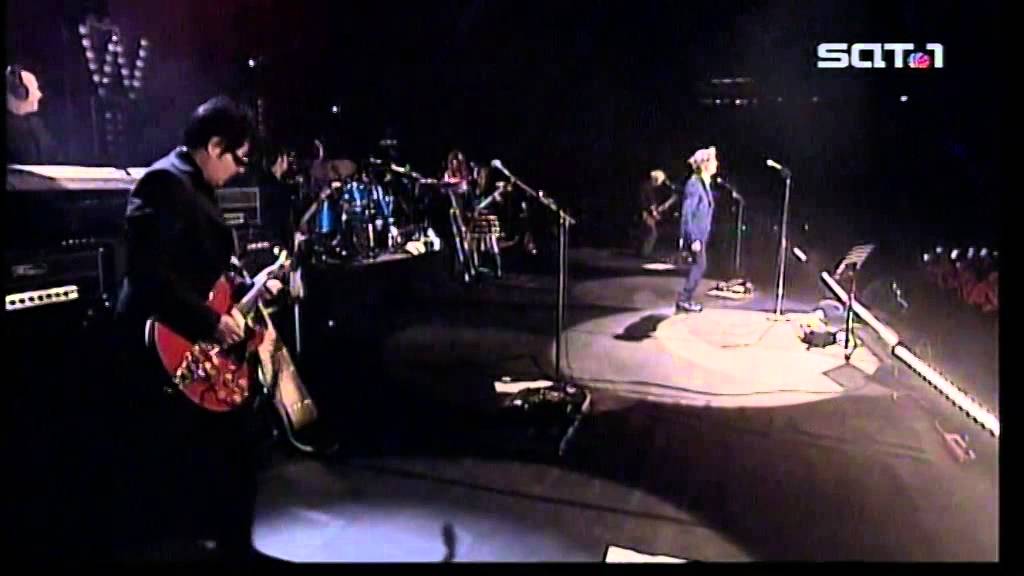
There’s a video of me playing Stay on the German television show Musikladen, and I launch into the first section where I can play a solo. He’s standing across the stage with his arms crossed, with this big grin, looking at me the whole time. He’s got this look on his face like, “That’s my boy!”

Schermerhorn: I think his genius, probably like Miles Davis, was to ask himself, “Who do I have around me?” Even if he had a guy who could only play two chords, then he’d write something using those two chords. His genius was hearing what you could do.
Alomar: I always say this: if you had Jimi Hendrix as your guitar player, would you tell him what to play? Fuck no. I tried to be inspiring, and I tried to give him what my best was. We always asked ourselves, “What if?” like, “What if we take the amplifier and we put it in the hallway?”
One time, Tony Visconti found a chandelier and threw a rope over it and then hoisted a microphone up there. These types of outlandish ideas, and that curiosity, will keep you young forever.

What did you think of Bowie as a guitar player?
Belew: This is an interesting thing. All the time I worked with David, I actually never saw him play much of anything. Not piano, not guitar. When I was his musical director in 1990, I just about managed to talk him into playing saxophone for one song, just because I thought it would be a cool look for David.
All those years I never thought about it, but when I ask myself when he sat down and wrote all these great songs, I don’t know the answer. He must have done it privately.
Schermerhorn: I thought what was cool was he never did barre chords. He did the E shape and slid that up and down the neck. He was letting the other strings ring on the 12-string. That’s how I remember him playing, and his timing was great.
Leonard: David wasn’t virtuosic or anything like that. He didn’t have any aspirations in those ways. He had a kind of caveman instinct with the guitar of what he wanted to do in a broad sense.
For instance, when we did The Next Day, he’d say, almost apologetically, “Do you mind playing this part?” And he’d play me a part from the demo, which was a stabbing chord or something like that. It was great, so raw and punk rock.
He’d say, “Take it and do what you want with it,” so sometimes I would modify it, but I would always be very careful to try and keep the intention. So he got people to do the things that he wasn’t able to do himself, but he had good instincts; he could write on the guitar and he could play a mean riff, too.
![David Bowie - Rebel Rebel (Live) [Official Video] [4K] - YouTube](https://img.youtube.com/vi/eF551z9KlA8/maxresdefault.jpg)
Plati: In the Spiders, he was basically the second guitarist for a while and he had chops, but once he started incorporating two guitar players in the band, then he didn’t have to be that any more; he became more of a frontperson.
Alomar: Bowie, like John Lennon, was a great rhythm, acoustic guitar player. Basically, they played triads, and they could play chords, but they couldn’t play chords and bass-lines together in opposition, so the bass couldn’t go down when the chord was going up. You always have to hit the root: you never hit an inversion. It’s what we call metronome playing. They could keep the rhythm down for the whole song.
Frampton: David played the riff on Rebel Rebel, so we know he was a great guitarist, but I think he used guitar and keyboard in order to write. He was like me in the sense that I can play piano enough to write a song, but I’m not a piano player, whereas I am a guitar player.
When were you last face to face with Bowie?
Belew: A long time ago. I don’t know. He called me several times, though. One time he called and asked, “What are you doing?” I said, “I’m out in my garden.” He said, “You’ve got a garden?” I said, “Yeah, I’ve got a garden. You could have a garden, too, if you want. You’re David Bowie!”
Schermerhorn: I ran into him a few times in New York, and he was always so nice to me.
Alomar: About a year or so before he died. It was Tony Visconti’s birthday, and he was there. I didn’t know he was sick. He seemed a little pale and rather frail, but it was mostly just about renewing old times, tying up loose ends, and rededicating our passion and love for each other as well as celebrating Tony’s good fortune and health.
Later on, I found that it was more of a pleasant goodbye. But one of the things that we have in Buddhism is that we don’t look at death as being death. It’s like when you call somebody after a long period of time.
You’re just calling to see how they are, to make sure that they know that you remember them and cherish them. As a Buddhist, I feel that if I don’t make that phone call to check up on you, then you’re still having a good old time. I know you’re fine.

What is your best memory of him?
Belew: Oh, man. There were so many. I feel like I have my own private film in my mind of everything that went on. Maybe the Sound + Vision tour. That was 108 shows, and it went for a year, and we played in 26 countries.
That’s when I really got to know David and befriend him. I got to experience a side of him that few other people did, because I spent time with him at night in his room, just talking about things, or having dinners or whatever. We were pals, so everything comes out. All kinds of joyful things happen.
Leonard: The whole experience was life-changing, and I feel very lucky. It was a little bit of “right place, right time” for me.
Alomar: I love the Scary Monsters… album. We had this period where we were so locked in. We could do anything; we were flipping beats and doing split-rhythms, and it was just amazing.
When we got together, our intent matched the level of our efficiency, so satisfaction was guaranteed. As a traveler in time, every one of us has that moment where you can hitch a ride to a star, and I think Bowie did a pretty good job of that.
- This article first appeared in Guitar World. Subscribe and save.

