




Seattle in the ’90s has reached mythological status. A time when the world focused its collective attention on a tiny scene of bands that had nothing in common other than a love of distortion, riffs and authenticity.
It gave birth to household names – chiefly the ‘big four’ of grunge: Nirvana, Pearl Jam, Alice in Chains and Soundgarden – but it also snuffed out the candle for some of its most iconic musicians.
Drugs and depression were an undercurrent that swept through the city like the Duwamish River. Kurt Cobain, Andy Wood, Layne Staley were all claimed by addiction. Chris Cornell and Mark Lanegan left longer legacies, but were still taken too soon.
For Pearl Jam guitarist Mike McCready, they were friends and bandmates. People he misses dearly. And the grief hit him all over again during the Covid lockdown.
“I was sitting around thinking about the singers that had died in our scene,” he tells me from his studio over Zoom. “I’ve had dreams about some of them and they haunt me sometimes. I was thinking, ‘Was it worth it for all these guys and women?’”
He didn’t know how to answer that question. He sought solace the only way he knew how: through art. Writing it all down seemed the best place to start.
“I could only write what I know. But I wanted to do it in the context of a historical fiction of the Seattle music scene. And I wanted to change the names and create its own world within it.”
McCready’s name is intertwined more than most. He got his first break when Cornell invited him to play on Temple of the Dog, the Soundgarden frontman’s tribute to his departed friend and roommate Andy Wood. Pearl Jam formed at the same time. A later stint in rehab sparked Mad Season, his part side-project, part therapy with Layne Staley and Mark Lanegan.
This new project, however, was outside his comfort zone, so he sought advice from friend, director and lifelong Pearl Jam fan Cameron Crowe. He was convinced: this could be a rock opera.
But not just yet. A stage show is still on the cards, but Farewell to Seasons is releasing first as a graphic novel that tells the story of Seattle through four fictional bands.

It’s packaged with a soundtrack album that features all-new songs from McCready, who is also singing for the first time, alongside a band of Seattle music vets including Duff McKagan, Dave Matthews bassist Stefan Lessard, Fastbacks drummer Mike Mussburger, Chris Friel, Nate Yaccino and Thunderpussy’s Molly Sides.
While it was challenging on both practical and emotional levels, McCready ultimately found the project cathartic. In a candid interview, he revisits his favorite musical eureka moments, the Seattle guitarists who most inspired him, and just what’s next for Pearl Jam.
You said you’re haunted by these ghosts. It must have been challenging to dig into the history of the Seattle scene and your part in it, given how many friends and fellow musicians you’ve lost along the way.
Duff McKagan stopped by the Shadow house in ’84, and said he was moving to Los Angeles. And we were like, “There’s something to that”
It was. It’s hard to think about the whole scene and how young and naive everyone was, and how much this explosion happened in this relatively provincial small city of Seattle, Washington, where everybody knew each other.
I was playing in a band prior to all that called Shadow, and I wanted to put that in the story as well. That’s one of the bands that’s actually named after the real band.
I felt like we never really got the props that we should have over the years, because we were 16 and playing all around the Northwest and doing shows. We broke up when everything started happening. I spent my 10,000 hours with that band, and I’m very proud of that era.
But later, getting to play with Layne or Chris or Lanegan, all these incredible singers, and now they’re gone. Kurt, for that matter – I didn’t know him at all really, other than him being an incredible singer-songwriter. Even Hendrix. What would they be doing now? Would they be blues artists? Would they be painters? That’s what haunts me to this day.
You moved to L.A. with Shadow to try and make it. When did you realize it hadn’t panned out?
About a year in, I got really sick with Crohn’s. We played a bunch of shows down there. Rick Friel, our bass player at the time, booked all the shows and made it all happen. We opened up for Andy Taylor. I got to see some cool stuff – I saw Jane’s Addiction at a club; I saw the Welcome to the Jungle video shoot.
The reason we moved down there was that Duff McKagan stopped by the Shadow house in ’84, and said he was moving to Los Angeles. And we were like, “There’s something to that.” And then a year later, they put out that EP [Live ?!★꩜ Like a Suicide].
It was a year of me working at Aaron’s Records, drinking too much, getting Crohn’s, going, “I can’t do this anymore.” So I moved back and I gave up. I quit playing music for two years from ’88, ’89. I was done. And then I got a call out of the blue from Stone.

What do you remember about that moment when you first played together with Stone? That must have been pivotal for you as a guitar player, to come back to the instrument after almost giving up.
When I got the call from Stone, I was working at a pizza place and I had given up. I was depressed and probably drinking too much. I was at my friend Tim DiJulio’s house, playing to a Stevie Ray Vaughan record – so I was still playing a little bit. And [Stone] saw that – I remember him walking in when Love Bone was still happening. But I had known him since seventh grade – Seattle was very small in the ’80s and in the early ’90s before it blew up. We all knew each other, we all went to the same parties.
I wanted to do something opposite of what Stone was doing. Kind of like Aerosmith
When we started playing together, selfishly, I was like, “’Okay, this seems to be my door. I better walk through it.” I always think of this Paul Westerberg quote: “Opportunity knocks once and the door slams shut.” After me going through LA and not making it and being depressed, all of a sudden this thing happens when I’m not looking for it. And out of a death – Andy Wood dies. That was an interesting musical paradox early on for me.
It was exciting. It was new. Who knew what was going to happen? But I felt like we connected first through humor. And then, he just had a ton of riffs and when we started playing, I wanted to do something opposite of what he was doing. Kind of like Aerosmith did stuff – early Aerosmith was in my mind back then – and I was going to be the lead guy, I guess, was his thought.
Farewell to Seasons starts with a young teenager, David Williams – who is based on you – jamming in his bedroom. Can you remember the moment you got your first guitar and started jamming in your bedroom?
It was late 1978, early ’79. Мy dear friend Danny Newcomb, who was the guitar player for Shadow, lived on my block and we were both 11. And I met Rick and Chris Friel. I’m a Cub Scout playing soccer, and all of a sudden I see this Kiss lunchbox that my friend Rick has. Those guys are playing and then I join them within six months.
We’re playing shows at 12 years old – our drummer’s eight. We started playing right away at talent shows in junior high. We rented a church out called the Unitarian Church. I just found a ticket for it the other day – it was a dollar. The Friel house is where everybody went and we would rehearse there all the time, three hours a day, five days a week for five or six years.
What was that first guitar?
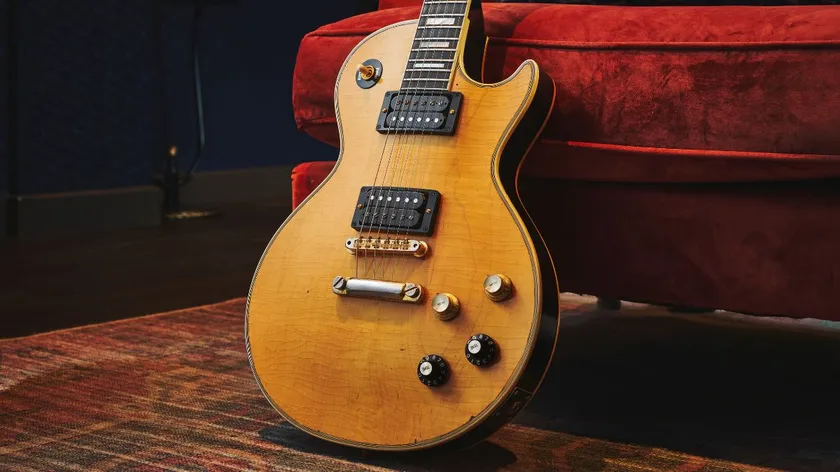
It was a $100 Matao Les Paul, black. It was pretty good. It had a good neck on it. I smashed it and then I fixed it. I was doing that early and I kind of regretted it. I was 12 and I threw it in the air at this talent show – there’s a picture of me chucking it in the air in one of the Pearl Jam books. Yeah, I was way into The Who. [laughs]

Another thing that really struck me is how the novel depicts your life with Crohn’s disease. David’s parents say, “All he does is use the bathroom and play guitar.” Did playing guitar help you deal with Crohn’s?
[Laughs] I think it’s a little harsh on my parents because they were really supportive, actually. But for story’s sake, we kept it in there.
The pain that comes with Crohn’s disease – which feels unbearably bad in your gut, and it’s embarrassing and you shit yourself, and all sorts of stuff I’ve had happen to me over the years – I believe my playing got better because of that.
And it also got me back to Seattle from L.A. – so I look at it as a catalyst. This is with perspective; when I had it, it sucked and I thought my life was over. And it turns out it wasn’t. Luckily there’s a lot more medications and diets now than when I got it. I continue to work with the Crohn’s & Colitis Foundation because of that.
But yes, I think it helped – it made me play deeper, hopefully. It was an antidote. Guitar is an antidote to many things for me.

And of course, you had your own addiction problems, but guitar was always there. You even formed Mad Season out of rehab.
As I was spiraling in my addiction and alcoholism in the early ’90s, I luckily got into rehab. I got out and I was kind of naive – like, “I want to get everybody sober along with me.”
Layne was my friend, I saw him struggling and I wanted to help him out, but also wanted to create music with him because I was sober for the first time. It gave me confidence, whereas I didn’t really have the confidence as much with Pearl Jam because everybody was such great writers for those first three records.
Mad Season allowed me to explore my writing abilities with Layne and my friend Baker [Saunders], and then I always wanted to play with Barrett [Martin] because he was this great drummer for the Screaming Trees.
The premise of it was to help Layne or help all of us… but everybody’s got to help themselves. I had to find out the hard way.

Collaboration was such an important part of the Seattle scene. What are the jams and recording sessions that really stick in your mind?
We did a cover of Hey Baby (New Rising Sun) by Hendrix with myself, Chris Cornell, Matt Cameron, and Jeff Ament [as M.A.C.C.]. Those guys [Soundgarden] were in recording one of their records and I just came by and said, “Hey, I’ve got an opportunity to do a Hendrix song. Do you want to do this?” And they were all up for it. We got to do that song during their session. Watching Chris sing on that one…
I had seen him obviously when we did Temple of the Dog. Temple was probably the first life-changing experience for me in terms of, “Okay, now I’m playing on this thing that’s very important.” This was a tribute to Andy Wood that Chris had written and I wanted to be very conscious of that but also play my ass off.
Prior to that, it was a big learning experience for me to let go, and Chris allowed me to let go and play all over that record. He was always super-cool to me and super-cool to Ed [Vedder]. So I’ll love him dearly forever for that situation.
Playing with Layne was great – the thing about Layne was that he would never talk shit about anybody. We’re all shit-talkers in Seattle, very passive[-aggressive]. Layne wouldn’t. He was funny and had a good heart. So when I got to play with him and I was trying to get sober, it was a mixed bag of emotions. I felt very proud of the project, but I was worried at the same time: am I getting too close to this? Could this be bad for me?
Playing with Ed for the first time [in 1990] was amazing. We were listening to some old tapes when he first got here – he recorded stuff on a boombox, and I went, “Fuck, this guy is good.” It was the first time I was in a situation where everybody was really firing on all cylinders when Pearl Jam first got together. And that was going on at the same time as Temple. A lot was happening very quickly.
Who were the guitarists that had the biggest impact on you from the Seattle scene?
Clearly the most obvious would be Hendrix, which is the scene before, but he made it in England and we all know the history of all that. I love to hear Kim [Thayil] play – he’s got an interesting style. He hits a chord differently than I hit; that allows him to move his fingers in that way in those Soundgarden songs.
I like Jerry’s style – he’s a great writer. Getting to see all those guys play was really fun, and getting to tour and open up for Alice in Chains when we were Mookie Blaylock was a fun time. Steve Turner and Mark Arm just beat the hell out of the guitars and there’s a relentless punk energy there, so that’s fun to watch.
The thing that surprised me about the Seattle scene is everybody’s so different, and this very small scene turned out to be huge. Kurt, of course, was a great guitar player in his way, as a songwriter – getting to see that live was incredible, too.

I’ve got to get to the inevitable Pearl Jam questions: what’s next and when are we going to find out who the drummer is?
We’re on a holding pattern right now because I’m working on this and Ed’s going to Japan. We’re going to find somebody. We don’t have anybody right this second to announce. I wish I did. I’m dying to play. We’ll make it happen – I’m excited to see where our future is. Everybody still wants to do it.
Were you surprised when Matt Cameron announced he was leaving?
I was kind of surprised. I think Matt was getting tired of being on the road; he’s paid his dues over the years and I wish him the best. It just wasn’t working for him anymore going on the road, and that’s OK.
We’ve been around a long time, and Matt was a huge reason we are still around; we were lucky to have him for 27 years. I was a little surprised and sad, but I also love him and I wish him the best.
Lastly, is there any new guitar gear that’s impressing you? Last time we spoke you were raving about Fender’s digital Tone Master amps, and lately you’ve been running FRFR cabs.
The consistency of the amps over the Dark Matter tour pushed me to play better than I have ever done
My guitar tech, Josh Schreibeis, has designed an amp modeling system and I think it’s made me play better. I used it on the Dark Matter tour. I love the consistency of it. [McCready’s live system is based around the Fractal Axe-Fx III – Ed]
I love the Tone Master [Pro] – I have it right here and I play on it every day [at home]. I can pick up any kind of pedal on that thing and it sounds pretty great.
I know there’s purists that probably aren’t into that, but I felt like my amp modeling system along with the old analog stuff has made me a better guitar player.
I can say, “Hey, I want this to sound heavier,” and he’ll go, “Okay, bam, it’s heavier.” He knows the technical stuff, and I know the verbiage – like, “Make it sound like The Byrds in 1966.”
I think it was the consistency of the amps over the Dark Matter tour that pushed me to play better than I have ever done. I just felt more confident.
- Farewell to Seasons is released on October 6 2026 via Z2 Comics.

