

Keith Urban reached modern country’s upper echelon via hits like Long Hot Summer, Somebody Like You, and Once in a Lifetime, and a commitment to his mission.
“There’s lead guitar players, then lead singers who are great players, then the Claptons, Gilmours, Knopflers, and Mayers, who are both,” he says. “That’s my lane. I’m not just a guitarist – I have to front the whole thing, lead the night, and entertain.”
He knows there are trade-offs between providing entertainment and guitar playing: “There’s a million different speeds happening simultaneously. I’m still learning how to balance that – but I’m much better now.”
Everything in moderation, then – except perhaps volume – as Keith Urban goes to 11…
1. What was your first guitar, and how did you get it?
It was a Suzuki three-quarter-size nylon-string acoustic. My parents bought it for me when I was 6, and that’s when I started taking lessons. The next guitar I bought was an electric guitar when I was 9 – an Ibanez Telecaster copy. I’ve still got the body; I don’t know where the neck went!

It’s a real bummer because I would love to have had the guitar intact for its sentimental value. But at least I have the body sitting in my warehouse.
2. What are some quirks or habits that, like it or not, have become part of your style?
Probably using the raised, ridged part of a pick. I’ve done that for 25 years or something. It’s part of my sound, but it frustrates me sometimes – I’d rather have a different material. I’d probably rather use more like a tortoiseshell.
So I’m in a bit of a bind: I prefer the sound of a different compositional pick, but I’m missing the raised ridges of, for example, a Blue Chip. If I could get something of that quality but with the raised ridges, I’d blend those two together.
3. What’s been your greatest gear find?
It’s hard to narrow down, but maybe finding a really great 1954 Strat. That was exciting – having a first-year Strat is amazing.

4. How many guitars do you own, and what gear do you own that might surprise people?
I have maybe 50-odd guitars. But I don’t know what would surprise anybody! I do have a Wandre guitar that’s super quirky. It’s definitely not a common guitar. I find them aesthetically gorgeous, so I always wanted one.
5. What’s your number-one tone tip?
Inspiration beats everything. Inspiration creates the tone, but they inform each other. A great tone can inspire another tone, but then, inspiration can trump whatever the hell the tone is. But it doesn’t really matter. Listen to The Stones’ Satisfaction. Is that a great tone? It’s the right tone, and it’s a hell of an inspired riff.
There’s no wrong tone. I have my own quasi-facetious explanation: it’s like going to a restaurant, ordering a meal, and loving it. Then you see what the waiter is bringing someone else, and you go, “Oh, I should have gotten that – that looks way better!” That’s guitar tone!
6. What’s been your most memorable encounter with a guitarist?
Countless! Playing with Tommy Emmanuel live, to John Mayer, to Vince Gill. Joe Walsh… I feel really lucky. I’ve gotten to play alongside James Burton, who sat in with me. To play alongside some of my all-time heroes is an extraordinary thing.

I’m a constant student of guitar and of the approaches my heroes take. I just went to see AC/DC again, and I’m constantly astounded by Angus Young’s tone. His technique is incredibly light. I actually took binoculars because I wanted to see that right hand up close! His combination of crazy light strings and deafening volume fascinates me. It’s almost a paradox of freneticism, but he’s a super controlled, gorgeous player.
7. What’s it like being in the room with John Mayer, Tommy Emmanuel, or James Burton?
A lot of artists make sacrifices to fit in. I didn’t want to lose myself musically
John’s a super unique guy, and so is Tommy; and James is just so kind, sweet, and soft-spoken. They’re all different. We’re all part of the same brotherhood, but everybody has their own methodology and quirks. It’s the reason why they don’t sound like anybody else – they’re not like anybody else.
8. What’s been the toughest time you’ve had as a musician?
I don’t know if there was a singular moment. It’s been more about holding my ground musically with the direction I wanted to go, and how I wanted to make records. I did that, really, starting with my first record. I just didn’t do what it took to fit in; I stayed true to myself.
A lot of artists make a lot of sacrifices to fit in. I wanted to be accepted – but I didn’t want to lose myself musically. That was a very, very difficult thing to do when I first came to Nashville.
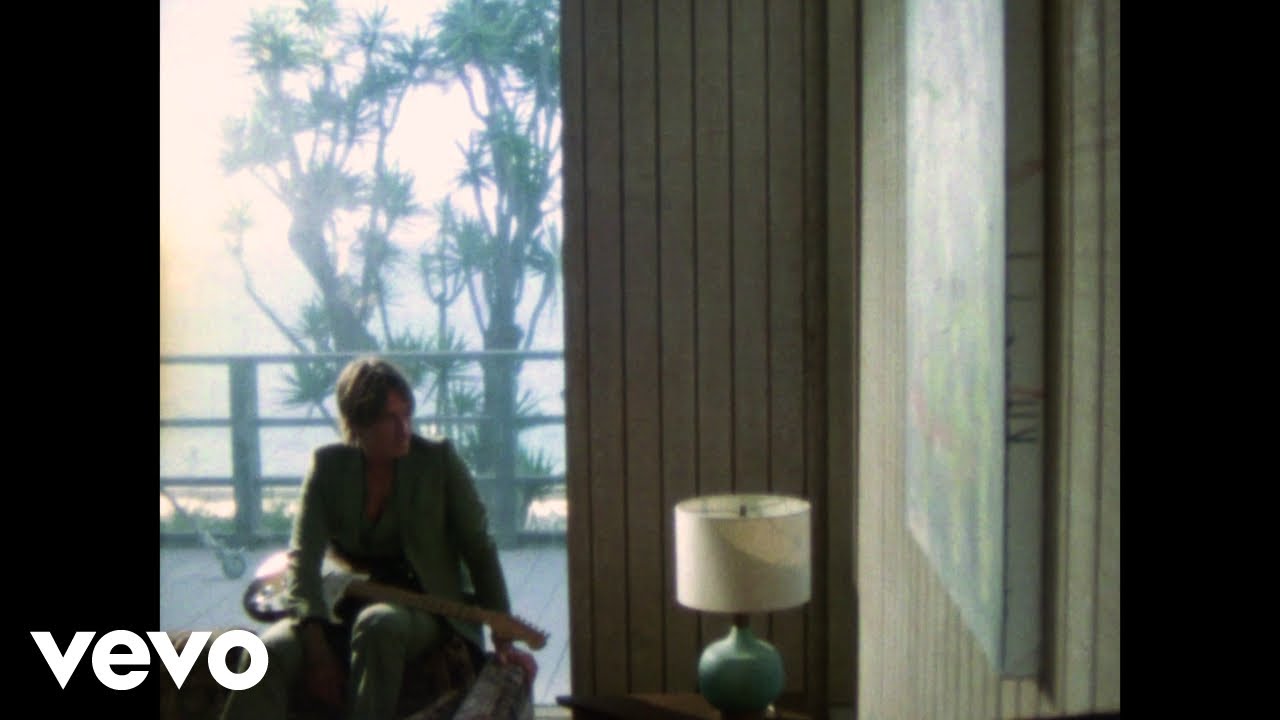
9. Which of your songs do you find the most challenging to play?
Nothing springs to mind. That’s a good sign! But with the long live solo I do in Long Hot Summer, the key is the willingness to fuck it up! It’s a very in-the-moment thing; there’s gonna be bits that are similar from night to night, but the execution’s gonna be unique to the night.
Like all players, I respond to the tone and the sound in the room. Whatever’s happening on stage sonically is gonna inform the playing. So will the mood I’m in, the way the guitar is reacting – it’ll all inform what happens in that solo.
10. What’s the best advice that you ever received?
The gauge of strings is not something I’ve looked at for most of my career. But getting to know Billy Gibbons more, and his obsession with extremely light gauge strings, has been interesting.
I played .11s for a couple of decades, but through COVID, I went down to .9s, and I thought, ‘This is great! I love the tone and everything about it.’ But during my first gig with them I was squashing the shit out of them because of adrenaline!

I ended up hovering with .10s, and I still use .9s occasionally. I’m trying to discipline myself to not hit the shit out of them – you can’t slam .9s, so I’m just turning up ridiculously loud so I can’t play too hard. The volume makes me play lighter.
11. What’s the biggest misconception about you?
I wouldn’t know how I’m perceived. Man, what other people think of me is just none of my business! I’m just trying to express myself – that’s my own journey. Tonally, musically, emotionally, spiritually; all of it.
What other people think of me, I couldn’t give a shit. I don’t read reviews, I don’t read comments. I’m just not interested. It’s got no benefit to me to read about or know any of that stuff.
- Urban’s latest album, Flow State, is on sale now.

