




Guitar World Verdict
Simple to use, cheap, yet great quality, it’s easy to see the JHS 3-Series Reverb as one of the best budget reverb pedals going. It’s got a surprisingly big range despite the simple 3-knob layout, and the pre-delay function makes the really ambient stuff a lot more usable. Those after really tweakable delay sounds probably won’t find much here to love, but if you want a single reverb tone for your pedalboard that doesn’t cost much, this is a low-cost way to add it to your rig.
Pros
- +
Incredibly simple to use.
- +
Built to withstand abuse.
- +
Does a surprising range of reverb tones.
- +
Superb value for money.
Cons
- -
Will feel very limiting for power users.
- -
Only one reverb algorithm.
You can trust Guitar World Our expert reviewers spend hours testing and comparing guitar products so you can choose the best for you. Find out more about how we test.
What is it?
The JHS-3 Series has been going strong for a while now and was recently bolstered by the release of three new effects in the form of a bit crusher, glitch delay, and oil can delay. Today’s focus is an older pedal which has become a staple on the ‘boards of players who only need a single reverb pedal tone: the JHS 3-Series Reverb.
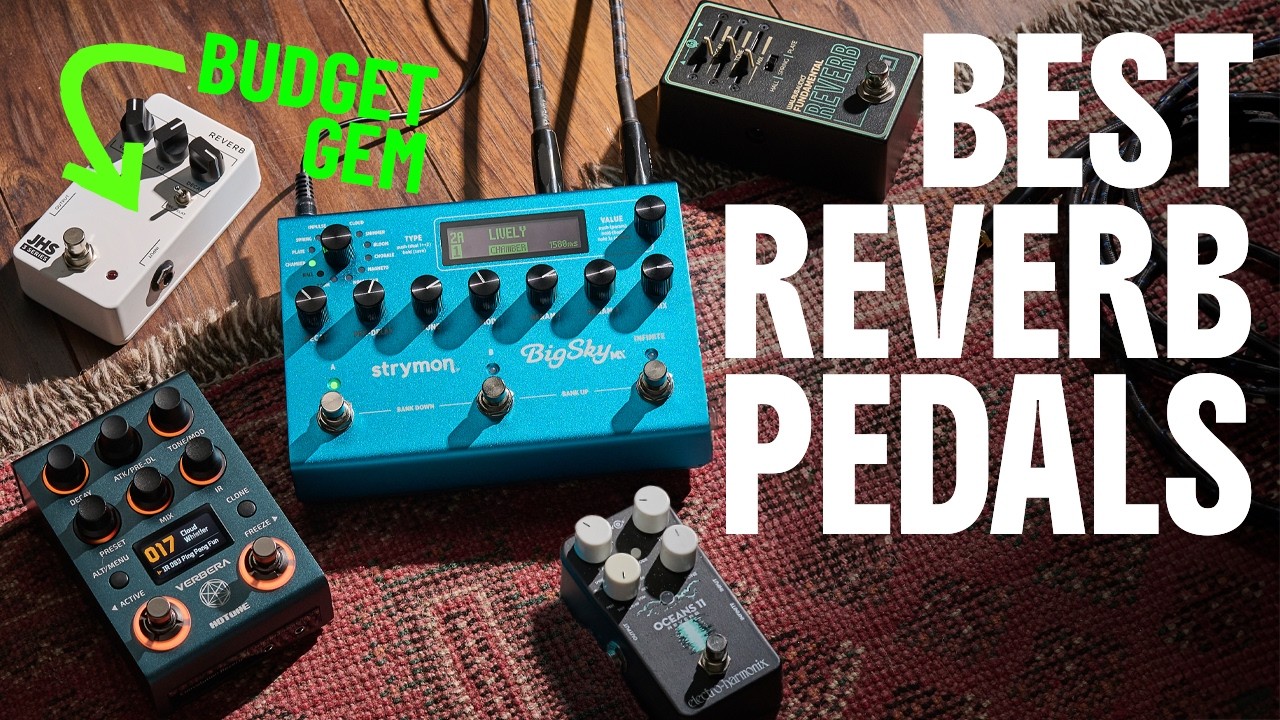
Recently, some of my colleagues on the Guitar World team decided to pit all of the best reverb pedals against one another in a YouTube video (linked below). As well as testing those properly expensive workstations containing myriad reverb algorithms and impulse responses, we had to look at those at the other end of the spectrum. There’s all manner of cheap reverb pedals available these days, and the 3 Series Reverb is one of the cheapest out there at just $99.
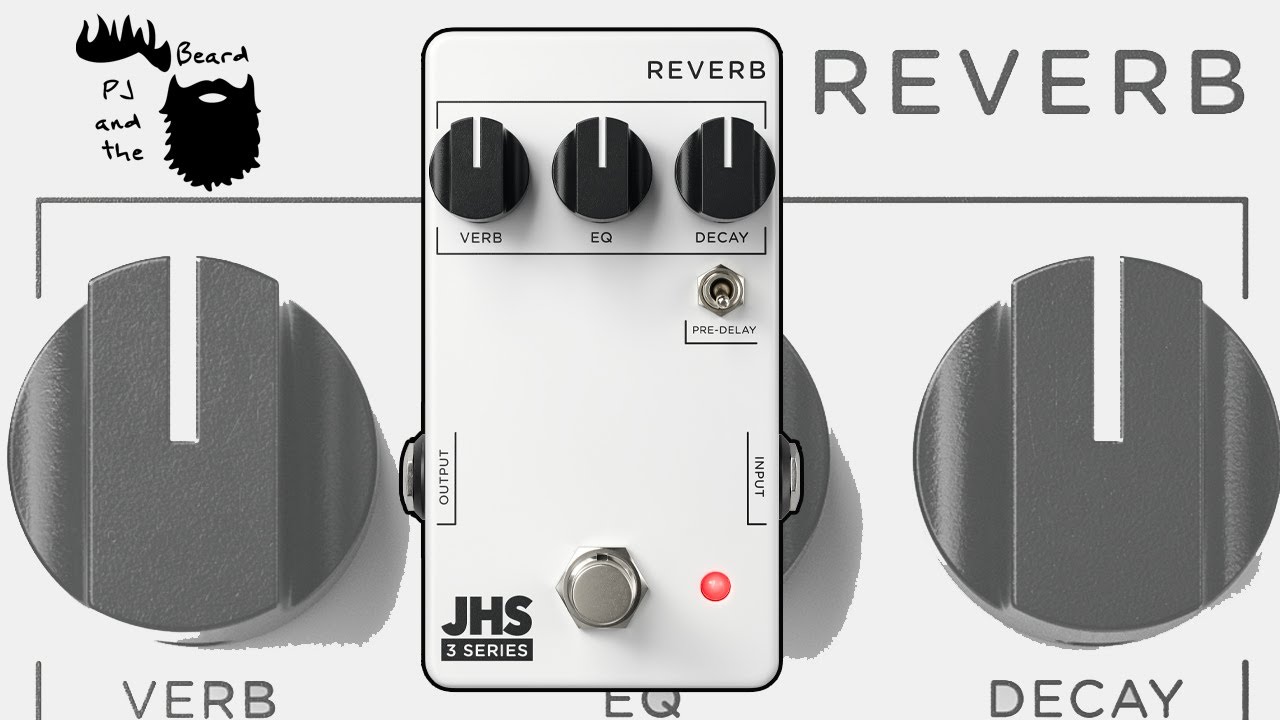
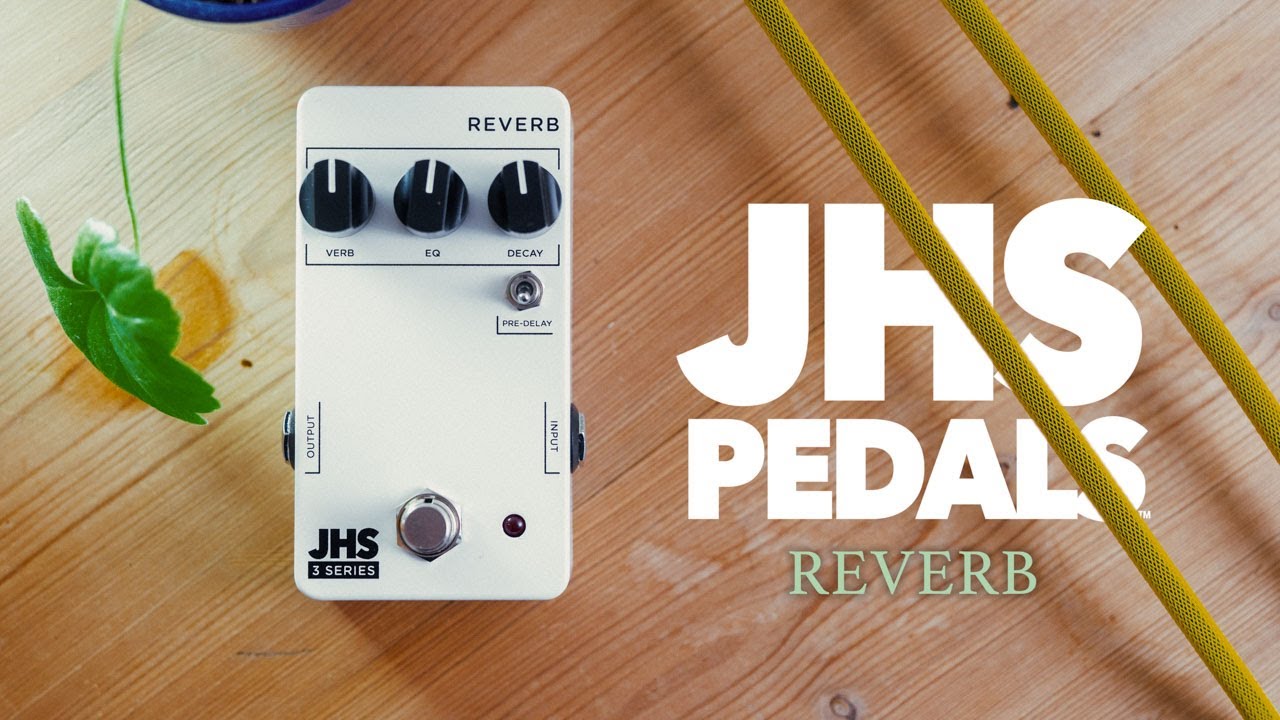
The 3-Series pedals all feature the exact same chassis and lineup of 3 controls plus a toggle switch. On this pedal, we have a verb control, an EQ knob, and a decay control. The single switch is a pre-delay, which slightly delays the time it takes for the reverb to start by a few milliseconds, making the start of your notes much clearer.
It’s got a simple 1-in, 1-out connectivity via 1/4-inch connectors, and takes a 9V DC pedalboard power supply that draws 74mA. You can’t run it on a 9V battery, so pedal power is your only option here. And that’s your lot. It may not sound like much, but as we’ll find out, it’s very much a wolf in sheep's clothing.
Specs

- Launch price: $99 | £90 | €114
- Type: Digital reverb pedal
- Controls: Verb, EQ, decay, pre-delay
- Features: N/A
- Connectivity: 1 x 1/4-inch input, 1 x 1/4-inch output
- Bypass: True bypass
- Power: 9V DC, 74mA
- Dimensions: 112.27 x 60.45 x 30.99mm
- Weight: 0.46 lbs, 0.21 kg
- Options: N/A
- Contact: JHS
Build quality

Build quality rating: ★★★★★
The chassis is very simple with its all-white build and plain black writing. It looks like those generic store-brand items you used to get in the 80s. All-white packaging and exactly what it does written on the tin or the carton in big, black, bold lettering. Some will love it. Those who like their unique-looking pedals with intricate artwork will likely hate it.
One thing I can say about it is that it certainly feels robust. Like those cans of generic pork & beans, this pedal would definitely survive an apocalypse with its die-cast aluminium construction. The powder-coated matte white finish is textured and feels durable enough to put up well with on-stage abuse.

The knobs are all firmly attached with a travel that’s not too soft or too firm. The pre-delay switch clicks satisfyingly into place, and the footswitch offers a similarly sturdy feel that leaves me in no doubt it can survive some serious stomping. It gives a satisfying click when you depress it, not the clacking sound of a super cheap pedal, but not a soft-touch, silent switch that you might find on something pricier.
Usability and features

Usability and features rating: ★★★★☆
Actually using the 3-Series Reverb is a doddle
Actually using the 3-Series Reverb is a doddle, even if it’s your first reverb pedal. The verb control dictates how much of the reverb you hear, while the EQ makes the reverb itself brighter when you turn to the right, or darker when you move it to the left. The decay control determines how long it takes for the reverb to stop reverberating. It doesn’t have spillover, so ambient users be wary: when you turn the pedal off, your reverb tails will cut off.

With just the three controls, it’s super easy to start dialing in tones, and I can’t see many struggling here. For complete beginners, it would be nice if it was clearer when the pre-delay is on or off. A new ear might be well-honed enough to understand what’s happening here, and the graphics don’t make it super clear. For clarity, putting the toggle switch in the up position engages the pre-delay.
Sounds

Sounds rating: ★★★★☆
Plugging in a Sire S7 HSS Strat-style guitar and running the pedal through the clean channel of my Orange Rocker 32 tube amp, I start with all of the controls at the 12 o’clock position, and the pre-delay switch set to off. As you might imagine, it’s quite a neutral reverb sound, present, but it doesn’t overwhelm your tone.
I’d describe it as a medium room setting, adding a nice tail to what I’m playing without completely masking the original note. Setting the EQ all the way to the right brightens the reverb up, making it a lot more present during my playing. Heading the other way darkens it, which has the same effect as pushing it back in the mix and making it more subtle.

The tail takes a good 15 seconds to die off
With the reverb and decay settings on max, the tail takes a good 15 seconds to die off. It makes it great for those cavernous post-rock noodlings, although on this setting it drowns out your initial pick attack. Putting the decay back to the middle point and turning the verb all the way down, the pedal gives you complete zero. With the verb back up to 9 o’clock, it’s a very subtle room sound, great for adding a touch of life to the tone without it being obvious it’s there.
With the pre-delay engaged and the settings back at 12, the pedal delivers a very short reverb, almost delay-like in its quality. It’s subtle when I arpeggiate chords gently, but strike the strings hard, and it comes back at you like the reflection of a snare drum off the back wall at a live show.
The pre-delay makes things much more well-behaved with the verb and decay settings cranked, too. That milliseconds pause before the tail kicks in lets your notes cut through while still keeping those synth-like pads of the reverb tail undulating beneath your playing. It makes moody tremolo-picked guitar lines stand out much better, while still sounding like you’re playing them from a glacier cave.
Verdict

It’s hard to knock the JHS 3-Series Reverb when it’s so cheap
It’s hard to knock the JHS 3-Series Reverb when it’s so cheap and does its one job perfectly. I was surprised at how much variety of sound there is in it despite the simple design, and that’s exactly the thing that people will either love or hate about it. For beginners or those with simpler needs, this is a lot of pedal for just $99. It can go from barely there room sound to a drawn-out blooming reverberance, making it a very versatile option for those on a limited budget.
For more experienced players or those who love to endlessly tweak, you’ll probably run out of things to do with this pretty quickly. There’s no preset saving, no expression functionality, no MIDI, nor any of the other fancy features we often associate with a modern reverb pedal. If you’re gigging a covers band and need something that can play a lot of roles, this isn’t the reverb pedal for you.
Guitar World verdict: Simple to use, cheap, yet great quality, it’s easy to see the JHS 3-Series Reverb as one of the best budget reverb pedals going. It’s got a surprisingly big range despite the simple 3-knob layout, and the pre-delay function makes the really ambient stuff a lot more usable. Those after really tweakable delay sounds probably won’t find much here to love, but if you want a single reverb tone for your pedalboard that doesn’t cost much, this is a low-cost way to add it to your rig.
Test |
Results |
Score |
|---|---|---|
Build quality |
Ultra-rugged, nothing to worry about here |
★★★★★ |
Usability and features |
t’s super easy to use, but lacking in features |
★★★★☆ |
Sounds |
Capable of a decent variety of sounds, but limited versus others |
★★★★☆ |
Overall |
A solid reverb pedal for not a lot of money |
★★★★☆ |
Also try
Hands-on videos
PJ and the Beard
Eirik Stordrange
Rabea Massad