


Whether you're looking to subtly thicken your guitar tone, or send it to the exosphere, our pick of the best delay pedals will get you there. Pretty much every guitarist in the world has a delay on their 'board in one form or another, and that's because it's a hugely versatile effect that can play a lot of different roles.
Very basically, a delay pedal makes a copy of the note you've played and plays it back to you. Depending on the settings of the delay pedal, it could be a quick, single repeat of the note, or endless, slow repetitions of your playing. Delay pedals offer a world of tone-shaping, dimension-expanding potential, and one that quite literally adds multitudes to your guitar sound. From the early days of tape and oil-can delay units to the ultra-modern digital algorithms of contemporary stompbox workstations, there’s a huge variety of sounds and effects on tap for guitarists of every discipline. The trick is finding the sounds you want for your own playing.
Luckily for you, this list is a solid representation of the best delay pedals on the market right now – and runs the gamut, from simple analog delay circuits to atmospheric digital workstations. Whether you want a practical delay for subtly widening your sound or an exospheric ambient-guitar experience, you’ll find the delay pedal for which you seek in the following entries.
For us, the coolest delay pedal on the market right now is the Line 6 DL4 MKII. Not only does it contain a massive 30 sounds that range from vintage to modern, but it also features reverb patches and a built-in looper. If the DL4 sounds a little overwhelming, check out the Boss DD-3T, which is incredibly versatile and one of the most popular delay pedals of all time.
If you want to learn more about delay, we've got a helpful comparison of analog and digital delays to point you in the right direction. We've also compiled answers to key questions in our FAQs section for those who want to learn more.
Best overall

✅Buy if you want the ultimate selection of delays: Packed to the brims with different delay tones, plus a whole suite of reverb tones, the DL4 is a who's who of classic and modern delay sounds.
❌Avoid if you want simplicity: You might not need a million different delay tones, in which case the DL4 will almost certainly be overkill.
At this point, you could probably call the original Line 6 DL4 a classic pedal. This rather giant delay pedal changed many players' perceptions of digital stompboxes and turned the entire pedal world on its head.
With the original being released way back in 2000, we were well overdue for an upgrade - enter the Line 6 DL4 MKII. This newly updated - and shrunken down - delay unit most definitely meets our expectations, delivering the traditional delays we've all come to know and love with a few valuable extras.
The DL4 MkII comes fully loaded with 15 MKII delay sounds as well as 15 Legacy settings. Better yet, you even get an expanded internal memory that allows the looper to record 120 seconds in mono or 60 seconds in stereo! If that's not enough for you, you also get some high-quality reverb sounds thrown into the mix, essentially making it three pedals in one.

"Major kudos go to Line 6 for preserving the core of the DL4’s intuitiveness and widespread appeal in the MkII – whereby the simple joy of rotating knobs and hitting footswitches unleashes a multitude of delay textures without the fiddly nuisance of LED screens or display menus."
Read more: Line 6 DL4 MKII review
Best digital delay

✅Buy if you want simple digital delay tones: Still regularly used by pro guitarists, this updated version of the iconic Boss DD-3 adds in a tap tempo and rearranges the outputs to make it much easier to use.
❌Avoid if you want lots of choice: The DD-3T does it's sound really well, but it's still just one sound so look elsewhere if you want more variety in your delay tones.
The Boss DD-3 has been the staple digital delay for 30 years, and the reason is no secret - it simply sounds amazing. Pristine delays, a pleasant overall timbre, and an EQ profile that works equally well in a band context or studio mix, make this a no-brainer for everybody from bedroom musicians to pros.
With the latest update, Boss has improved the base functionality of the DD-3 by adding a tap-tempo input, allowing you to use an external tap source to control the delay time. This allows you to get your delays in time with the rest of the band on the fly. They've also changed the position of the direct output jack, moving it to the left-hand side which makes a lot more sense.
Apart from that little else has changed with the actual sound and look of the DD-3T. It still features delay times in ms with 50, 200, 800, and a shot loop setting. The level, feedback, and time knobs are exactly the same too. It's very much an 'if it ain't broke...' type deal, and with the Boss DD-3 still appearing on pedalboards even now, Boss doesn't need to change it all that much.

"The DD-3T provides the exact same beloved sound quality that made the DD-2/DD-3 such a perennial favorite with so many gifted guitarists for the last 37 years or so. With new features plus the more logical configuration of the output and direct out jacks on the same side, the DD-3T is a worthy replacement for the DD-3 that will keep its legacy going strong for decades to come."
Read more: Boss DD-3T review
Best tape delay

✅Buy if you want iconic tape tails: Based on the classic delay unit, the RE-202 gives you vintage delay sounds aplenty with the usability of a modern digital delay pedal.
❌Avoid if you like modern sounds: As it's based on an old recording unit, this won't do pristine, clean digital delay sounds.
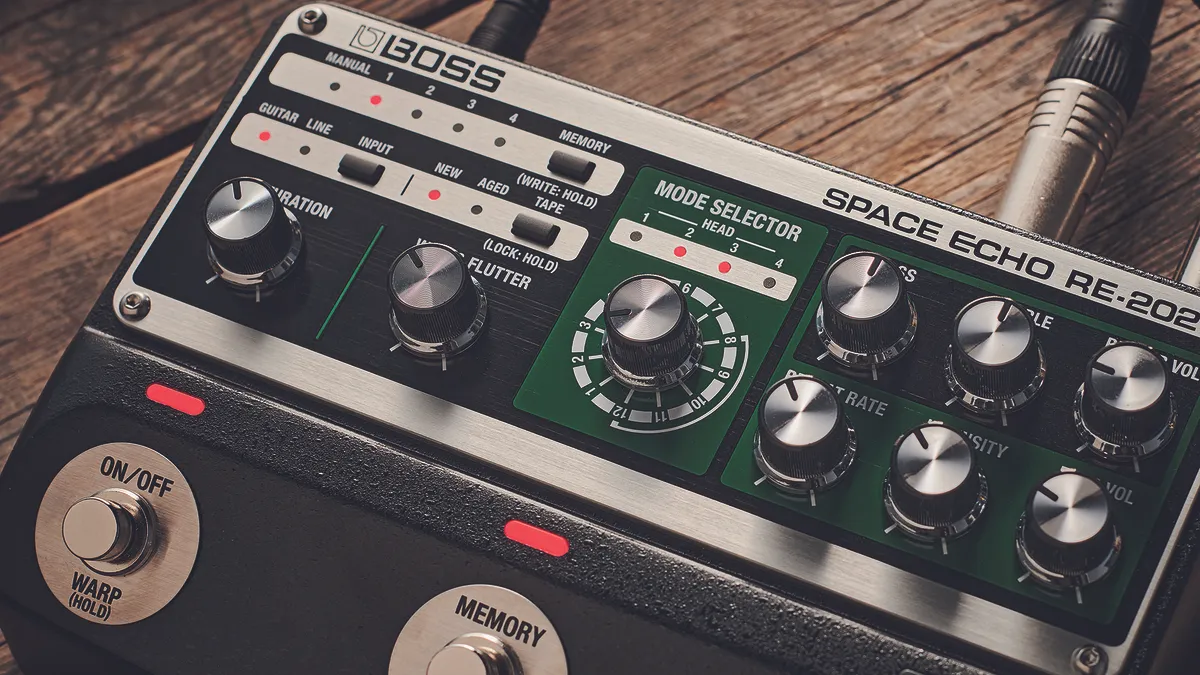
Based upon one of the legendary delay machines of music history, the Boss RE-202 Space Echo gives guitarists the sound of a Roland RE-201 in a compact form, minus any of the associated hardware maintenance costs. Carefully constructed using a pristine, original RE-201, this incredible tape delay is about as close as most of us will get to the real deal.
One of the things that draws guitarists to tape delays is the organic and sometimes unpredictable sounds it can create. Whereas with the original tape machine, you’d be at the mercy of its idiosyncrasies, with the RE-202 you have full control over the Wow, Flutter, and saturation sounds, as well as the ability to adjust the individual tape heads - something not possible with the original.
What it adds up to is probably the most accurate Space Echo sound we’ve ever heard, and undeniably one of the best tape delay pedals going. There’s loads of connectivity too, so you can use an expression pedal to control parameters, including the famous feedback into oscillation. It runs in stereo or mono and features MIDI control too.

"Boss has got this just right: the RE-202 accurately reproduces Space Echo sound while going way beyond the capabilities of an original Roland RE-201. If you’ve ever wished to have a Space Echo in your rig but thought it impractical, now you can do it with total confidence."
Read more: Boss RE-202 Space Echo review
Best analog delay

✅Buy if you want analog delay: With its warm, lush-sounding delay tails, the Carbon Copy is one of the most popular analog delays around.
❌Avoid if you like bright tones: The Carbon Copy is a pretty dark-sounding pedal, so if you want bright, cutting delays you should look elsewhere.
With its gorgeous built-in modulation, the MXR Carbon Copy is a superbly distinctive-sounding pedal. Although it shines when used for a variety of different uses, it's probably most at home in the shoegaze, dream pop, and ambient genres, even cropping up on a lot of post-rock guitarists' pedalboards.
As you'd expect, it's a heavy hitter on its own, but it also stacks well with other delays and creates gorgeous pad-like echoes when put after a drive. It does feature a bright switch to add more high-end to the tone, but it's still on the darker side compared to other digital delay pedals.
Push the mod-switch and you'll get some absolutely amazing sounds, adding a chorus pedal-like tone to your delay tails. It's sparkly yet thick, great for fattening up your tone when used in a quick, slapback style setting, or for getting seriously ambient with a longer delay time and more repeats.
"It has all the lovely analog warmth in its cloud-soft repeats that breathe dimension to your guitar tone, especially in the Bright voicing. In its original mode, the CC Mini mimics the darkly textured repeats of the Carbon Copy, which many players love - including me - that adds a shroud of ambiance to solos and pick chug."
Read more: MXR Carbon Copy Mini review
Best for the studio

✅Buy if you value pristine sound: The Timeline is the gold standard for tweakable digital delays, ideal for studio situations.
❌Avoid if you value simplicity: There's a lot to unpack here, so you're probably best off avoiding this if you like things simple.
The Strymon Timeline was the first big-box delay to offer truly studio-grade tone, with a range of excellent patches and signal processing that could go toe-to-toe with studio rack delay units. It's now a stone-cold modern classic and our top pick if you're looking for a slick, record-ready pedal.
The user interface is slick, with plenty of options accessible on the front panel, but it has to be said that firmware updates on some of its competitors have left it somewhat behind in power-user features accessible to the menu-diving obsessives on units such as the DD-500.
You'll spot the Timeline on a wide array of pro guitarists' pedalboards, thanks to its excellent quality and the depth of available tweaking. If your main concern is the highest-quality sound possible with the simplest interface, it's hard to argue against the Timeline.
Best budget option

✅Buy if you want vintage delay tones on a budget: This analog delay pedal is an absolute steal at below the $50 mark, delivering classic tape tones for much less than others on this list.
❌Avoid if you want lots of choice: This only does a single, analog-style delay tone, so you'll want to look elsewhere for more variety.
If you want the analog, BBD experience but don't want to pay a premium for the privilege, then the TC Electronic Echobrain is a brilliant budget delay pedal. Priced insanely competitively, like much of TC's offerings, you get a lot of pedal for your money here.
The sound here is very organic and one of the things that really impressed us was the level of flexibility in the knobs. From super-fast stuttering to infinite oscillation, there's a lot of expressivity available here. There's a lot of color in the repeats, great for psychedelic and lo-fi sounds.
The enclosure is a little larger than your typical Boss stompbox, but it's by no means huge. Top jacks make wiring it into your existing pedalboard a breeze and the only downside we could find was that the switch activates on release rather than your initial press down, which you can get around by replacing the switch or slightly adjusting your playing style.
Best for gigging
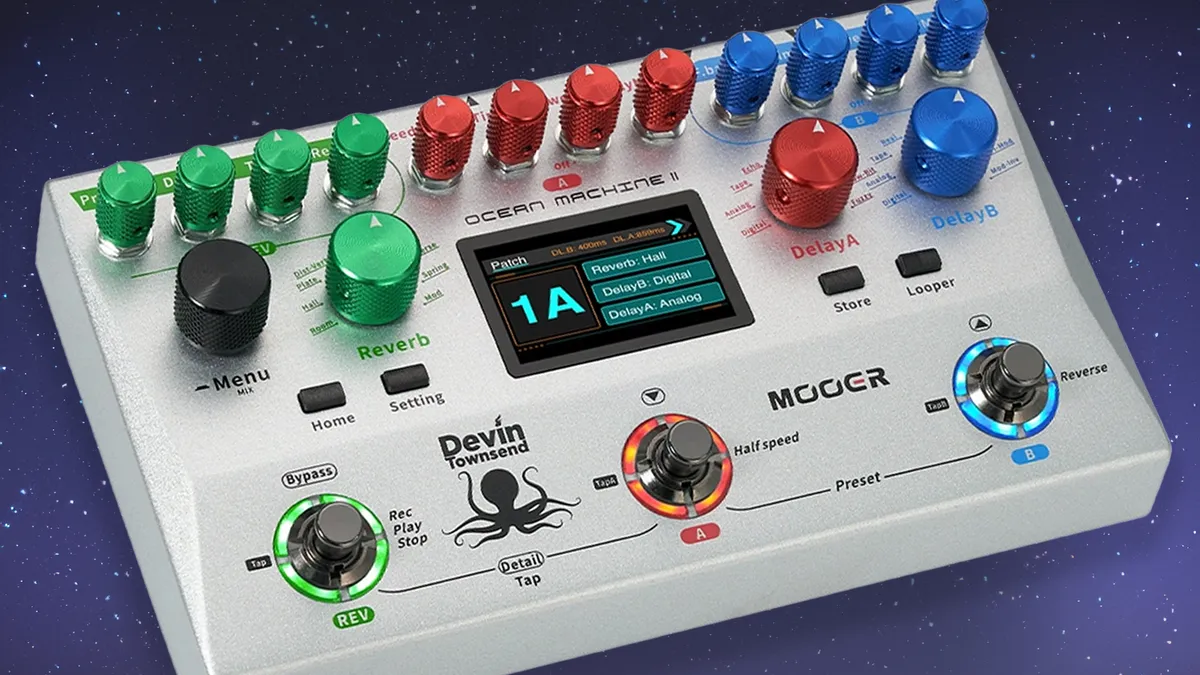
✅ Buy if you want a comprehensive gigging workstation: Extensive I/O and endless algorithmic potential make it easy for this to provide exactly what your touring pedalboard needs.
❌ Avoid if you possess little in the way of patience: You’ll need to familiarise yourself with the manual before you start tinkering properly.
The Mooer Ocean Machine II is a 2nd-gen edition of the brand’s collaboration with Devin Townsend, and an upgrade that brings with it a seriously juiced-up set of features and specs. The same essential elements are here – two delay engines, a reverb engine and a looper – but everything before and behind this core feature-set is new and improved.
On the ‘new’ side of that particular equation is full MIDI support, giving you comprehensive control above and beyond that provided by the on-board knobs and switches. There’s also a new expression pedal input for more conventional control of certain parameters.
There’s a great deal to like about this full-featured workstation, from its stereo I/O to its 2-minute looper and beyond. All that I/O can only be a good thing for the gigging guitarist; this is an affordably-priced one-stop shop for anything and everything you could need on the road.
"Much more than a dual-delay/reverb/looper effect, the Mooer Ocean Machine II is a sophisticated ambient soundscape-generating device that is like an instrument unto itself, which can inspire hours of sonic exploration and composition creation."
Read the full Mooer Ocean Machine II review
Best vintage delay

✅ Buy if you want a permanent answer to your vintage-echo needs: The word comprehensive is used a lot in this guide, but here it means the most; endless ancillary settings, functions, and modes make the Olivera the most full-featured single-sound delay going.
❌ Avoid if you want longer delay times: The Olivera is naturally limited by its figurative form, with short-ish delay times reflective of the OG oil can delays.
Strymon has a great many excellent delay pedals in its roster, but this latest small-ish number is one of its most impressive to date. The Olivera aims to emulate the 50s vibiness of the oil can delay, with all its murky magic. Oil can delays were noisy, unpredictable, and lo-fi before the word ‘lo-fi’ was a twinkle in the milkman’s eye – and the Olivera is the most comprehensive rendering of this sound you’ll ever find.
Though the controls are simple enough – five knobs and a switch to engage the virtual ‘heads’ reading the virtual ‘can’ – the Olivera is deep as anything. Various sub-functions and power-up modes make this a real workhorse of a pedal, including a hidden tone function, infinite repeats, and a ‘spillover mode’ that enables trails even when switching presets (of which there are 300, accessed via MIDI or Strymon’s MultiSwitch expression accessory).
Stereo I/O means it can handle a variety of different signal chains, the expression input enables control of multiple parameters at once, and USB-C connectivity enables both firmware updates and MIDI I/O. Oil can delay has never been so viable – and your tone has never been so vibey.

"If you find yourself bored with run-of-the-mill delay pedals, the Strymon Olivera may very well be the pedal for you. In true Strymon fashion, the pedal is expertly put together, intuitive to use, and sounds fantastic. Be warned, though, this pedal has relatively short delay times, so those seeking longer echoes will want to look elsewhere."
Read the full Strymon Olivera review
Best for soundscaping

✅Buy if you want soundscapey ambience: The Encounter combines classic delay emulations with some more esoteric fare, as well as some spooky reverbs.
❌ Avoid if you want a simpler delay: Six parameters, alternate functions, CV control and MIDI are not necessities for good delay sounds.
Source Audio is well and truly The Business when it comes to digital effects and algorithms – and its once again proving it with the Encounter, a dual-stomp pedal taking after the prior and popular Ventris, Nemesis and Collider stompboxes.
This isn’t strictly a delay pedal, either, being that equal space is given to delay and to reverb. There are six algorithms for each, which can be assigned to either of two effects engines and engaged independently. You can run these engines in parallel, split stereo or in series whichever way you choose; though each side of the pedal is labelled for a specific effect, there’s nothing stopping you loading a second delay algo to the reverb side for dual delay or another flavour.
There’s up to 128 presets on offer in the Encounter, though only eight of them can be accessed straight from the pedal itself; you’ll need to utilise the 5-pin DIN MIDI port on the side to access all 128. Atop the pedal, you’ll find both an expression pedal input and a CV jack for independent control of effects parameters – great for adding movement to those rich, vibey soundscapes made possible by a variety of intense time-based algorithms. An adventure in time and space, for sure.
"While it is undoubtedly a no-brainer purchase for the ambience freaks, shoegazers and experimentalists among us, the Encounter has wide-ranging functionality as a practical delay and reverb unit that may well be the only one any player would need on their ’board."
Read the full Source Audio Encounter review
Also consider
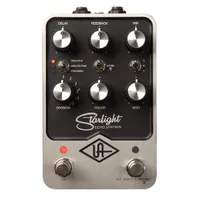
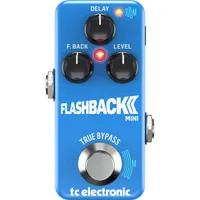
Here you'll find more of our favorite delay pedals. If you didn't find what you were looking for out of our top picks, don't worry there are still load of great options for you!
Glossary

Confused by all the terminology around delay pedals? Our glossary of key terms will ensure you know your bucket brigade from your buffered bypass.
Analog delay - An analog delay pedal is one that uses analog circuitry to create its sounds. On a technical level, it continuously varies electrical signals to mimic a waveform, usually using a bucket brigade device.
Bucket brigade device (BBD) - a Bucket Brigade Device consists of multiple capacitors in a line. The signal passing through fills and then empties each of the capacitors, causing a slowdown in the signal which results in the delay tone you hear.
Buffered bypass - A buffered bypass strengthens the tone passing through your guitar pedal and pushes it through. This gives you a stronger signal when you've got long cable runs in your signal chain.
Digital delay - A digital delay imitates the process of an analog delay signal, using 1s and 0s to replicate a signal being passed through capacitors. The signal gets converted to digital going into the pedal, processed, and then converted back to analog as it leaves the pedal.
Feedback - Feedback in terms of delay pedals refers to the amount of repeats you hear after you play your note. A short feedback means you hear one note, whereas a long feedback setting gives you multiple repeats.
Modulation – Modulation refers to any change you make to a property of a waveform. Amplitude modulation, for instance, would see the volume of a sound increased and decreased regularly over a period of time – aka tremolo. Frequency modulation, meanwhile, would see pitch increased and decreased over time – aka vibrato. Modulation is often paired with delay to create movement or to emulate the imperfections of tape delay.
Oil-can delay – Oil-can delay is a type of delay wherein a rotating drum has audio information written onto it, which is then read by a pickup. Oil inside the drum helps it retain its information over time. It is similar in principle to a tape delay, but with a darker tone and a more atmospheric, indistinct end result.
Oscillation – Oscillation occurs when a signal is fed back through a delay circuit enough to self-sustain, leading to runaway repeats. These endless repeats can be controlled in a number of ways, either as a sound effect in and of itself or as a bed of noise over which you can continue to play.
Repeats - On a delay pedal, the repeat knob usually determines the amount of time between the delays you hear after you play a note. It's also often labeled as 'time' or 'rate'.
Tap tempo - A tap tempo allows you to manually set the delay time by tapping your foot to your preferred tempo. Useful when you're playing with a live band and playing faster or slower than the song's usual tempo.
Tape delay - A tape delay pedal emulates the vintage delays created by analog tape machines from the 60s and 70s. Tape delay results in a warmer and darker tonality with more compression and saturation.
Time - Another way to determine the space between your delay repeats. Also known as 'repeats' or 'rate'.
Wow & flutter - Wow and flutter are terms used to refer to the effect of age upon analog tape machines. As the parts of a tape machine get more worn, small pitch modulation effects happen resulting in unpredictable effects. Wow refers to low-frequency modulation whereas flutter is a less predictable modulation higher up the frequency range.
Analog or digital?

All delay pedals can be basically put into one of two categories – analog and digital. The first ever delay units used tape to replay the guitar signal – we’ve come a long way from there (though these do still exist), with analog delay pedals superseding these.
Analog delays utilize something called a bucket brigade chip. The guitar signal passes through the capacitors within this, which slows it down, or delays it. The sound is often referred to as dark, or lo-fi – your delayed guitar signal’s tone isn’t exactly the same as your dry tone. As you turn up the repeats, you’ll hear the tone slowly degrading, sometimes becoming more ‘warbley’. This unique sound is preferred by many players as it’s full of character. You can also get analog delay pedals to self-oscillate which can be really cool.
Digital delay pedals can replicate your guitar tone pristinely, as many times as you like. Some describe this as sterile sounding, but it’s really subjective and it’s whatever you like the sound of and what works for the music that you play. Many digital delays can also replicate the sound of analog and even older tape units. It might not be the ‘real thing’, but with many of the top end digital delays, it’s pretty much impossible to tell.
How to choose
Always-on or occasional use?
It’s an innocuous question, but one that can also have some positive impacts for your budget – how often are you wanting to use your delay? If you envision a specific sound for a solo or two, you won’t be relying as heavily on the tone of your chosen delay than if you’re looking for an always-on affair. You might find a delay that sounds like the specific sound your solo or section needs, and be effectively sorted.
What sounds do you want?
Of course, sound is the fundamental consideration – and again, could positively impact your budget and pedalboard size. If you only want one specific sound, then you don’t need a massive delay workstation with dozens of effects and parameter controls; a simple three-knob stompbox, like the MXR Carbon Copy, could be just the ticket. Look out for pedals that emulate specific delay sounds, too, like Strymon’s oil-can-aping Olivera or Boss’ tape-echo RE-202.
If you want access to a multitude of options, whether to experiment at home or to have a palette of sounds on stage, you’ll probably want a digital delay with a few presets or algorithms. Some will also have the opportunity to save presets for instant recall, which could be essential for seamless performance.
How much control do you want over your sound?
Control is a good thing, but too much control can be paralysing. If you only want a subtle slapback or echo to liven up your tone, you won’t be in need of more than a few simple controls to find the effect you need. If you’re a natural-born tinkerer, though, or someone with highly specific expectations, you may value having the ability to really tweak and personalize the sound exactly to your liking. Effects pedals that let you get granular with your controls are also more likely to have more sounds and effects to offer you.
What features do you need?
The sound is central to your choice of delay pedal, but the feature sets on offer in each can be an excellent way to narrow down your shortlist. Gigging guitarists with complex pedalboards and wide-ranging setlists will have more need for preset banks, expression control, and MIDI functionality than someone playing at home or who spends their time primarily in the studio.
There are also specific features that might be make-or-break for you. Not all delay pedals have tap-tempo functionality, for instance, which lets you tap the tempo with your foot so that you can easily get the delay time you’re after, or match your delay with the bpm of the music you’re playing along to. Likewise, you might be after the oscillatory capabilities of an analog delay circuit or emulation, which aren’t always present in some digital pedals.
How much space do you have on your pedalboard?
Lastly, how much space do you actually have on your pedalboard? Pedalboard real estate is scarce at the best of times, and you might not have room for a 12-knob, three-switch megalith. Footprint is a key consideration, especially if you’re gigging or moving your pedalboard around a lot – but it’s a trade-off, particularly if your ideal delay pedal serves four or five different needs in one.
Relatedly and as a final note, it’s worth considering the power requirements of your shortlisted delay pedals. Your pedalboard power supply can dictate what’s actually possible with your remaining pedalboard space, unless you’re OK adding another wall wart into the mix for bigger delay units.
FAQs

What does a delay pedal do?
A delay pedal makes a copy of the note you've played and plays it back to you. Depending on the settings of the delay pedal, it could be a quick, single repeat of the note, or endless slow repetitions of your playing.
Where should I put my delay pedal?
The general rule for pedal order is that your delay pedal should go after your drive and modulation, but before your reverb pedal. That said, there are no hard rules for pedal order, so if you want to experiment with the order of things, go for it!
The earlier in your chain you place your delay pedal, the more its delayed output (or ‘wet’ signal) is affected by your pedalboard; if you want a washed-out, shoegazey guitar sound, putting your delay at the start of your chain can make for some wild, crunchy trails that mingle indistinctly with your own playing.
The kind of delay pedal you have impacts the potential results of your experiments, of course. If you have a workstation delay with a looper built in, you might not have so much fun navigating the effect of all your effects on your recorded playing (unless you’re a sound artist or prefer not to bake effects into your loop recordings). Similarly, delay pedals with additional modulation effects built in might get muddy with additional effects processing, where simpler delays produce slightly more repeatable sounds (geddit?).
It’s also worth mentioning here that some pedals are probably better off before your delay, including your tuner pedal and any compressor pedals you use to even out your playing dynamics. Still, and with these caveats in mind, there’s no harm in moving things around in the name of science!
Why do I need a delay pedal?
You don't necessarily need a delay pedal, but your tone will be awfully dry without one. Using a delay pedal, particularly on lead guitar sounds, adds a sense of space to your tone on medium to long settings. Similarly, you can thicken up your general guitar tone with a fast, slapback-style delay.
There’s a delay sound for every occasion: translucent dotted-eighth delays for The Edge’s trademark U2 jangle; David Gilmour’s rich tape-echo solo textures; Kele Okereke’s glitchy digital Bloc Party prangs; Daniel Rossen’s washed-out Grizzly Bear flourishes; woozy, oscillating Cocteau-Twins-y delays. And, of course, there’s everything in between and beyond, from twangy country slapbacks to post-rock soundscapes.
What’s the difference between analog and digital delay pedals?
All delay pedals can be basically put into one of two categories: analog and digital. The first ever delay units used tape, wire, and even oily rotating drums as mediums through which to replicate a guitar’s signal, and, though these still exist through vintage units and faithful (and expensive) reimaginings, we’ve come a long way from these bulky, sometimes-complicated, and often-unreliable technologies.
Analog delay pedals utilize something called a bucket brigade chip. This chip uses clever analog circuit design to store and release incoming signals, resulting in a delayed output. This output is less clean than your guitar’s tone and is often described as dark or lo-fi. As you turn up the repeats, you’ll hear the tone slowly degrading, sometimes becoming more ‘warbly’.
This unique sound has gained a following of its own amongst guitarists, thanks to its characterful contribution to tone. You can also feed the output of the chip back into itself, enabling the BBD chip to self-oscillate – a cool effect of all its own.
Digital delay pedals, meanwhile, eschew analog circuitry in favour of 1s and 0s. Your guitar tone is converted into digital audio information inside the pedal, which is then affected by code as opposed to components. Digital delays, at their most basic, are clean and even pristine; audio from your playing is captured and repeated with great accuracy.
Delay algorithms are used to alter the character and tone of the sound, and different delay algorithms can enable digital delays to replicate the sound of analog delays, whether BBD pedals or even older delay tech. It might not be the ‘real thing’, but with many of the top-end digital delays, it’s pretty much impossible to tell – not to mention much more reliable.
How we test

Here at Guitar World, our team of writers consists of seasoned musicians with a shared passion for all things delay. Many of us use the delay pedals on this list in our own rigs, so we bring our collective experience from live performances, studio recordings, and a genuine love for experimenting with sonic landscapes.
When it comes to selecting the best delay pedals, we delve into nuances such as delay types, versatility, build quality, and how each pedal integrates into different musical contexts. We've rigorously tested these pedals in a diverse array of sonic settings, from dialing in ambient dreamscapes to fattening up gritty rock riffs. Our recommendations go beyond the specs to ensure they meet the demands of amateur enthusiasts and professional players.
Each recommendation results from meticulous testing and a commitment to providing insights that resonate with the diverse needs of guitarists, from those diving into their first pedalboard to seasoned players seeking that next dimension of tone. The writers at Guitar World are here to be your companion in navigating the expansive world of delay pedals, helping you achieve the perfect sound for your musical journey.
Read more about how how we test products and services and how we make our recommendations.
Why trust us?

☑️ A global audience of 3.8 million monthly
☑️ 1,200+ reviews on GuitarWorld.com
☑️ 30+ years of product testing at Guitar World
Guitar World boasts over 44 years of expertise and stands as the ultimate authority on all things related to guitars. The magazine and website feature expertly written gear round-ups and top-quality, authoritative reviews penned by a team of highly experienced industry professionals.
Guitar World's inaugural print issue hit the shelves in July 1980, and ever since, it has been captivating players and enthusiasts with engaging lessons, insightful interviews with the biggest guitar heroes, and priceless buying advice for newbie players.
Furthermore, GuitarWorld.com continues this legacy online and serves as the hub of the world's foremost authorities on guitar playing. The site not only hosts content from Guitar World but also showcases articles from respected publications such as Guitarist, Total Guitar, Guitar Techniques, and Bass Player. With a reach extending to 3.8 million players each month, GuitarWorld.com is a go-to destination for guitar fanatics globally.

