




Guitar World Verdict
Strymon's first all-analog pedal is a triumphant success, offering a unique approach to tube-style drive tones that will breathe fresh life into your gain staging.
Pros
- +
Unique drive tones that offer something fresh.
- +
Sag control is a great addition.
- +
Versatile selection of tones, from gritty drives to spitty fuzz.
- +
Foolproof control layout.
Cons
- -
Bright switch could be more reactive.
- -
Wouldn't say no to an additional tone knob.
You can trust Guitar World Our expert reviewers spend hours testing and comparing guitar products so you can choose the best for you. Find out more about how we test.
What is it?
Strymon is one of the biggest names in the digital effects world, having cemented its reputation as one of the very best in the business thanks to a catalog that comprises the likes of the industry-conquering BigSky reverb, Swiss army Deco tape saturation pedal, John Mayer favourite Flint tremolo/reverb, revered TimeLine delay pedal and more.
But the Fairfax that we have here represents a completely different prospect. Why? Well, because it’s the company’s first-ever all-analog pedal. Unlike its previous builds, Strymon has opted for a fully analog circuitry that promises to deliver authentic saturated amp-style drive tones from what can only be described as a no-nonsense, foolproof overdrive pedal. Well, kind of an overdrive pedal.

As someone who, like Mayer, sees the Strymon Flint as an indispensable part of their pedalboard these days, and who has admired many of the company’s effects both from afar and up close over the years, I was especially excited when I caught wind of the Fairfax’s release.
An all-analog Strymon pedal? Inspired by old-school amp drive tones? That is small enough to fit on my pedalboard?! It was an enticing prospect. Not only that, it had an interesting design brief.
This wasn’t just a drive pedal – Strymon itself wouldn’t call this strictly an overdrive pedal. The Class A Output Stage Drive was modeled after a vintage Garnet Amplifier’s Herzog tube drive, famously favored by Randy Bachman on Guess Who’s American Woman – in essence, it’s a miniaturized tube circuit in a pedal. Who doesn't love those?
Specs

- Launch price: $199 | £199 | €229
- Type: Overdrive
- Controls: Drive, Level, Sag, Bright
- Features: JFET circuitry to channel the Garnet Herzog tube amp used by Randy Bachman
- Connectivity: Mono in/out
- Bypass: True-Bypass
- Power: 9V, DC center-negative, with a minimum of 500mA
- Dimensions: 11.51 cm x 7.19 cm x 5.92 cm
- Weight: 0.28kg
- Contact: Strymon
Build quality

Build quality rating: ★★★★★
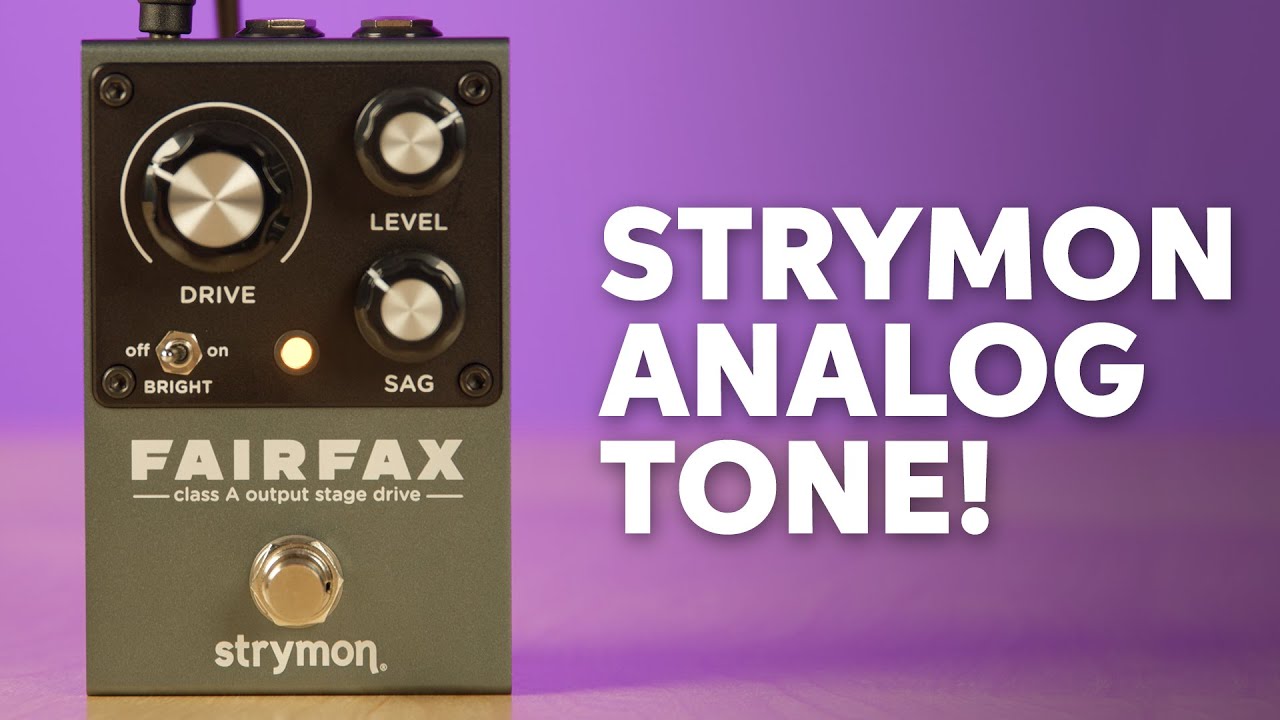
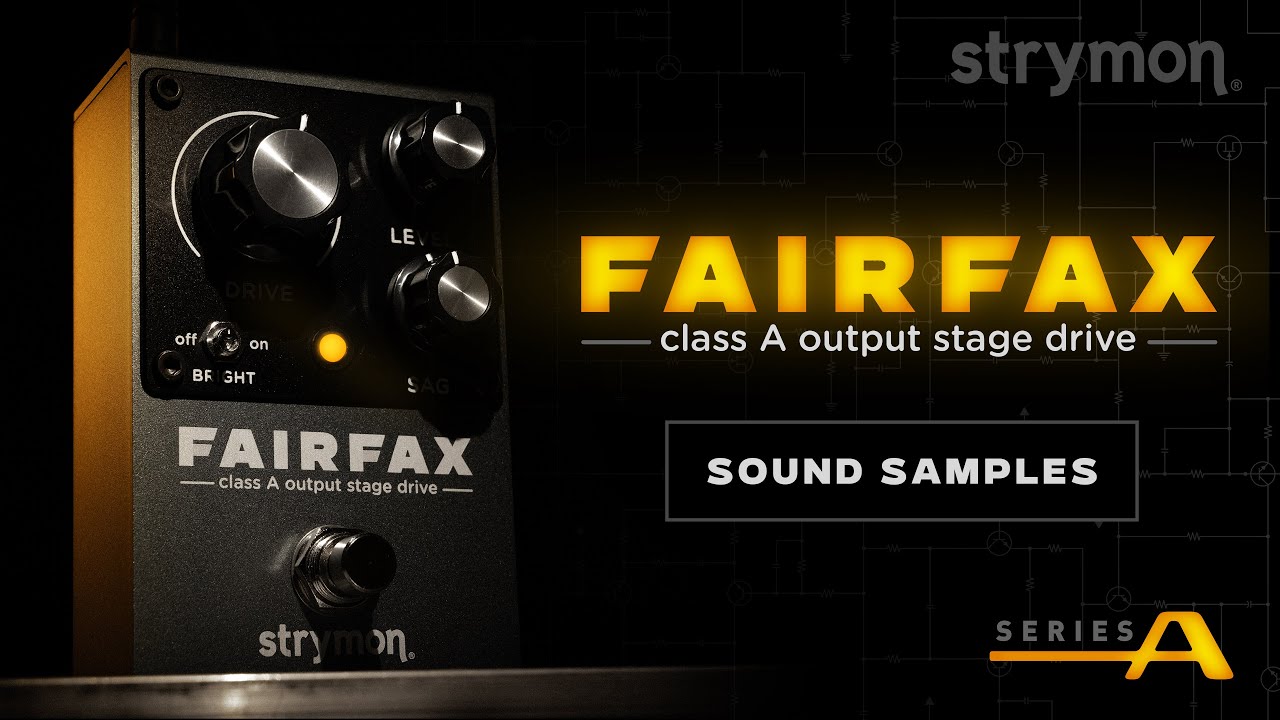
The Fairfax is one of Strymon’s smallest, most streamlined pedals to date, with a sole footswitch, three controls for Drive, Level and Sag, and an On/Off Bright toggle switch for accessing more pronounced higher frequencies.
The Drive knob is the largest of the three – which makes sense, given it probably gets the most use here – while the Bright switch is underneath. Level and Sag, situated on the right hand side of the pedal, are slightly smaller.

It’s a really compact pedal with an interesting circuit stuffed inside. The source material utilized a 12AX7 and 6V6 layout, and here Strymon has aimed to capture that using JFETs and a transformer-based power supply that gives the Fairfax some serious juice.
Nothing about this gives me cause for concern. The pedal looks sleek, in a stylish shade of muted green, and feels industrial and robust, and yet is small enough to fit on my ‘board. The controls have the satisfying feel in travel I'd expect from this brand too.
A small point, but I also like the slightly-more-square chassis of this one – sets it apart from my standard pedals and visually differentiates it from other typical drive boxes.
Usability

Usability rating: ★★★★½
Strymon has done a great job of channeling the original’s vibe while making it suitable for modern rigs
There are no entry barriers to dialing in tones here, which is always a telling sign of a good workhorse pedal. Strymon pedals, especially the bigger ones, can sometimes be quite daunting to get around, but this here is refreshingly simple. As mentioned, the control layout is streamlined and it requires little work to get some nice Bachman-aping amp tones straight from the get-go.

On the whole, the controls are nicely responsive with decent sweeps, but – and I’ll get to this in the next section – I found the Bright switch to be something of a passenger on the pedal. In my testing, it didn’t add too much, nor did it provide anything drastically different, and I think the pedal could have done without it.
An additional tone-shaping knob – for tailoring some of the frequencies, for example – would have been nice. That said, the OG Herzog only had two control knobs, so I can’t be too harsh. Strymon has done a great job of channeling the original’s vibe while making it suitable for modern rigs.
Sounds

Sounds rating: ★★★★½
What I like about the Fairfax is, because of its design brief, it delivers an overdrive flavor that conventional drive pedals can’t really recreate – especially with the added Sag control. Unlike the classic mid-boost gain and high-distortion pedals that are absolutely everywhere, the Fairfax focuses more on the old-school amp tones that inject a really unique dimension to a pedalboard.
With Sag rolled all the way off and the Drive around the 2 o’ clock position, you can get some fiery gain tones that sound like a cranked vintage amp. Roll back Drive and bump the Level and it tidies up nicely – not really to the point where it can be used as a clean boost, but great for gritty rhythm playing.
Diming Drive, knocking back level will give you proto-distortion tones, but not to the extent where things become overly gain-y. You still get the clarity and character of your clean signal, but it gets dressed in a really nice, thick coating that is infinitely inspiring and fun to play with.
But it’s the Sag control here that is the real MVP. The higher you crank it, the spittier the tone becomes. When it’s maxed up, you get that lovely dying-battery-esque tone that sounds like your signal is fighting for its life. Paired with a cranked Drive knob and you get some wonderfully strangled, almost gated fuzz-like effects, while knocking back the gain gives it a lo-fi sound that offers plenty of character.
It brings something completely different to the table and in a world of clones and copies, Fairfax feels like a breath of fresh air
Is it the most usable drive tone out there? Probably not, and you might get more mileage out of one of those aforementioned mid-boost gain pedals, but – for my money at least – you won’t have as much fun with any of those.
It brings something completely different to the table and in a world of clones and copies, Fairfax feels like a breath of fresh air. It also stacks surprisingly well with other pedals – even when it’s especially sag-heavy – and paired beautifully when run through a Fender Blues Junior and a Quad Cortex mini in different setups.
Verdict

You don’t have to be a Randy Bachman fan to enjoy it
A breath of fresh air in a world of clones and copies, Strymon’s first foray into the world of all-analog pedals is a triumphant success. It could have played it safe with a more familiar circuit, but Strymon has been rewarded for its decision to bring a niche and oft-unexplored tone to the mainstream.
It might not be the most usable gain pedal you’ll have on your pedalboard, but I dare say it could become an indispensable one – and one that you’d struggle to channel with a conventional overdrive. Relatively redundant Bright switch aside, this is a really intuitive and inspiring pedal that brings something new to the table – and you don’t have to be a Randy Bachman fan to enjoy it.
Guitar World verdict: Strymon's first all-analog pedal is a triumphant success, offering a unique approach to tube-style drive tones that will breathe fresh life into your gain staging.
Test |
Results |
Score |
|---|---|---|
Build quality |
Sleek and industrial, built to a pedalboard-friendly size. |
★★★★★ |
Usability |
Streamlined control layout but more tonal tweaking options would be nice. |
★★★★½ |
Sounds |
Loads of tube drive tones on tap, from gritty gain to spitty fuzz. |
★★★★½ |
Overall |
A triumphant first foray into all-analog effects for Strymon. |
★★★★½ |
Also try
Hands-on videos
Strymon
Mike Hermans

Sweetwater