

Guitar World Verdict
Far from a mere phoned-in ‘modern’ rework of an existing model, the Tekton is all-new and feels it; it’s been put together with real care and attention to what today's guitarists need. If you've been waiting for a progressive, contemporary reimagining of the PRS blueprint, here it is.
Reasons to buy
- +
Fantastic-looking update of the PRS blueprint, with lots of very well-considered design features.
- +
The Stylus pickups are really impressive, sounding clear and defined for both low and high-gain settings.
- +
It plays absolutely superbly, and it’s clear that a lot of thought went into making the neck profile and the neck-to-body join as smooth as possible.
Reasons to avoid
- -
The hard edge of the carved top against the picking arm is the sole ergonomic misstep.
You can trust Guitar World Our expert reviewers spend hours testing and comparing guitar products so you can choose the best for you. Find out more about how we test.
What is it?
One could argue that PRS didn't need to come up with “a guitar aimed at “the most discerning, technical players” (they're not just 'metal guitars'), contemporary musical styles and cutting-edge gear setups, as this has been the company's bread and butter for decades.
Even the very first production PRS, the Custom 24, remains immensely desirable among modern guitarists – decades since it was designed.
So a more explicitly contemporary addition to the range could easily look like overkill; it needs to stand apart usefully from the Custom, rather than just packing in a bunch of gimmicks nobody asked for - or it mightn’t be worth the risk at all.
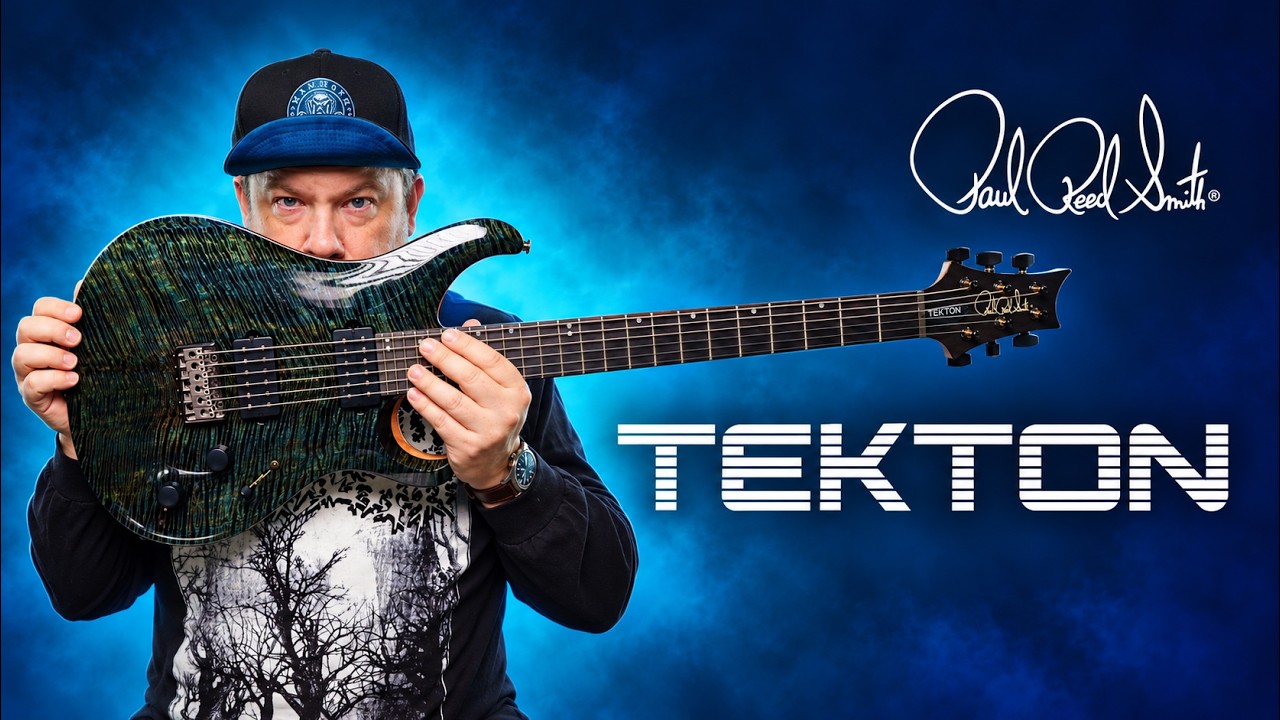
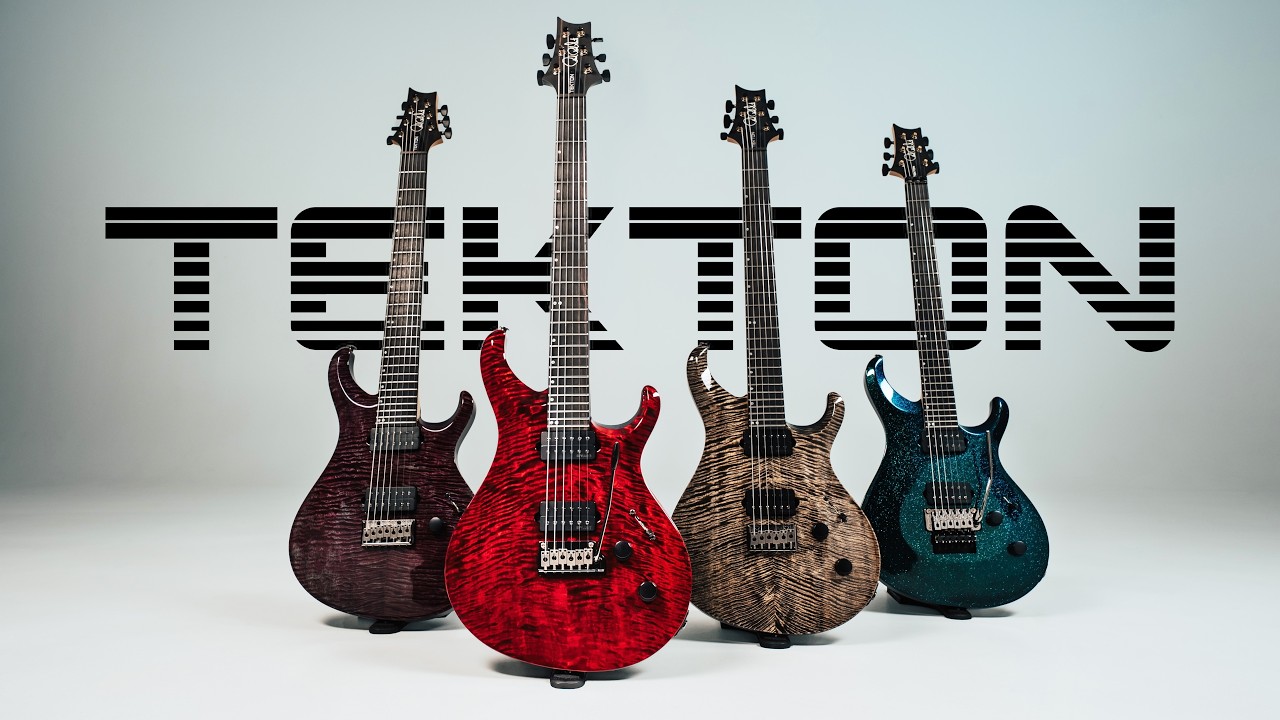
The company has decided to meet the challenge head-on, though, and here's the result – the Tekton range. There are four models, and this is the Tekton T – a six-string with the classic PRS vibrato.
Specs

- Launch price: $$2,899 | £2,899
- Made: USA
- Type: Six-string electric guitar
- Body: Mahogany with figured mango top
- Neck: Maple, satin nitrocellulose finish, Modern D profile
- Fingerboard material/radius: Ebony, 16” radius
- Scale length: 25.5”/648mm
- Nut/width: PRS composite, 42.8mm
- Frets: 24, jumbo, stainless steel
- Hardware: PRS Phase III locking tuners, PRS two-point vibrato
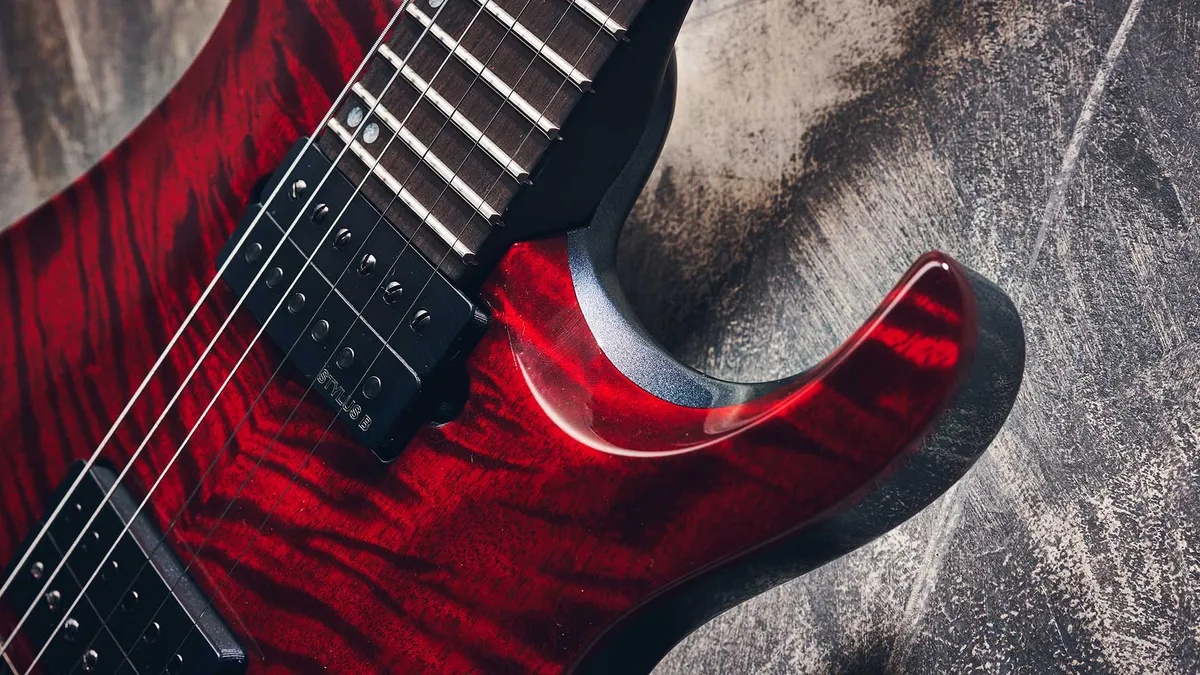
- Electrics: PRS Stylus bridge and neck humbuckers, 3-way pickup selector, Volume and push-pull Tone control (for coil split)
- Options: Fixed-bridge Tekton six-string, Tekton Floyd six-string, Tekton SVN seven-string
- Left-handed options: N/A
- Finishes: Bloodstone Red (as reviewed), Slate Blue, Imperial Topaz, Black Tourmaline, Violet Tourmaline, Fuchsia Aura
- Case: PRS Premium gig bag (included)
- Contact: PRS Guitars
Build quality

Build quality rating: ★★★★½
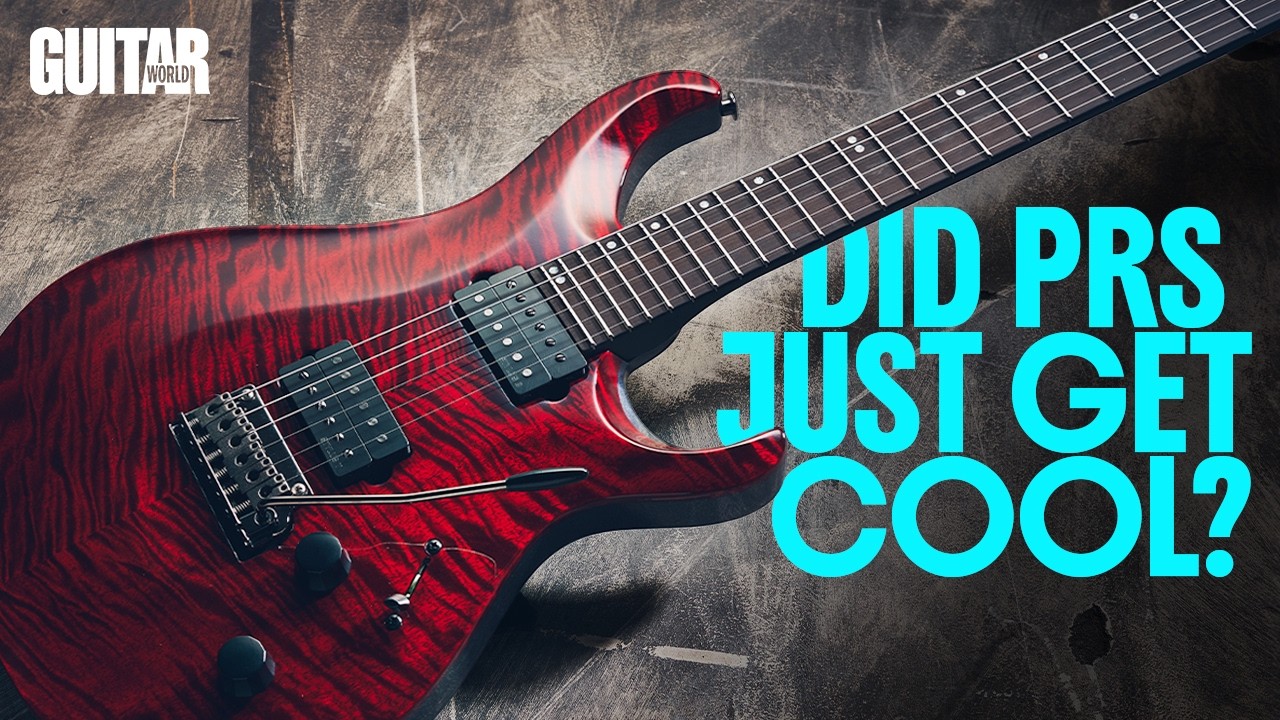
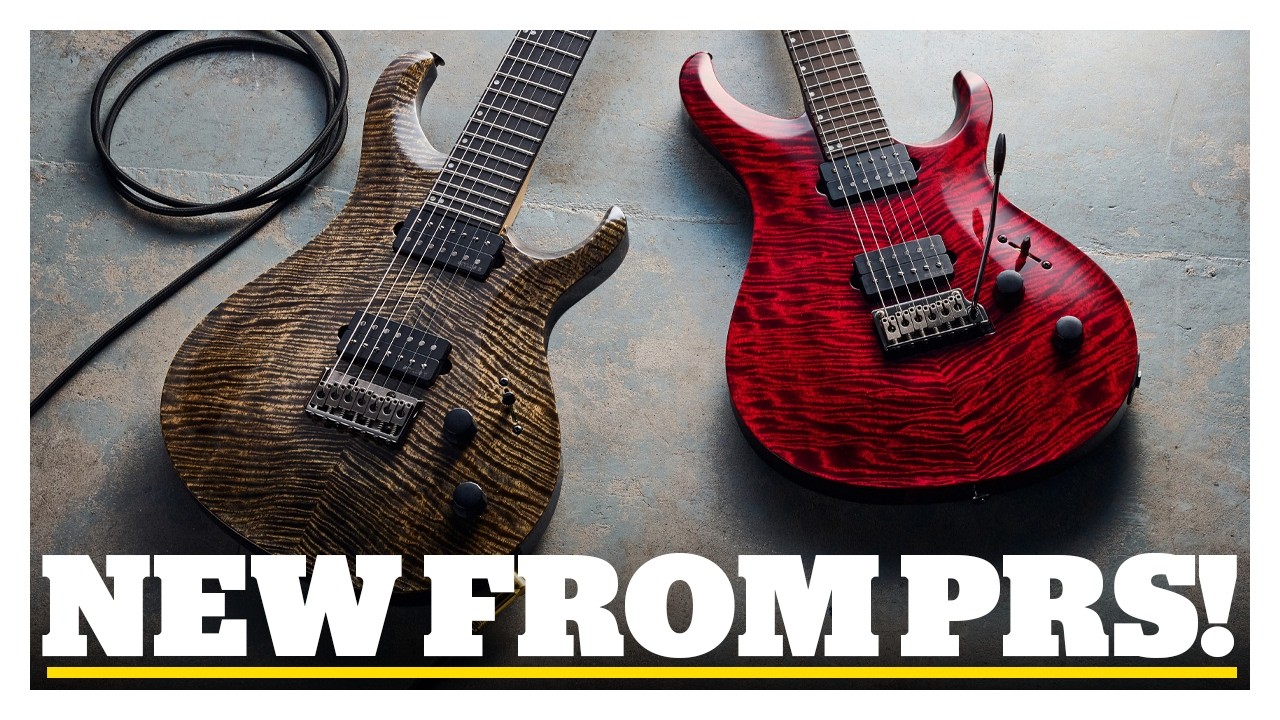
The Tekton shape is a slimmed-down, sharpened combination of the tried-and-tested Custom 24 and the offset Vela. It’s a really successful design; it still looks very much like a PRS, but modernised appropriately. Purposeful and elegant, it wouldn’t look out of place on a modern metal stage – but it needn't frighten away those with more classic tastes either.
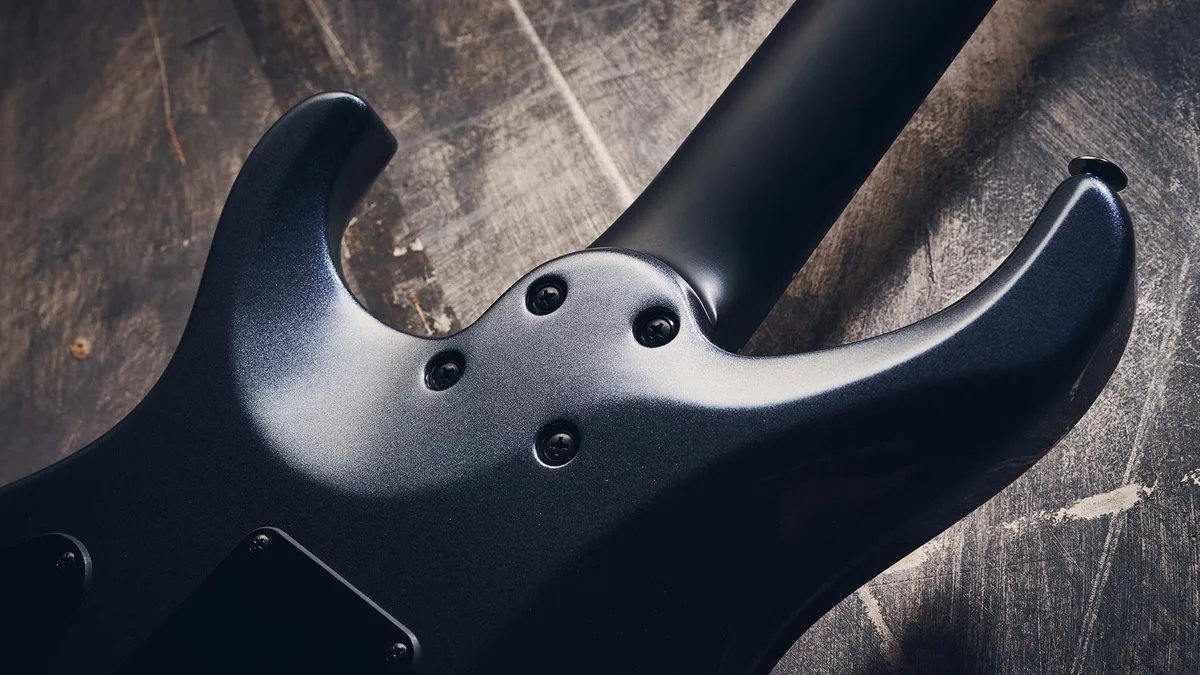
The back and sides of the mahogany body are painted a glossy metallic grey - a slightly odd-looking choice against the deep red top and satin black neck, but this varies by color choice.
Either way, there’s abundant contouring and a slim, sculpted bolt-on neck joint - worlds away from the oversized heel of a Custom 24, more reminiscent of something like Ibanez’s All-Access Neck Joint. These are claimed to be the slimmest bodies and necks that PRS has ever put into production; the Tekton T is, indeed, wonderfully lightweight.
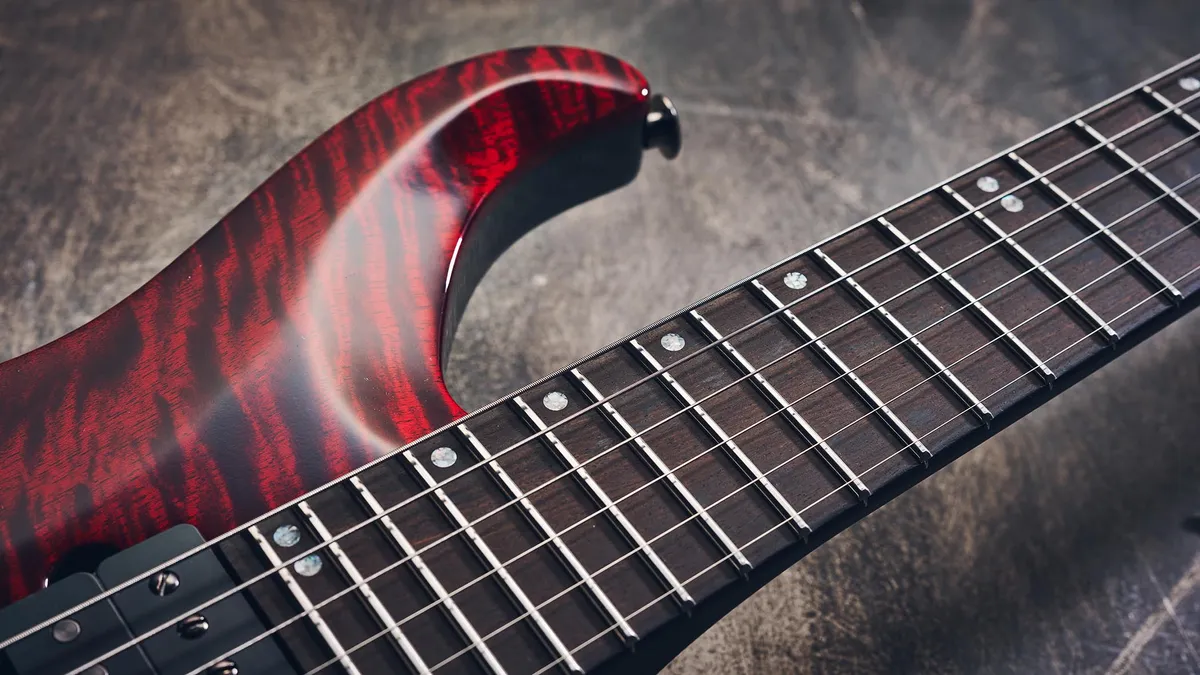
The ‘Shallow Violin’ carved top is mango wood, which PRS is liking currently; after the trees’ long and productive fruit-bearing lives are behind them, the mature wood is harvested as timber and it’s sustainable and high-quality – often beautifully figured too, as here.
The six-string Tektons move away from the trademark 25” PRS scale length – it’s a Fender-familiar 25.5” instead. All models have 24-fret ebony fingerboards, and they all feature stainless steel fretwire too - de rigueur for many a modern guitar, and you can bet that there'd have been complaints otherwise.
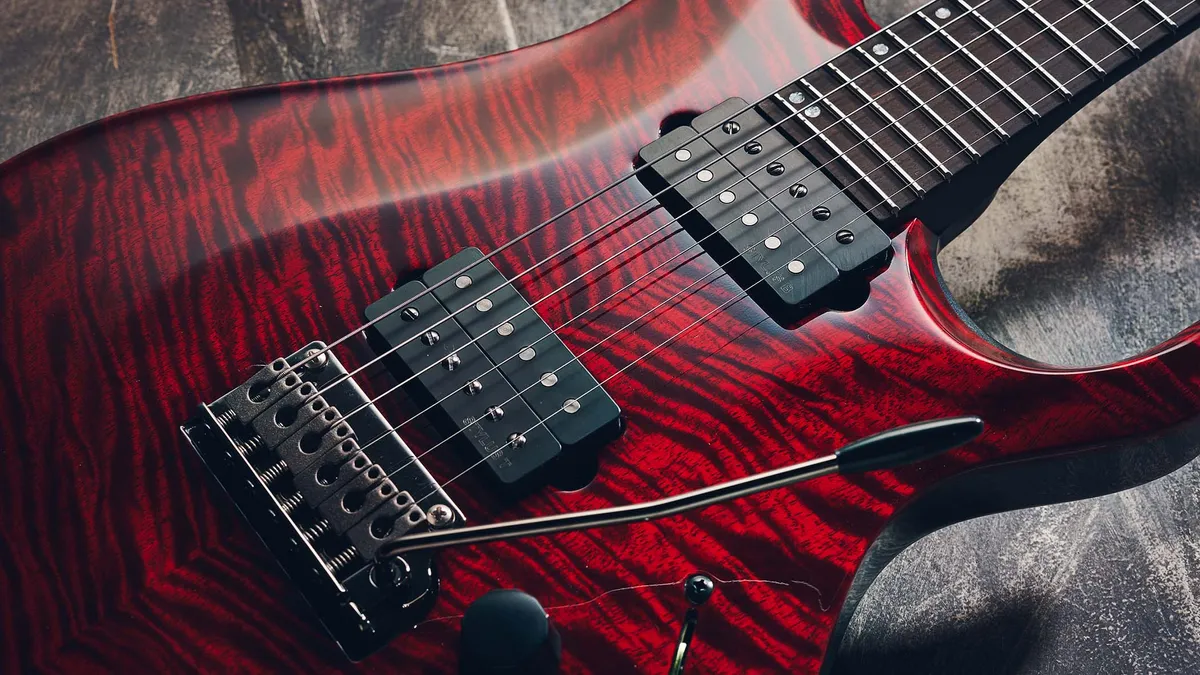
Hardware-wise, the solidity one expects from PRS is here in abundance. The Tekton T utilizes the company’s venerable two-point vibrato, and a set of its latest Phase III locking tuners; there's nothing to worry about whatsoever with any of that.
Playability
Playability rating: ★★★★½
The Tekton T’s neck profile is a shredder's delight
The contoured back and subtly offset shape allows the Tekton T to balance well and sit very comfortably. If there’s anything wrong with the ergonomics, it would be that the carved top creates a hard edge to the body where it meets the picking arm; it’s not as comfortable as a more traditional Strat-style elbow contour.
However, the Tekton T’s neck profile is a shredder's delight. The maple is reinforced with hormigo, a dense hardwood, for extra stability, and PRS describes this neck design as ‘thin but substantial’, which does get the point across – fans of Jackson and Charvel should feel at home.
The D-shaped carve feels nicely supportive, whether your hand is positioned for wide bends and vibrato or for fast scale runs. As you’d hope for this price, the finishing and fretwork are perfect too.
The PRS two-point floating vibrato is a tried-and-tested piece of hardware, and brings its usual functionality here. It’s great for expressive phrasing but, if silly noises are your bag, it can gargle and shriek with the best of ‘em too.
If, like me, you’ve ever struggled to gel with the ergonomics of more traditional PRS models, you’ll likely find the Tekton range to be a dramatic improvement.
Sounds
Sounds rating: ★★★★★
The Tekton range debuts a new pickup for PRS, too. Each model employs two Alnico 5-powered, modern-voiced Stylus humbuckers. It was decreed during development that these pickups should sound just as good with a digital-amp modeling setup as with a valve amp. That means a balanced frequency response, and a little less output - in theory, giving clarity and punch without sacrificing too much character.
I fired up a contemporary digital rig (my small pedalboard designed to run direct, built around a Line 6 HX Stomp), and cycled through some varied settings - majoring on more modern sounds, as that's the idea.

The split-coil sounds are excellent too – with more than enough punch and a useful change in character
Right away, these pickups are exceedingly well-judged – crisp, clear delivery that lets your carefully-dialed tones shine through. The output doesn’t overpower a clean signal, and helps to keep higher gain tight and defined, with great string separation.
It’s exactly what you’d want from a modern, two-humbucker guitar – sounding highly accomplished for anything from function-band sets to tracking modern metal riffs.
The split-coil sounds are excellent too – with more than enough punch and a useful change in character that opens up even more versatility – from tight, defined single-coil rock tones to glassy cleans.

Verdict

Price-wise, the Tekton range will sit near the other USA-built, bolt-on PRS range, the CE series – and it’s an ideal alternative, for those seeking a more overtly modern guitar.
The ergonomics are the best of any PRS model yet, by far
The new Stylus pickups fit their brief admirably, with superbly balanced, defined tones, while the ergonomics are the best of any PRS model yet, by far. It's versatile, too – a guitar that truly will work for a multitude of styles.
This guitar truly does bring PRS's design philosophy right up to date, and it'll surely become a serious player in the high-end rock guitar market.
Guitar World verdict: Far from a mere phoned-in ‘modern’ rework of an existing model, the Tekton is all-new and feels it; it’s been put together with real care and attention to what today's guitarists need. If you've been waiting for a progressive, contemporary reimagining of the PRS blueprint, here it is.
Test |
Results |
Score |
|---|---|---|
Build quality |
The colour combinations between top, back and neck may not be to all tastes - the shape looks fabulous, though, and the build is beyond reproach. |
★★★★½ |
Playability |
It’s light, beautifully balanced and the neck profile is stunning. It’s just that hard edge on the top that slightly impacts playing comfort. |
★★★★½ |
Sounds |
The Stylus pickups hit the nail on the head in terms of catering to modern players - clear, responsive and equally great through digital or analog gear. |
★★★★★ |
Overall |
The Tekton T hits the brief admirably, updating the PRS template in ways that are truly an asset to contemporary players. |
★★★★½ |
Also try
Hands-on videos
PRS
Guitarist
Riffs, Beards & Gear