




Guitar World Verdict
It doesn’t have the flexibility of its V2 sibling, but the White Whale Junior is all about size. If it has to be a real spring for you and you have limited pedalboard space, you might just have found the ideal solution.
Reasons to buy
- +
Spring reverb and tremolo in one pedal.
- +
Compact size (for a spring reverb).
- +
Easy to operate.
- +
Separate volume controls for tremolo and reverb.
Reasons to avoid
- -
Proximity to strong magnetic fields like power transformers can affect the pedal.
- -
No remote switching facility.
You can trust Guitar World Our expert reviewers spend hours testing and comparing guitar products so you can choose the best for you. Find out more about how we test.
What is it?

When we reviewed Crazy Tube Circuits’ White Whale V2 in 2024, we concluded that it was the perfect remedy for any amp that doesn’t have onboard reverb and tremolo.
That sweet combination of tremolo and spring reverb closely associated with vintage Fender amps is something that still has currency today, and CTC’s shoehorning of a real spring into the V2 chassis gave players who wanted it the chance to have the real thing on their ’boards, rather than a digital emulation.
The chunky dimensions of the V2, however, meant that it wasn’t going to be a hit with everyone, especially those looking to keep a really compact pedalboard.
So CTC’s next task was to fit its spring tank into an even smaller chassis – the White Whale Junior – which the brand describes as “possibly the world’s smallest fully analog, real spring reverb and amp-style tremolo”.
Specs

- PRICE: $349/£256
- ORIGIN: Greece
- TYPE: Spring reverb and tremolo
- FEATURES: True bypass, selectable power-up bypass state
- CONTROLS: Tremolo: Volume, Speed, Intensity; Reverb: Volume, Dwell, Mix, Tone; Tremolo footswitch, Reverb footswitch
- CONNECTIONS: Standard input, standard output, power
- POWER: 9V DC adaptor (not supplied) 110mA
- DIMENSIONS: 83 (w) x 154 (d) x 68mm (h)
- CONTACT: Crazy Tube Circuits
Build quality, usability and sounds

Now, the Junior is by no means tiny as it still houses the same three-spring reverb assembly as its sibling.
But it does so in a much more pedalboard-friendly format with all the connectivity in the best place and the separate footswitches for tremolo and reverb right where you’d want them.
There are, of course, compromises to be made from the larger machine. There is just one tremolo voice here, which is a hybrid of optical and tube bias styles, and one reverb type, which has the V2’s long decay setting combined with the EQ of the medium decay setting.

There’s also a fixed order of the effects, with the spring reverb sitting before the tremolo stage, which is okay by us as it mirrors traditional Fender brown- and black-panel amplifier architecture.
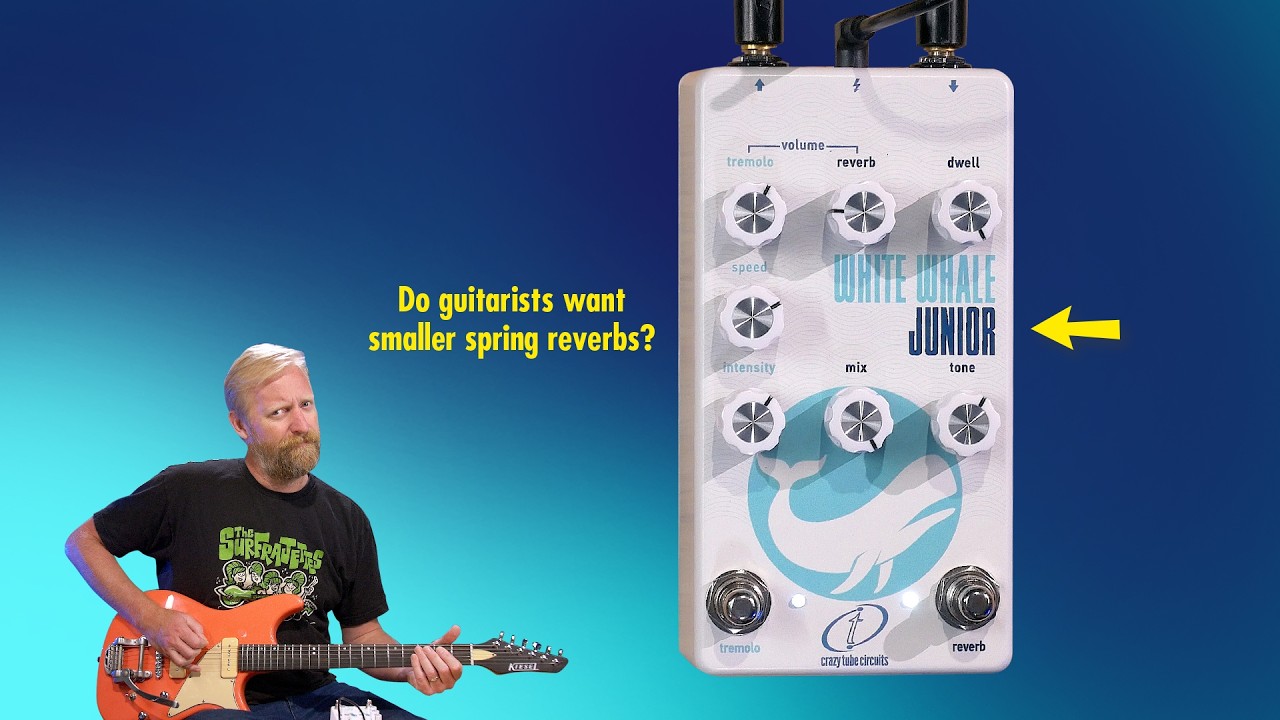
You’ll find the expected Speed and Intensity controls for the tremolo, there are Dwell, Mix and Tone knobs for the reverb, plus each effect gets its own Volume knob, both with enough grunt to engender a substantial boost, if desired.
Verdict
Verdict: ★★★★½

Individually, the pedal delivers gorgeous pulsating tremolo and useful reverb variations with Mix setting the amount added to the signal, Dwell adjusting intensity, and Tone building in brightness as required.
However, it really shines with the dimensional quality of the composite sound when both effects are active.
Guitar World verdict: It doesn’t have the flexibility of its V2 sibling, but the White Whale Junior is all about size. If it has to be a real spring for you and you have limited pedalboard space, you might just have found the ideal solution.
Hands-on videos
60 Cycle Hum
R.J. Ronquillo
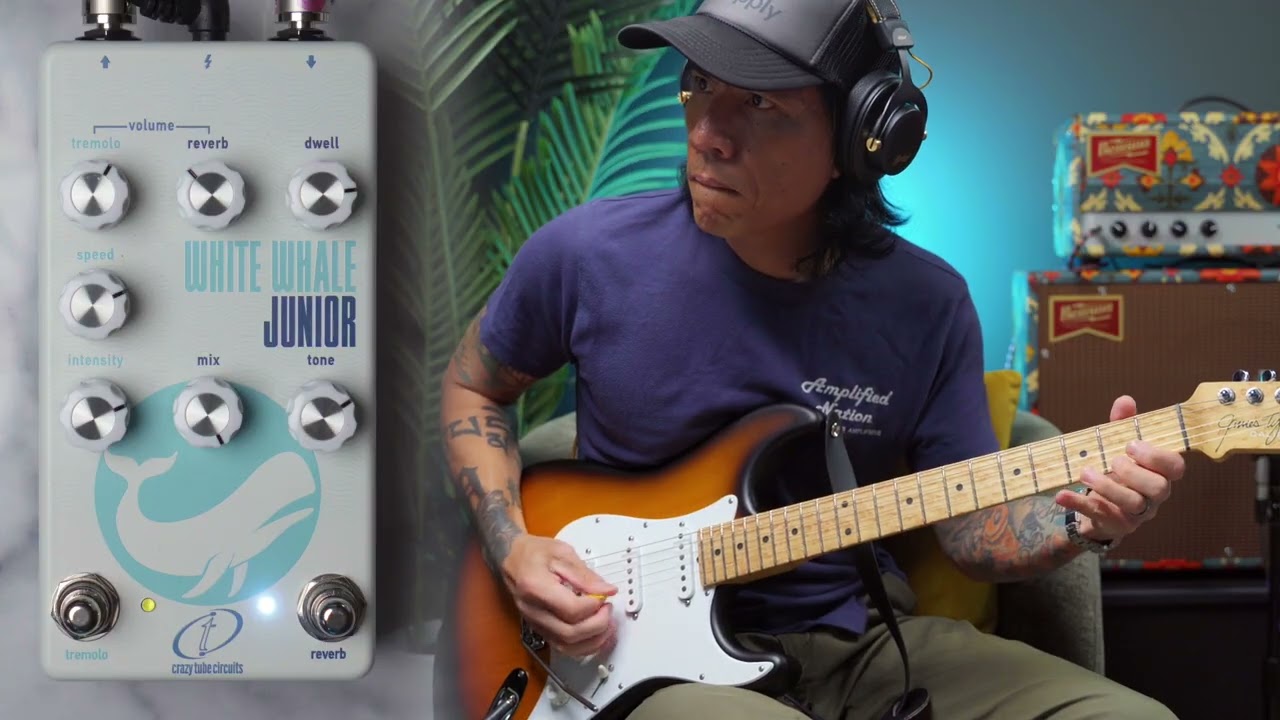
The Studio Rats
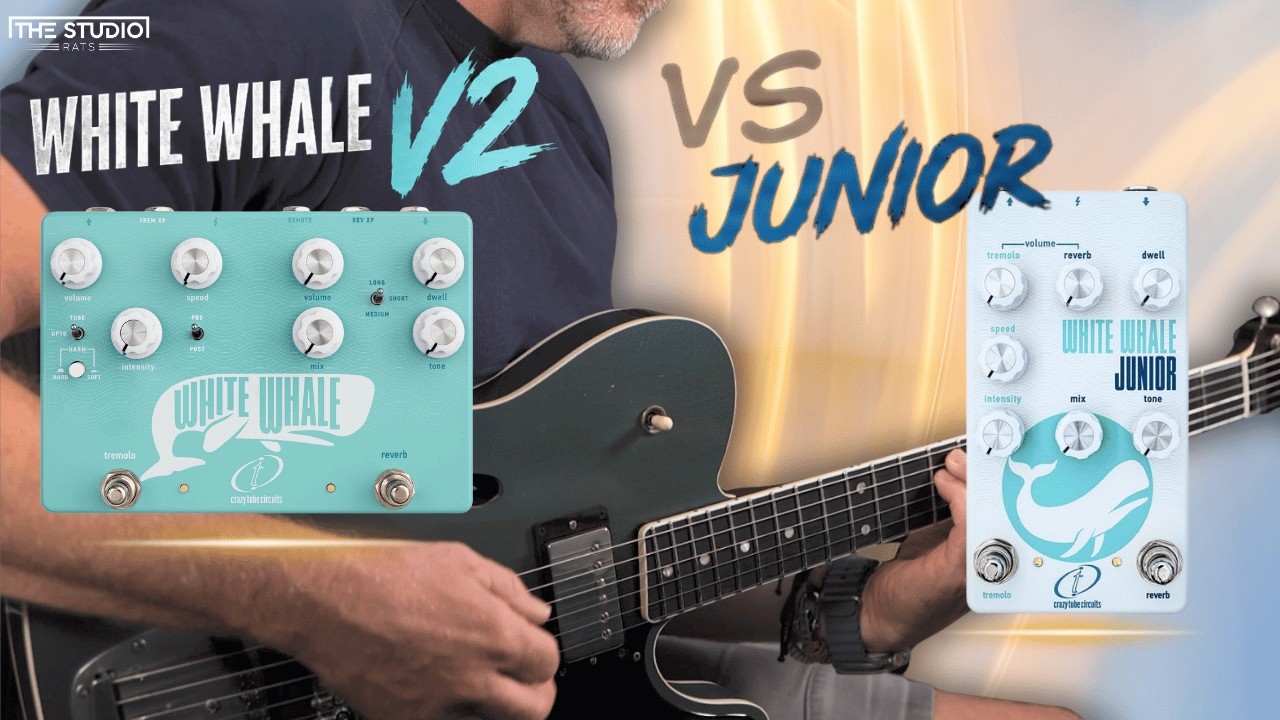
- “There's hardly a bad setting in the pedal”: Crazy Tube Circuits Triptychon review
- This article first appeared in Guitarist. Subscribe and save.

