

Guitar World Verdict
For its first USA production seven-string, PRS needed to come out swinging in order to justify an inevitably serious price point; the brand has certainly achieved that with the Tekton SVN. This is a truly fantastic instrument; real care has gone into making the Tekton work seamlessly with an extra string.
Reasons to buy
- +
The same arresting looks and fantastic design as the six-string Tektons.
- +
The 26.5” scale is a great choice for both articulate lows and fluid solos.
- +
The Stylus pickups are just as impressive for seven-string - especially with the trump card of that coil-split.
Reasons to avoid
- -
As with the Tekton T - the top edge can be uncomfortable for your picking arm to rest on, compared to a Strat-esque elbow contour.
You can trust Guitar World Our expert reviewers spend hours testing and comparing guitar products so you can choose the best for you. Find out more about how we test.
What is it?
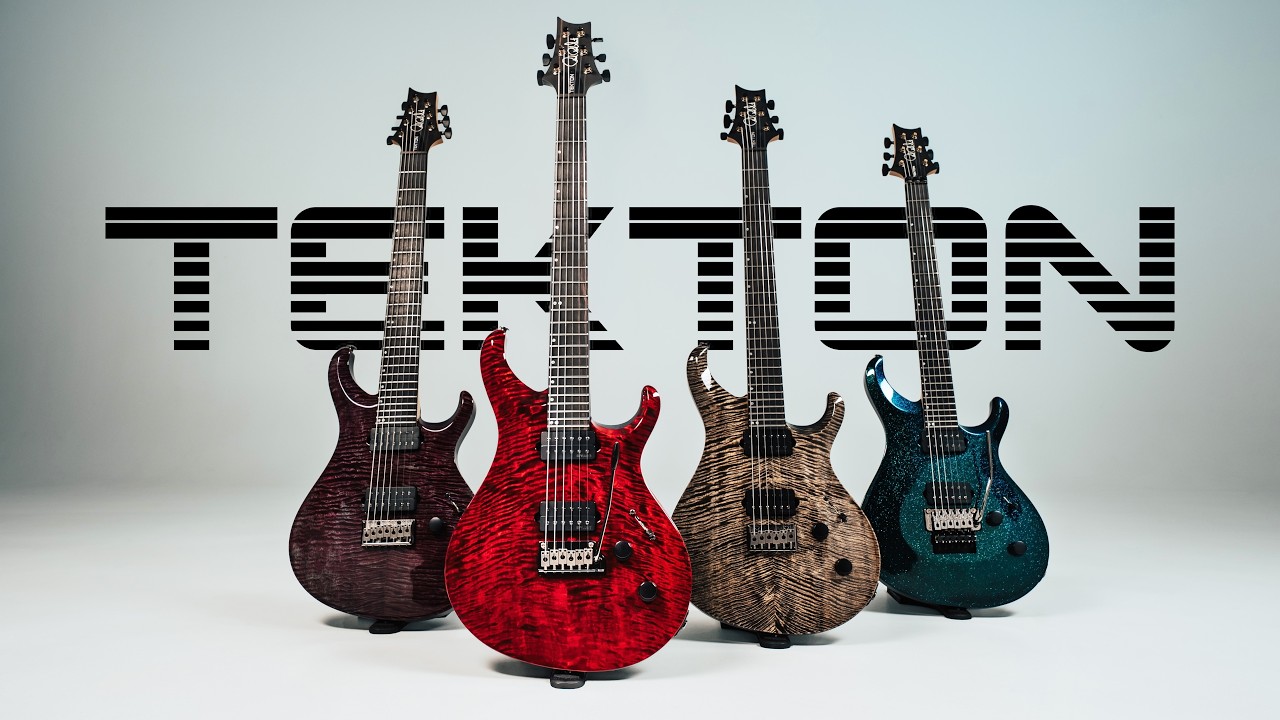
You might already have seen our review of the brand new PRS Tekton T – part of the launch of “a whole new family of guitars”, to quote its maker.
The Tekton range is a serious new proposition, the most overtly modern, possibly even metal guitar range of that we’ve seen from PRS yet, aimed at the contemporary guitarist and built to integrate perfectly with contemporary gear including digital amp modelers.
Being designed for high-performance modern rock and metal guitar at the outset, the specter of extended range must have loomed large over the development process.
A seven-string Tekton will surely have been planned from the start, given how prominent sevens are in those styles. And we've seen seven-strings from PRS before, of course – most notably with the name of Periphery's Mark Holcomb attached – but it’s fair to say that we've not seen anything quite like this from the brand yet.
For a start, as well as being the first USA-built production seven-string, this is PRS's first seven at any price point with a bolt-on neck, bringing it further into the space occupied by various shred-esque models from seven-string pioneer Ibanez.
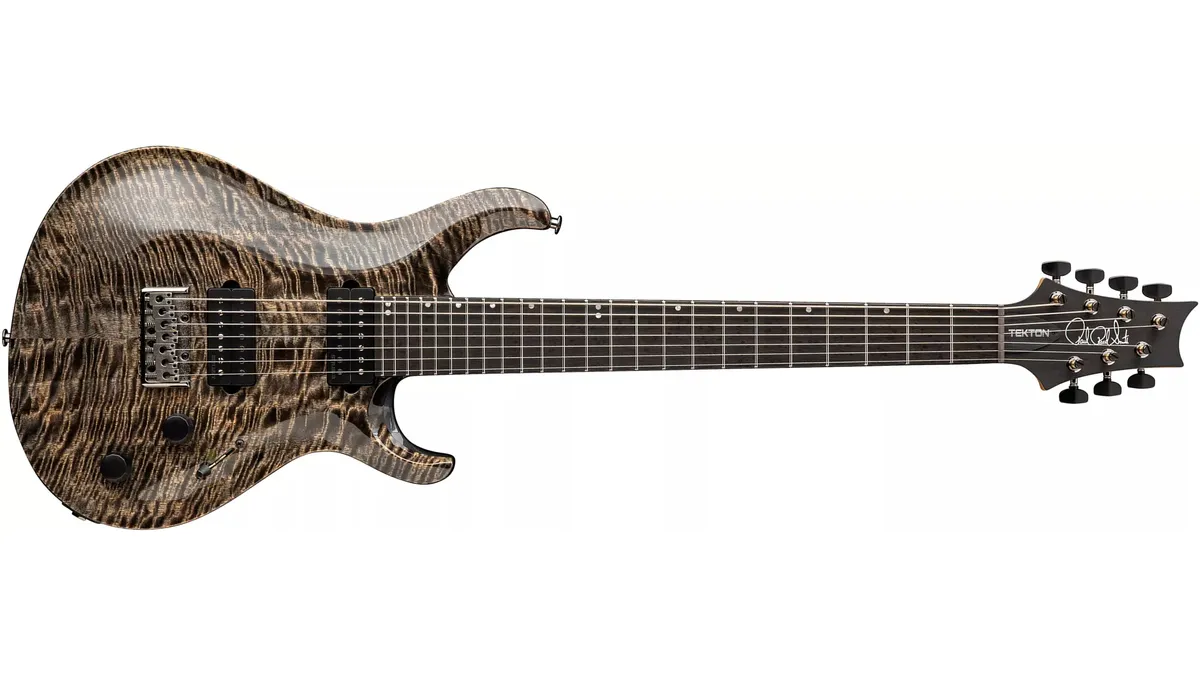
Then there's the shape – the basis of the new Tekton silhouette is actually the vintage-inspired PRS Vela, but with lots of tweaks. The end result is the thinnest body and neck design that the company has ever put into series production.
Specs
- Launch price: $2,999 | £2,999
- Made: USA
- Type: Seven-string electric guitar
- Body: Mahogany with figured mango top
- Neck: Maple, satin nitrocellulose finish, Modern D profile
- Fingerboard material/radius: Ebony, 16” radius
- Scale length: 26.5”/673mm
- Nut/width: PRS composite, 48.4mm
- Frets: 24, jumbo, stainless steel
- Hardware: PRS Phase III locking tuners, PRS 7-string Hardtail bridge
- String spacing at bridge: 64mm
- Electrics: PRS Stylus bridge and neck humbuckers, 3-way pickup selector, Volume and push-pull Tone control (for coil split)
- Weight: 6.6lb/3kg
- Options: Fixed-bridge Tekton six-string, Tekton T six-string with PRS two-point vibrato, Tekton Floyd six-string with Floyd Rose vibrato
- Left-handed options: N/A
- Finishes: Black Tourmaline (as reviewed), Slate Blue, Imperial Topaz, Violet Tourmaline, Bloodstone Red, Fuchsia Aura
- Case: PRS Premium gig bag (included)
- Contact: PRS Guitars
Build quality
Build quality rating: ★★★★★
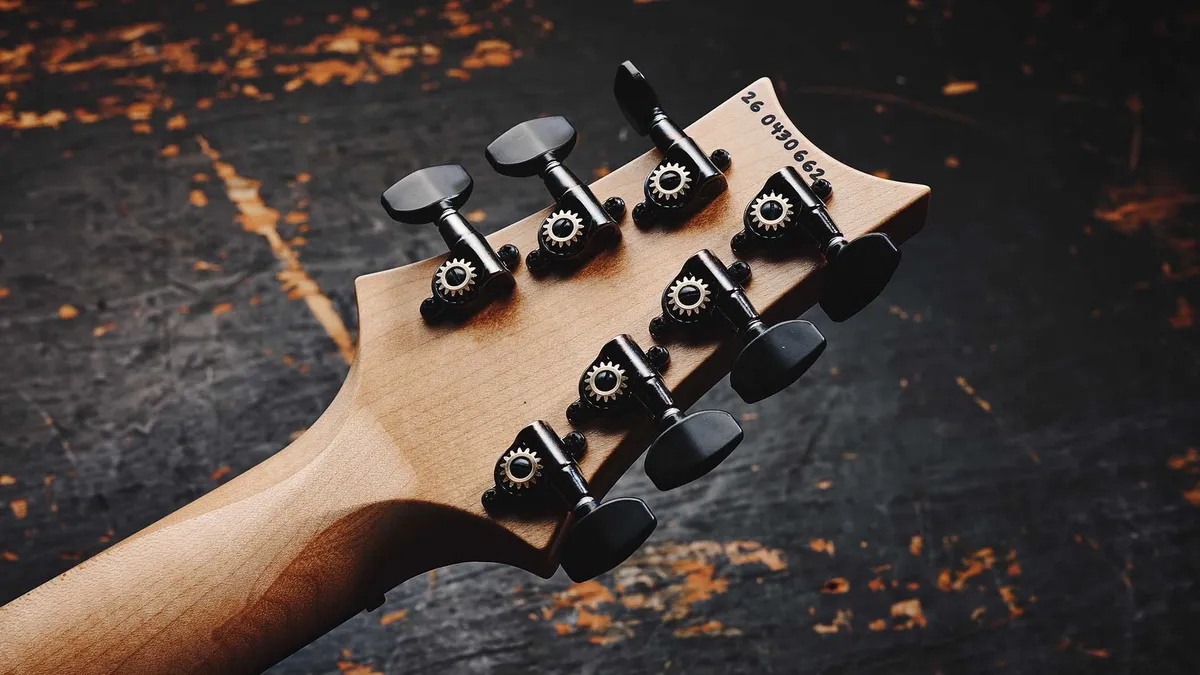
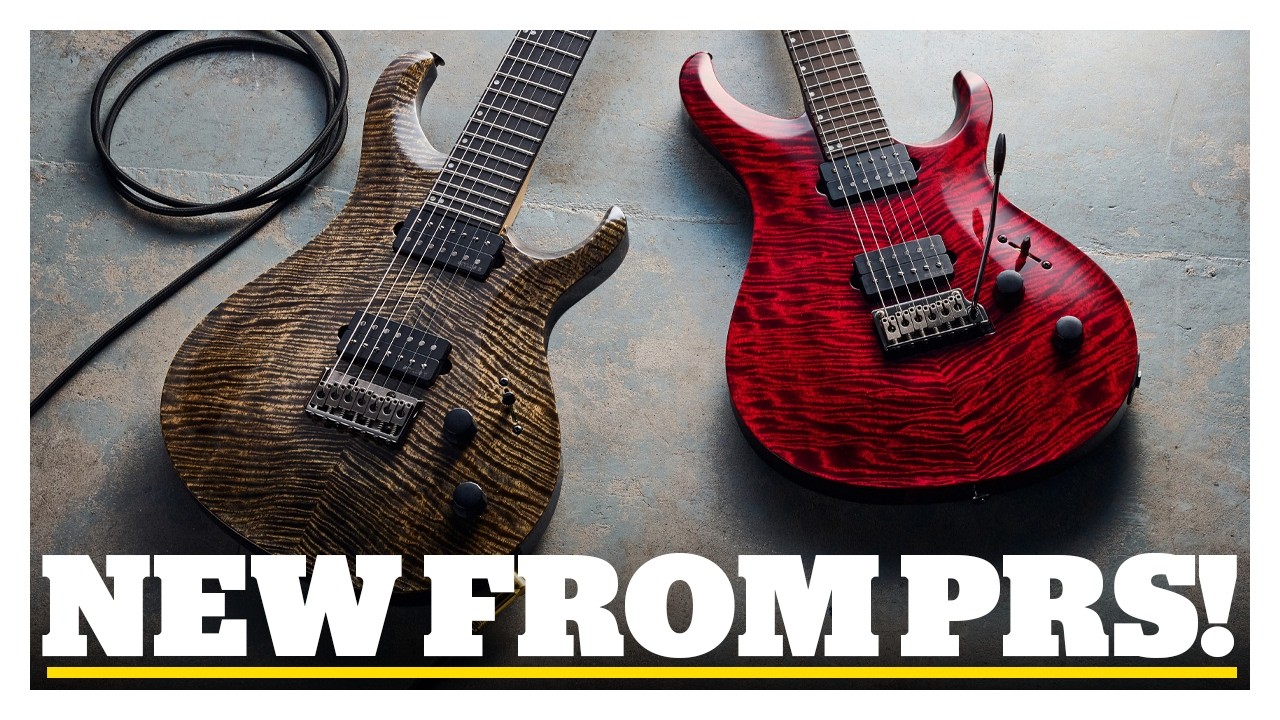
And doesn’t that shape look great? Just as with the Tekton T, the aesthetic – and build quality – really impresses. The carved mango top is just as beautifully flamed, and the elegant slimmed-down shape is purposeful without looking over-cooked.
I hinted at scale length above - in today’s world of down-tuning, the industry-standard 25.5” scale adopted for the six-string Tekton models wasn’t really going to cut it for the seventh string. In common with several modern-day rivals (and, indeed, its cheaper stablemate, the SE Mark Holcomb SVN), the scale length here is 26.5”.
This is useful for seven-string as it allows that low B to stay clearer and tighter, especially if you plan on dropping it down to A – or beyond. For a seven-string guitar intended for technical rhythm and lead guitar alike, this scale length is probably the ideal compromise.
The Tekton’s new Stylus pickups make their way over to seven-string, promising the same detail and transparency as the six-strings. The SVN also boasts a substantial-feeling string-through hardtail bridge and, again, a set of PRS ‘Phase III’ lightweight locking tuners.
Playability

Playability rating: ★★★★½
It’s a wonderfully accommodating seven-string, which otherwise feels very similar to its sibling
The contoured back and subtly offset shape allows the SVN to sit very comfortably against the player’s body. There’s the same gripe as with the T – a slightly uncomfortable hard edge to the mango top where it meets the forearm but, other than that, there’s little to complain about ergonomically. And even despite the extra wood involved in making it a longer-scale seven-string, the SVN is similarly lightweight to the Tekton T.
The Tekton SVN’s neck handles its extra string and extra inch of scale length with aplomb. The maple is left unpainted and, as seven-string necks go, it’s up there with the most comfortable we’ve tried.

The shoulders feel just slightly less pronounced; the resultant perception is of a shallower profile, despite the quoted depth measurements being identical.
It’s a wonderfully accommodating seven-string, which otherwise feels very similar to its sibling – the neck feels barely any bigger, and you’ll fly up and down the fretboard with all the same abandon.
As expected, the extra length makes the high strings marginally less forgiving for bends and vibrato, but for many seven-string players, that’s a trade-off worth making.
Sounds

Sounds rating: ★★★★★
The Stylus humbuckers impressed first time round with their clarity and punch – important attributes for seven-strings. For low tunings especially, you need less gain than you think, so a cooler-output humbucker (with coil-splitting available) is often the best way. And so it proves to be – the pickups are brilliant here too.
True to the Tekton series’s modern ethos, I focused primarily on my Line 6 HX Stomp, running through compressed cleans and crunchy overdrive, to contemporary extreme metal tones based on Mesa/Boogie, Soldano and Peavey amp models. This proved to be a lot of fun, prompting an instant flurry of riff-writing. There’s something to be said for that.

The full humbucker is, again, very clear and defined, with plenty of top end detail and great string separation
The full humbucker is, again, very clear and defined, with plenty of top end detail and great string separation, thanks in part to the medium output. It keeps clean sounds clean, and keeps even heavy distortion sounding tight and full. And the split-coil sounds are especially good, with low notes taking on a formidable, wiry snarl.
Whether split or full, though, the 7-string Stylus humbuckers combine with the longer scale to create a tight, percussive and balanced sound – fabulous for technical drop-tuned metal riffs, of course, but far from a one-trick pony. You could easily slot this guitar into a diverse range of settings and not feel limited.
Verdict

I said of the Tekton T that it was easily the best PRS yet, ergonomically, and the same rings true of its seven-string sibling - even with the longer scale and the wider neck, which could easily have made it feel unwieldy and difficult, it’s a fantastically playable guitar.
At its price, it’s likely to appeal mainly to serious seven-stringers who know exactly what they want
Then there’s the tone – the Stylus humbuckers repeat their trick, providing a supremely balanced and versatile suite of sounds that needn’t pigeonhole the SVN as a metal guitar at all, if your tastes lie elsewhere.
At its price, it’s likely to appeal mainly to serious seven-stringers who know exactly what they want, but even those less familiar with sevens may find a lot to like here.
Guitar World verdict: For its first USA production seven-string, PRS needed to come out swinging in order to justify an inevitably serious price point; the brand has certainly achieved that with the SVN. This is a truly fantastic instrument; real care has gone into making the Tekton work seamlessly with an extra string.
Test |
Results |
Score |
|---|---|---|
Build quality |
Built every bit as well as the Tekton T, but the unpainted maple neck is also just… nicer. |
★★★★★ |
Playability |
This is a truly fantastic-feeling and sounding seven-string; that hard-edged top remains the only fly in the ointment. |
★★★★½ |
Sounds |
The new humbuckers are just as accomplished in seven-string form, and the coil-split adds an extra layer of aggressive growl. |
★★★★★ |
Overall |
The Tekton SVN is, if anything, even better than the Tekton T – it nails the brief for a well-designed, modern seven-string guitar right out of the gate. |
★★★★★ |
Also try
Hands-on videos
PRS
Guitarist
Riffs, Beards & Gear