





Guitar World Verdict
These Revstars are good-sounding guitars – there’s that smoothness that underpins the sounds we hear, plus the pickups aren’t over-potted and have some attractive and lively ‘clonk’ to them as you wind up the wick.
Reasons to buy
- +
Great twist on the Revstar design with excellent vibrato.
- +
Overall build is typically sharp.
- +
Good classic sounds, plus the Focus Switch boost.
- +
Chris Buck has a subtly stripped-down Revstar style.
- +
Low-wind soapbar single coils.
- +
Simplified controls and switching.
- +
TonePros wrapover bridge.
Reasons to avoid
- -
Expensive compared with their siblings in the range.
You can trust Guitar World Our expert reviewers spend hours testing and comparing guitar products so you can choose the best for you. Find out more about how we test.
What is it?

What once seemed like a radical new thing, now 11 years on Revstar – Yamaha’s first new guitar line-up in more than a decade – has stayed the course. No mean feat in today’s fickle guitar market.
Okay, the range was completely overhauled four years ago, but the original Café Racer inspiration was retained, and while plenty of us enjoyed the earlier models, it seems that the Mk IIs are, well, just a bit more grown up.
These new guitar designs brought in fresh technology in terms of a passive transformer-based Focus Switch midrange boost, and a slightly larger body created with Yamaha’s Acoustic Design process, which results in a mildly chambered structure designed to attenuate and/or amplify specific frequencies.
Graphite strengthening plays its part in the chambered bodies (Japanese models only), while dual graphite rods are slipped into the neck of both Japanese and Indonesian levels with the exception of the start-up Element models.
Then there are the processes we seem to have been writing about for some years. The Japanese guitars, once assembled, go through Yamaha’s IRA (Initial Response Acceleration) procedure, which Yamaha says is “a process in which the instrument matures and opens up as the stresses between the wood and finish, neck and fingerboard, and body and hardware are released, resulting in better sound and playability”. This, in our experience, ekes out a few extra per cent in terms of sound and performance.
But close on the heels of the new generation Revstars we saw the return of the good ol’ Pacifica, which hadn’t really gone away but was lacking a little up-to-the-minute design. The resulting Pacificas from 2024 and their SC (T-style) models, which were launched at the start of the year (and featured in our last issue) are certainly making waves for their intelligent, modern and very player-centric design.

But what’s next? Well, also at this year’s NAMM Show, apart from delivering that killer Pacifica SC punch, Yamaha took the wraps off the stylish Yamaha 60th Anniversary Revstar, the RSP20B 60th and the Chris Buck RS02CB. Two new Revstars with rather different aims and prices. Let’s take a look.
Specs
Yamaha 60th Anniversary RSP20B

- PRICE: $3,699 | £2,403 | €2,299 (inc case)
- ORIGIN: Japan
- TYPE: Double-cutaway, solidbody electric
- BODY: Chambered 2-piece mahogany with thin flamed-maple cap and graphite reinforcement
- NECK: 3-piece mahogany with carbon graphite reinforcement, glued-in
- SCALE LENGTH: 629mm (24.75”)
- NUT/WIDTH: Bone/42.5mm
- FINGERBOARD: Single-bound rosewood with pearloid bar inlays, 304mm (12”) radius
- FRETS: 22, jumbo stainless-steel
- HARDWARE: Tune-o-matic-style bridge with Göldo G5 vibrato tailpiece, Gotoh SG301 MG-T tuners – gold-plated
- STRING SPACING, BRIDGE: 52mm
- ELECTRICS: Yamaha VH5B (bridge) and VH5N (neck) Alnico V loaded humbuckers, 5-position lever pickup selector switch, master volume, master tone
- WEIGHT (kg/lb): 3.86/8.49
- OPTIONS: None
- RANGE OPTIONS: The other MIJ Professional models (all at £1,599) are the twin-humbucking RSP20 and the RSP20X in Rusty Brass Charcoal, and the RSP02T
- LEFT-HANDERS: Not this model
- FINISHES: Noble Black Burst (as reviewed) – gloss polyurethane body with satin polyurethane neck back
Yamaha RS02CB Chris Buck

- PRICE: $1,299 | £1,254 | €1,199 (inc gigbag)
- ORIGIN: Indonesia
- TYPE: Double-cutaway, solidbody electric
- BODY: Chambered, thin maple cap
- NECK: 3-piece mahogany with carbon graphite reinforcement, glued-in
- SCALE LENGTH: 629mm (24.75”)
- NUT/WIDTH: PPS/42.3mm
- FINGERBOARD: Single-bound rosewood with pearloid bar inlays, 304mm (12”) radius
- FRETS: 22, jumbo stainless-steel
- HARDWARE: TonePros AVT2 wraparound bridge, die-cast tuners – nickel-plated
- STRING SPACING, BRIDGE: 52mm
- ELECTRICS: Yamaha VP5b (bridge) and VP5n (neck) Alnico III loaded soapbar single coils, 3-position lever pickup selector switch, master volume, master tone
- WEIGHT (kg/lb): 3.52/7.74
- OPTIONS: None
- RANGE OPTIONS: The Revstar range kicks off with the Element models (£439). The Standards (£659) come with dual humbuckers or soapbar single coils, graphite neck reinforcement and wide colour choice
- LEFT-HANDERS: Element RSE20L (£439) and Standard RSS20L (£659) with humbuckers
- FINISHES: Honey Gold (as reviewed) – gloss polyurethane body with satin polyurethane neck back
- CONTACT: Yamaha
Build quality, usability and sounds

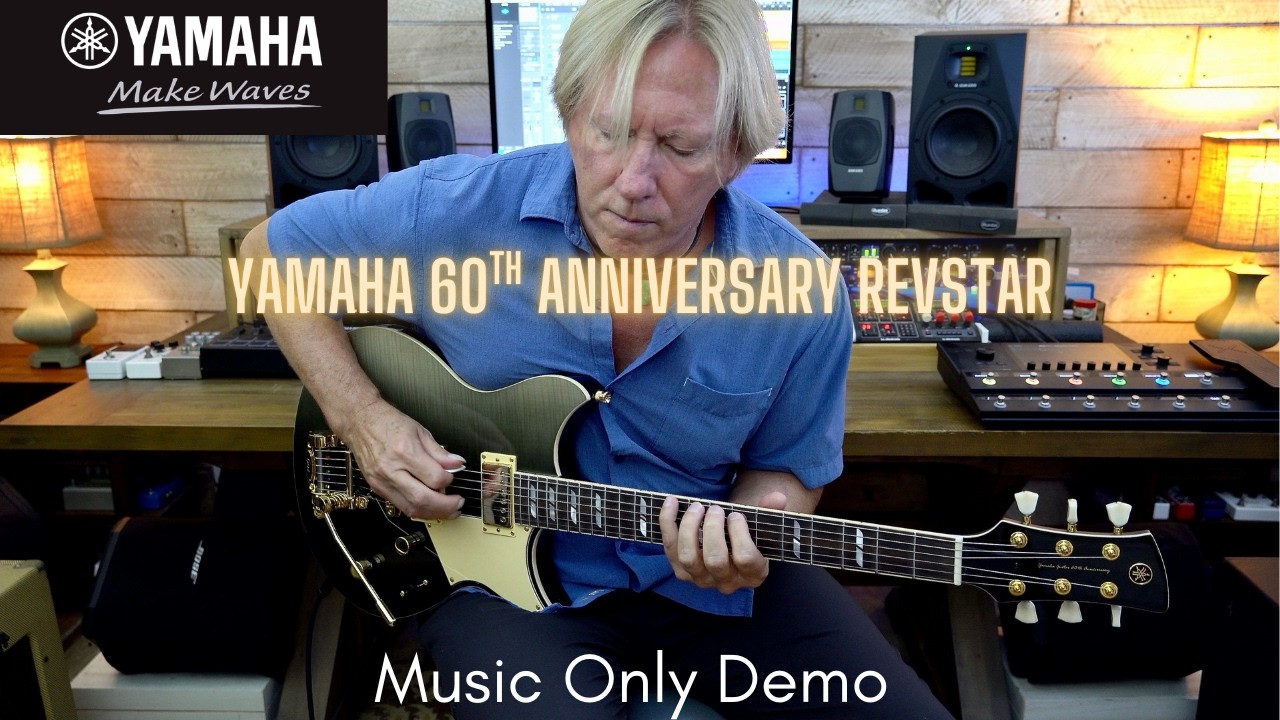
If you need proof that Yamaha makes exceedingly good guitars, then take this 60th for a spin. There’s an angular elegance to the Revstar design, not least in this tuxedo celebration style. The Nobel Black finish is solid gloss all over the body with the exception of the bass side where it fades to a light grey and – rare on a Revstar – you can see the thin and only lightly figured maple top.
The cleanly single-bound top edge of the body really defines the outline; there is a light forearm chamfer to the otherwise flat top, and on the back, where the edge radius is larger, we also get a sizeable chamfer reducing the bulk of the 42mm-thick body.
What we can’t see is the complex chambering to the mahogany back under that maple top, or the dual graphite rods. And while any chambering will reduce weight, that’s not Yamaha’s primary aim: it’s all about tuning the frequency response and that includes the dual carbon graphite rods in the maple neck.

“Both the carbon rods in the neck and body help eliminate unwanted boomy bass frequencies,” said Yamaha’s manager of Guitar Development, Takashi Yamashiro, when we evaluated the redesign in 2022. “Even with the chambering, we’d like the body to vibrate not as a typical semi-hollowbody but more likely as a solidbody.
“With the carbon rods around the bridge, it stabilises the body vibration, eliminates unwanted bass and elevates the midrange. The neck rods increase the stability for sure, but with the well-calculated design of the neck and body, the guitar could get a well-coupled vibration between them.”

There’s no chance of seeing the three-piece mahogany of the neck, either, as it’s black-painted, a contrasting satin to the body’s gloss. There’s a light point to the body heel and a slight volute behind the nut on the classy back-angled three-a-side headstock.
The tune-o-matic bridge lightly rocks as the vibrato is moved and once the new strings settled tuning stability is solid, they feel liquid. Superb
Like the body and headstock, the rosewood fingerboard is single cream bound, with split bar inlays – and, to be honest, our only concern is the chunky stainless-steel frets. Why? The ends have been left fairly angular, as if there’s still another process to go to round them.
There are no complaints about the hardware here, though. Gotoh’s rear-lock tuners have a very positive feel and look pretty classy, too, while the Göldo G5 vibrato is a typically improved Bigsby-style piece, with easier stringing, a super-smooth feel and the 360-degree rotatable arm that can be set exactly how you want. The tune-o-matic bridge lightly rocks as the vibrato is moved and once the new strings settled tuning stability is solid, they feel liquid. Superb.
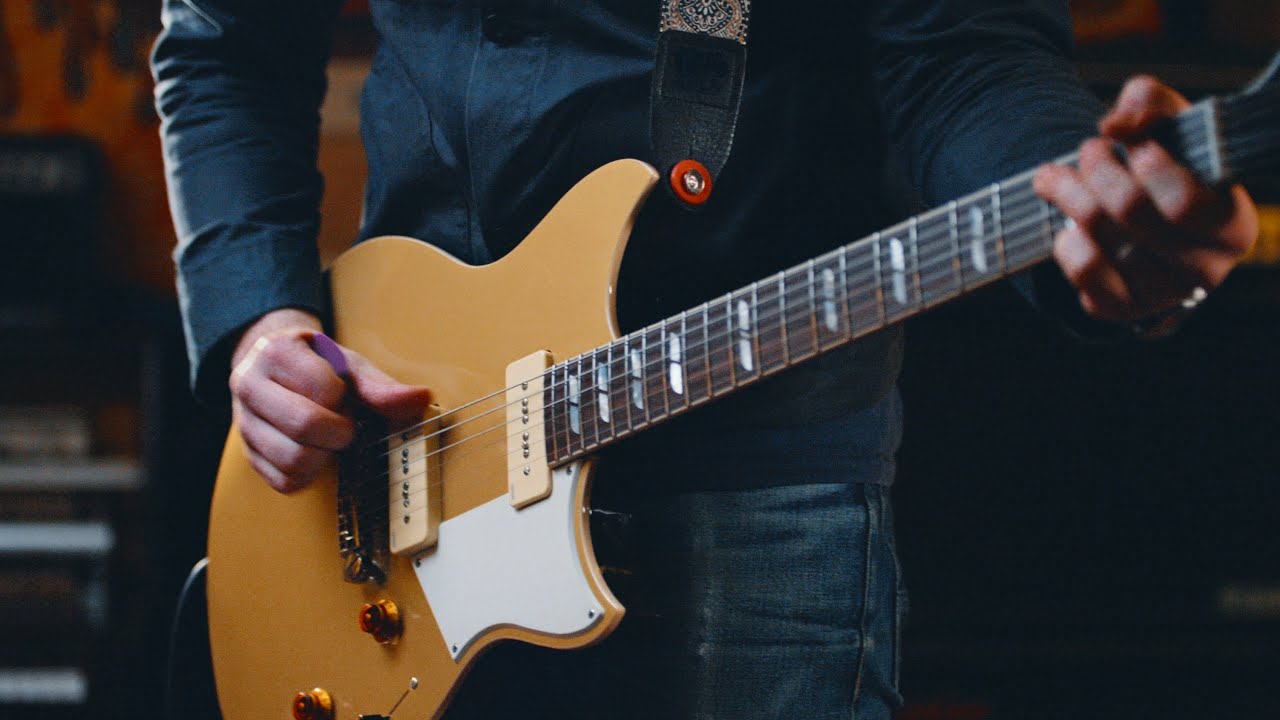
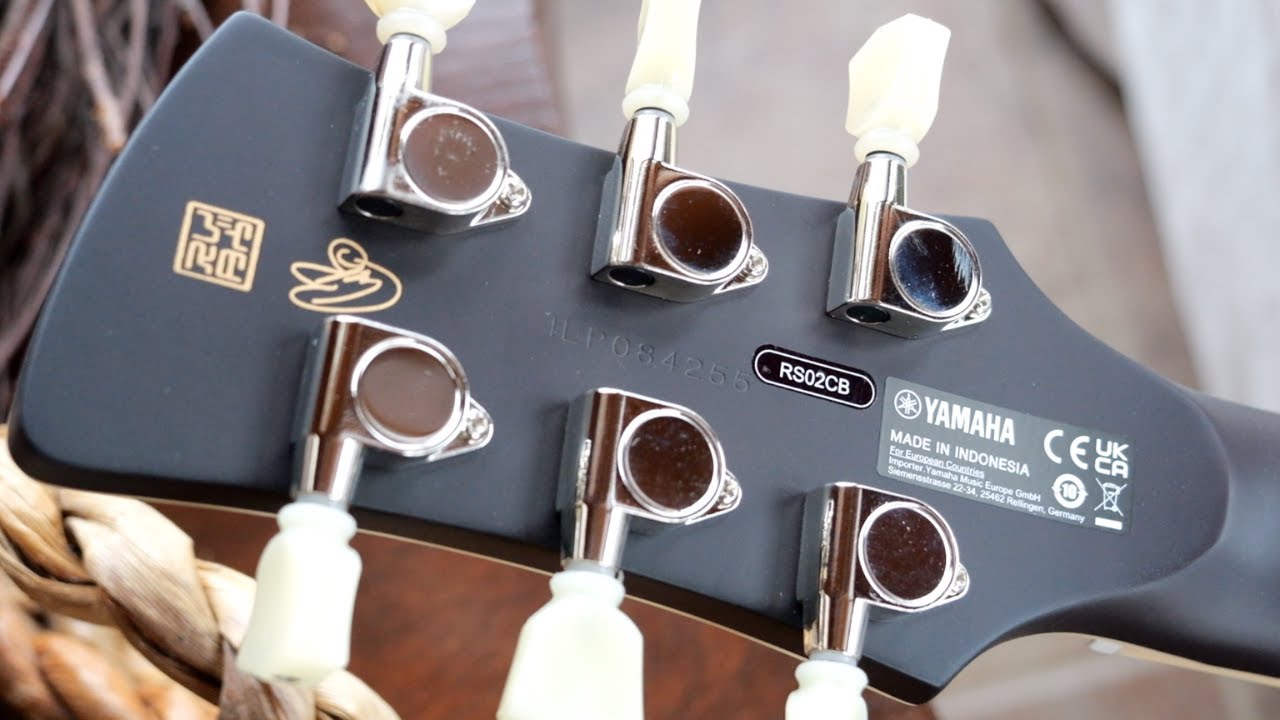
At pretty much bang-on half the cost of the 60th model, the long-awaited Chris Buck drops the celebratory style and gets right to the point. It’s based on the Indonesian-made Standard RSS02T with quite a few changes.
The maple-topped, chambered mahogany body (without graphite rods) and the three-piece mahogany neck with its carbon reinforcement are retained, but the first change is the tune-o-matic bridge and vibe-y ‘racing tailpiece’ are ditched in favour of a Tone Pros AVT2 wraparound.

The VP5 soapbars get a magnet swap from Alnico V to III, while the chromed metal knobs are switched to old-school amber top hats. There’s no truck with Yamaha’s high-pass Dry Switch or Focus Switch passive boost extras, and the pickups are simply selected on a three-way lever. Oh, and aside from the split-bar inlays that actually look like a pearl, rather than the duller pearloid of the standard models, that’s it.
Now let’s get the difficult bit over, shall we? These changes basically double the price of the Chris Buck model over the standard Standard RSS02T.
Revstar has quite a specific feel, not least these Mk II versions with their slightly wider, flat-front bodies almost summoning a less chamfered Gibson SG or a lightly offset version of Yamaha’s own SG classic. The scale length and playing feel are more Gibson-like, of course, and with pretty trim weights, good strapped-on or seated balance, these are easy guitars to get accustomed to.

From the instruments we’ve tested, the neck shapes have been pretty consistent, and these two are a little different. There’s a slightly more Fender nut width of 42.4mm here with a depth that averages 21mm at the 1st fret, 23.5mm by the 12th. The profile is quite distinct, though – a slightly flat-backed shape with noticeable shoulder – and both these 2026 guitars feel identical to our earlier 2022 Standard reference.
We mentioned the slightly sharp-feeling fret ends, and our earlier model is noticeable in that its fret ends are really nicely domed by comparison. They feel great, though, with good height and are really bend-friendly.

There is some difference playing these unplugged. While both have a strikingly similar evenness and smoothness to their character, the 60th does sound a little fuller. But both are working in a similarly lively manner: vibrant and quite alive.
The 60th isn’t shooting for anything particularly contemporary when it comes to the sounds we hear plugged in. In fact, the only lightly potted humbuckers seem to nod back to the late ’50s and give the guitar a pretty classic voice. No complaints there, certainly in positions 1, 3 and 5 on the five-way lever (bridge, both and neck).
Overall, the 60th is a little fuller and thicker than our RSS20, for example, which is spec’d with the same VH5 humbuckers (with similar DCRs), but the Professional Japanese level of the 60th clearly sounds, well, bigger.
Still, there’s plenty more here: those position 2 and 4 sounds certainly capture some of the classic ‘in-between’ single-coil sounds, useful played clean and funky or to add another gained texture for lead lines.
Meanwhile, the pull-switch Focus Switch adds thickness and level boost, which isn’t overdone in terms of level. The vibrato obviously adds to what we hear and create, not least with a big clean sound that the 60th actually excels at. Add big ’verbs to taste.
Verdict
Verdict: ★★★★½

While our second Revstar did need some attention in the setup and intonation, sounds-wise the Chris Buck is rather special. Neither soapbar is overwound – in fact, our pair has the same amount of wire. And this is less the aggressive midrange of a hotter Gibson Junior or Special; it’s a little more refined, more jangly, more traditional single coil.
But that’s not to say it doesn’t have some poke and nose. A little level boost and pull the tone back slightly and you’re there. The neck sounds quite Patent Applied For-like, that lovely fatter single-coil voice, and the mix position is standout with beautiful sparkle, hollowed depth and all the bounce you’ll need.
Guitar World verdict: It’s not just the pickups, of course, these Revstars are good-sounding guitars – there’s that smoothness that underpins the sounds we hear, plus the pickups, again, aren’t over-potted and have some attractive and lively ‘clonk’ to them as you wind up the wick. Shame about the supplied setup, but with that sorted, this is a very valid, almost stripped-down Revstar with a classic-aimed voice.
Hands-on videos
Chris Buck
Trogly's Guitar Show
Guitar Guitar

Robbie Calvo
- “One of the best electrics out there, at any price”: Yamaha Pacifica SC Professional and Standard Plus review
- This article first appeared in Guitarist. Subscribe and save.

