




Mention the words ‘signature guitar’ and you will usually provoke one of two distinct reactions.
Some see the ultimate expression of an artist’s vision, an instrument shaped by years of touring and real-world experience. Others see little more than a standard production guitar with an inflated price tag and a famous name slapped on the headstock.
The truth lies somewhere in the middle, split between two design philosophies: instruments built as faithful replicas, and instruments engineered to refine and innovate.
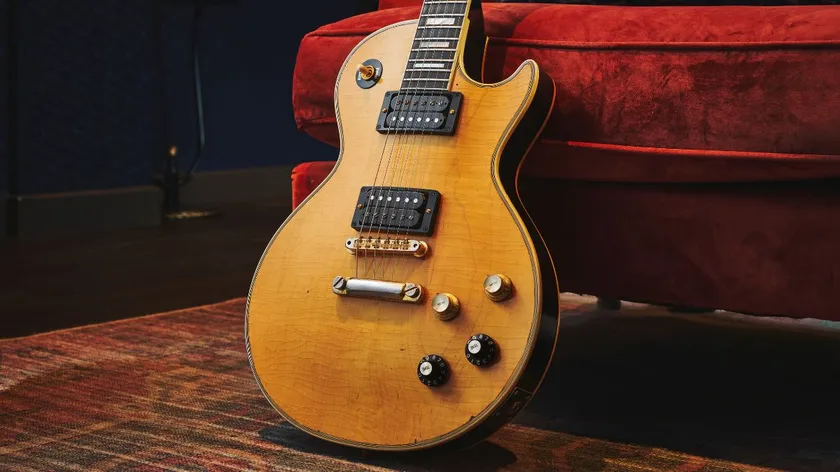
The first approach treats the guitar as a historical artefact. Faithfully replicated models such as Gibson’s recent ‘Greeny’ Les Paul, cloned from the iconic 1959 ’Burst shared by Peter Green, Gary Moore and Kirk Hammett, aren’t trying to improve the original template.
Their purpose is to preserve a frozen moment of rock history for a new generation. Conversely, the second philosophy looks forward, asking a practical engineering question: how can we make this guitar better?
These instruments use an artist’s experience to refine ergonomics, hardware and electronics. Steve Vai’s groundbreaking Ibanez JEM is the ultimate example. Its structural innovations solved real performance roadblocks, eventually trickling down into the mass-market RG series and permanently changing how modern guitars are built.
Problem Solvers
The best signature guitars rarely begin as marketing ideas; they start with a player trying to solve a persistent problem. Fender chief product officer, Justin Norvell, explains that this collaborative spirit is part of the company’s original DNA.
“It’s an ongoing conversation we have with everybody,” Norvell notes. “Leo wasn’t a guitar player. It was Bill Carson, Freddie Tavares… all of these players that would just say, ‘I like this. I don’t like this. Can you put an extra pickup on there? Can you do this?’”

Artist-driven R&D existed long before formalised signature models did. Michael Schulz, Fender’s head of Signature Artists, says that same spirit drives modern projects, though artists now arrive with highly specific insights from heavy touring and recording.
“We’re getting more information from artists saying, ‘Hey, I’ve been doing this thing. I’ve been hearing this thing… let’s R&D it.’ So then, we’ll try to figure out how to make it work.”
We bounced ideas off each other for years and we would always come up with different stuff
David Grissom
In much the same way, the PRS DGT grew organically from a friendship starting in the mid-1980s between David Grissom and Paul Reed Smith. As they exchanged ideas, Grissom’s road and studio experiences led to requests for a thicker mahogany body, revised pickups and player-focused changes.
Those ideas first evolved into the PRS McCarty model, which Grissom initially declined to put his name on out of respect for Ted McCarty’s legacy.
Grissom explains: “I was really at the point where… nobody knows who I am and I don’t want my name on the guitar. A lot of the ideas that I was trying to translate into the PRS were really ideas that Ted McCarty had pioneered at Gibson, and I thought it was extremely fitting and appropriate to recognise Ted for all his contributions.”
Only after years of continued refinement did that platform become the DGT. As Grissom recalled: “We bounced ideas off each other for years and we would always come up with different stuff.”
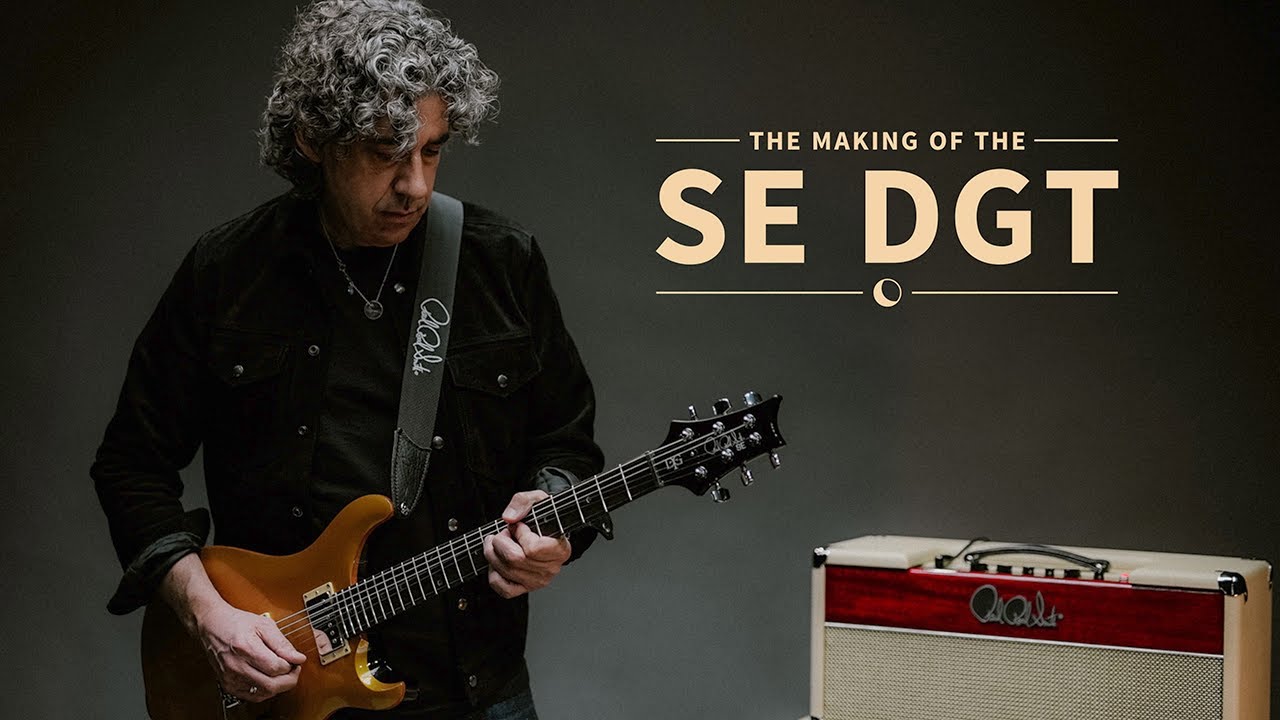
As Grissom’s session work increased, the guitar had to cover more ground. “We changed the control layout so the bridge pickup volume knob was closer to my little finger because I worked that constantly,” he explains. “We worked on the neck profile quite a bit over several years with quite a few prototypes.”
We changed the control layout so the bridge pickup volume knob was closer to my little finger because I worked that constantly
David Grissom
Norvell witnessed a similar level of microscopic detail when collaborating with Radiohead’s Ed O’Brien, where tiny shifts in wood dimensions mattered.
“I remember we were messing with different necks,” Norvell recalled, “and Ed was feeling 10 thousandths of an inch on the back shape of neck. ‘Well, this one’s a little bigger.’ We’d get out the digital calipers and, sure enough, the neck was bigger.”
The Eric Johnson Signature Stratocaster illustrated how demanding an artist can be when every detail affects performance. Norvell recalls that “Eric wasn’t interested in changing a guitar simply for the sake of change; he was searching for a very specific feel and response. The project ultimately involved testing more than 60 pickup sets and developing Fender’s first compound back-shape neck.”
But the real takeaway was much bigger than any single component. It was about getting every element to vibe together perfectly. “We always reduce it to the components,” Norvell says. “But, really, it was about designing a guitar that’s optimised to be the best version of itself where all the components work together in harmony.”
This same holistic approach defined the development of the PRS DGT, where Grissom focused heavily on achieving a seamless dynamic response across the entire fretboard.
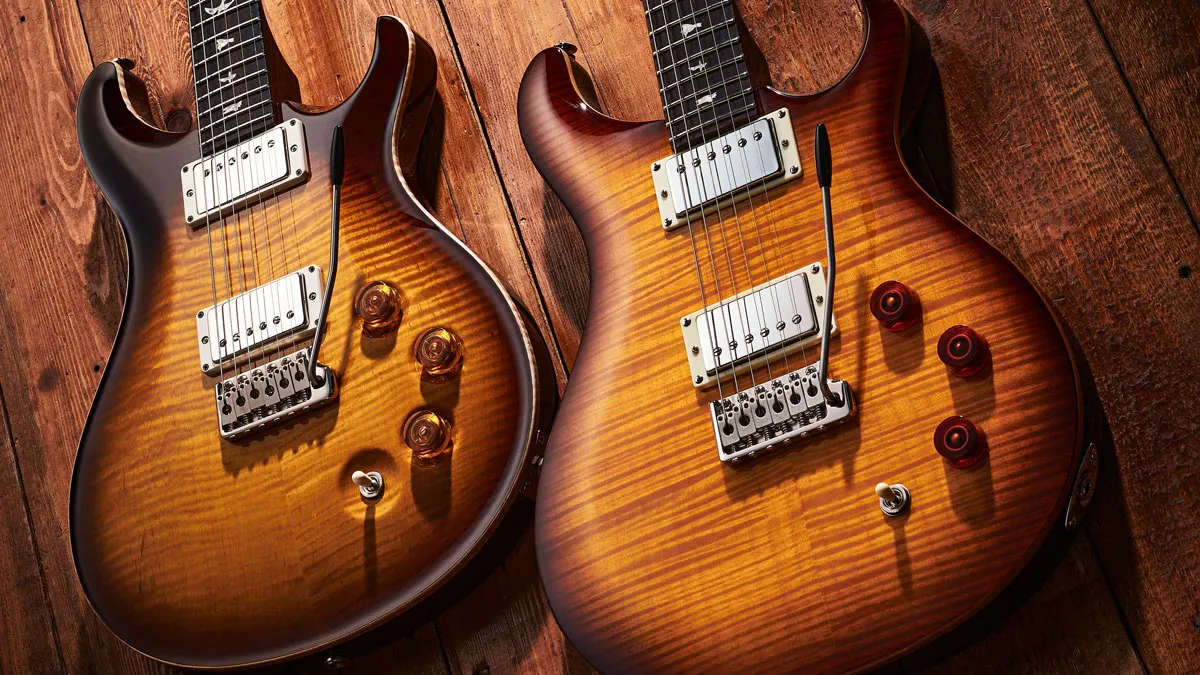
The pickups became a major focal point of the R&D process. Instead of settling for high-gain performance or sterile vintage replication, he pushed for a balanced pickup voiced to deliver rich output and musical warmth without losing an ounce of single-coil-like openness and clarity.
“I still felt like there was too much midrange, too much gain,” he says, “but I didn’t want it to be sterile. I’m trying to get that sweet spot, where you do have mids, but you don’t sacrifice the sweet top-end and the harmonic complexity.”
Factory manufacturing methods, like pickup potting, became part of the discussion. Grissom questioned whether soaking them too long in wax killed the sound.
“If you’re letting them soak in a tub of wax for 10 minutes,” he says, “you’re killing all that air around them.” The solution was subtle: “To this day, they just go in for a little bit, and we don’t do the vacuum where it pulls the wax through.”
That level of detail carried through the entire instrument, down to the fret bevels, spec’d for “maximum real estate, but with no sharp edges”. He sums up the philosophy simply: “Everything about that guitar is spec’d out. It’s not an accident. It’s not left to chance.”
Tried & Tested

Real-world testing is equally vital. Fender’s Michael Schulz recalls sending Mike McCready an early Road Worn Strat prototype to play on stage with Pearl Jam. McCready came back with direct operational notes: “Hey, this sounds great, but I need this changed a little bit – I need this neck thing fixed right here a little bit.”
For Schulz, that was definitive proofing: “How much more R&D truth can you get than having this be played during Yellow Ledbetter and Alive and Even Flow live with Pearl Jam?”
Grissom describes the exact same idea from the player’s side. His suggestions were “born out of thousands of gigs and hundreds of sessions”, but success required “the ability to take those suggestions, put them into a guitar, and then hit the road, or go make a couple of records to see if they worked”.
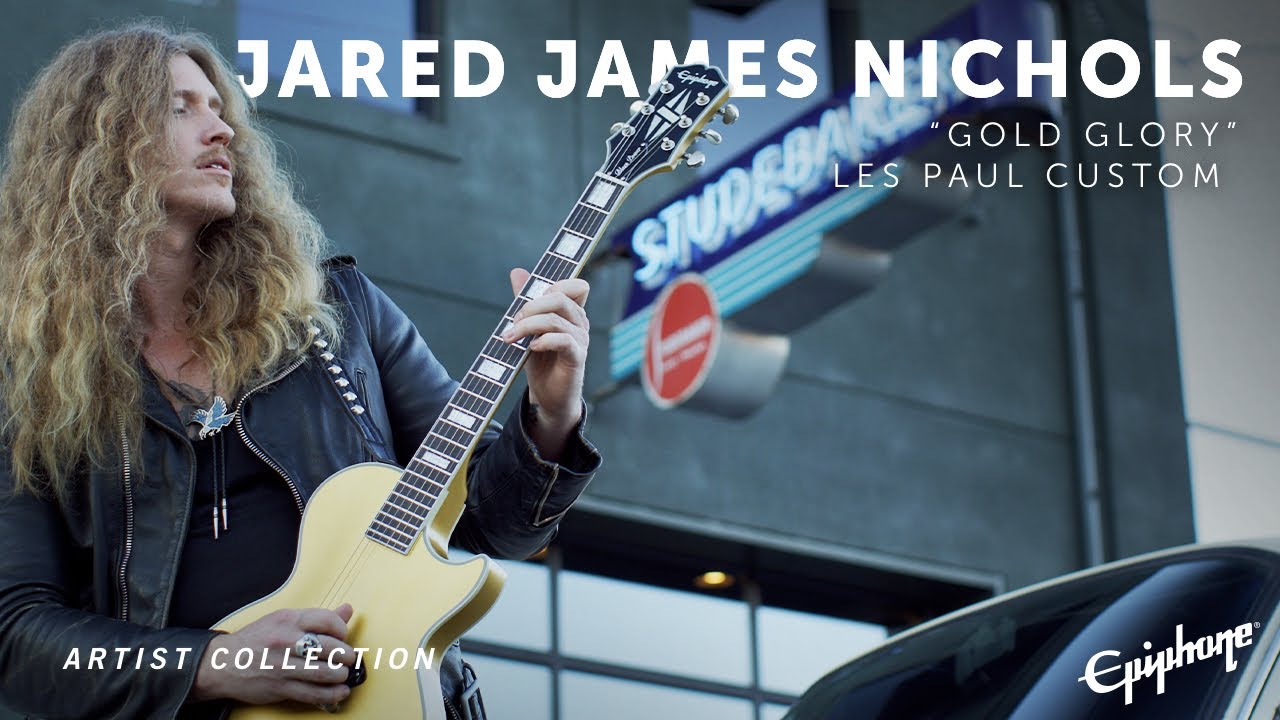
Jared James Nichols’ signature model evolved even more organically. Nichols took his own Les Paul, removed the neck pickup, stripped the controls and rewired it with a single bridge P-90 and one volume knob. The guitar became his main instrument long before a brand got involved. When Gibson approached him, Nichols says the development was remarkably collaborative.
“They let me pick whatever components I wanted,” he recalls. Crucially, Nichols chose to build the guitar as an Epiphone, rather than a Gibson Custom Shop model, wanting something working musicians could realistically afford.
Perhaps no model better illustrates the power of artist-driven R&D than Steve Vai’s collaboration with Ibanez. Rather than modifying an existing production model, Vai worked with engineers to build a guitar from scratch.
The resulting JEM introduced innovations such as the Monkey Grip, enhanced upper-fret access, advanced switching and the ‘Bear Claw’ tremolo rout – all practical solutions to Vai’s real playing challenges.

Meanwhile, Paul Reed Smith rejects the idea of a standard blueprint for signature guitars, noting every collaboration follows its own path.
“It’s all different,” Smith explains. “What I did with Herman Li, what I did with David Grissom, what I did with Carlos Santana – all completely different stories.” In fact, Herman Li’s model took nearly a decade because “he didn’t just want a guitar. He initially wanted a synthesizer controller that would do things that most guitars won’t do.”
By contrast, “David wanted a McCarty guitar with a tremolo, he wanted everything right”. Ultimately, Smith says, “it’s not a label-slapping moment where you just throw an artist’s name on the back of a headstock. It’s getting these people what they want and having their legacy and their pride involved.”

Together, these stories show that signature guitar R&D is multifaceted. Whether it is a long factory development cycle, a prototype tested on stage, or a guitarist stripping a Les Paul down to the essentials, the best examples all share one core idea: the artist brings the problem, the builder helps find the solution, and the guitar becomes stronger because both sides listen.
Back To Business
Behind every successful signature guitar is a massive investment of time, money and trust. Long before reaching a dealer’s wall, manufacturers spend years refining prototypes alongside an artist. It is a major risk, with no upfront guarantee that the instrument will appeal beyond a core fanbase.
For some players, royalties from a successful signature guitar can provide long-term financial stability while cementing an artist’s legacy. While David Grissom and Steve Vai both acknowledge the economic benefits, they insist that a guitar must ultimately stand on its own merits. Players buy an instrument because it performs, regardless of whose signature is on the headstock.

To make it all work, the guitar market has split into very distinct price points and tiers. At the ultra-premium end, limited Custom Shop micro-runs function less like tools and more like fine art or financial assets. The benchmark remains Gibson’s 2004 Jimmy Page Les Paul.
The 25 ‘Played and Signed’ models originally retailed for $25,000 and now routinely command over $80,000 at auctions. Fender’s 2006 clone of Eric Clapton’s ‘Blackie’ retailed for $24,000 and sold out in hours. These instruments generate immediate, high-margin cash flow and can elevate a brand’s entire catalogue.
This split highlights a brand-new approach to signature collaborations. As Fender’s Justin Norvell and Michael Schulz reveal, modern collaborations look far beyond traditional rock heroes.

High-profile releases like the Bruno Mars and H.E.R. Stratocasters are explicitly engineered to introduce the guitar to younger, more diverse demographics. When a partnership really clicks, it doesn’t just sell gear; it builds a lasting legacy for the company and creates a classic instrument that keeps inspiring players long after the artist is gone.
More Than A Name
The ultimate compliment a signature guitar can receive is when players forget it’s a signature model at all. The Gibson Les Paul is the absolute benchmark. While it carries the name of a true pioneer, most guitarists don’t buy a Les Paul to sound like Les Paul; they buy it because it is one of the greatest electric instruments ever built. Somewhere along the way, the design simply became bigger than the signature.
The same has happened with many of today’s most successful artist models. The PRS DGT has earned a loyal following among players who appreciate its feel and versatility, regardless of whether they’re familiar with David Grissom’s music. Martin’s 000-28EC followed a remarkably similar path.
The guitar’s initial spark came during Eric Clapton’s legendary 1992 MTV Unplugged performance, where his stripped-down acoustic set gripped a global audience and put the short-scale Martin 000 back on the modern map.
But while that landmark broadcast served as the ultimate launchpad for his 1996 signature model, 30 years later, it remains a cornerstone of Martin’s line-up because players discovered it is simply an outstanding, highly responsive acoustic instrument in its own right.
Even the Ibanez JEM tells a similar story. Steve Vai’s ideas helped reshape the instrument, but many of the innovations developed during the project eventually found their way into Ibanez’s hugely successful RG series, extending far beyond the people who originally set out to buy a Steve Vai model.
A signature opens the door in a showroom, but the guitar has to do the rest. That’s what separates the truly great signature models from the forgettable ones. The best ones endure because they became exceptional instruments in their own right.
The Game-Changers
Most signature guitars are designed to solve problems, introduce new ideas or celebrate an artist’s contribution. Every once in a while, a guitar does something much bigger. It changes the entire direction of the company.

Gretsch is one of the best examples. By the early 1980s, the company had all but disappeared from the conversation. Production had stopped, quality had suffered, and the brand had lost relevance.
Then Brian Setzer stepped into the spotlight with the Stray Cats, proudly playing his well-worn Gretsch 6120. Suddenly, a new generation of players rediscovered the brand, sparking renewed interest that eventually led to a successful line of signature models and playing a significant role in the company’s resurgence.
Gibson experienced a similar revival in the late 1980s. At a time when pointy ‘SuperStrats’ dominated the hard-rock market, Slash walked on stage with a late-’50s-style Les Paul and reminded an entire generation why the design had become a classic. Demand for Les Pauls surged, helping re-establish the model as Gibson’s flagship guitar and laying the foundation for one of the company’s most successful signature relationships.
Stories like these are rare, but they illustrate the extraordinary influence the right artist and the right guitar can have. The best signature models don’t just sell well; occasionally, they revive forgotten designs, reshape public perception and help rewrite a company’s future.
- With thanks to ATB Guitars in Melksham (www.atbguitars.com) and Gas Station Guitars in Taunton for providing the stunning vintage guitars photographed for this issue’s cover feature
- This article first appeared in Guitarist. Subscribe and save.

