


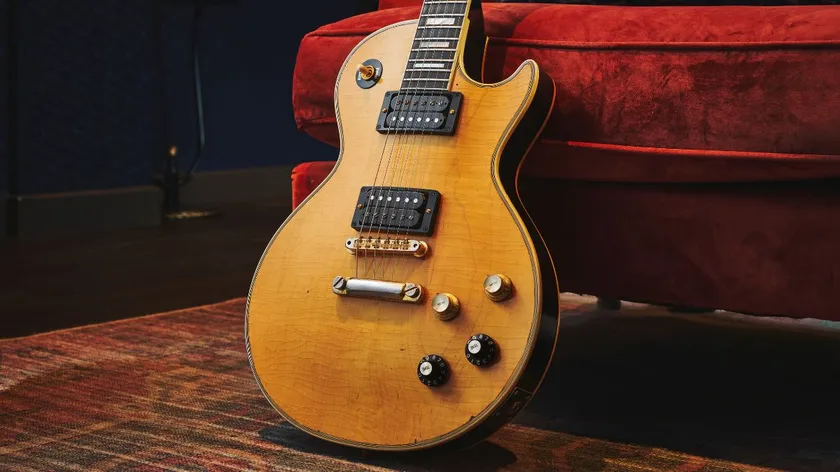


When it comes to spending money on gear, guitarists have been arguing the same thing for decades: is it smarter to pour your money into the electric guitar itself, or to splash out on the amplifier? On one side, you’ve got the purists, like me, who insist that a high-end axe is non-negotiable. The feel of the neck, the resonance of high-quality wood, and the precision of the hardware can’t be matched by a budget instrument, and even the best amps can’t hide a bad guitar’s flaws.
On the other hand, there are the tone chasers who believe a killer amp is the real secret sauce, arguing that even a beginner electric guitar becomes a world-class instrument when it’s plugged into a boutique tube combo with all the right bells and whistles.
In this feature, I'm squaring off with my Guitar World colleague and pro gear tester Matt McCracken to settle the debate once and for all. Each of us is taking up arms for our chosen side; I think it’s better to have a high-end guitar through a wallet-friendly amp, while Matt thinks just the opposite, preferring to plug a budget-friendly guitar into a top-of-the-line amplifier. We have each been given a theoretical $2,500 budget to spend, with free rein to spend that money however we see fit, as long as the rig is fully giggable.
For most players, money is a finite resource, and the dream of owning a pro-level guitar and an artisanal amp at the same time is sadly out of the question. Do you blow your budget on a guitar that inspires you every time you pick it up, or do you go for the amp that makes every note sound its best, even if your instrument is a little rough around the edges?
We’ll dig into why some players swear by premium guitars and see amps as mere loudspeakers, while others claim the amp is the heart of your tone and that even humble guitars can sound massive through the right rig. So, whether you’re plotting your next gear splurge or just love a good showdown, we've put our reputations and rigs on the line to see where you should really spend your hard-earned cash.
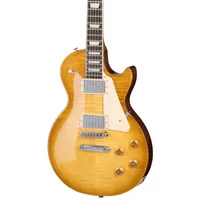
Expensive guitar and a cheaper amp


I'll be fighting the case for spending more on your guitar than your amp. First things first. I love guitars. Currently, I have around 25 of them, and that number only seems to be going up in the last few years.
Okay, I’ll be the first to admit that I have more than a passing passion for premium instruments, but at the end of the day, for me, it’s the guitar that inspires me to play. I think a well-made, well-set-up guitar makes you play better; it makes you more expressive and ultimately makes it easier to find your own voice.
My argument is pretty simple: if you’re going to spend money, spend it on the guitar, and don’t worry too much about the amp. I know there are some incredible boutique amps out there, and sure, plugging into a ‘60s Vox AC30 is a religious experience. But in 2026, modeling amps, even the affordable ones, are so good it’s almost ridiculous.
Technology’s caught up. At home, I routinely plug my almost $4,000 Gretsch Players Edition Falcon into a Positive Grid Spark, and it sounds killer, and I don’t think I’m missing out on anything when I’m jamming in my living room. Does my amp cost a fraction of my guitar? Absolutely. But does it really matter? Not one bit.
No amp can fix a guitar that feels like a plank of wood with strings, or even worse, one that won’t stay in tune
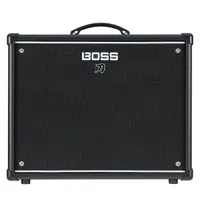
And that trend continues on to giggable amps, too. Look at the mighty Boss Katana. This humble little amp is incredibly wallet-friendly and, better yet, sounds fantastic. It’s loaded with a slew of classic Boss stomps, it’s easy to set up, and more than loud enough to take on even the most enthusiastic drummer.
Look, for me, your hands, your playing, your inspiration, all of it starts with the guitar. It’s the thing you touch, the thing you vibe with, the thing that gets you excited to pick up and play, whether you’re noodling on the couch, recording something or playing live. If the guitar feels right, you’ll want to keep coming back to it. No amp can fix a guitar that feels like a plank of wood with strings, or even worse, one that won’t stay in tune. But I genuinely think a great guitar can make even the most basic amp sing.
Of course, I’m not saying amps aren’t important – far from it. I still have a couple of tube amps I rely on, but if I were just starting out and building my rig from scratch today, with today’s tech, I know where I’d put my money. These days, you can get a modeling amp that sounds fantastic for not a lot of cash. The gap between a $200 amp and a $2,000 amp has closed more than most people want to admit. But I think cheaper guitars still need a little work, and possibly a fair few upgrades to get close to what a premium guitar feels like to play.
So if you’re on a budget, or just trying to decide where to put your money, my advice is simple: get the guitar that excites you, that feels like it was made for you. The amp can come later. Or not. Plug into whatever you’ve got. The important part is you’ll want to play, and at the end of the day, that’s what it’s all about.
Daryl's gear picks
Expensive amp and a cheaper guitar


I’m in camp guitar amp. For me, the level of guitar manufacturing has gotten so good that there’s not all that much difference between a thousand-dollar instrument and a three-thousand-dollar one. For me, a guitar is a guitar, a tool that any decent craftsman can eke a good sound out of.
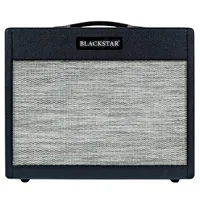
An amp, on the other hand, is something entirely different. Modeling is great; I’m a big proponent of it, but I still use a tube amp when playing live. Yes, I hate carrying it around, especially as it’s paired with a monster pedalboard, but for me there’s nothing that quite touches the sound of a cranked amp in a room.
I’m no John Mayer, but I play just as well on a Squier Strat as I do on a multi-thousand-dollar American-made shred guitar
As a guitar reviewer for the past four or five years, I’ve played a lot of different instruments. I’m a lucky boy, having had my hands on premium-level guitars costing over two grand and budget players around the $250 mark. For me, the difference in playability is negligible, especially once you’ve reached a certain level of guitar playing proficiency. These days the limiting factor on budget guitars is the sound rather than the playability.
A guitar from Indonesia can be set up to play just as well as one that’s handmade in the USA, so with a little extra work you can have something that plays just as butter smooth as a much more expensive instrument. I’m no John Mayer, but I play just as well on a Squier Strat as I do on a multi-thousand-dollar American-made shred guitar. And I still sound like me no matter what the instrument. I imagine if you gave the man himself an SE Silver Sky or the Core model, he’d sound just as good on both of them.
But my argument isn’t that you can make a guitar under $500 sound as good as a full-fat Gibson Les Paul, but rather that you can get a lot for your money below the $1k mark, and still have enough leftover from our overall $2.5k budget to get a top-quality tube amp to match.
The improvements above the $1,000 guitar mark are, for me, diminishing returns. You’re paying for the label, let's face it. If that's what you aspire to, there's no problem with that. But there are so many great guitar makers out there delivering high-quality instruments for less and less money; I imagine that’s what’s got certain companies scared enough to start making moves in the courtroom.
Digital amps are a prediction of physics; playing a cranked tube amp is physical interaction happening in front of your very ears
Modeling amps are fine if you’re practicing in your bedroom, but as soon as you get to live playing or recording, you’re going to notice their limitations. They just don’t have that depth of tone and quality, especially in the high end, which can often be harsh and digital-sounding. They need in-depth tweaking to sound their best, using software or downloading 3rd party impulse responses to get the most out of them.
Plug into a good tube amp though, and you’ll find all these problems disappear. Just turn some knobs, and away you’ll waltz to your own personal tone-henge. Sound is a physical thing, and computers haven’t managed to perfectly recreate that feel with their 1s and 0s – not yet anyway. Digital amps are a prediction of physics; playing a cranked tube amp is physical interaction happening in front of your very ears.
So my argument is that there’s not much point in spending many thousands on a guitar when you can get an instrument that plays just as well for below the thousand-dollar mark nowadays. Instead, you should splurge on a quality guitar amp, the thing that carries your sound to your ears and those of your listeners, as this is where the real magic lies in music-making. Sound is something we feel physically, and if you want to sound your best, I think you should spend your cash on a great tube guitar amp.
Matt's gear picks
Analysis

At the end of the day, whether you put your hard-earned cash into your guitar or your amp really isn’t about which one costs more or has the fanciest specs. We’ve looked at both sides of the argument here, from the thrill of a beautifully built guitar in your hands to the way a killer amp can make any guitar sing.
But honestly, if you step back from all the gear talk, what really matters is simple: does your setup make you want to play? The right guitar or amp is the one that you can’t wait to plug in and mess around with, the one that gets your creative juices flowing and just feels right every time you pick it up or turn it on.
What gets you inspired is personal. Maybe it’s the smooth neck of a guitar you can’t put down, or the way your amp shakes the room and puts a grin on your face. Spend your money wherever it’ll keep you picking up your guitar, because really that’s the whole point.
So don’t stress too much about where your money goes. Try out different gear, trust your gut, and pick the setup that actually makes you want to play more. In the end, it’s not about the price tag; it’s about what inspires you to grab your guitar and make some noise.
Tell us what you think
We've had our say; now it's your turn. Vote below on which part of the rig you think is the most important, and therefore you should spend more on. Sound off in the comments and let us know which side you're on. Better yet, tell us how you'd build your own dream rig for $2,500. We'd love to see what you come up with.
