


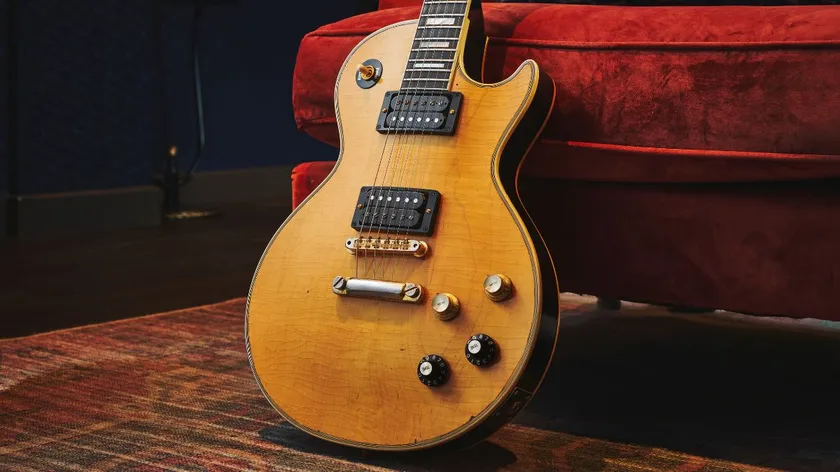


Indie-rock guitarist and songwriter Buck Meek decided to throw a curveball at his solo band as they tracked his fourth album, The Mirror. While they played live, producer James Krivchenia and engineer Adrian Olsen imported channel feeds into modular synths to create ambient soundscapes triggered by the performances.
“At the end of each day we'd listen back not only to hear ourselves, but also this parallel reality that was not even necessarily rhythmic,” Meek says. “It was just these crazy landscapes. That was really exciting.”
For fans of Big Thief – his main gig alongside Adrianne Lenker, who also appears on The Mirror – such a spirit of innovation won’t come as a surprise. Meek is anything but conventional in his approach to music and his instrument.
He even turns the concept of a solo album on its head. Instead of using the opportunity to flex his Berklee-trained instrumental prowess, he yields the spotlight to guys like Adam Brisbin, who takes the lion’s share of leads on The Mirror.
“I feel like I'm really making music when I've kind of disappeared,” Meek says. “I'm not thinking about myself at all. I’m listening to everything around me and responding to it.” In the most collaborative spaces, he notes, everyone is doing that simultaneously.
“If you're in a state of pure listening and you’re open with a group of people you trust, it kind of rearranges your cells or your mind, [how] your thought patterns work, and your relationship with your instrument. I think it pulls you out of your own habits and instincts, and changes you as a person and as a player.”
His role as a guitarist here is still vital, though. Using a trio of trusted instruments – a 1926 Martin 0-18 that was shattered and repaired, a “parts-caster” made with pieces from Guitar Mill, and a prototype of what became the Collings I-30 hollowbody – he’s turned out a collection of subdued, experimental indie-Americana pieces.
Did you go into writing The Mirror with any specific goals in mind?
I wanted to relinquish fear as much as I could in the writing process. I wanted to be really honest with myself; to lean into things I was afraid to say. When you’re writing a song, inevitably, self doubt comes up, or self consciousness, or the desire to be smart, cool, beautiful, hip, and well-liked.
It’s a vulnerable process to make anything. And for this album, when those things would arise, I’d lean into them and do the thing that I was afraid to do, and amplify or emphasize it. That was really freeing.
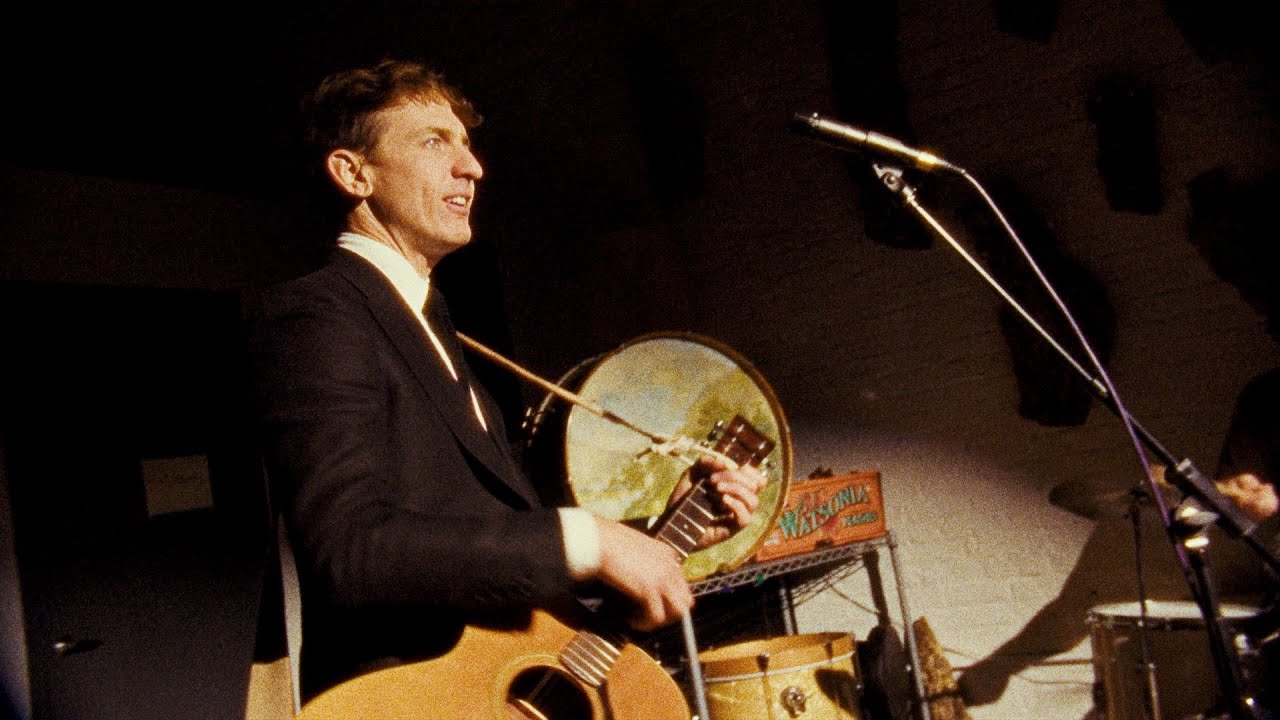
Recording live allows for spontaneity, but you added a layer of triggered effects and synths. How did that shape the performances?
We had my live band set up in a circle in a log cabin studio that I have with my wife, Germaine Dunes. I was on the front porch with a vocal mic and there was a big window into the living room where the band was set up with the drums, so I had a little isolation out there. We had James and Adrian in the control room, who had two separate modular synth and electronic instrument worlds.
They were able to pull any channel from the band into their rigs as a trigger, whether for melodic percussion, or just some element of the band triggering an ambient landscape and kind of destroying it. That was being fed back into the mix, although we weren't hearing it in real time. So there was this element of trust.
You can hear that on Pretty Flowers, Ring of Fire, and Can I Mend It? They were creating this parallel reality, and when we heard it, it was really surprising. It created this sense of danger.
What role did the guitars play in those moments?
Most of the guitar playing you hear on the record was done live in the room with the band. Adam Brisbin has been playing guitar with me for 10 years, and he's one of my favorite guitar players on Earth. He's an incredible improvisor. Most of the solos are Adam just flying off the cuff in the moment with the band, while his guitar was triggering some synths.

From a guitar performance standpoint, what was your contribution?
In Big Thief I’m a lead player; but with this project I focus mostly on writing the songs, singing the songs and playing rhythm. When I was growing up I was brought in by these jazz players in Wimberley, Texas – Slim Richey and Django Porter. These old school manouche and swing players had me playing that four-on-the-floor Django Reinhardt-style rhythm for hours a day.
I was only allowed to play rhythm, like the “sushi rice for seven years” thing. So rhythm guitar has always been a really important part of my life, and I enjoy being able to focus on that and let Adam take the lead. Rhythm is like an underdog, but there’s just so much depth there. I think you could spend your whole life just playing rhythm guitar.
He’d talk about guitar like it was digging ditches or being a factory worker – like you’re waking up every day and working hard, bleeding on your guitar a bit
Were there moments where you surprised yourself?
One moment that felt like a realization was the song God Knows Why. We’d been playing really loud live, leading up to the recording session – kind of Crazy Horse style, just unhinged. We tried to record it that way, but it somehow sounded really small.
Then James suggested we take acoustic guitars and tune them really low, almost as slack as they could get, like baritone range. We played the song a lot quieter with acoustic guitars, but somehow it translated to be much bigger sounding.
That was a big lesson for me, that louder doesn't always translate well in microphones. When you're playing live, there's no replacement for displacement as far as loud amps in a room. But somehow with microphones, it doesn't always translate.
Something about playing softly with these low-strung acoustics just kind of bloomed in the microphones, and you get all this low end and all this wood. It ended up feeling much heavier in the microphones.
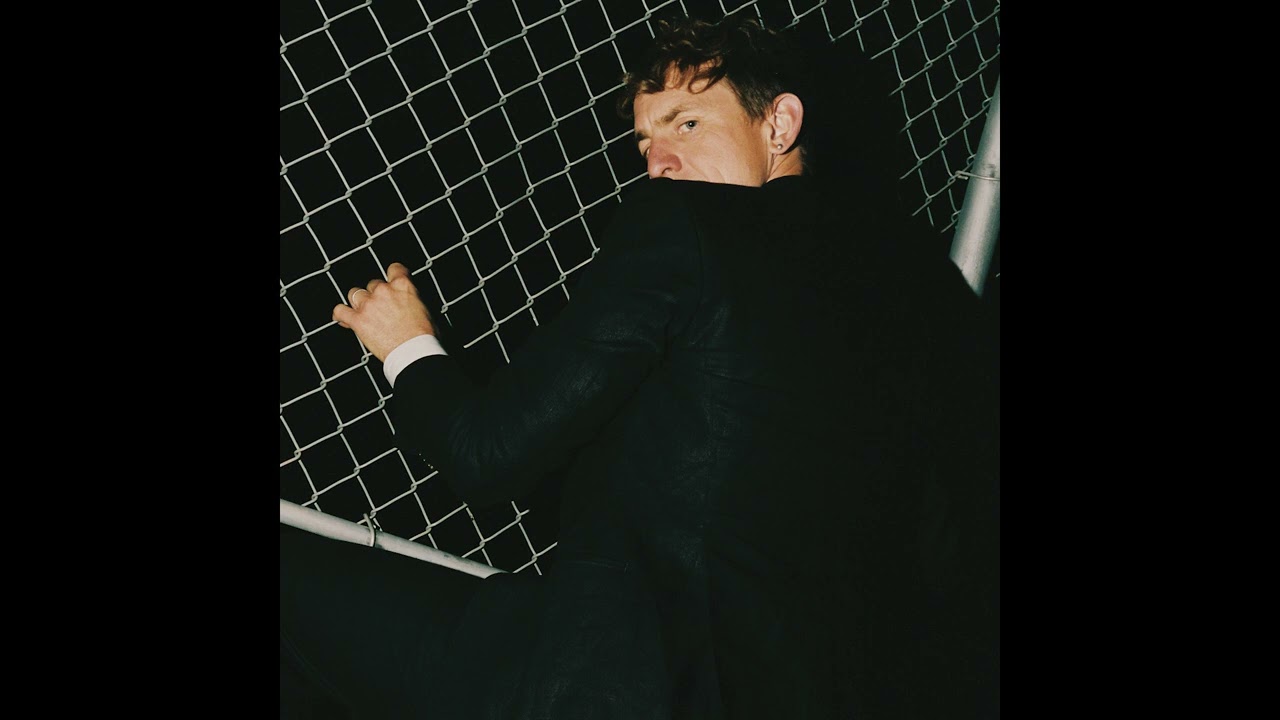
You studied Berklee early in your career. What elements of your education inform what you do today?
The guitar teacher that I found in my sophomore or junior year, David Tronzo, really changed my life on the guitar. I think about him all the time, every time I pick up a guitar.
In one of my first lessons with him at Berklee, he was basically like, “Who's your favorite guitar player?” And I said, “Oh, Django Reinhardt.” And he's like, “Wrong answer, go home.” I kind of figured out the puzzle that I was my favorite guitar player, and he's like, “Right answer, take your guitar out of the case.”
I think the first lesson he gave me was two notes. He said, “We're gonna spend the whole hour just playing these two notes,” and, “Play from your guts – make me cry with these two notes,” like, it doesn't need to be fancy.
He would talk about the guitar from a place of survival. He’d always say, ‘Are you keeping the lights on with that playing? You need to be playing in a way that moves people’
“Don’t worry about all the theory, the inversions, and all the heady modal stuff the school is teaching you. Let’s just play two notes for an hour and tell a story.”
He would talk about the guitar from a place of survival. He’d always say, “Are you keeping the lights on with that playing? You need to be playing from the heart, from your guts, in a way that moves people and is gonna put food on the table.” And not in, like, a shallow way, but to remind me to keep it real, I guess.
He’d talk about guitar or playing music like it was digging ditches or being a factory worker. You need to treat this like you’re waking up every day and working hard on it, bleeding on your guitar a little bit. I think about that all the time.
- The Mirror is on sale now.

