

Guitar World Verdict
The already impressive Tonex One has just become a much more interesting proposition with this newest iteration. It’s the same stellar sounds and budget-friendly credentials, but with its limitations decreased and its usability improved. I expect that we are about to see the Tonex One+ on many a pedalboard.
Pros
- +
Lots of functions squeezed into a small package
- +
MIDI and Bluetooth connectivity expands rig potential.
- +
Great amp tones via IK's capture tech.
Cons
- -
Desktop app is a bit clunky.
- -
Requires some button memorization to get to certain functions/modes.
- -
Some may prefer more in-depth effect tweaking.
You can trust Guitar World Our expert reviewers spend hours testing and comparing guitar products so you can choose the best for you. Find out more about how we test.
What is it?
Whilst not everyone is on board with the digital guitar amplification thing, there is no escaping the fact that it is now an established part of the industry, in both professional and hobbyist realms. IK Multimedia’s Tonex line has done its fair share in helping the technology reach this point, with the Tonex Pedal and its tiny sibling, the Tonex One, leading the way in affordable, capture-based sounds.
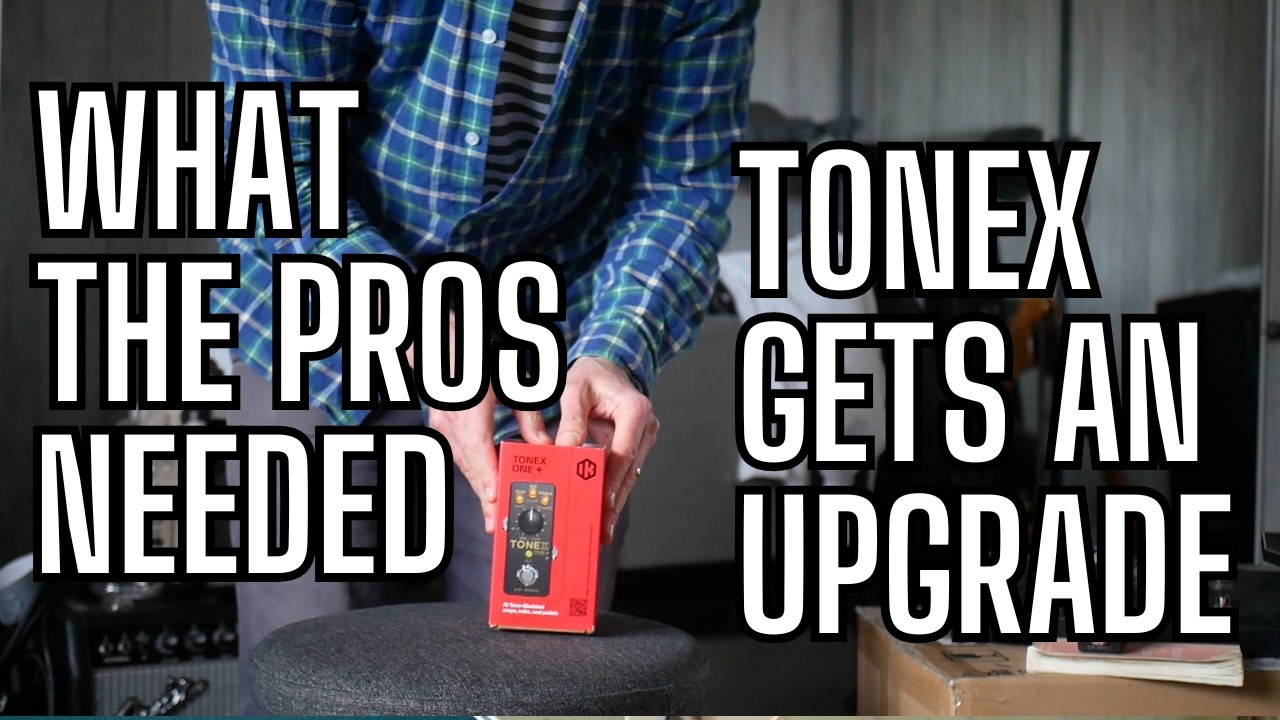
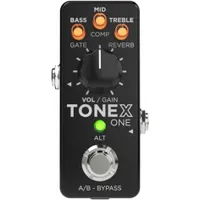
It’s the latter of the two pedal amps that I am looking at, as it has received a bit of a glow-up in the form of the Tonex One+. The original is a mini pedal that squeezes the Tonex sounds into a tiny package.
The downside is that there is only one footswitch and four controls, so playing live could be a little awkward if you need more than one or two sounds from the pedal.
If the Tonex One had MIDI and Bluetooth connectivity, this issue would be heavily mitigated by allowing users to utilize a MIDI foot controller for live changes and a mobile app for editing. Unfortunately, this was not to be on the Tonex One, but I think you can see where this is going…

The Tonex One+ boasts exactly these two things, which, if they work as advertised, would drastically increase the utility of the pedal and therefore the number of rigs that it could be a viable addition to.
A bit of housekeeping before we get stuck in, the Tonex line works on captures, which IK Multimedia refers to as Tone Models. Captures differ from amp modeling in that they are a snapshot of the captured amp in its current state, rather than a complete model of the components of the amplifier – including its editable controls.
This means that any EQ changes are a generic, and often more subtle change than you might find on a model that reflects all the controls as they are on the actual amp. The upside is that you have thousands of captures to choose from, and, if you have the right gear, you can even capture your specific amp and take it on the road in digital form within the pedal.
A potentially huge addition to an already significant product line
Captures (or Tone Models) can’t be created on the Tonex One+ (this function is reserved for the pricier Tonex Pedal), but it can still run all the captures uploaded to Tone.Net, which is IK Multimedia’s library of free Tone Models uploaded by users across the world and also home to some paid collections from Tonex. Many more paid options are sold by third parties too.
So, in short, this is a potentially huge addition to an already significant product line.
Specs

- Launch price: $249 | £249 | €269
- Type: Amp capture and multi-effects pedal
- Controls: Bass, Middle, Treble, Gate, Comp, Reverb, Volume/Gain, Alt button
- Features: IK Multimedia Tone models and effects, Bluetooth app, MIDI connectivity
- Connectivity: 1/4" In and Out, Bluetooth, and 1/8" TRS MIDI in and through, USB-C
- Bypass: Buffered Bypass
- Power: 9v DC centre negative, 0.15A
- Dimensions: 48x94x53 mm/2.09" 1.89"x3.7"x2.09"
- Weight: 168g/0.37lbs
- Contact: IK Multimedia
Build quality

Build quality rating: ★★★★½
We’ve reviewed a number of different models of the Tonex One on Guitar World, and the build in all cases is the same outside of the aesthetic, and this remains unchanged in the Tonex One+.
In summary, it’s a small, aluminium package with some reassuring heft that indicates a good build. The footswitch follows suit with a satisfying clunk, and the mini knobs offer enough resistance to inspire confidence in their longevity.
The bigger control is a little looser and doesn’t quite have the same premium feel, but not problematically so.
The aesthetic is similar to the original pedal, with a black chassis but gold text instead of silver. Being entirely subjective here, I prefer the Gold.
Usability and features

Usability and features rating: ★★★★☆
To cram so many features into something so small is nothing short of astounding. Again, we have covered this in previous reviews as the Tonex One+ operates the same way as its prior iterations.
The short of it is that each of the controls for the three-band EQ and the main volume control has two functions, the second of which is accessed by holding down the Alt switch. Making for a total of eight parameters that are adjustable from the front panel.
So many features in something so small is nothing short of astounding
There are three different modes - Dual, Stomp, and Browse. The first has the footswitch toggle between two presets, and the second features one preset with the switch turning the pedal either on or off. Browse mode changes the function of the three EQ controls from Bass, Mid, and Treble to preset A, B, and C. Turn the mini controls to change the preset each is assigned to, and toggle between the three of them with the footswitch.

The issue with having so much in something so small is that accessing some of these things requires memorizing button presses and/or knob turns. For example, changing between Dual and Stomp mode requires holding the Alt button for six seconds until its light turns blue, then turning the Bass EQ mini knob.
Methods like this feel a little convoluted, but it’s hard to imagine another way to do these things whilst preserving the miniature form factor. So, while it does take a bit of brain power, I find myself willing to figure it out.
But the big news with the Tonex One+ is the added MIDI and Bluetooth functionality. Starting with the MIDI, this allows the player to control preset changes and effects with a MIDI controller.

No longer do we have to connect the device to a PC or Mac to edit presets, as it can all be done from the app
Unceremoniously demoting my Line 6 Helix Floor to a MIDI controller for testing, this works as expected with the addition of a ⅛” to five-pin DIN adapter, and will make the Tonex One+ a viable addition to many a pedalboard. Particularly if you are using a switching system like the Boss ES-8 or Gig Rig systems with built-in MIDI control.
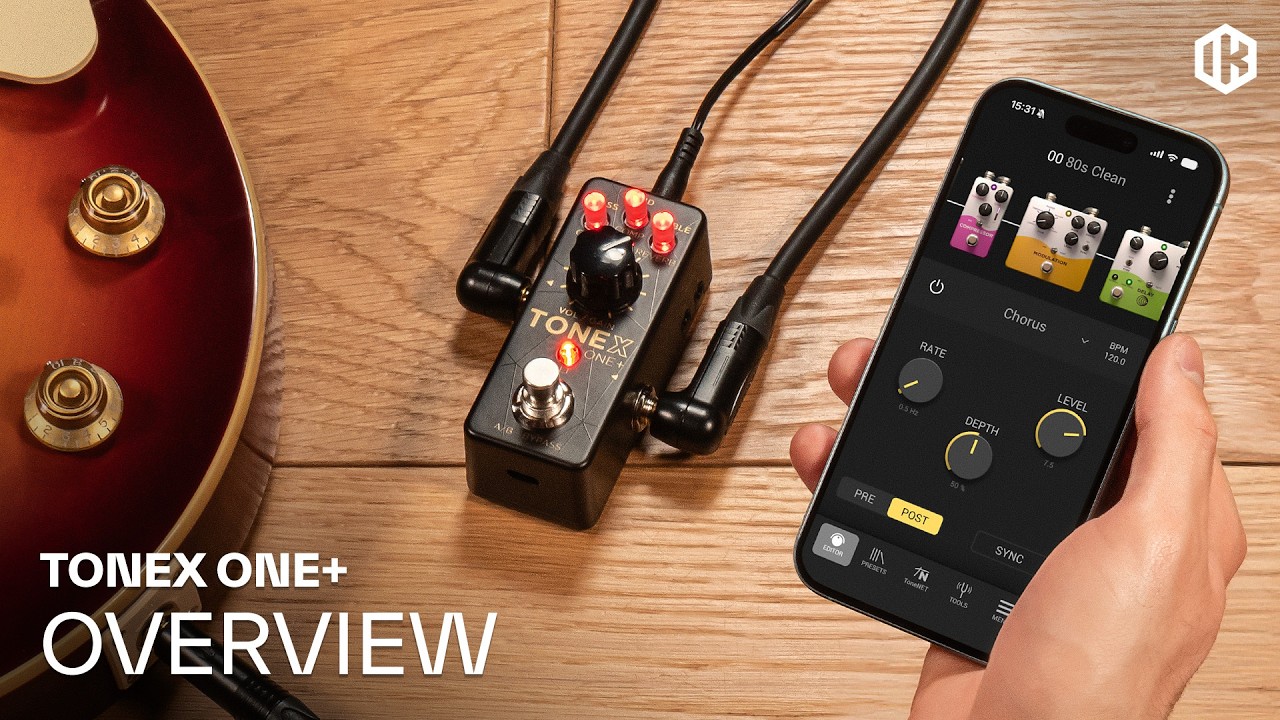
Adding to the functionality is the Bluetooth and associated Tonex Control app, which changes the way we interact with the Tonex One+. No longer do we have to connect the device to a PC or Mac to edit presets, as it can all be done from the app. A pretty big improvement from the Tonex One.
The app itself is easy to use, with high-quality images of the signal chain across the top. The chain consists of a noise gate, amp, cab, compressor, followed by a choice of five modulation effects, two delays, and six reverbs (four of which are spring).
The parameters for adjusting each item are displayed via big knobs beneath the chain, along with the option to move the effects (apart from the gate) post or pre-amplifier. It’s all pretty straightforward, making editing feel seamless.

A simple metronome and tuner is always a plus, and included here, along with access to Tone.Net - IK’s library of Tone Models. There is a wider selection available in the browser version of ToneNet, and no way to test Tone Models with just the app and pedal (there is, however, with the desktop software), without overwriting a model within the hardware, so there is certainly some room to add utility here.
However, if you have a Tone Model from ToneNet you would like to add, it’s as simple as selecting it from the list, and then the app will add it into the current preset on the hardware. This is delightfully simple and much more straightforward than the process involved in the Desktop apps.
While the desktop apps have been improved over time, and they are certainly easier to navigate than they initially were, they still feel somewhat clunky.

You can download free, user-made Tone Models through the Editor app, but you will need to use a browser to view curated versions of the rather big list. And the only way I could find to download IK's Signature + collection was with a combination of both the Editor and Tonex app.
Companies like Kemper do a better job of having this all in one place, so IK still has some catching up to do. But, as I said, the company has already improved the apps from where they were upon release, so it is the kind of catching up that can absolutely be achieved.
And given the unit's budget credentials combined with the sheer number of features in such a diminutive size, I can see plenty of players finding it worth looking past these issues.
Sounds

Sounds rating: ★★★★½
Since we last looked at the Tonex Line, IK has released the new V2 version of its capture software. This promises more accurate captures, faster AI training in the capture process, the ability to batch process Tone Models, and automatically deal with phase issues.
The Tonex One+ comes loaded with 20 presets consisting of these V2 tone models from the new Signature collection, which is free for all those purchasing the Tonex One+ The Signature collection totals 100 tone models, all accessible via the ToneNet.
Playing through the presets, what is immediately obvious is just how well they clean up on the volume control. As someone who has used and gigged the Tonex Pedal, it’s something that the line has always been good at, and that continues to be the case here.
The result is a set of dynamic sounds that react well to picking attack in a way that you can’t help but feel engaged with.
A quick favourite is the Big Hair 800 preset with it’s JCM800 flavoured tones. It’s a massive Marshall sound, perfect for that 80s rock thing. Another is the 51 chug, with a thumpy low end that you would expect from a 5150 Tone Model.
I find that some models can lean slightly on the edge of too much low end- The Slow Hand preset, for example. When I’m hitting a low note in a clean chord, there’s a bass frequency that tends to take over a little, disguising the rest of the chord in a way that is tricky to dial out.
To that end, there are plenty of third-party vendors that I would highly recommend having a look at. For example, I find some of the Studio Rats stuff to be free from that aforementioned low end and boast a few more of those tasty overtones than the pre-loaded sounds in the pedal.
I’ve spent a lot of time with the Tonex Pedal, having gigged it in the past, and the V2 Tone Models certainly feel a step up in terms of the dynamic response. Tonally, I suspect that it would be hard to tell which is more accurate outside of a controlled A/B test with the reference amp to hand, but the tech is impressive either way, as it is a joy to play.
The cab section can utilize captured cabs, a VIR cabinet emulation, or third-party Impulse Responses. Most of the time, I am leaning towards the captured cabs as they seem to provide a little more clarity when compared to the VIR.
When it comes to the effects, we have already reviewed them in previous bits of hardware, such as the Tonex One Joe Satriani. The Tonex One+ features the same suite of stomp boxes, but to summarise, what’s on offer is a simple but functional collection of essentials.
The chain begins with the gate, and that is particularly impressive when it comes to taming those high-gain sounds, managing to control the noise whilst not getting too much in the way when set properly. Next is the compressor, then a modulation which can be either a Chorus, Tremolo, Phaser, Flanger, or Rotary speaker, then a Digital or Tape delay, and lastly a Room, Plate, or four variations of a Spring reverb.
All feature simple but effective controls, for example, just Time, Feedback, and Mix for the delay sounds. If you're someone who wants to be tweaking for days, you may prefer a device with a bit more depth here.
Personally, I find that their straightforward nature allows me to speedily reach the good stuff, with effects like the delay providing either the crystal clear character of a digital delay, or the lovely flutter of a tape with enough control to keep either out of the way of the mix, or all encompassing if you need it.
The only one I would appreciate a little more control over is the Chorus, as it is a little dark on clean tones, making things a touch too heavy on the low end.
Tones capable of holding their own on a pro-level board
With all this, however, we have to remember the price point. This is around $249 in most places. Significantly cheaper than the competition, but with tones capable of holding their own on a pro-level pedalboard.
Verdict

For long-time Guitar World readers, most of what is written here won't be a surprise. We have reviewed the Tonex Pedal and the Tonex One previously, as well as others from the line, and they all run on the same tech.
What sets the Tonex One+ apart is the inclusion of MIDI and Bluetooth. MIDI significantly increases the pedal's utility on a pedalboard, bypassing the limited switching that its form factor necessitates, and the Bluetooth app makes editing presets a lot easier than on its older sibling.
Compared to other pedalboard-friendly digital solutions, the Tonex One+ doesn't have the relatively high power draw of something like a Nano Cortex or Fractal Am4, and the added functionality solves some of what made the Tonex One a compromise.
I often gig with analog pedals in a digital rig, and those considerations have meant I've never quite found the perfect solution before, but this could be it.
The Bluetooth app arguably makes adjusting presets easier on the Tonex One+ than even the full-blown Tonex Pedal
It’s worth noting here, however, that the Tonex One+ does not replace the standard Tonex One if your needs are streamlined. If you are someone who is just looking for one amp sound on the end of a pedal board, with effect duties covered by your favourite stomp boxes, then the MIDI is not needed, the App won't be quite as game-changing, and the best option for you may be the original.
For everyone else, this is a huge step up.
Guitar Word verdict: The already impressive Tonex One has just become a much more interesting proposition with this newest iteration. It’s the same stellar sounds and budget-friendly credentials, but with its limitations decreased and its usability improved. I expect that we are about to see the Tonex One+ on many a pedalboard.
Test |
Results |
Score |
|---|---|---|
Build quality |
The same high quality build we have come to expect from the Tonex Line. |
★★★★½ |
Usability and features |
A tiny pedal packed full of features, but with a few worthwhile compromises in ease of use. |
★★★★☆ |
Sounds |
Pro level sounds at an affordable price point, with even better tone models available through third party vendors. |
★★★★½ |
Overall |
The MIDI and Bluetooth solves a lot of the limitations of the original, whilst sporting the same stellar tones. |
★★★★½ |
Also try
Hands-on videos
IK Multimedia
The Studio Rats
John Nathan Cordy