


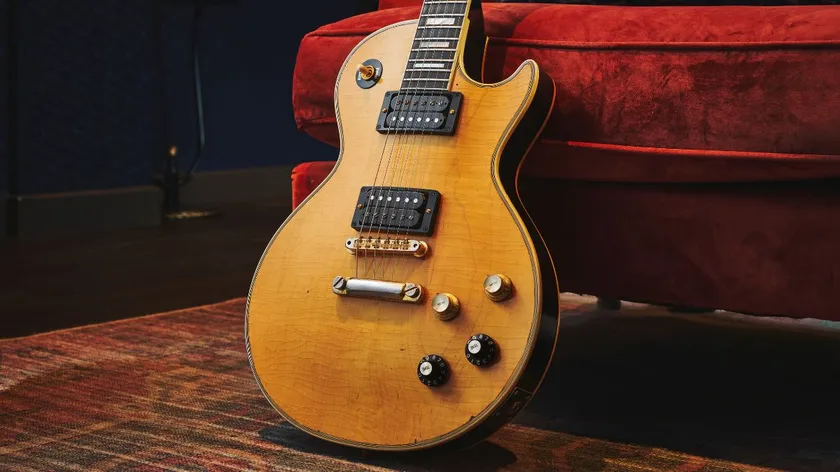


A staple of many great country and country rock songs – and, in the hands of Jimmy Page and Albert Lee, rock songs – is the sound of the B-Bender.
For those unfamiliar, a B-Bender is a string-pulling device built into a guitar, most often a Fender Telecaster, that allows the player to raise the pitch of the B string by simply pulling down on the guitar strap. This enables one to emulate the pitch-bending sound of a pedal steel guitar, which works in a similar way, with pedals used to raise the pitches of individual strings or groups of strings.
The B-Bender was originally known as the “Parsons/White Pull-String,” because it was the brainchild of guitarist Clarence White and drummer Gene Parsons of the Byrds and Nashville West.
Legend has it that, while recording, Clarence said, “Hey, I need another finger to play this chord! Gene, come over here and push down on my B string behind the nut to raise the pitch.” Gene reportedly said, “You know, I can build a device that will do that for you.” And thus the Parsons/White B-Bender was born.
Part of the guitar’s body is hollowed out for a pulley system: a rod is attached to the strap button above the neck, and when this rod is pulled downward (by pulling on the strap), the pulley system raises the pitch of the B string inside the bridge up to one whole step.
As a young guitarist, I was completely under the spell of all of the fantastic B-Bender players, including White, Marty Stuart, Lee and Page, who used a B-Bender guitar brilliantly on the 1979 Led Zeppelin album In Through the Out Door.
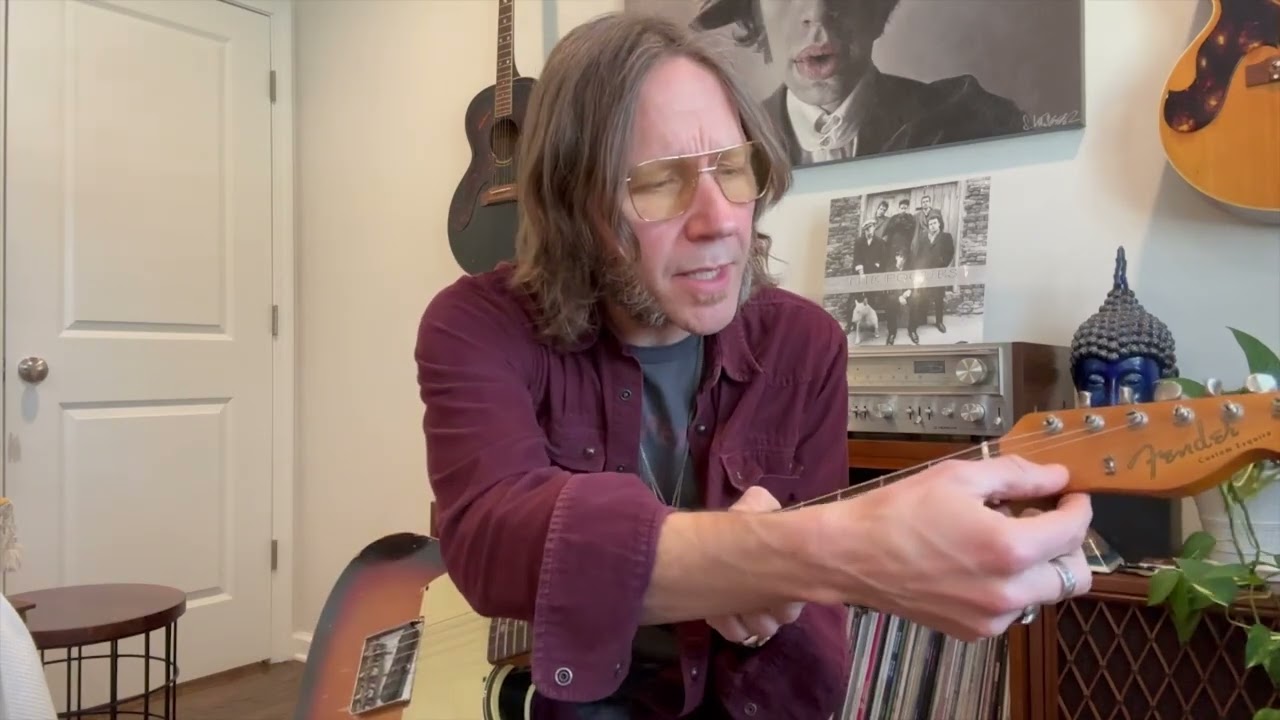
Like most players, I was forced to learn how to attain the B-Bender sounds on a standard guitar long before I attained one equipped with a B-Bender.
As shown in Figure 1, while holding down the notes B and F# at the 7th fret on the top two strings, I can bend the F# up to G#. This technique, where one note rises while another remains stationary, is known as an oblique bend.
We have a Blackberry Smoke song called Sleeping Dogs, in which I play B-Bender-type licks on a standard guitar. As shown in Figure 2, there’s a turnaround in the song that goes D5 - E (or E7) - G7 - D.

Figures 3 and 4 illustrate the licks I play over these chords, for which I bend my G string downward to raise an E note up to F#.

Years ago I’d go see Rick Richards from the Georgia Satellites, who played a Les Paul Junior through a dimed Hiwatt amp. He was the king of Chuck Berry-style licks, like the one shown in Figure 5, and he’d play beautiful licks like Figures 6 and 7 that emulated the B-Bender sound by bending his G string while holding two-note forms on the top two strings.


In Figure 8, I begin by bending into an E major triad (E, G#, B) and then play a lick based on E major pentatonic (E, F#, G#, B, C#) combined with the E blues scale (E, G, A, Bb, B, D).

In Figure 9, the oblique bend technique is applied to the top two strings with the bends on the B and G strings.

- This article first appeared in Guitar World. Subscribe and save.
