


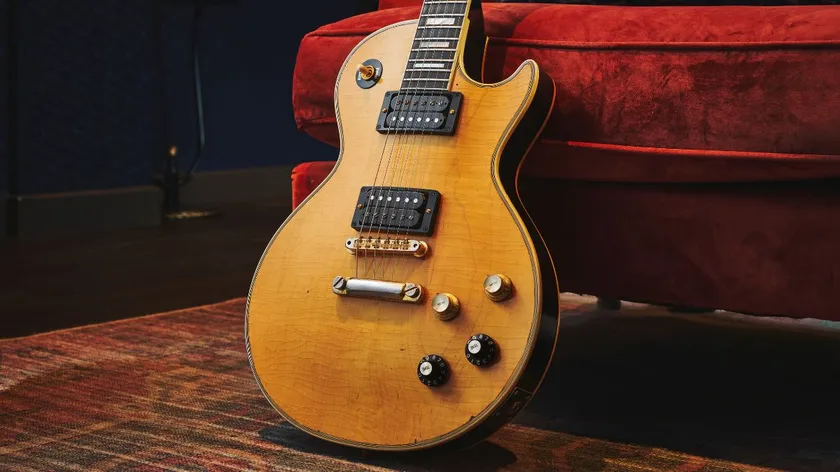


The idea behind this lesson’s example solo is to try to ‘reinvent the wheel’ by wilfully ignoring the rich tradition of blues/pentatonic soloing – which has evolved over decades – and imagine folk, jazz, blues and Celtic music combining as if for the first time in a parallel universe... In theory, this could give a brand-new perspective on vocabulary, tone and so on. In practice, it reminded us a lot of Mike Oldfield!
Mike is best known to many as the composer and performer of Tubular Bells. Though renowned as a multi-instrumentalist, Mike has said that he regards himself primarily as a guitarist, having initially been influenced by acoustic soloists such as John Renbourn and Bert Jansch. However, he was also very struck by the emotive blues-influenced soloing of Free’s Paul Kossoff and the electronic soundscapes of Terry Riley.
In fact, the more we look into Mike’s playing, the more apparent it becomes that he was already going through the thinking process described above back in 1973. He invented something that incorporates elements of all the styles mentioned, with his own take on melody and harmony – plus an unusual violin-style vibrato and fingerstyle technique, even when playing with lots of overdrive.
Mike’s amplification setup was similarly unconventional, employing overdriven channel strips, multiple stages of EQ, limiting and noise gates. We’re definitely not talking about someone who just went out and bought what everyone else was using!
The example solo, though not originally played with the specific intention of emulating Mike, does include many of the elements he combined to form his own style. It isn’t very pentatonic (though there are moments) and makes more use of arpeggios, often superimposed over different chords. I hope this will be useful to anyone searching for some fresh ideas for their blues licks.

Example 1

This opening phrase starts and finishes with recognisably pentatonic ideas. The descending line between the two quotes directly from the D major arpeggio in different positions – or inversions, if you prefer. Either way, the notes are D, F# and A in various permutations.
The fact that we’re playing D major patterns in the context of E minor is an interesting twist. When you consider an Em11 chord is made up of E, G, B, D, F# and A (Root, b3rd, 5th, b7th, 9th and 11th), it begins to make sense.
Example 2

After an angular pentatonic beginning, we revisit the idea of superimposing different triads/arpeggios over a static underlying chord. Over the A minor, we have a descending run derived from the arpeggios of C major, B minor and the chord itself, A minor.
The B minor part functions as a passing phrase between the C major (relative major to A minor) and the A minor arpeggio itself. It doesn’t have enough notes in common with the E minor to be used as a starting point for melody.
Example 3

After a bluesy pentatonic beginning, complete with bends and vibrato, we move onto some more superimposed arpeggios. By now, this concept may be starting to seem familiar: we have fragments of D major and B minor mixed in with pentatonic style lines, using shape 1 of the E minor boxes.
It’s worth experimenting to see what triads/arpeggio shapes sound good to your ear, rather than aiming for what ‘should’ work. No risk, no reward!
Hear it here
Mike Oldfield (with David Bedford) – First Excursion
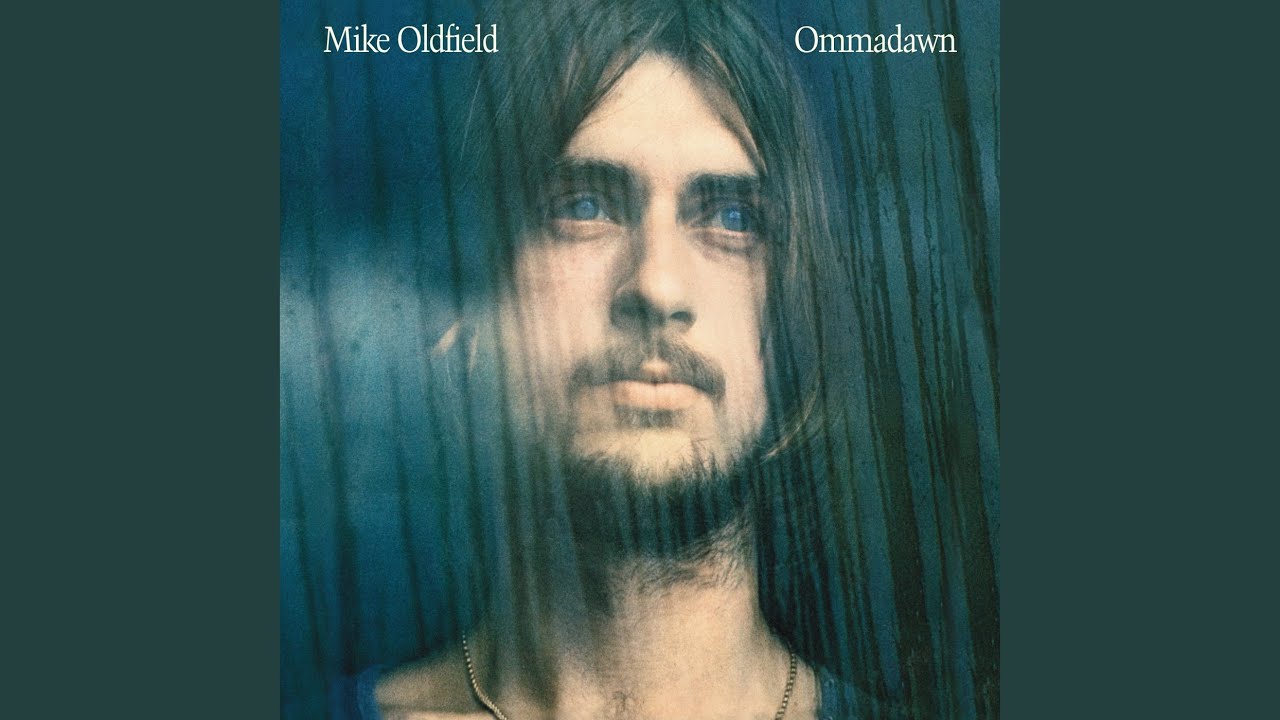
Recorded in ’76 through Mike’s unusual setup and further amplified at high volume (through a Fender Twin), Mike makes extensive use of the feedback and sustain this enabled.
Folk-influenced grace notes, superimposed arpeggios and soaring melodies dominate here. There are fewer string bends than in a traditional blues solo and the tone is unconventional, too, but this is expressive nonetheless.
Mike Oldfield – Tubular Bells
![MIKE OLDFIELD Tubular Bells (Live at the BBC, 1973) [HQ] - YouTube](https://img.youtube.com/vi/nbYQYOM66MA/maxresdefault.jpg)
Though there is some very interesting guitar on both Parts One and Two, there is one area that is particularly relevant. At around 11:30 of Part One, Mike starts a harmonised blues shuffle.
It builds into something more shrill but is certainly an interesting vision of how blues influences can lead to different places – some far removed from what some might call the ‘mainstream’ these days. To be fair, that was the case when this was released in 1973, too…
Mike Oldfield – Incantations
The latest of our three examples, released in 1978, this album also has some very accomplished playing that isn’t widely discussed in blues circles.
From 3:33 of Part Three, there is a long guitar solo that showcases Mike developing further on themes he was already experimenting with a couple of years earlier.
Once again, this is unconventional stuff, but if we put aside the more widely accepted boundaries of guitar soloing, there are ideas worth ‘borrowing’!
- This article first appeared in Guitarist. Subscribe and save.

