



Michael Angelo Batio is known as much for his wild-looking guitars and shred pyrotechnics as for his work with Holland, Nitro, and Manowar. His big personality might seem off-putting, but his passion is pure. “I knew from the age of 10 that I would be a professional guitarist,” he says. “There was no backup plan.”
He turned that ambition into reality after moving from Chicago to L.A. in the ‘80s. “To see people like Paul Gilbert, Bruce Bouillet, and many more play up close was inspirational for me,” he recalls.
“When Yngwie Malmsteen played his very first show in the USA with Steeler, I was there. Yngwie became the talk of the guitar world – L.A. was the center of the guitar universe back then.”
Batio has made raging six-string theatrics the center of his own universe. He’s having a blast playing with Manowar; the hyper-macho group of metal maniacs match his energy. Chest-pumping arena-driven metal is what he’s all about.
“To be young in the ‘80s, playing music, was so incredible. It’s hard to describe the feeling and intensity. And L.A. and Hollywood were the places to be.”
What drew you to the guitar?
I started playing the piano at 5 years old. By the time I was 10 I was listening to guitar-driven surf and heavy rock. That’s what made me pick up the guitar – I wanted to play the music I liked.
When did you decide the sort of player you wanted to be?
I let that find its own way. I studied jazz guitar and got a great understanding of chords and melodies. Heavy rock and metal was popular in my age group; I just liked those genres, especially prog rock.
I found it very comfortable to play in those styles – like I was meant to play them. And I loved playing in front of people.

Did you feel pressure to compete in the shred wars of the ‘80s?
There was intense competition and rivalry in L.A. regarding guitar players and bands in general. Technical playing in rock and metal exploded – it became the foundation for most playing styles on the scene.
Also, guitar tone in metal became much more sophisticated, with people like Lee Jackson and Jose A. modifying amps and creating sounds that couldn’t be achieved before. But the irony was that glam metal was huge at the same time, which didn’t focus as much on technique.
We all got along, co-existed; everyone had room to be successful. It was highly competitive, but we were all going to each other’s shows and supporting each other. It wasn’t unusual to see a lot of other great guitarists in the audience watching me. And I followed and watched them.
How did that scene change you from the aspiring guitarist who’d left home?
When I moved to L.A. the first band I saw, in The Troubadour rock club, was W.A.S.P. I’d never seen anything like them before. And the packed crowd of wild-looking rockers was equal to the show! It was levels above anything I’d seen in Chicago.
After six months of living in L.A. I went home to see my parents. They were shocked – my dad said, “Son, what happened to you?” In six months I’d gone from a semi-long-haired college-looking kid to having jet black hair and tattoos, looking like a real rock star. I didn’t even realize I’d changed!
When I was back home I saw some of the bands I’d thought were really cool before I moved. They looked and sounded amateurish to me. L.A. was on a different level in every sense.
The key to my lead sound is 1k mids. Now, anyone with good software can get it – but it took me a long time to find
What’s happened with your early band, Holland?
I loved being in that band. I learned a lot about what it takes to be successful within the music industry’s top echelon. I got chills from listening to Tom Holland sing – I still love his voice. To me, Tom was like a cross between Paul Rodgers and Steve Perry; he had a magical, major-league voice and he was a great songwriter.
Contrary to cliched beliefs about guitarists who shred, I’m a great songwriter too. Our most popular songs were ones I had a major part in writing with Tom. We made a record that’s stood the test of time, but it didn’t resonate with the label, and we didn’t get the backing it deserved. I moved on, taking valuable lessons with me.

Which led to you forming Nitro.
Immediately after Holland, I formed the Michael Angelo Band in L.A. Then, as luck would have it, I met a young singer named Jim Gillette. He had everything – talent, looks, a great work ethic – and he was a great songwriter who could sing anything.
His vocal range was incredible. When Jim and I started collaborating, it just worked. We were very prolific songwriters and got signed after only one show at Gazzarri’s on the Strip in Hollywood.
What’s the story behind the multi-neck guitar you played back then?
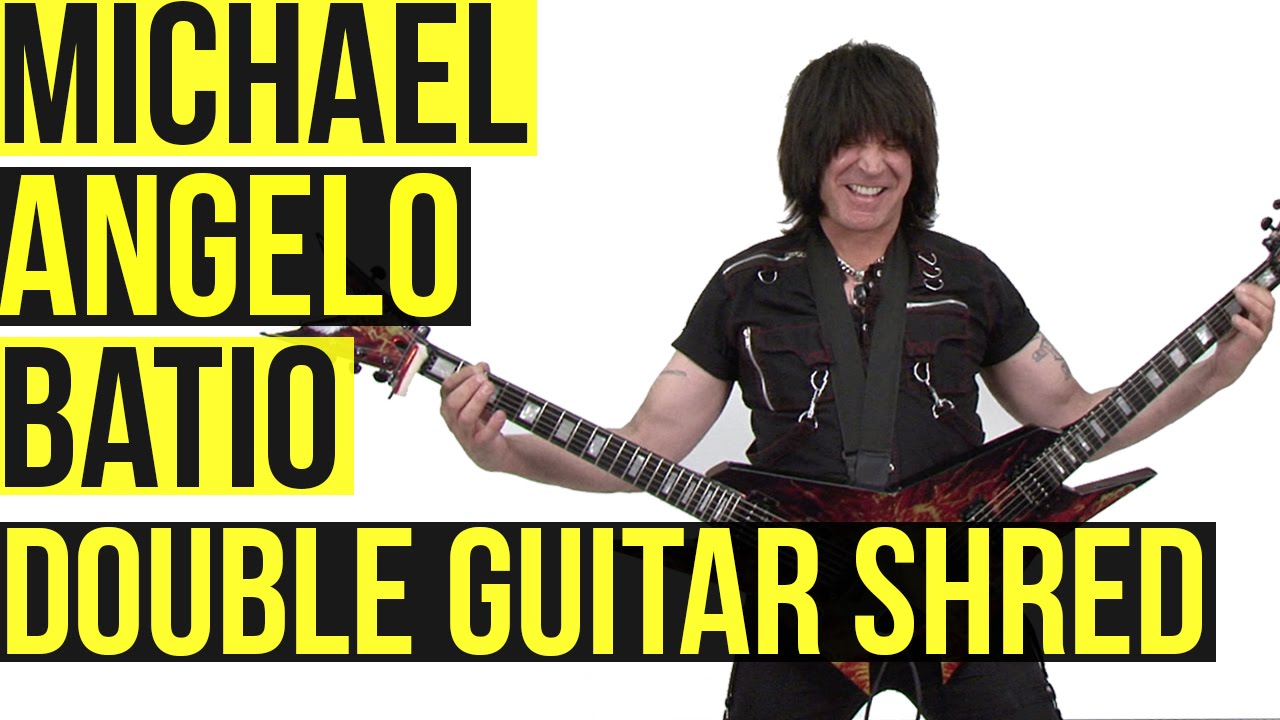
I wanted to do something no one had ever done before – and I did it. I invented the double guitar. It has a truly left-handed neck and a truly right-handed neck. It’s described as a “twin-necked, V-shaped guitar.”
It’s not strapped around my shoulder like a normal guitar. It uses one strap around my neck. It gives me free access to play either neck, or both at the same time. Then there are the MAB string dampeners, which I invented and patented, that make the double guitar virtually feedback free. That was the secret of getting the guitar to sound good.
Is it true that the prototype was essentially two guitars Frankensteined together?
Yeah, my first version was two separate guitars. I took a Flying V and fastened it to a snare drum stand; it was a right-handed guitar faced in a left-handed playing position. Another V was strapped right-handed around my shoulder. I played the left side first, then the right, then both at the same time.
Then I invented the Quad Guitar! It was hand-built by Wayne Charvel in Southern California. The two top necks have seven strings, while the two bottom necks have six. It’s four separate guitars with back plates determining its shape.
When I was doing my over-under technique super-fast during my solo, the wireless pack came undone from my belt
Beyond the wild guitars, what’s the key to your rig?
The key to my lead sound is 1k mids. Certain amps can get that frequency and certain overdrive pedals accentuate it, like a TS-9 Tube Screamer. Now, anyone with good amp software can get that type of sound – but it took me a long time to find the right combination to get that thick, singing lead tone.
I’ve also designed and released over 20 signature guitars. If you wanted to copy me, you had to have one built as I did. But it’s not about being better than other people; it’s about being the best version of yourself and following your own path.

How did you end up with Manowar?
Manowar’s management said they’d like me to record some guitar tracks. I went to their studio; and then everything just moved forward. I met singer Eric Adams and some of the crew, and things just fell into place.
I truly love playing in Manowar. I’ve been a member for four and a half years now. We’re headlining arenas and playing metal that resonates with millions of fans around the world. My rig is custom-made and designed by Joey DeMaio. He’s a true genius, and the rig and tones are massive.
You’ve hooked up with the Smashing Pumpkins onstage a few times. The band have made no bones about their love for glam metal. What led to that?
Jeff Schroeder – formerly a guitarist in Smashing Pumpkins – is a good friend. Billy Corgan and the band are from Chicago, so there was that connection. Jeff mentioned that Billy has guest guitarists come up on stage, and that I was invited to play at Riot Fest in Chicago with them. Over 40,000 people were at the show, and the Smashing Pumpkins were the headliner.
I had one rehearsal with the band, and we did the show. Billy told me to go for it during the performance, and that’s exactly what I did! Also, on a side note, Jimmy Chamberlin is an incredible drummer. Billy, James [Iha, guitarist], and the entire band are fantastic to work with, and their crew is top-notch.
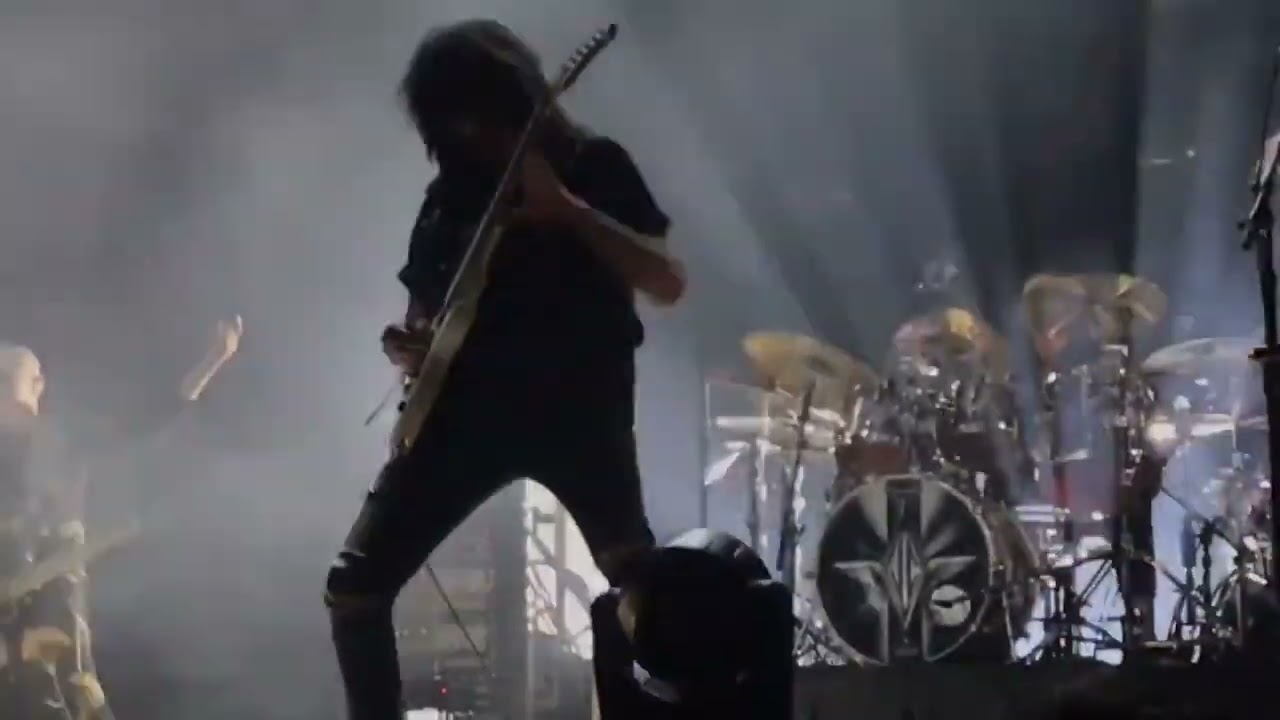
When I was doing my MAB over-under technique, super-fast during my solo, the wireless pack came undone from my belt. It was going to crash onto the stage. Billy saw it, came up, and in a super-quick motion, grabbed the pack like a pro athlete before it hit the ground, reattached it, and we continued the show. All in a matter of seconds!
It was an extremely agile move. It was so smooth, it was like we had choreographed it! I performed with them a second time at the Fiserv Forum in Milwaukee; another huge crowd and great show. I can’t say enough good things about Billy and the band. Amazing songs, super talented, and very cool.
I don’t have regrets. I’ve made the best decisions I could make at the time. I’ve never been afraid to try something new or make a change when I felt it was necessary
What’s something about you as a player that might be a surprise?
I’ve never considered myself the fastest guitarist. I only wanted to be as fast as I needed to be. But I love playing fast – it’s exhilarating! Being the best MAB I can be has always been the primary goal. I love songs of any genre.
I get intense emotions from songs, performances, sounds, and more. When The Beatles released their final song, Now and Then, using incredible technology to have all four members on it, I had tears in my eyes. The verse melody that John Lennon wrote is hauntingly beautiful. And the video by Peter Jackson is superb.
Do you have any regrets?
I don’t really. I’ve made the best decisions I could make at the time. Not everything worked out as I’d have liked, but that’s part of the process. It doesn’t deter me. I’ve never been afraid to try something new or make a change when I felt it was necessary.
- Manowar’s next world tour commences in January 2027.

