


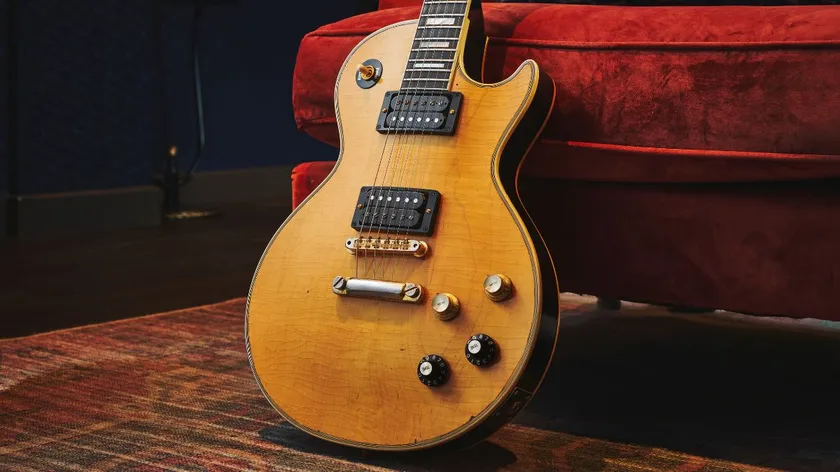


It's been common knowledge for quite awhile now that Jimmy Page relied on a Telecaster for the ferocious and punchy tones of Led Zeppelin's 1969 debut album, not the 1959 sunburst Gibson Les Paul that he would become so synonymous with (he didn't own it yet).
When that band's story came to an end (aside from one full and a few partial reunion concerts) in 1980 with the tragic death of John Bonham, though, Page was left slightly adrift.
Over the coming years, he'd score a film, play at a smattering of charity concerts, and make a few surprise onstage cameos with old friends, but it wouldn't be until 1984 that he'd find himself in a proper band again.
Oft-forgotten in discussions of the great rock supergroups, the Firm teamed Page up with legendary rock belter Paul Rodgers (he of Free and Bad Company), bass virtuoso Tony Franklin, and future AC/DC drummer Chris Slade, and brought the guitarist into arenas once again.
Though there were some familiar tools in Page's onstage arsenal (see below), the guitar legend – eager to not simply re-hash his old band's sound – also took the opportunity to switch things up in the guitar department, notably picking up the Tele once again. This, however, was a Tele with a twist.
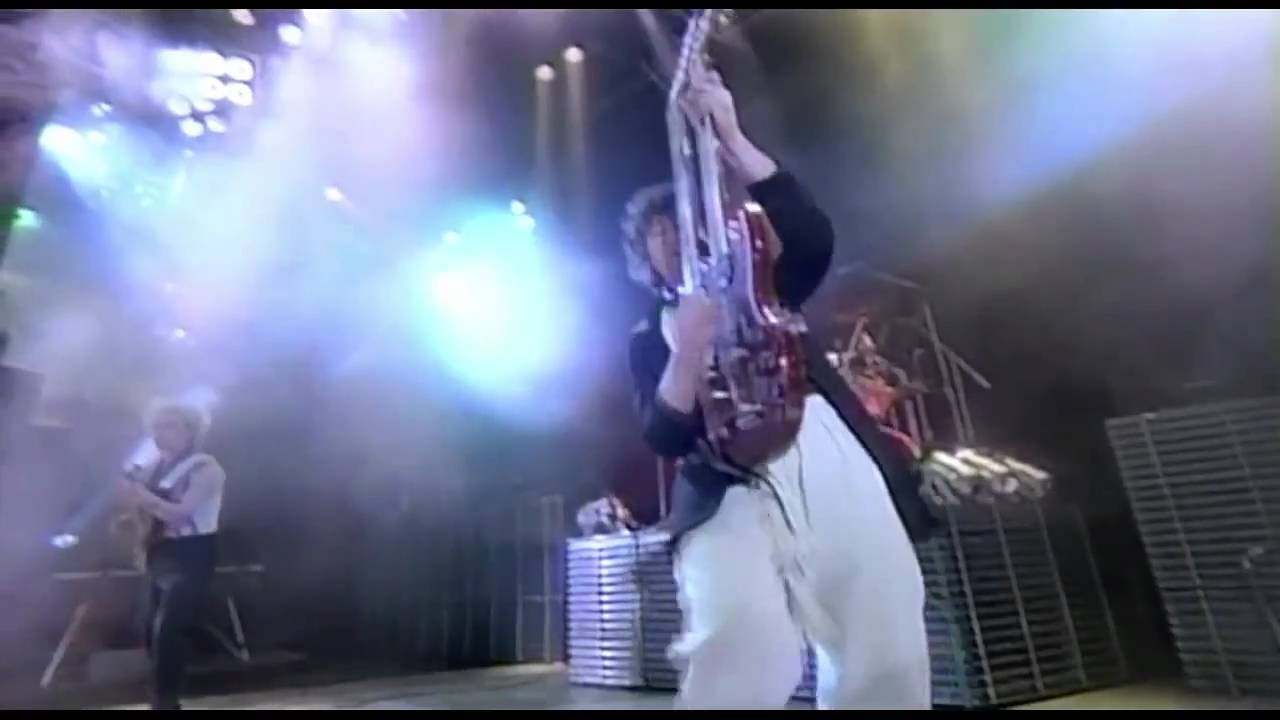
Now, it wasn't the famed '59 model he used on Led Zeppelin I. This was a '53, painted a unique shade of brown; and it was, crucially, fitted with a neat little tool called a B-Bender.
For those uninitiated, allow me to momentarily pass the baton to GW Editor-in-Chief (and resident B-Bender expert) Damian Fanelli...
“The B-bender is a device that lives in- or outside your guitar and allows you to pull – usually with some sort of arm, palm, or hip movement – your guitar’s B string up a perfect whole step. So, an open B would become an open C#, a C (first fret on the B string) would become a D and so on – until, of course, you ‘release’ the bender.
“Although this simple explanation might not convey the magic and wonder of a B-bender, suffice it to say the bender allows guitarists to create super-sweet, otherwise-impossible licks and chord voicings, the kind that make you close your eyes and smile while you’re playing guitar. And, oh yeah, it sounds cool as hell.”
Like many B-Bender users and aficionados, Page came to the device via the late Clarence White. Before his tragic death at the age of 29, White left his mark via his fearless fretwork with the Byrds and the Kentucky Colonels, and on records by Arlo Guthrie, Joe Cocker, Jackson Browne, and many others. White, along with fellow country ace Gene Parsons, co-invented the B-Bender.
“I heard Clarence White as a guitarist on the Untitled LP by the Byrds and all the stuff he was doing I thought was quite amazing, and there were parts that I couldn’t physically do as far as trying to do it on the guitar,” Page told Guitar World in 1986.
“I heard that there was this mechanism within the guitar – the Gene Parsons/Clarence White B-Bender. And I was lucky enough at one point in time to see the Byrds play, though I saw them many times, at a hall in Dallas. And at the end of a very, very pleasant evening hearing them playing and talking to the members of the band, Gene Parsons made up one of these B-Benders for me.”
Page said that the device took a year or so “to come to terms with,” but, he told GW with a laugh, “it [became] such a good thing to cheat with.”
“I suppose it’s just like a tremolo arm for all the guys that play a Strat. Of course, it is. It’s a gadget, but you work with it accordingly.”

