


Many famous guitar collections are simply impressive – but some go far beyond that. So far, in fact, that they become as culturally important as anything found in a museum and raise questions about the role private guitar collections play in preserving pillars of modern culture.
Jim Irsay, who died last year, was that kind of collector. The catalogue of his collection reads like a roadmap of American pop culture and includes everything from the original paper-roll manuscript of Jack Kerouac’s On The Road to Miles Davis’s Martin trumpet and, of course, some of the most important guitars the world has ever seen.
“As a very wealthy individual, Jim Irsay had the means to collect so many iconic objects, which most of us can only dream of,” says Amelia Walker, who is specialist head of the Private & Iconic Collections at Christie’s.
“But I think he was genuinely just a really nice guy who loved guitars, loved music, and felt a responsibility to look after these things and steward them onto their next home. I think he was aware that you can’t be buried with these things – you are but the temporary custodian of them.
“So I think his main aim was to bring them together and let people access them, and he did a lot of touring exhibitions. He got the instruments played by The Jim Irsay Band, and Kenny Wayne Shepherd played the Black Strat. So I think he was very open to sharing them. And because he was also a player, I think he knew that, where the instrument’s condition allowed, these things should be played – they should be loved and warmed up and all of that sort of thing.
“While he was definitely somebody who had them behind glass in his office – which I think is every guitarist’s worst anticipation of what happens at auction – he did also play them.”
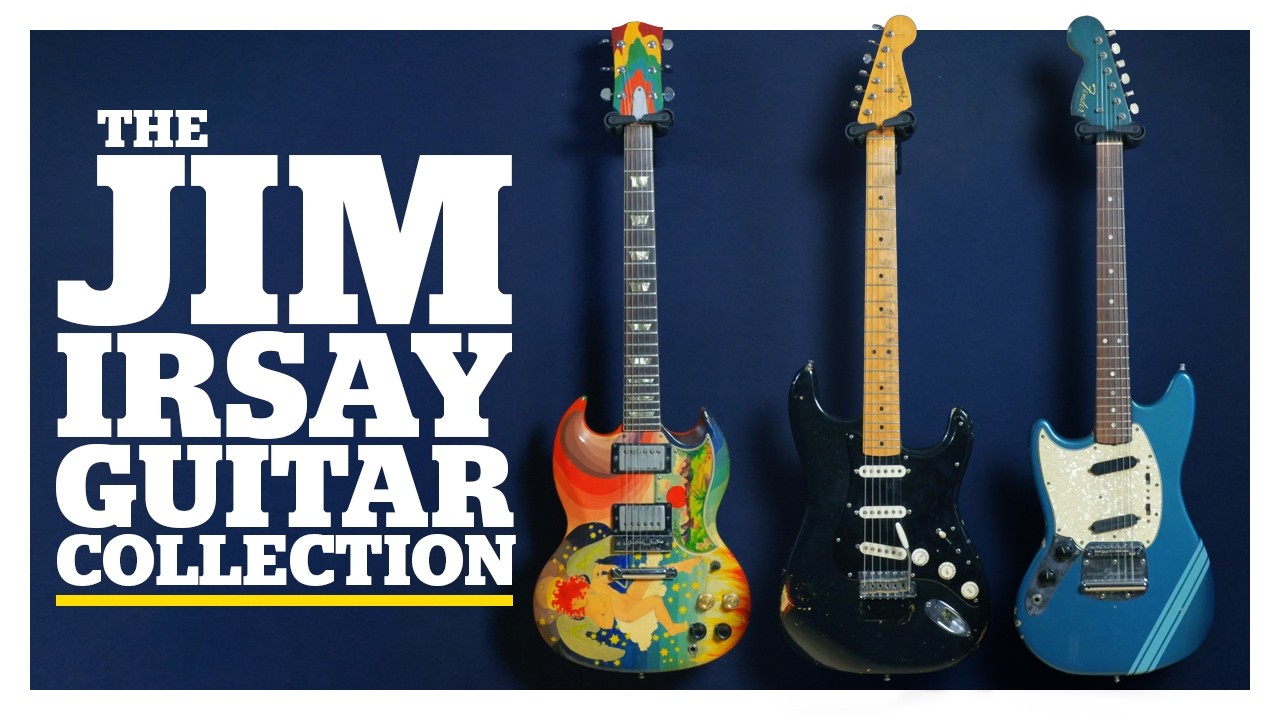
Eleanor Jane, founder and editor of Eleven magazine and the book Superstar Guitars, concurs, recalling her time documenting Jim Irsay’s instruments in a similar light.
His office was like a museum – but one in which you were encouraged to interact with the artefacts
Eleanor Jane
“His office was like a museum – but one in which you were encouraged to interact with the artefacts,” she recalls. “I photographed the guitars up close and personal – a phenomenal collection of hitmaker after hitmaker. After the photoshoot, Mr Irsay arranged for a private concert for me and the team, demonstrating the most iconic guitars and flying in some of the best musicians around to perform and jam, including Kenny Wayne Shepherd.
“He even drove in Hunter S Thompson’s iconic ‘Red Shark’ car as an incredible backdrop for the event. This turned out to be the first of many, much larger, free concerts and exhibitions across the USA, in which Mr Irsay brought in artists such as Billy Gibbons and Tom Bukovac to perform, allowing thousands of fans an experience of a lifetime.”
![The Jim Irsay Collection [L-3]: The Gibson Hummingbird used by Bob Dylan at the inaugural concert for the then-President Elect Bill Clinton in ’93; Walter Becker of Steely Dan’s stage-played Hahn 229 S-style electric; 1966 Vox Kensington prototype used by both John Lennon and George Harrison, and was present in the studio for the Magical Mystery Tour sessions.](https://cdn.mos.cms.futurecdn.net/HPGsDTBsEdKehSBEZgDW84-1200-80.jpg.webp)
All very commendable, but surely a collection of this calibre represents, in the final analysis, a cultural commonwealth of the kind that typically belongs in museums. Now that it’s all up for sale, is it likely that major pieces from the collection will end up in public hands again?
“Well, it’s interesting – and I’ve had the same conversations with people here in LA and in London,” says Amelia Walker. “You looked around the room at just a few of the highlights that we had and it was sort of like a museum exhibition, rather than an auction, because each of those items is an amazing item on its own individual merit, like you would see in a museum celebrating the best of the best of whatever category – and so it is museum-quality.

“People have all sorts of different thoughts and feelings about where collections such as this should end up, and I imagine there will be some participation from institutions.
“But people also forget that museums don’t have any money and it’s often down to generous philanthropic donations that they get pieces like this, like The Met collection donation from Dirk Ziff, which is one of the most incredible philanthropic donations ever, in this world [of iconic guitars].
“So it’ll be interesting to see who bids on these items. I suspect it will be a huge, varied mixture of guitarists, collectors, museums and investors.”

Indeed, the authenticators behind high-profile sales of this kind have to employ the sort of forensic approach normally reserved for academics.
With many of the modifications made to famous guitars taking place over decades on dim backstage workbenches or even at the hands of DIY-oriented players themselves, how do latter-day specialists determine what changes have been made (and when) in order to establish provenance?
Sometimes techs keep methodical, detailed notes over the years, but that kind of evidence is rare when it comes to fully confirming the backstory of iconic guitars.
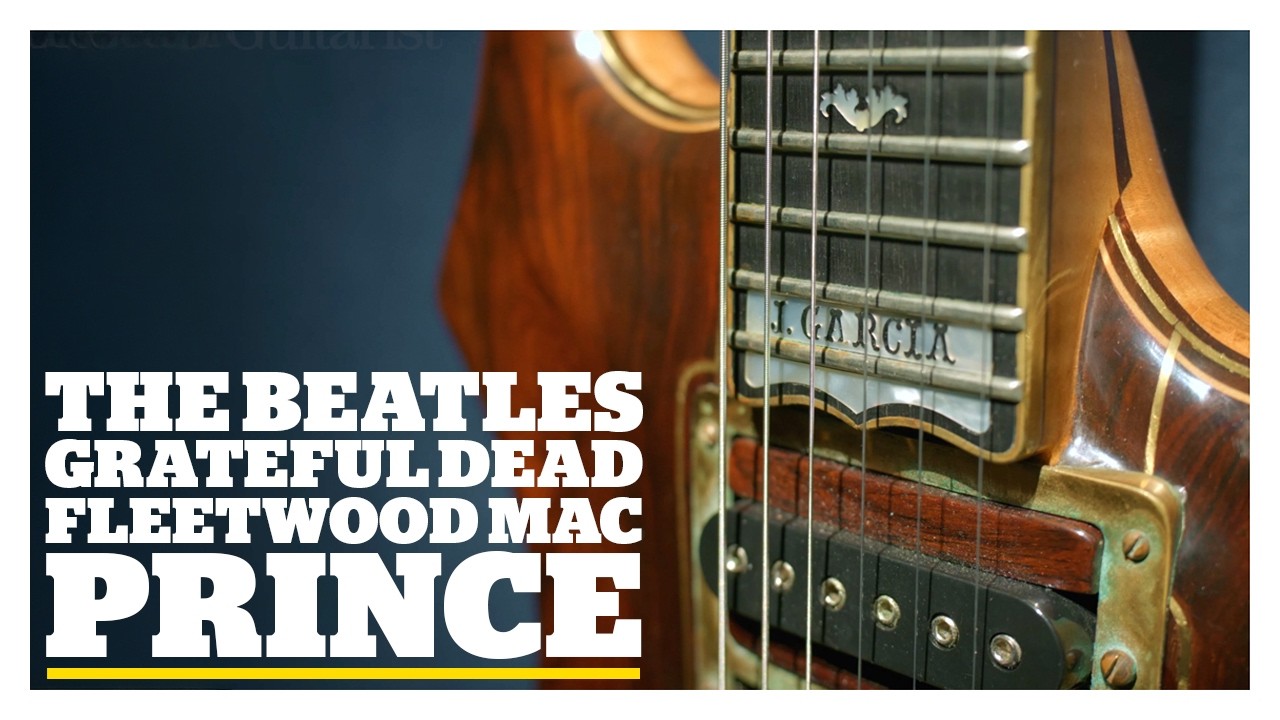
“It’s a really good question and it keeps me up at night a lot of the time,” Walker says. “But we do our utmost to talk to every single person who’s touched that instrument, in terms of the techs, the roadies, the restorers, the dealers. Obviously, with the Black Strat, Phil Taylor wrote a whole book about it, so he was very, very involved, so we’ve obviously spoken to him recently.
We do everything we can to get to the bottom of modifications, and we’re really lucky to be able to call up people like Seymour Duncan and ask, ‘Do you remember doing this?
“We do everything we can to get to the bottom of modifications, and we’re really lucky to be able to call up people like Seymour Duncan and ask, ‘Do you remember doing this? Is that what happened?’ And most of the time, people are so kind and generous with their recollections or their records, and it’s part of our due diligence process.
“But we do have to include a caveat that we will never be able to fully list every modification that would have happened since 1970, for example. This was a big issue with the Jeff Beck sale because they were Fenders [Beck’s Strats] and he continually swapped necks around and continually swapped the pickups around, and did it himself without telling his techs most of the time.
“I had such a nightmare trying to marry things up. We have a very clear line that we try to be spot-on with everything, but we cannot possibly list the full modifications, and part of being a touring and recording artist’s instrument is being modified for their needs. So that’s what we do. Basically, we go to pretty extreme lengths to try to get to the bottom of everything.”
- Christie’s will auction The Jim Irsay Collection: Hall Of Fame, including the iconic guitars in this feature and others, plus some of the most important cultural objects of the 20th century, on the evening of 12 March. For more information on the four-part sale series, visit Christie's
- Photographer and editor Eleanor Jane’s new book, The Guitar Chronicles, is due to be released on 17 September via Welbeck.
- This article first appeared in Guitarist. Subscribe and save.

