




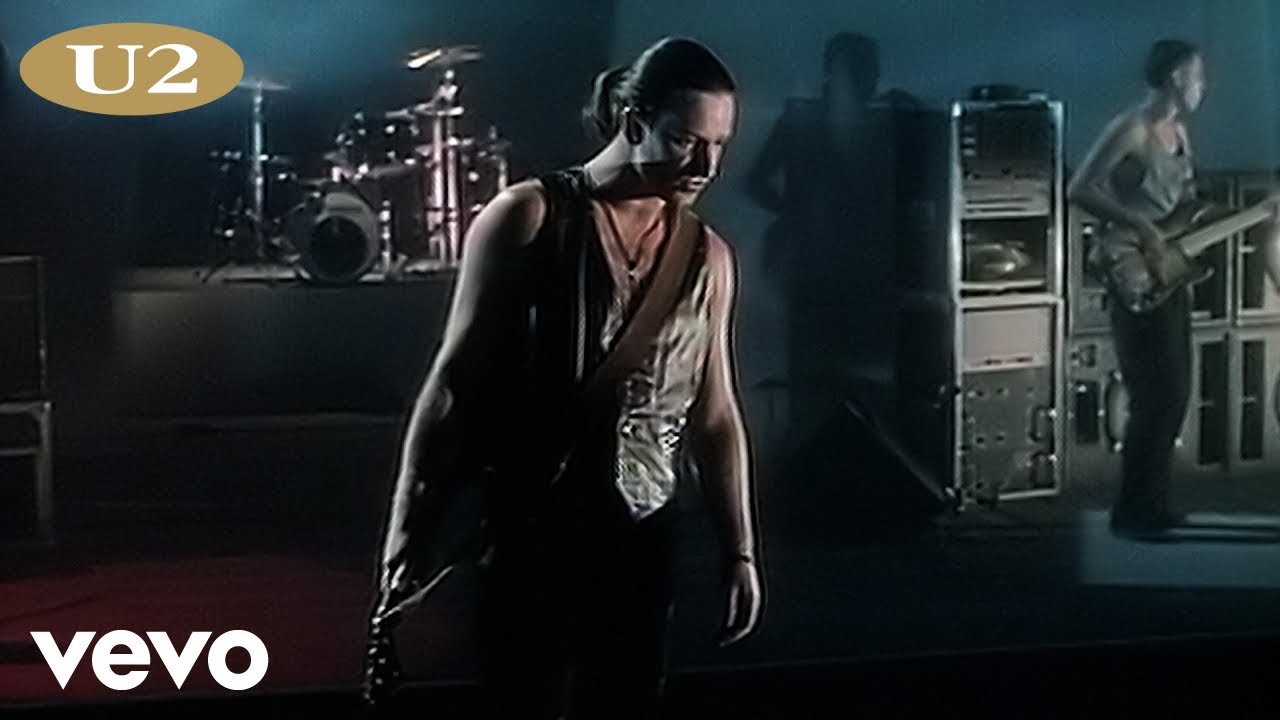
Revisit the opening bars of U2’s 1987 Billboard-topping ballad With Or Without You. There’s a music-box chime. A heartbeat bassline. A soft but purposeful beat. But what really turns the head are those long, lost, lonely whistles, each one hanging for an eternity, aching with Celtic melancholy.
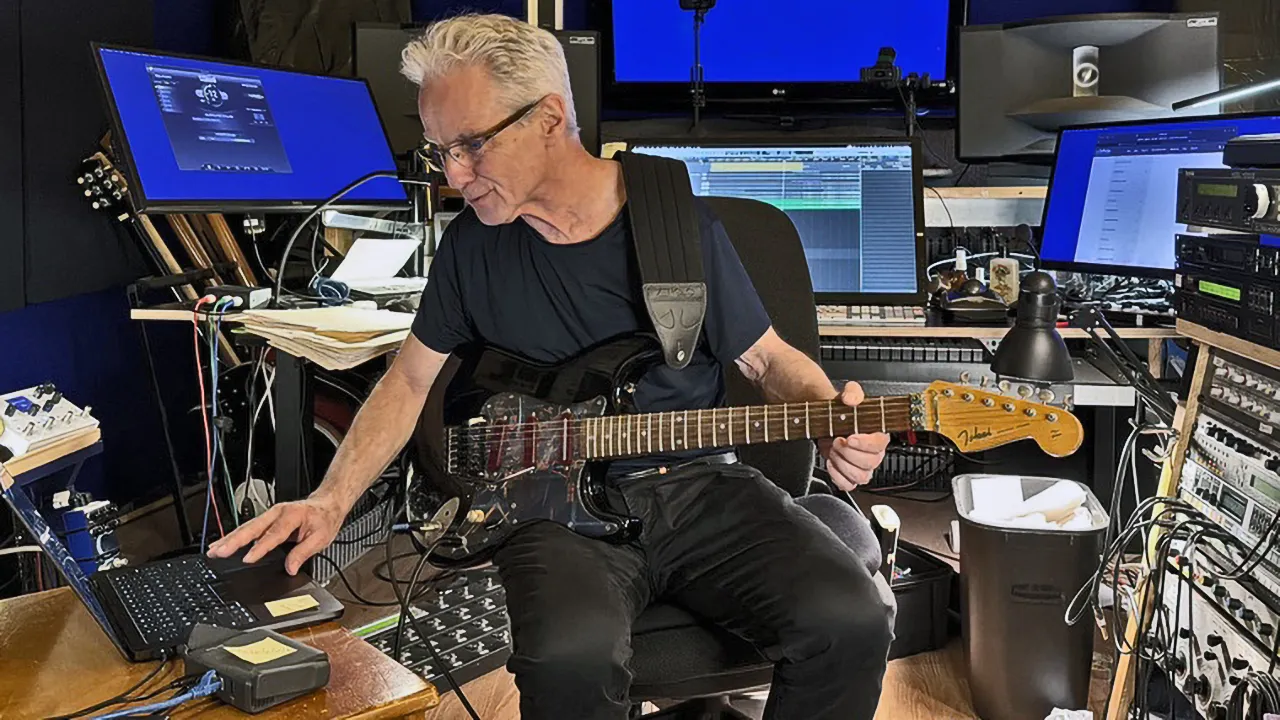
Four decades later on a call from his LA studio, Michael Brook is conjuring that exact same sound for GW. The 74-year-old didn’t perform the guitar part on the Irish band’s classic fifth album, The Joshua Tree – that was The Edge.
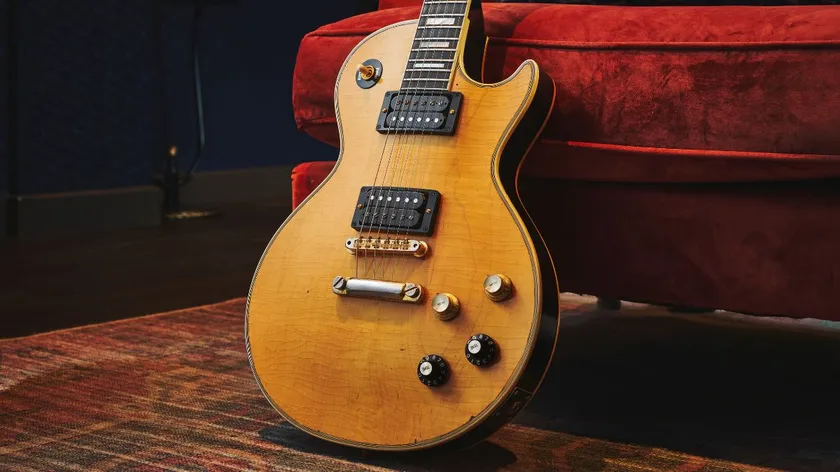
But he did invent the near-mythical sustain device behind it, which has been retrofitted into a grand total of three so-called Infinite Guitars. Brook owns one, Edge another, and Joshua Tree co-producer Daniel Lanois the third.
“Here it is,” he smiles, holding up the Tokai Strat copy that hosted his original circuit, then letting fly with a cascade of deathless notes. “It’s still my favorite guitar.”
Of course, to suggest the Infinite Guitar is all the Canadian has achieved is outrageously reductive. According to his PR team, Brook is here to talk about the reissue of his 1992 solo albums, Cobalt Blue and Live At The Aquarium, each a hit of pure ambience.
“The zeitgeist just wasn’t right,” he recalls of their cool commercial reception first time around. “It’s so much better now.”
But even those are just a conversational jump-off for a musician whose sprawling résumé takes in A-list collabs with Robert Fripp, Brian Eno and Youssou N'Dour; movie soundtracks Heat, Mission: Impossible; and album productions from The Pogues to Nusrat Fateh Ali Khan)
“To tell you the truth,” says Brook, gesturing at the treasure trove of gear behind him, “I’ve been in this cave for about the last 25 years.”
It all began when Brook picked up the guitar as a compromise in the early ‘60s. “My parents wouldn’t buy me drums – in self-defense, I’m sure! And once you get over a not-very-high hump, there’s an innate pleasure in playing guitar.”
He cites The Beatles, Hendrix and Jeff Beck as his formative influences. How about Pink Floyd’s David Gilmour, whose ghostly style seems to loom over Cobalt Blue? Brook shakes his head: “I have huge respect for him, but it just never rang my bell. My friends and I, our party game was, ‘What incredibly popular album have you never heard?’ And for me it was The Dark Side Of The Moon.”
In any case, Brook was soon moving in more sophisticated musical circles. He remembers that as a music/electronics student at Toronto’s York University, he was ashamed to play guitar.
“If something sounded like rock music, they looked down on it as dumb. People were into music that was unpredictable, atonal, slightly random – and very critical of anything melodic. That first year, I didn’t tell anybody I played guitar.”
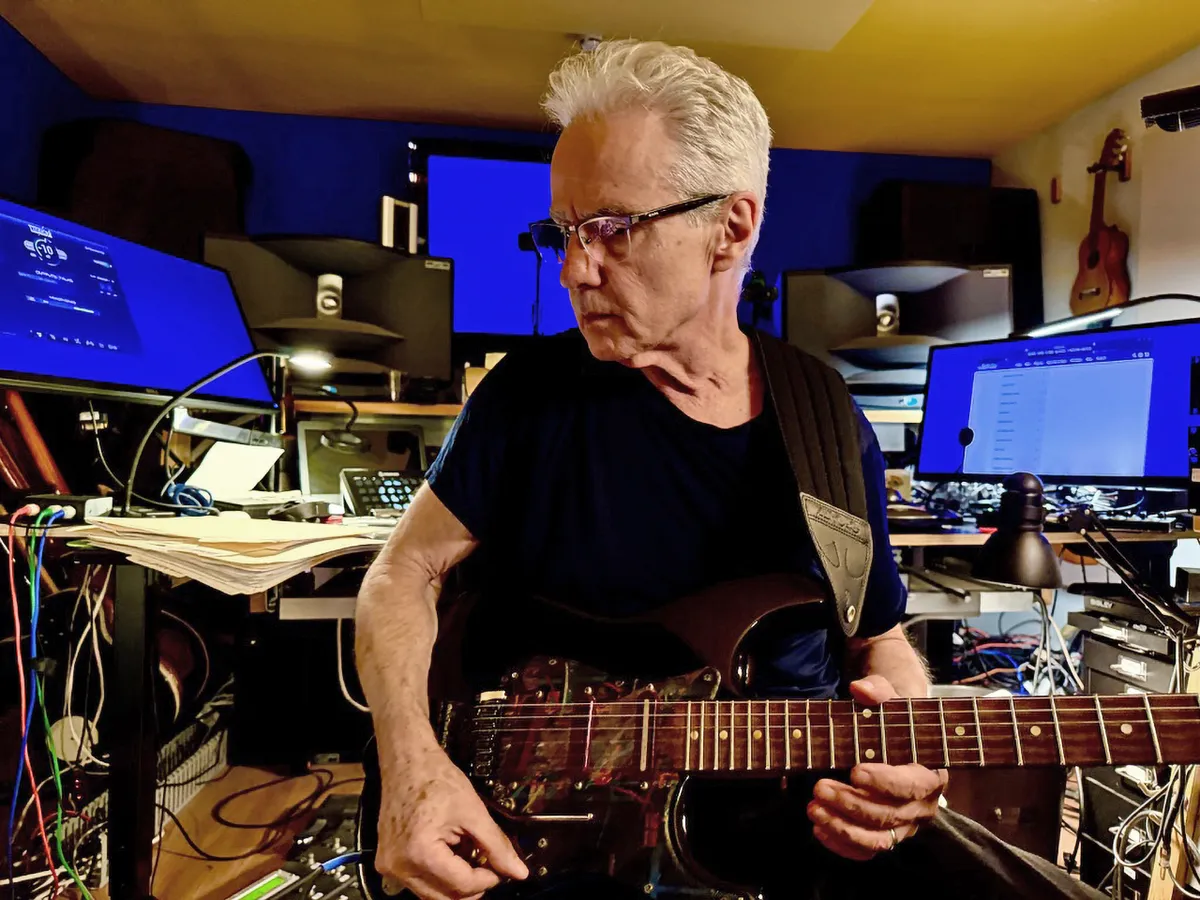
Out in the real world, he began work on 1985 solo debut Hybrid and found he didn’t have the tools for his vision. “I’d been exposed to ornamentation and melody in Indian music and I was playing around with that. But to a degree, a guitar is a percussive instrument.
“Then in 1983, I saw Bill Nelson play in Toronto, and he started the set with an EBow, which I’d never heard of or seen before. And I thought: ‘I’m fucked! He’s doing exactly what I’ve been trying to do and everyone’s going to think I’m copying him!’ Fortunately, it was just a 60-second intro, so it was fine.”
Brook ordered his own EBow but it never showed up (“I mailed this guy a check, never heard back”). In desperation he tapped his own electronics background, developing a circuit that fed a signal between pickups, creating an endless loop. “I didn’t have much money and I didn’t know if it was going to work,” he says.
“So I thought, ‘I’ll just get a cheap guitar for the prototype, then it’s no big deal.’ So I got this Tokai Strat. It was pretty rickety, but it worked. And when I sent in another order for a EBow, it turned out the Infinite Guitar was much better for what I wanted to do.”

In his post-college years, Brook met Lanois and fellow U2 producer Brian Eno while working as an engineer at Ontario’s Grant Avenue Studios. In the mid ’80s, the story goes, U2 were ready to can With Or Without You until Edge knocked on Brook’s door.
“Brian thought he might be interested in the Infinite Guitar. So Edge came to my little bedsit and said, ‘Can you make me one?’ I modified his ’75 Strat, and he got this magic piece of music out of it. That song gave me chills. Nobody had ever heard something like that before. Even I had never thought of using it that way.”
I just didn’t want to be in the instrument-making business. I’d rather use it as a tool for my own music
U2 went on to become the world’s biggest band, while Brook rolled into a thrilling portfolio career. “Robert Fripp is a very particular person,” he reflects of his work with the King Crimson man. “There was one song we did in 35/8, and I just never got it. I screwed it up seven times out of 10!
“As for producing The Pogues’ Waiting For Herb [1993], that was very challenging because Shane MacGowan had been kicked out of the band. There was a lot of emotional baggage.”
Fast-forward to 2026, and Brook is clearly successful, sought-after, and financially solvent. But a question hangs in the air: where might he be now if he’d patented the Infinite Guitar and rolled out production?

“Around the time of The Joshua Tree, I did speak to some manufacturers,” he reflects. “Fender was one, and a company called IVL. We had meetings and they were all pretty interested.
“I think Edge’s guitar tech showed it to Fernandes, but I don’t know the whole history there. I think their Sustainer is pretty good. It may be slightly influenced by the Infinite.”
But doesn’t he mind the millions that got away? He gives a good-natured shrug: “I realized I just didn’t want to be in the instrument-making business. I’d rather just use it as a tool for my own music.
“It’s turned out that the Infinite has its little niche. It’s not the best at lots of things, but it’s turned out to be very good for me.”
- Cobalt Blue and Live At The Aquarium are out now.

