


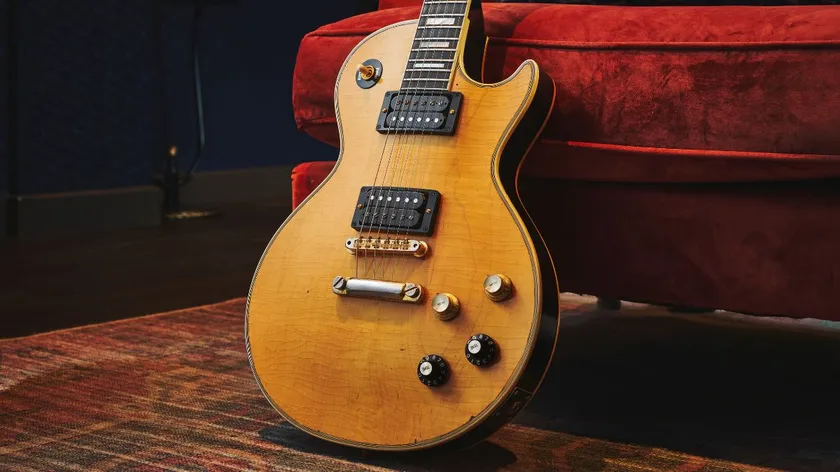


“Nuno’s shoutout was an emotional moment for me. I was gobsmacked. Without my brother showing me Extreme’s music, I would never have been there”: From Plini to Polyphia, how Rick Graham quietly became one of progressive guitar’s most influential names
From Guthrie Govan, through to Jason Richardson and Andy James, Rick Graham has garnered friends, fans and guest-spots with guitar’s most technical talents – and helped a huge chunk of players to hone their craft along the way

Feel and theory are often positioned in opposition to each other, but the most accomplished players will master both. Rick Graham is one of them.
A technical monster whose playing still fizzes with emotion, his name is spoken with reverence by some of the most accomplished and forward-thinking players on the planet, and he counts everyone from Nuno Bettencourt and Guthrie Govan, through to Andy James, Jason Richardson, Plini and Polyphia, among his friends and admirers.
The truth of this is reflected in his wealth of collabs and guest features – Plini’s Selenium Forest, Polyphia’s Envision, Richardson’s Hos Down. When Extreme rolled into his hometown of Birmingham, UK, back in August, Bettencourt praised him from the stage before launching into Midnight Express. He has, quietly and self-effacingly, become a hugely influential figure in progressive circles.
None of that has gone to his head, though. His own journey as a player was propelled in part by his brother, who sadly passed away in 2015, but has left Graham with an indelible legacy – not to mention an incredible drive – as a player. He is constantly working on original material, but is perhaps best known for sharing his knowledge through lessons and tips videos on his online platforms – though he has never identified with the term ‘influencer’.
It’s about time Graham got his dues then – and his most recent signature model from Charvel, in stunning Shell Pink, is a good start on that front.
Guitar World’s Amit Sharma spoke to Graham about his life with the guitar, from his burgeoning days as an indie kid hammering a battered acoustic, to his eventual evolution into one of the most fearsome and emotive players in progressive guitar.
Let’s go back to the beginning. What was your first guitar?
All the latest guitar news, interviews, lessons, reviews, deals and more, direct to your inbox!
My first guitar I actually learned on was a really old, terrible acoustic guitar with action that high. But the first electric guitar was a Vox. I can't remember the exact model of it, but I was so proud of that guitar. [It] was the original, where I learned most of my riffs, and the pentatonic scales and everything that I still do now.
Who were the people who drove you to get involved with the guitar?
Right from the word go, it was Johnny Marr from the Smiths. He was the guy that really inspired me to play. I was into The Smiths, The Cure – Robert Smith influenced me, majorly. Then my brother introduced me to more rock-oriented music with Master of Puppets. [Once] I heard Master of Puppets, I was done for! From then on, it was just rock all the way.
Nirvana came out at that point. And I still love some of their tracks – In Bloom is one of my favorite tracks of all. It's just got the best riff ever. So I grew up as an '80s guy, but also embraced the grunge that came out in the early '90s. And somehow, here I am.
I always say, I'm self-taught – but with the help of really great musicians, through the music, through the records – through listening and using my ears and feeling things. It's such an important, powerful tool.
You don't necessarily have to understand how music theory works if you feel something and it means something to you. So to you, it might be “Lydian mode”, but to somebody else, it might have a certain feel to it that they cannot describe. It somehow impacts you on a different level.
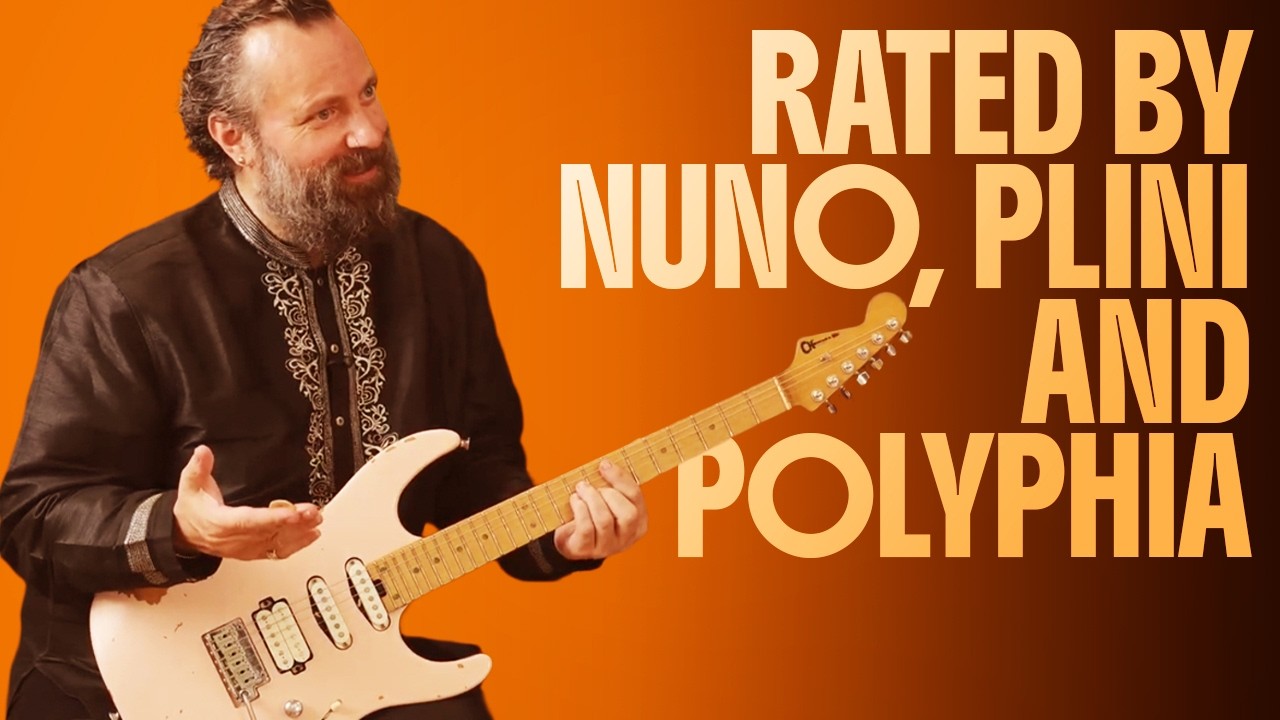
As you developed as a player your listening went from Metallica to the super-shredders – and then, at some point, you must have developed a taste for fusion.
I got into that world because I started playing with a band, around about ’94, and we spent our time listening to Frank Zappa and Parliament, Funkadelic stuff. All that rhythmic funk stuff. So I really got into that.
The live Chick Corea stuff with Scott Henderson, you know, with the electric band, like King Cockroach. Scott Henderson did stuff that I was just like, “I don't quite understand what he's doing…” I had to figure it out for myself, the scales that he was using, like, melodic minor modes. So I had to sit down and just go, right, how does the melodic minor work? And how can I use it?
Then I figured out functional harmony and non-functional harmony, and how they juxtapose together. That's when I started to really go, ‘Hang on! Theory is something I want to understand, because it will help me to express myself.’

One thing that really helped me on my guitar journey was the Hot Licks lesson videotapes. I heard in an interview with you, it was a similar case. What were your favorites?
Yes! The Vinnie Moore ones I found really helpful. Both of them, I used to watch those for the intros, you know? The first one, where he had that Prairie Sun Studios T-shirt, you know? They're both just incredible.
I loved the Malmsteen one. My brother bought the Chris Impellitteri one. It was too quick for us to understand! It was so fast. I had the Joe Pass video, the Eric Johnson one – I waited so long for that. My friend had it , but he lived quite a distance from me, so I kept saying to him, “When? When can I get it?” I waited for months and finally he let me borrow it. And it was the most magical thing that I'd ever seen. The tone is phenomenal.
There's something magical about really taking your time and waiting for something, and for some reason, it resounds with you even more. Those, to me, were the golden days of guitar playing, watching those videos, and just being so inspired.
Carl Verheyan’s Intervallic Rock Solos rewired my brain. It made me start looking at the guitar in a completely different way.
The same for me, too. I remember seeing that and just going, “I never thought about it that way.” Carl Verheyan’s literally jumping around the fretboard, and it creates this freshness in the sound, but you've got to be comfortable, you've got to take the leap at some point and risk it and just go for it [to progress]. I'd rather see somebody go for it and failing, than not going for it and staying safe.

One thing you're quite famous for is your left-hand strength – the hammer-ons from nowhere! I always looked up to Reb Beach for that, with his tapping and fretting hand strength. It seems like you’re one of those people as well.
Yeah, absolutely. For me, it was to do with relaxation. I try and work on that as much as I can. I did a clinic with Reb Beach, years ago. In 2010, a friend of mine couldn't make the gig as an opener for Reb Beach in Manchester, in the UK, and he said, “Would you step in?” I was like, ‘Yeah, man, absolutely!’
So I opened for Reb Beach and got to meet him and hung out with him. He was the nicest guy ever. And what a what an amazing player he was… and the funniest guy. Tom Quayle was there. Reb came on, played a few of his tunes and halfway through one, he‘s playing, and he spots Tom in the front row and goes, “Oh, hi Tom!” [mid-song]. Tom's like, ‘What the hell?!’ He’s just a natural and a decent guy to be around.
Speaking of shoutouts, it was just a couple of months ago when Extreme were playing in Birmingham and a certain Nuno Bettencourt gave you a shout-out on the stage…
Yeah, that was quite an emotional moment for me. I was gobsmacked. I didn't expect it. I went and caught up with him before the gig. We hung out before the gig, then watched them play, and he gave me the shoutout. And I was just like, “I can't believe this. This is mental…”
Because, without my brother showing me Extreme’s music, I would never have been there. So it was a very, very emotional moment, because my brother's not here anymore. It would have been just great for him to have been there and to have experienced it, but he was there in spirit, of course.
A post shared by Rick Graham (@rickgraham)
A photo posted by on
So when Nuno gave me the shoutout – and also insulted me at the same time – I just thought, we are good friends, you know? And then once the gig had finished – and the playing was just phenomenal, the whole band were really tight – he messaged me and said, “Don't go yet!” So I went backstage and we all hung out together.
It was just the most surreal but amazing time. And that's what it should be about – what music is about – connecting with people and making good memories and making good things happen. It's not about success, fame and money. It's nothing to do with that. It's to do with creating good moments, good times – things that will stay with you for a long, long time.
The modern rock/fusion scene has a lot of young players who are also carrying the torch. I love that you've collaborated with some of them, too. Like Plini and the Polyphia guys.
Yeah, Plini, I met him on the Petrucci forum, way before he was out there doing his thing. And he was like, “I’m just releasing this EP [with this track] Selenium Forest. I've got this space. Are you ready for this?” I'm like, “Of course I am! Send it over, man.” So I did a scratch track of me soloing and sent it to him. And he just like, ‘That's great. Can you do that fast bit again?’
I practiced it and practiced it. I said, “Sorry, I just can't do it the same way.” So the [original scratch track] ended up on the on the recording. Sometimes you record something, and you capture it in the moment, and [redoing it] loses the emphasis somehow.
Then the Polyphia guys got in touch and said, “Will you do a guest solo?” and I was right in the zone with my playing then – really focused – and I was really pleased to have had that opportunity. Then Jason Richardson saw that, and was just like, “How dare he do something like that!” and so he got me on his album, which was brilliant. Then I did an Andy James track, which was a big deal for me.
So I've done quite a lot of collabs with people, but those are the ones that kind of stick with me, because these guys allowed me to express myself on a recording. And it's a great little timestamp of my life, too.

One player you get compared to a lot is Guthrie Govan. Both of you have this incredible technical dexterity, but you can be so musical as well. Have you ever met him?
Yeah, I met him. The first time, he was doing a gig in [UK city] Coventry. I was living in France at the time, and I came back from France, and I turned up and watched him play. He struggled that night; he broke a string on the first track, and it just completely threw him off, but this happens to everybody – you can't expect things to work perfectly every single time. We're human beings – but he still played amazingly well, and I got to meet him afterwards, and he was really kind.
Then I think I spoke to him at NAMM just before a Tone Merchants gig. I was really nervous for him, because there was just a tiny stage, and the whole place was packed full of guys like [arms folded], “Go on, then!” I'm like, “Oh, God… How must that feel?” But he went out and slayed it. He is, in my opinion, one of the best guitar players that has ever graced the Earth. I still watch his stuff, just going, “How!?” It's just amazing. He's changed the landscape of guitar playing.
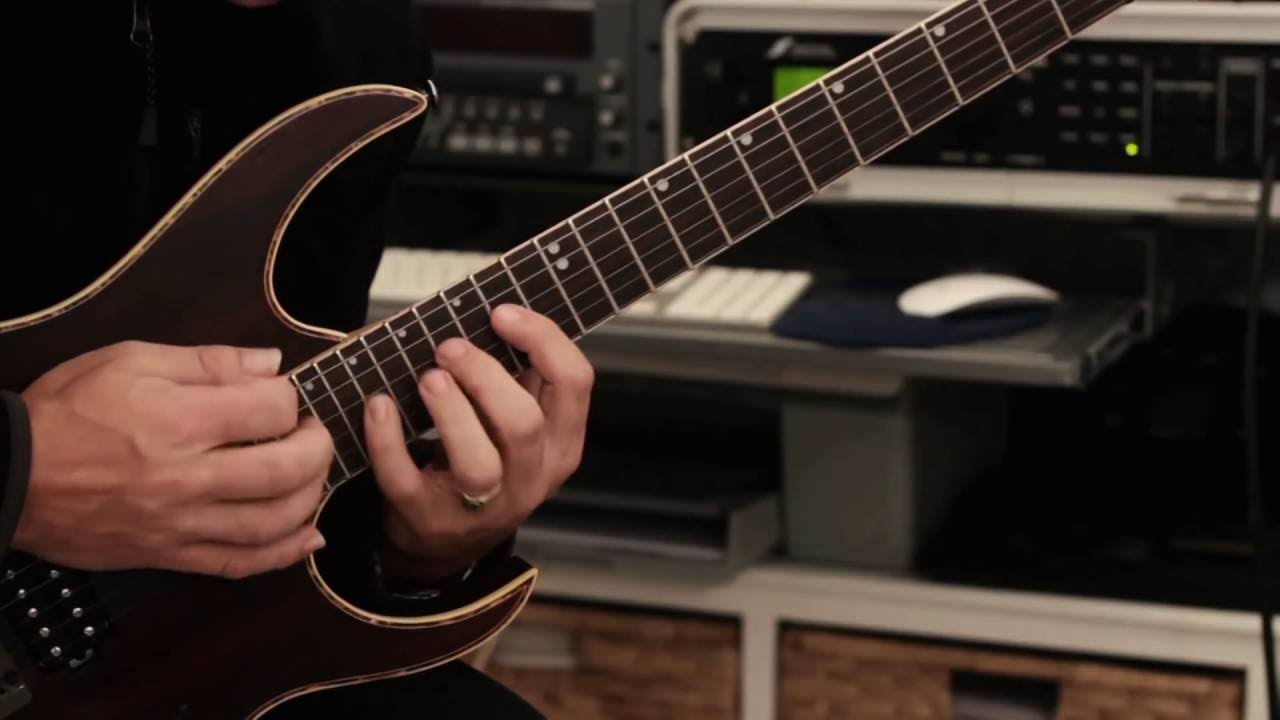
Moving forwards, of course, you have a beautiful Charvel signature that's new for this year. Tell me about it...
Basically, it is exactly what I've always wanted. For years and years, I've been obsessed with Shell Pink. I don't know why. I can't explain it. It's just one of those things that is, to me, aesthetically beautiful. The first one was the Celeste Blue model, but that doesn't have the reverse headstock, which is a little bit of a nod to one of my favorite players, by the way. And you know, when I got the go-ahead for this, I was just like, ‘Oh man, this is going to be so awesome.’
Even now I just look at it, going, ‘God damn. This is so sexy!’ It’s amazing to look at, and it's also amazing to play. It really, really is good. These pickups are Charvel pickups – the previous ones were Bare Knuckle – but these sound incredible.
It’s got the same compound radius fretboard, as the first, which suits me down to the ground, in terms of doing chordal stuff lower down, and the shredded stuff higher up. It's really comfortable, but the tuning is tight as hell, as well. You can really bend it totally out, and it stays really tightly in tune.

Are you a pedals guy? What are the ones you couldn’t live without or that have left their mark on your over the years?
I grew up with Boss pedals. My brother used to get loads of different pedals by different companies. So he'd be, like, “Check this pedal out. Listen to it, it sounds great.” So I experimented with a lot of different pedals
[Some years back] I bought a 100-watt head from a company called Splawn Amplifiers, based in Texas. I’ve still got it. It's one mean, mean amplifier. A lot of the tuition videos I've made with mic’ing up that amp. And I was in touch with a company based in Denmark, Karl Martin effects, and they had a pedal called the Plexitone and, man, I plugged that in and it was like, “Holy shit!” It took the amp to another level. It needed the pedal to be honest. So I used those for a while, but I'm not that much of a pedal geek.
No, I can't imagine you plugging into a vibe or chorus that often. I think modulations may be less your bag.
Well I did. I bought a Marshall 1974x amp that has built-in tremolo and that was just incredible. I always played it when I felt sad, for some reason, just plugged in and had the tremolo on, when I felt the blues.
It was a great amp. I don't have it anymore, but I recorded a track called I Can Feel You Breathe, that I wrote in 2016, with that amp – and I still get people saying, “What sound are you using on the Axe-Fx?” And I'm like, “No, that’s a real amp mic’d up in my my bedroom, with a foot stool and an SM58!”
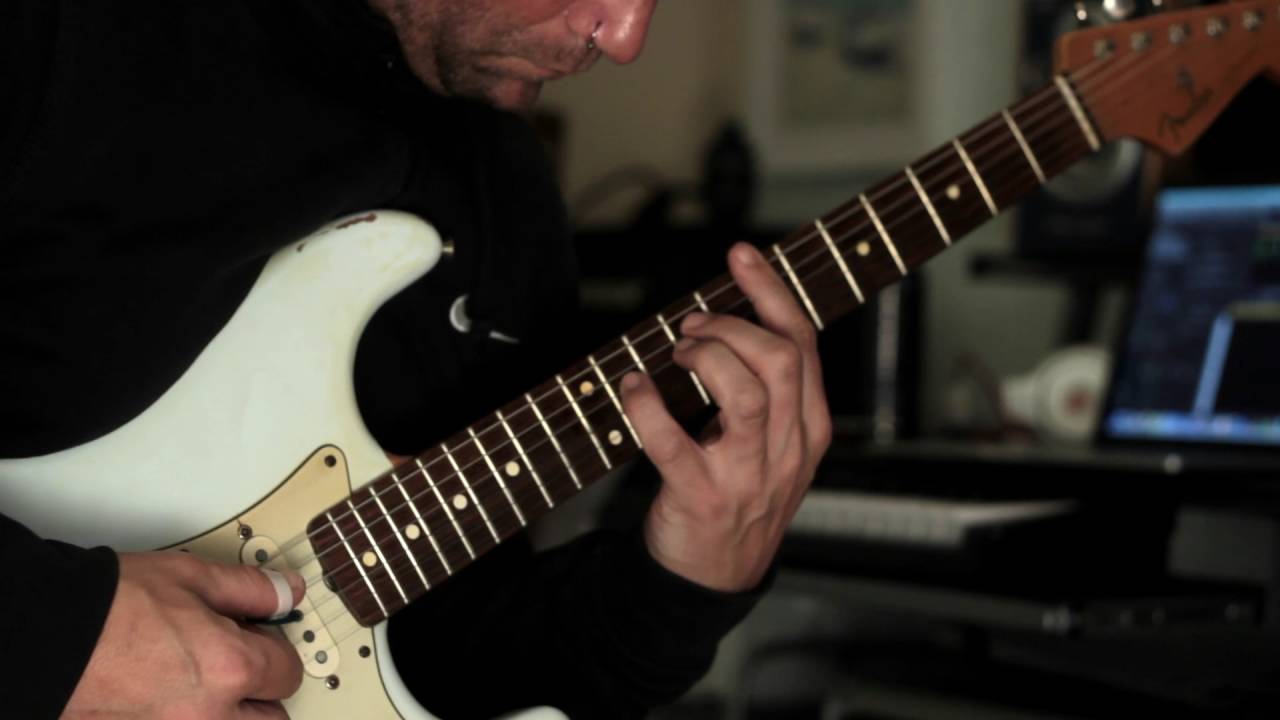
I recorded another track called Your Eyes about two days after [using the Axe-Fx], and they're both like fingerstyle pieces, but I can tell the difference, you know, from the first track. Not a lot of people can – but then again, I wrote the bloody music and recorded it. So if I couldn't tell, then there'd be something wrong! I don't quite know how to quantify it. There's something not quite there, you know, but it's still amazing [modeling].
A lot of it is to do with the player as well. We mustn't forget that what we’ve got with these [our ears], that's a big deal. That's what really creates your sound. You can have all the best gear in the world. But if you haven't got it here [in the ear], it ain't gonna help you very much.

Vibrato is like a window into a guitar player's soul. Everyone’s got their own take on it, like Zakk Wylde's is big and wide and quite frenetic. Yours is a bit slower and very controlled, and maybe more from the Petrucci kind of world.
I'm glad you talked about this, because it was a big deal for me. When I was developing my playing, my brother was always there with everything. He was always right behind me going, “Rick, why aren't you doing this?” And vibrato was a big deal. He pulled me to one side one day and said, “Rick, it's terrible. You’ve got to work on it.”
So I treated it like a vocalist would. [Running up and down the bend] that took years and years for me to develop. I spent years with it being out of tune, out of control. I spent years because I wanted to make sure that my delivery was good – even if the notes in between weren't great, at least I could finish it with something!
A [good vibrato] means a hell of a lot more than just playing something [complicated], messing it up, and not delivering it with intention.
- Rick Graham’s Charvel Signature Pro Mod DK24 PT is available now for $1,799. For more information head to Charvel.

Amit has been writing for titles like Total Guitar, MusicRadar and Guitar World for over a decade and counts Richie Kotzen, Guthrie Govan and Jeff Beck among his primary influences as a guitar player. He's worked for magazines like Kerrang!, Metal Hammer, Classic Rock, Prog, Record Collector, Planet Rock, Rhythm and Bass Player, as well as newspapers like Metro and The Independent, interviewing everyone from Ozzy Osbourne and Lemmy to Slash and Jimmy Page, and once even traded solos with a member of Slayer on a track released internationally. As a session guitarist, he's played alongside members of Judas Priest and Uriah Heep in London ensemble Metalworks, as well as handled lead guitars for legends like Glen Matlock (Sex Pistols, The Faces) and Stu Hamm (Steve Vai, Joe Satriani, G3).
- Matt ParkerDeputy Editor, GuitarWorld.com
You must confirm your public display name before commenting
Please logout and then login again, you will then be prompted to enter your display name.
