


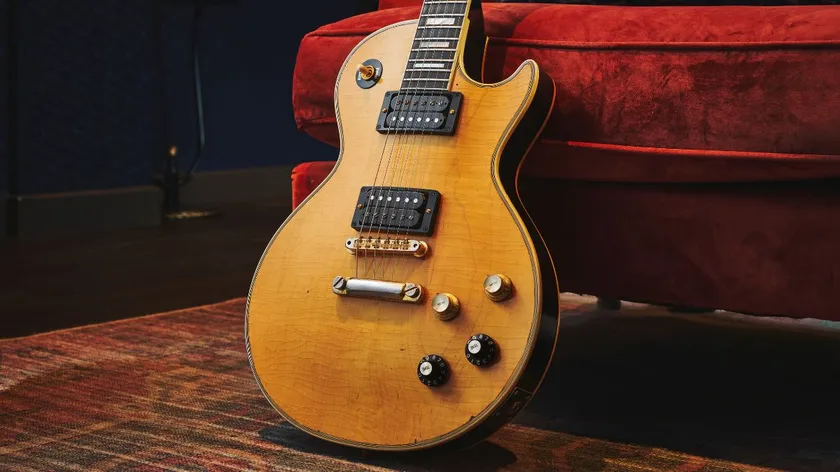


News of Ace Frehley’s passing on October 16 wasn’t just a shock to the Kiss Army, but to rock and guitar communities at large. This was a man who had survived car crashes, police chases, addiction, relapse and two tumultuous stints in the Hottest Band in the World.
The expectation was that the guitarist, affectionately known as “Space Ace,” would live forever… or at least longer than 74 years. If he were going to be taken out, surely it wouldn’t come at the hands of not one but two seemingly innocuous falls in his home studio, right? Wrong. As Frehley told Guitar World in 2024, he had experienced balance issues throughout his entire guitar-playing life.
“I’m mostly a guitar-into-an-amp type of player,” he said. “I can’t have pedals on the floor; I’d trip over them. You’d be hard-pressed to find a photo of me playing with pedals; I’d be shocked if you could find one. It’s rock ’n’ roll, so I don’t need ’em much anyway.”
It was apparent from a young age that Ace – born Paul Daniel Frehley on April 27, 1951, in the Bronx, New York – was born to rock. Like many players of his era, he was influenced by the guitar gods of the British Invasion, especially blues-based players like Eric Clapton, Jimmy Page and Keith Richards.
As a teen, Frehley, who had experienced a rough home life that led him to join a gang, acquired the nickname “Ace,” reportedly because he had a knack for picking up the ladies. Something else he was also pretty good at by the time he reached his teens was playing guitar. He ditched his studies for it, then dropped out of school and made it his life’s work.
Soon, Frehley found that a life playing music is kinda hard to come by. As a 22-year-old would-be guitar-slinger, Frehley spent his days driving a cab around New York City. It was around this time that he came upon an ad in The Village Voice that read: “LEAD GUITARIST WANTED with Flash and Ability. No time-wasters please. Paul 268-3145.”
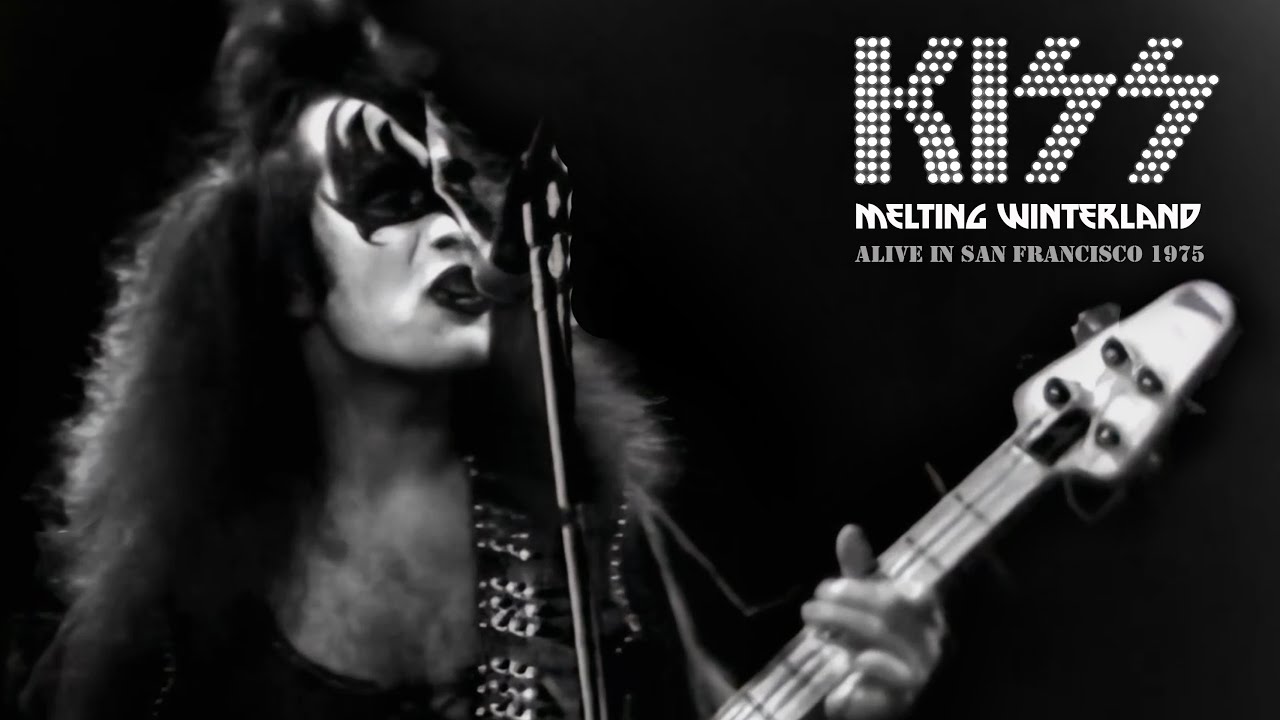
The Paul in question was Paul Stanley. The band? Soon to be named Kiss. Frehley showed up at the fledgling act’s New York City rehearsal space on East 23rd Street with a guitar and two different-colored tennis shoes on his feet, one red and one orange.
Frehley has often said that the chemistry between him and the other members of Kiss – Gene Simmons, Peter Criss and Paul Stanley – was immediate. But it was Stanley, the other guitarist in the band, that he initially connected with on a musical level.
“More than anything, it was chemistry,” Frehley told Guitar World last year. “But it’s hard to say; it’s always that way with those things. I do know that the little things about my style fit well alongside Paul’s.”
After joining the group in 1972, Frehley was up and running: he designed the band’s lightning-bolt logo and came up with his Spaceman makeup design, lending a hand to Stanley’s Starchild image, too.
But his most significant contribution was an unschooled, frenetic guitar style that took songs like Deuce, Strutter and Black Diamond to the next level. According to Frehley, he didn’t put much thought into it, telling GW, “I was always old-school, with a Marshall turned up to 10, playing a Les Paul. That’s my sound.”
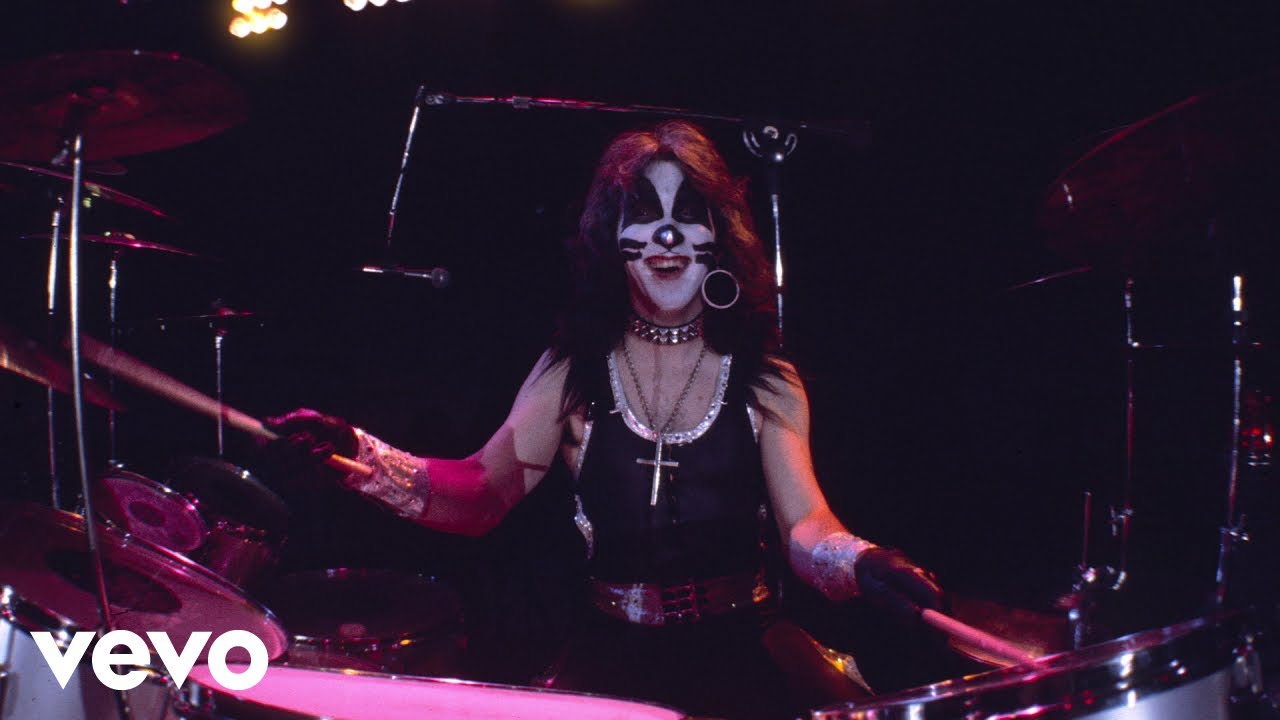
By 1973, Kiss had hooked up with manager Bill Aucoin, and within a year, Casablanca Records label head Neil Bogart had agreed to take a chance on the band, inking them to a contract. Kiss fired off three albums in short order – Kiss and Hotter than Hell (both 1974) and Dressed to Kill (1975) – none of which sold well.
The albums featured Frehley’s fiery playing and a few monster cuts like Cold Gin, Parasite and Strange Ways, which he had penned – although he was afraid to sing – and the anthemic Rock and Roll All Night, but people just weren’t into Kiss as a studio band.
With Casablanca on the verge of bankruptcy and the members of Kiss facing the prospect of getting day jobs and seeing their dreams die, a last-ditch effort came in the form of 1975’s Alive!, a double album that showcased what Kiss did best: play live.
“It broke incredible ground for us,” Stanley told Guitar World earlier this year. “We were building this rabid following, yet we weren’t selling albums that reflected that. Alive! was a sonic souvenir where people could go home and say, ‘That’s what I saw, and that’s what I heard!’”

Speaking to GW in his last-ever interview in 2025, Frehley echoed Stanley’s sentiments. “We felt that our studio albums were good, but they didn’t capture the essence of our concerts. I think Alive! did. A lot of people jumped on the bandwagon.”
Alive! was a multi-platinum smash hit, catapulting Kiss to the top of rock’s ranks. It turned Frehley into a Les Paul-wielding guitar hero overnight. It should have been good news, but it would be prove to be the beginning of the end. By 1976, he had developed a drinking habit.
Maybe it was his free-wheeling personality, maybe it was the stress of being in the spotlight, maybe the guy just liked to party. Whatever the reason, Frehley’s boozing led to him being late to studio sessions for 1976’s Destroyer. The album’s producer, Bob Ezrin, wasn’t having it.
“Sometimes I showed up late because I had a hangover from the night before,” Frehley told GW. “Everybody knows I was an alcoholic. Bob was a guy who liked to get things done quickly, probably because he had a mountain of cocaine and a bottle of Rémy Martin on the mixing desk with him. But, of course, Paul and Gene never mention that.”
Destroyer would ride the wave of success created by Alive!, though Ezrin did sub in session player Dick Wagner on Sweet Pain and the ballad Beth. This upset Frehley, not only because it happened, but because he didn’t know about it.
“I was told Bob did that because he felt my solos weren’t as great as they should have been, so he had Dick play them,” Frehley said.
“But it was more about punishing me for not being on time. I see it as partially my fault but also partly Bob’s fault. The thing that bothered me most was that I wasn’t told he had replaced my solos; I had to find out after I listened to the record at home on my turntable. That bothered me for a long time.”
That wasn’t all that was bothering Frehley, as he was electrocuted during a show in Lakeland, Florida, in 1976; the experience inspired his signature track, Shock Me, which appeared on Kiss’s 1977 album, Love Gun. The song, noted for its slick guitar solo, also became Frehley’s first-ever lead vocal.
Love Gun’s producer was Eddie Kramer, who had captured the likes of Jimmy Page and Jimi Hendrix on tape, so he knew a good guitarist when he heard one.
“Right from the beginning, I knew Ace would be a star – that’s for sure,” Kramer told GW in 2023. “Ace had intuitive talents; he could play blues and rock, and I loved that he could play all these cool blues licks but make them his own. He wasn’t scared of anything.”

As talented as Frehley was, Kramer had a hell of a time capturing his vocals for Shock Me. “I’d have him on the floor with a bottle of whatever to calm him,” the producer said. “And the more takes we did, the more confident he got. By the second or third take, he was up on his feet, and I said, ‘Alright, Ace, keep going. It’s cool.’”
I’d have him on the floor with a bottle of whatever to calm him. And the more takes we did, the more confident he got. By the second or third take, he was up on his feet
Eddie Kramer
Love Gun was another big hit for Kiss, but all was not well. Frehley’s drinking and drug use were escalating. Making matters worse – at least for Frehley’s bandmates – was that Shock Me had lit a fire under the guitarist, leading him to consider quitting the band even though Kiss was on top of the world in 1978.
This led to the group’s decision to record four individual solo records and release them on September 18 of that year. On the strength of songs like Rip It Out, Snowblind and the smash-hit cover of Hello’s New York Groove, Frehley’s self-titled solo record was the best – and most popular – of the bunch.
None of this made Frehley want to – or think he needed to – stay in Kiss. He often said he was “more creative out of Kiss” and that he was “held back” by Stanley and Simmons.
There’s merit to this, as Kiss’s next three albums, 1979’s Dynasty, 1980’s Unmasked and 1981’s Music from The Elder, featured more and more Frehley cuts. Those songs, including 2000 Man, Save Your Love, Talk to Me and Dark Light, were often the best tracks on the album.

Frehley’s new confidence collided with his off-the-rails addictions, and in 1982, before the sessions for Creatures of the Night began, he told his bandmates he was quitting Kiss.
According to Frehley, Stanley and Simmons begged him to stay. As Simmons told GW in 2022, "We had to find a workaround for the Ace [problem] – and that wasn't easy because, for all his issues, Ace was a unique player.”
Frehley’s solo career failed to take off, however. What followed was a whole lot of drinking, several near-death car crashes, failed rehab attempts and a separation from his wife, Jeanette. Through the chaos came very little music, but that changed when Frehley met veteran bassist John Regan in 1984, although he was out of sorts, let’s say, at the time.
“As I walked in, Ace was lying on the floor,” Regan says. “He looked up at me and said, ‘Oh, hey, how’s it going?’ He was so unassuming, and didn’t seem to think it was weird the way we were meeting [Laughs]. We hit it off straight away and got to talking. It didn’t take long for us to start chatting about getting together and playing some music.”

Their chemistry was immediate. The good news for Frehley was that his new partner had his shit together, so when Megaforce Records label head Jon Zazula, after some prodding from Vice President Eddie Trunk, threw up a Hail Mary and signed Frehley a few years later, there would be someone around to keep him on the straight and narrow.
For a time, Frehley kept it together, leading to the successful solo album, 1987’s Frehley’s Comet. The record almost went gold on the strength of Rock Soldiers, making it his most successful non-Kiss album. However, the wheels soon came off, leading to more drinking, though Frehley did manage two more solo albums – 1988’s Second Sighting and the mighty 1989 effort, Trouble Walkin’.
By the ’90s, Frehley was in his 40s and drinking heavily; he’d fallen entirely off the musical map thanks to the then-new grunge movement. Minus the drinking, Frehley’s predicament, albeit on a slightly grander scale, had also befallen his old pals in Kiss, inspiring a reunion in 1995 for an episode of MTV’s Unplugged.
Frehley, along with original drummer Peter Criss, joined the then-current Kiss lineup of Stanley, Simmons, Eric Singer and Bruce Kulick for a surprise run-through of classic songs, including 2000 Man, Beth, Hard Luck Woman and Rock and Roll All Night.
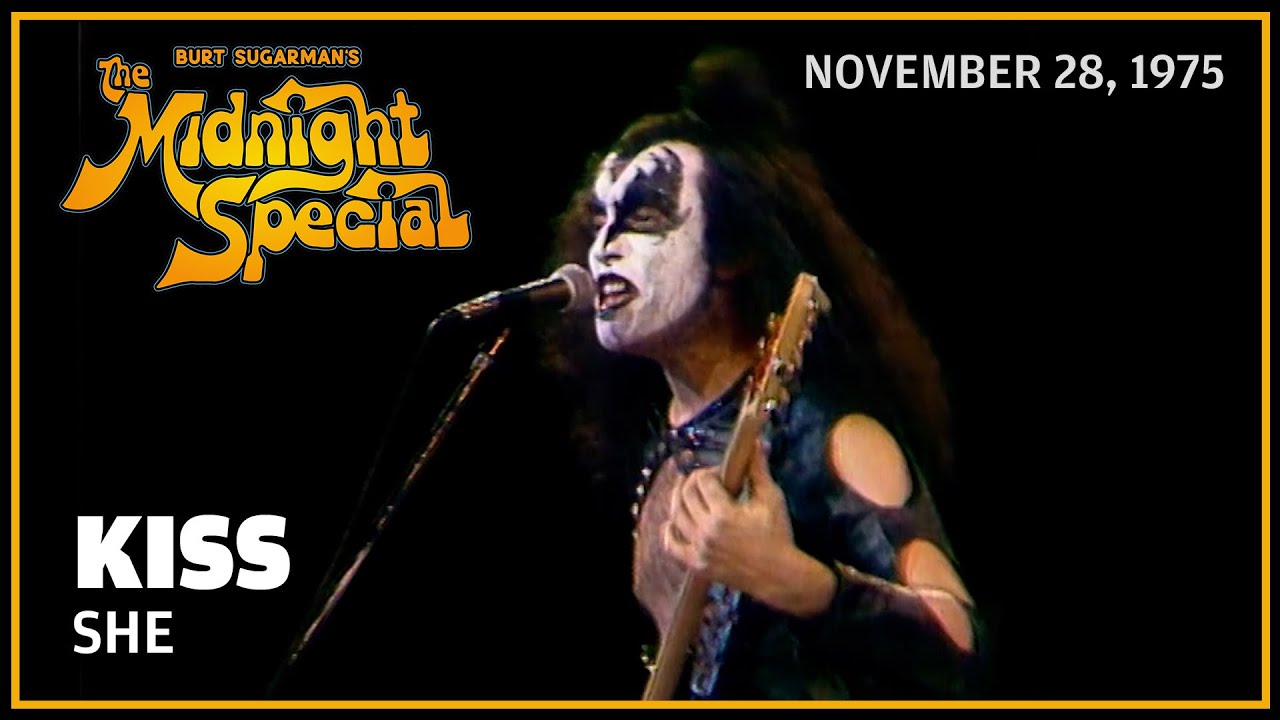
This led to Stanley and Simmons secretly shacking back up with Criss and Frehley, despite the fact that behind the scenes, the latter was still drinking heavily and using drugs. As for Kulick, he knew there was trouble in paradise.
“I knew something was up,” Kulick told GW last year. “A reunion was always in the back of my mind. I hoped it would never happen; I always knew it would – especially after Unplugged.”
Kiss’s Reunion Tour saw Frehley gallivanting around the world once again to great success. His future should have been great, but within a few years, and after 1998’s Psycho Circus, a reunion album gone wrong, the wheels came off once again. His drinking and drug use escalated once more, making the supposed Farewell Tour in 2000 and 2001 inevitable – even though the tour wasn’t so much a farewell for Kiss but a farewell to Frehley and Criss as members of Kiss.
When Frehley quit Kiss for the second time in 2002, he claimed once again that his bandmates had begged him to stay. It wasn’t to be. He assumed that he’d pick up his solo career where it left off, but that wasn’t to be, either – at least, not at first.

Frehley didn’t sober up until 2006, but once he did, starting with 2009’s Anomaly, he rattled off a series of triumphant solo records that matched the best of what he’d done in and out of Kiss in the ’70s and ’80s. His most recent record was 2024’s 10,000 Volts, crafted with the help of his co-producer, Trixter guitarist Steve Brown, and one which he felt was his best yet.
Be that as it may, while speaking with Guitarist in 2024, Frehley revealed that he was simply happy he’d survived.
“I got rid of my demons,” Frehley said. “I used to be a bad drunk and did a lot of drugs. I wouldn’t be here talking to you right now if I didn’t get sober 17 years ago. When I talk to young musicians, I always tell them, ‘Don’t fall into the pits that I did.’”
This, along with the fact that Frehley was said to be working on a new album in 2025, makes the news of his death all the more heartbreaking. In the years since quitting Kiss, he’d fallen out with his ex-bandmates, Stanley and Simmons. In particular, Stanley was in his crosshairs.

“A few months before the [final Kiss] concert,” Frehley told Guitarist, “Paul goes on Howard Stern’s show and says if me and Peter got up on stage, you might as well call the band Piss. I don’t know why he said it. Paul’s a good guy; he’s a very talented songwriter, singer and frontman. But he’s hot and cold. Sometimes he’ll say nice things, and sometimes he’ll say things that aren’t nice.”
These comments, along with Kiss’s refusal to meet his monetary demands, were probably why Frehley chose to forgo appearing as a guest during Kiss’s End of the Road Tour, which concluded at New York’s Madison Square Garden in December 2023. Note, however, that Frehley oscillated between saying that Stanley and Simmons wouldn’t pay him enough, and that they never asked him at all.
We’ll never know the truth. What we do know is that by the time GW spoke with Frehley for the last time this past August, he was open to reconciliation.
“I’m the kind of guy that never says ‘never,’” Frehley said. “I don’t hate Paul or Gene. We’re rock ’n’ roll brothers. Peter, too. So anything can happen, just not at this point. I’m having too much fun doing my own thing. Maybe I’ll get inducted into the Rock and Roll Hall of Fame as a solo artist!”

After his death, Simmons and Stanley sent love to their fallen brother. The former said via X, “Our hearts are broken. Ace has passed on. No one can touch Ace’s legacy. I know he loved the fans. He told me many times. Sadder still, Ace didn’t live long enough to be honored at the Kennedy Center Honors event in December. Ace was the eternal rock soldier. Long may his legacy live on!”
Given the state of their relationship, unsurprisingly, Stanley was a bit less touchy-feely, posting under a picture in which he and Frehley were laughing: “I remember in 1974 being in my room at the Hyatt on Sunset in L.A., and I heard someone playing deep and fiery guitar in the room next door. I thought, ‘Boy, I wish that guy was in the band!’ I looked over the balcony… [There] he was. It was Ace. This is my favorite photo of us…”
Then there was the man who stabilized Kiss’s lead guitarist spot after Frehley’s departure, Bruce Kulick, who tells GW exclusively, “I knew Ace’s passing would rock the music world. I remember thinking, ‘This is like Eddie Van Halen’s death. He influenced so many, and he was one of a kind.’ What I’m seeing online proves me right. His legacy is monumental.”

And, of course, there’s Tommy Thayer, Kiss’s modern-day Spaceman – who, despite being Kiss’s longest-tenured lead guitarist, took a hell of a lot of flak for wearing Frehley’s iconic makeup. Frehley himself often jabbed at Thayer, but that didn’t stop the latter from taking the high road.
He inspired generations of guitarists, myself included, to chase greatness. It’s been an honor to walk in his footsteps
Tommy Thayer
“A legend who will never be forgotten,” Thayer said of Frehley via social media. “He inspired generations of guitarists, myself included, to chase greatness. It’s been an honor to walk in his footsteps. His legacy will live forever. Rest in peace, Ace.”
If Frehley’s death feels sudden and unfair, that’s because it was. He had more to do, more shows to play, more music to make. It’s tough to fathom a world without him. As the meme says, “You can be a doctor, a lawyer, a pilot, but you can never be Ace Frehley.” What did the meme mean? That Frehley – while not the most technical player – had a vibe.
He influenced a vast number of guitarists, and he knew it, jokingly telling Guitar World in 2024, “If I’d known I was gonna influence thousands of players, I’d have practiced harder.” Maybe he should have. But what would the point have been? He had the thing that many players who are “better,” worked harder and were “respected” wished they had: the “it” factor. As Kulick puts it, “He defined what it means to be a rock star.”
As Frehley told GW in his final interview: “I’m probably gonna go until the wheels come off!” And while we didn’t expect it to be so soon, we can take solace in the fact that the guitar-playing Spaceman from Planet Jendell lived as he wanted, with no regrets – until the goddamned wheels came off.
- This article first appeared in Guitar World. Subscribe and save.

