

Graham Coxon doesn’t usually like to be reminded of his younger self (“I wore a dreadful shirt that day,” he squirms when I tell him that Blur’s seminal 1995 show at Mile End Stadium was this writer’s first teenage gig. “I really regret that shirt”). But he’ll make an exception for Castle Park.
Recorded alongside the noisy, angular tracks that became 2012’s A+E – but shelved as his post-Blur career as a musician, visual artist and TV soundtrack composer snowballed – the album is a lovely surprise gift, teeing up this year’s reissue programme of the guitarist’s entire solo catalogue.
All these years after you recorded it, are you pleased with Castle Park?
Yeah, I’m glad it’s out there. No more secrets. It’s a little snapshot of me, 15 years ago. I wanted it to come out earlier, but it just never seemed like there was a right time to put out an album that sounded like ’60s-influenced trad indie or something.
It’s a funny old thing. But, yeah, it’s good to get it out of the way. I made it with Ben Hillier [producer], and he was always like, “When’s that fucking album coming out?”
The songs came from the same sessions as A+E, right?
Yeah, there were 20 songs and they fell quite neatly into two different piles. A+E was more aggressive and nuts and groovy, perhaps. And Castle Park was more loose.
A lot of A+E came from improvisation, but Castle Park was a little more traditional songy-type stuff – verses and choruses. And even an attempt to create a sort of Spaghetti Western with Dripping Soul.
It’s not particularly about the actual Castle Park in Colchester, where I had to climb over a rather treacherous fence with friends a few times after it shut on a Friday night. I guess the title seemed to reflect a certain romance and innocence. Even though I was no spring chicken when I recorded it.

You’ve said you were heartbroken when you wrote these songs…
Yeah. There’s a quite light-hearted “I’ve got dumped” song [Alright], but actually, at the time, it hurt. The album starts with a reasonably optimistic vibe. But when I’ve listened to it again recently, I go, “Oh my God, this just goes downhill.”
It gets more and more weird – there’s New Orleans soul, and Mélodie Pour Christine is something I used to play on an old Spanish guitar – then gets about as depressing as you can get on the last song, All The Rage. But I think that’s a really interesting chord sequence, and the way it goes to that middle eight when the French horns come in.
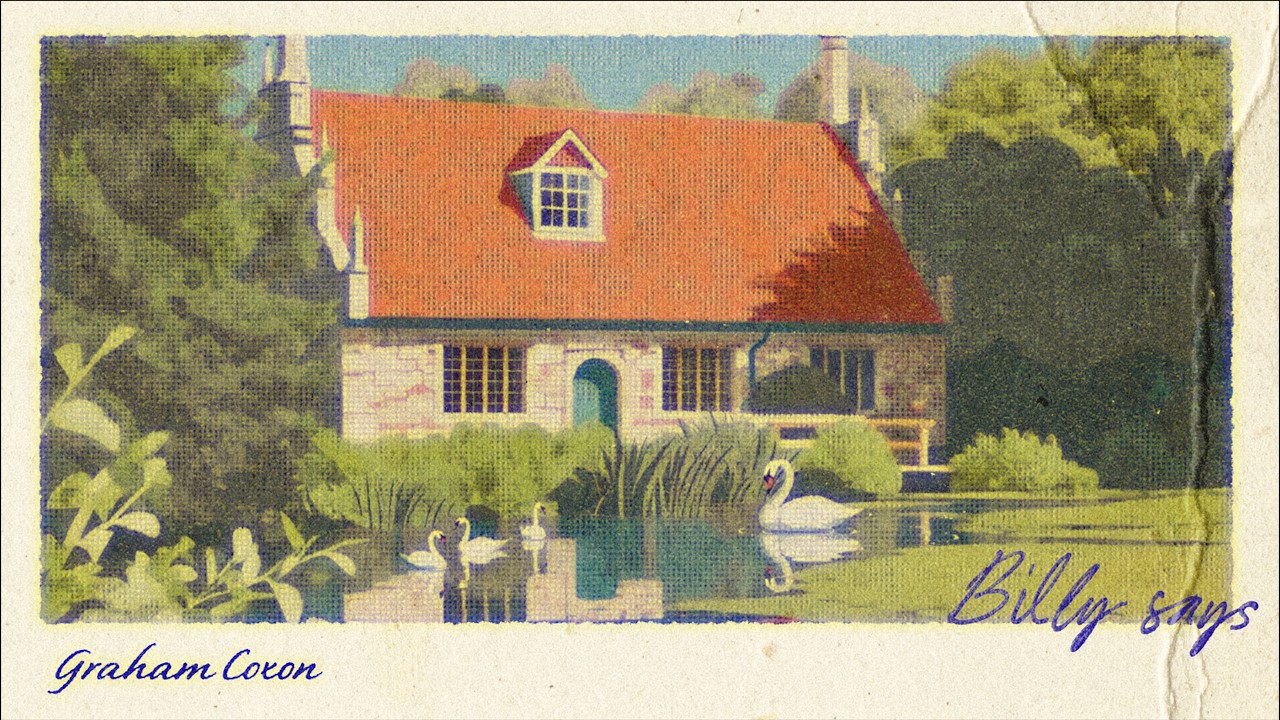
There’s a bit of a Jam influence on Billy Says, but it’s not as good as The Jam. There’s Kinks-iness in there, too, but I’m not as good as The Kinks. I don’t think anyone is anywhere near Ray Davies as a songwriter, to be honest. He’s our best songwriter we’ve ever had. Closely followed by Paul McCartney.
What kind of guitars were you reaching for?
It was the same old thing, really: a Tele, a bit more of a Fender-y sound, that jangle kind of thing. I mean, my old Blur Tele, that butterscotch thing with the stickers – that weighs a ton. It’s like playing a Les Paul, basically. And the neck is thick.
It’s an absolute beast, but I didn’t know any different. Then I finally bought an old ’68 Tele, which someone had dug a huge hole in and put in a [Patent Applied For pickup]. The neck on that was so beautiful, I had to buy it, and it was so different from that one I struggled with throughout the ’90s. So it was quite possibly that ’68 on Castle Park.
How about your amps?
A lot of the sounds on A+E were just through a tiny, cheap, nasty, solid-state amp. But for Castle Park, I might have used my ‘Plexis’. There’s not an awful lot of aggressive sounds on it, or really gainy tones.
It’s kind of gentle. But even at the beginnings of Blur, my goals when it came to tone were based pretty much around Abbey Road, that warm bluesy thing on I Want You (She’s So Heavy).
There’s a couple of outings for acoustic guitars, too.
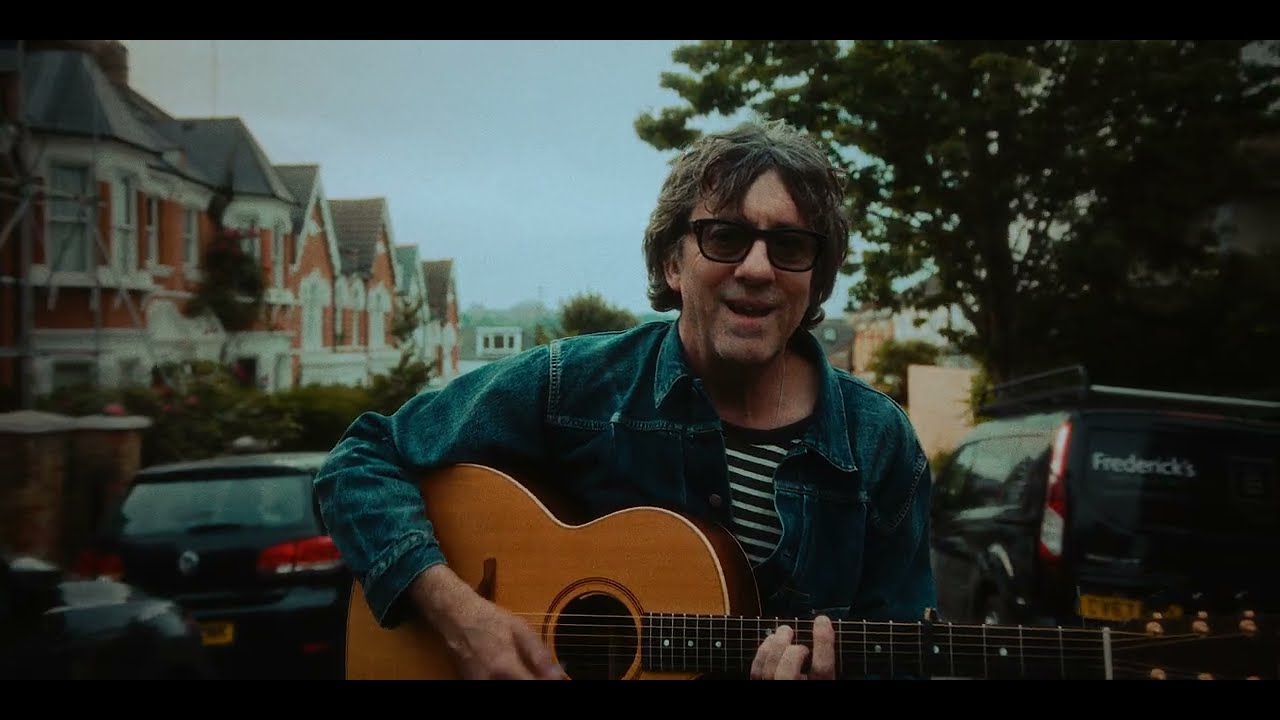
I think the Dripping Soul acoustic was just a Spanish one that was knocking around, just to give it that Ennio Morricone Spaghetti Western thing. Easy may have been my old Harmony Sovereign. It was a pig to play, but I kinda wish I hadn’t sold it. Actually, part of the reason I did was to get that Marquis D-28 [points to wall behind him].
Dripping Soul is a funny old song. It seems like each record I’ve made, there always seems to be this kind of strange presence, some sort of feminine spirit. Like, on The Spinning Top [2009 album], she was there, and with my work with Rose [Elinor Dougall] in The Waeve, she turns up quite a lot. Rose and I live in this house and we’re not alone here. You just have to keep them happy by writing songs about them.
How does your solo approach to music differ from playing with Blur?
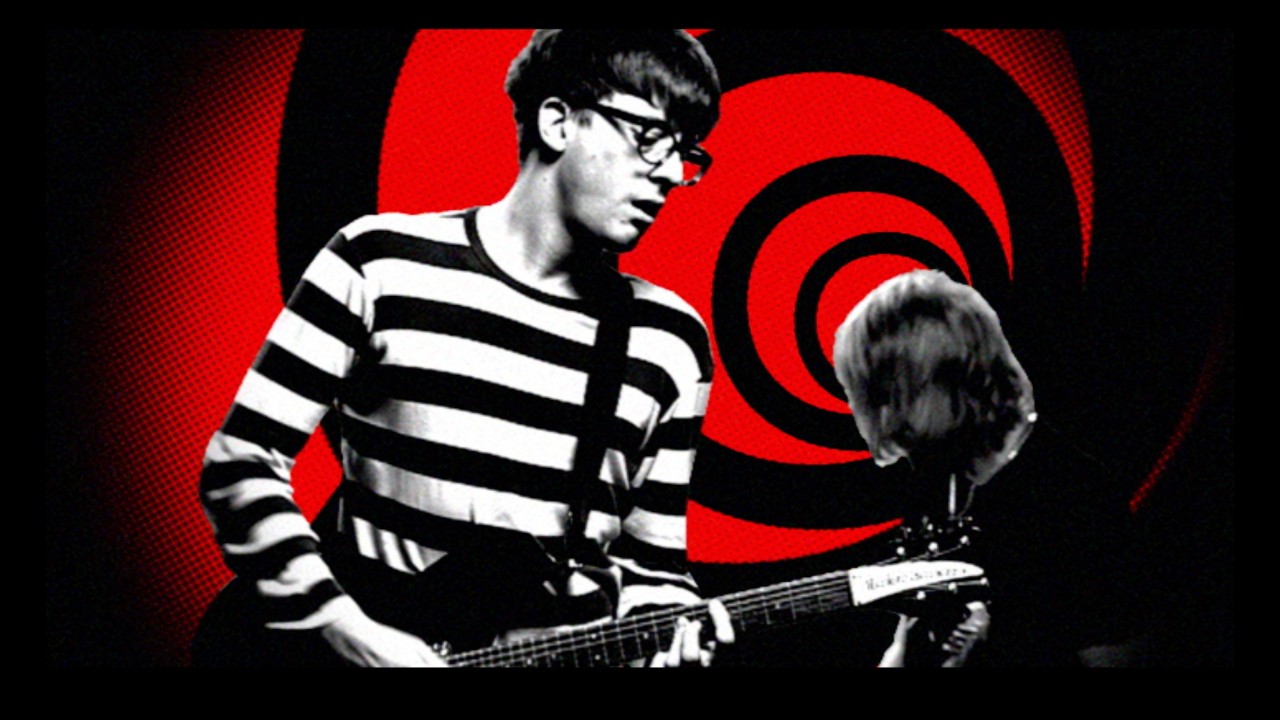
Well, with Blur, I have to interpret somebody else and channel what I think they’re saying emotionally in a song, before they even do it. It’s like creating a runway for the aeroplane of their voice to land on nicely. So as not to overwhelm it.
Y’know, the guitar comes with a lot of baggage, and it can be quite a masculine energy, and so I’m always trying to be very careful how I use it. I mean, sometimes I just Polyfilla a song with distortion, but normally I try to be considerate!
How do you know if a song should go in the Blur pile or your solo pile?
It’s not up to me. It’s up to Damon [Albarn], innit? We’ve all written a little bit for the Blur pile, but, really, that comes down to what Damon’s writing, and that’s a struggle I’ve had since I’ve known him.
You know, how dare I have the flippin’ hard neck to write songs when I’m Damon’s mate? But he’s a bloody good songwriter and he has written some beautiful songs. So it’s frightening but inspiring at the same time.
You’re reissuing your solo catalogue this year.
[Deadpan] There are so many overlooked works of genius, I had to get them back out there…
What was it that made you embark on a solo career with 1998’s The Sky Is Too High?
A neighbour was a boxing trainer and he’d decided to write a script for a film about a Victorian bare-knuckle fighter. He came round and said [geezerish growl], “You’re in that music game. Write us a couple of songs.” So I thought, “Well, this bloke’s a boxer. I don’t want him to start kicking me about the kitchen.”
So I wrote Me You, We Two and A Day Is Far Too Long, purely for his film. Then I found I couldn’t stop. I just thought, “Cor, this is good. Just get some words and chords together.” It seemed to make me feel something. It was different from drawing and painting.”
The Spinning Top was a showcase for your acoustic guitar skills and really surprised Blur fans. Was that an important album for you?
Yeah. Because the acoustic guitar had always been such a bugger for me. In Blur, I’d just swing the songs along with a bit of strumming, but the guitars I had just seemed so horrible.
I was influenced by Bert Jansch, John Martyn and Davy Graham, but I just got tired of sitting there, depressed, saying, “Gosh, I wish I could play this kind of thing.”
So one day, I went down Denmark Street, into Hank’s, and thought, “Ooh, look at all this.” I realised there were these small-bodied OM-type guitars with a string spacing that was really comfortable to fingerpick with.
I just thought, “Well, I’m going to buy one of these, then I’m going to go home and hide all my plectrums, and for eight hours a day I’m just going to practise.” I used to have a place in the countryside near Canterbury and I sat at the kitchen table for a week, messed around with tunings and got those songs together. And I got Danny Thompson on the album as well.
How do you rate Damon Albarn as a guitarist?
[raises a suspicious eyebrow] This is a stitch-up…
No, no, we think he’s great…
Damon always plays those little Taylors. I’m always like, 'Come on, play a proper guitar'
Well, he’s got his own thing, like everyone has. You know, he rushes it a bit with his strumming. But he does that nice, simple kind of Elizabeth Cotten picking thing. But he always plays those little Taylors. I’m always like, “Come on, play a proper guitar.”
Some people say you play guitar like an incredibly talented teenager. The energy, the artiness, the messiness…
Despite what people say about me – that I just want to be noisy – that’s not always the case. I’ve also got an appreciation for people like Larry Carlton. I love his playing on New Frontier. It’s like Donald Fagen has gone: “All right man, you got one take – go!” And you can hear that he’s feeling his way through the song.
Melody, for me, is very important. And there’s nothing better than playing the changes, y’know? I mean, I’m not great at it. Theoretically, I’m not terribly good, but I like the idea of having a conversation with the guitar. I don’t want to dominate the thing.
I don’t know all my scales, but [if I did] then I wouldn’t play so many naughty notes that do something emotionally interesting. But sometimes I play something and it’s absolutely dreadful. It’s just the luck of the draw, really!
- Castle Park is out now via Transgressive.
- This article first appeared in Guitarist. Subscribe and save.

