


Imagine a textbook Nashville gunslinger. Chances are, in your mind’s eye, you’re picturing a claw-handed Southern roots master, raised on hickory smoke and hybrid picking, firing off first-take flash at three recording sessions a day.
By those metrics, Robyn Hitchcock might seem a square peg on the Music City scene where he planted his flag in 2015. Make no mistake: the 73-year-old Londoner is a serious player, especially when you hand him an acoustic guitar.
But Hitchcock is also a mischievous, satirical, at times achingly British songwriter, whose breakthrough band of the late ’70s – The Soft Boys – played mind-expanding psychedelic folk in the face of punk’s raw clatter and gave direct influence to artsy outfits like REM.
Fiercely prolific since 1981’s solo debut, Black Snake Dîamond Röle, Hitchcock’s solo career still moves with the energy of his adopted music scene. And as he releases – by our calculation – his 25th album, The Confuser, he tells Guitarist he’s never felt more at home as an artist.
There’s a strand of your voice and writing that seems so English. So it’s interesting to find you in Nashville. What does it mean to you to work there?
Nashville calls itself Music City at the airport, and it’s a fantastic place to find musicians, to hang out with musicians, to record. I’ve made four records here. It’s also conveniently placed for touring the States. I mean, Tennessee is a red state and not necessarily the kind of place I would be, but the cities tend to be oases of liberal thought.
You know, the baying hounds are all outside the perimeter. Nashville is the only place I know where people take musicians seriously, so you don’t get into an Uber only for them to go, “Do you make a living playing that thing?” I like being in that marketplace and I feel very honoured if a local muso says, “Robyn, you’re a Nashville cat.”
Jeff Beck once said that, in Nashville, even the janitor played better guitar than him. What are the merits of being in a town where everyone’s so good?
I think I’m a very good acoustic player, and I’m an idiosyncratic electric player, but most electric players are much more technically adept. So I’m basically known as a songwriter and a performer, rather than an instrumentalist. People don’t hire me to play sessions or anything, but the fact they’re prepared to play with me, I feel very validated.
There are great players and, of course, they’re not necessarily from Nashville. There’s a new guy that plays with my wife [Emma Swift] called Rick Lollar, originally from Tallahassee. He’s one of these guys like Richard Thompson, who just came out of the egg and they could play – you know, the fretboard held no fear for them.
Dave Rawlings and Gillian Welch: he’s from Rhode Island and she’s from California, but people just converge here. And I’ve never met Jack White, but the Third Man hive is here. Then there are homegrown guys. Will Kimbrough, who plays with Emmylou Harris, I think he’s fairly local.
Lyrically, the new album holds a sense of unfolding disaster. What’s your position on what we see going on in the world now?
Well, you can wring your hands and go, ‘This is terrible’ and ‘Isn’t mankind a revolting beast?’, and ‘Why do the worst people always reach the top?’ and all that. I’m not exactly saying, ‘Bring it on,’ but I refuse to fall to my knees in the face of horror.
I just think you’ve got to get up and rock [laughs]. And rock ’n’ roll is an old person’s game now – there’s still loads of people 10 years older than me who are doing it. I imagine they’ve got personal trainers and better health regimes than I do. I’m just an amplified folkie, really. I don’t have the infrastructure that The Stones or McCartney or Dylan has.
This is your 25th solo album, so you must be a prolific writer. Do you reject more songs than you keep?
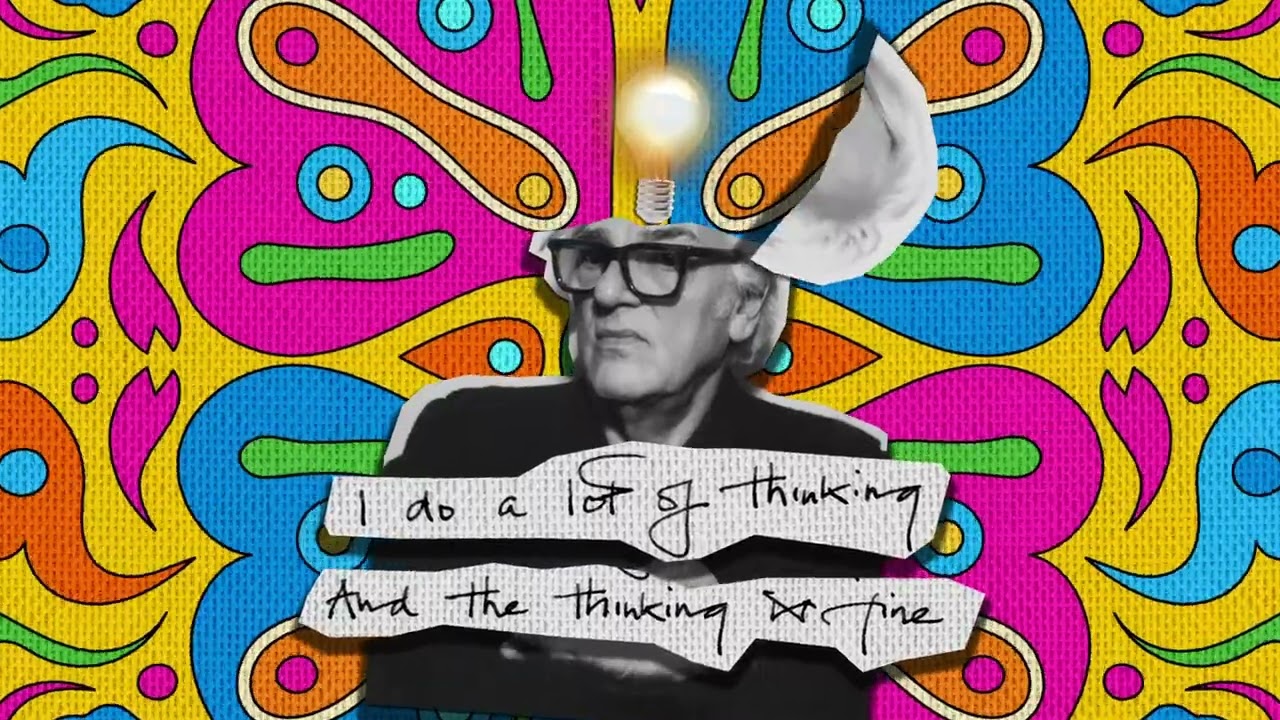
A lot of them fall by the wayside. Songs select themselves. I never sit down to write a song, I just realise I’m making one up in my head. It’s usually when I’m doing something else, so I have to quickly sit down and sing into the phone or scribble in my notebook. I sometimes work on it there and then.
The last song on The Confuser, Wasted, came to me about 40 minutes before I had to check out of a hotel in San Francisco, so I pretty much wrote the whole thing there on the spot. Others, like Ghost In Sunlight, I spent years trying to get that right, wrote hundreds of lyrics. So some things are just cleaner and neater than others. It can be a sprawling mess.
Do you let the ideas flow when you’re writing?
Initially, I keep the taps wide open and unfiltered, and as the song goes on, as I hone it, I’m more rigorous. You’ve got to be open to suddenly going off at a tangent in the last 30 seconds. Some songs are just a series of tangents, then it’s a matter of making them stick together.
Like, Paul McCartney’s You Never Give Me Your Money is about six different sections that don’t really repeat, but it works. Or Jugband Blues by Syd Barrett. On the other end, you get Dylan songs like Desolation Row, where you have endless verses of exactly the same structure. That works if you’re telling a story, I think.
How has your approach to songwriting evolved over the decades?
I’m not really aware of having a craft, but I do think of finishing songs as a kind of problem-solving
I sometimes wonder if I’ve exhausted my bag of tricks, or whether I did that decades ago, and I’ve simply got three or four different paths I use and I’ve been up and down them many times. I’m not really aware of having a craft, but I do think of finishing songs as a kind of problem-solving.
Once you’ve started one and you’ve captured the essential feel of it – which often only takes a couple of seconds – then you’ve got to make the rest of it work. I paint as a hobby. And rather like people doodle when they’re thinking about stuff, if I’m doing a painting, often I’m playing a song over and over in my head.
I mean, it’s a mystery. I just know there’s a point where you’re like, “Okay, great, this flows properly.” And if you don’t feel like singing or playing what you’ve just written, then it’s not working. But I absolutely have no idea where it comes from or how it starts. Nick Lowe used to refer to [songwriting inspiration] as ‘the man’. He’d say something like, “The man came round today.” Or, “The man wasn’t there this morning.”
How did the guitar come into your life?
My first experience with the guitar was drawing pictures of The Beatles playing it, or even – because I was a Doctor Who fan – drawing Daleks playing it.
My parents gave me a beat-up old guitar for my 14th birthday, and I got a Les Paul copy called a Kimbara in 1975, but I wasn’t really a Les Paul [player]. It took me a long time to figure out, but I realised I was a Fender person. I briefly had a Gretsch. But I couldn’t get it in tune, and I wasn’t sophisticated enough to figure out what to do with it.
In the early days of The Soft Boys, I bought a Stratocaster, which I actually swapped with another Cambridge musician for a Telecaster. Then I pretty much settled on Telecasters, and my big old archetypal ’78 Tele – the one I used on I Often Dream Of Trains [1984], Fegmania! [1985] and Element Of Light [1986] – is appallingly heavy.
I don’t know if it’s got gold bars inside it or something, but it has an enormous and specific gravity. I actually don’t play it live any more. I’d haul it out and I realised it’s just not for touring. But it’s got a really good tone and I still use it for recording.
What guitars would you pick up if you were relaxing at home?
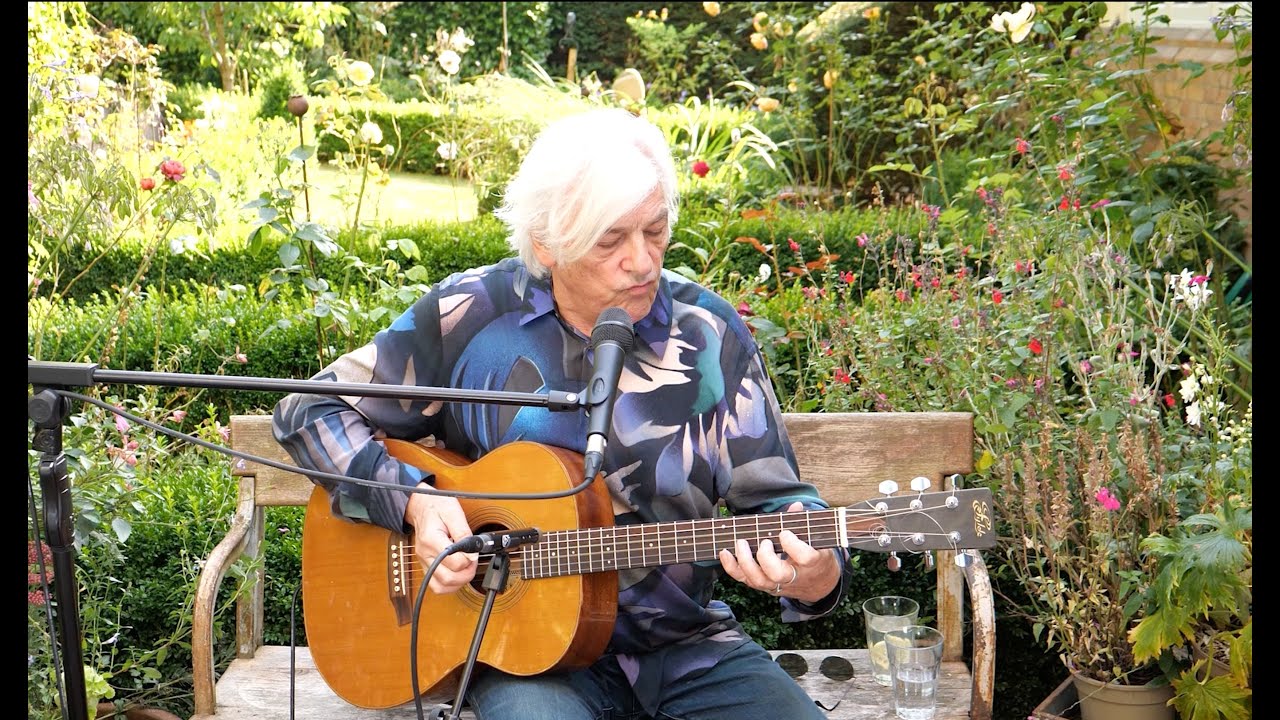
Well, I’ve got one here called a Fender Malibu, which is a very strange-looking thing. It’s got a head like a Stratocaster, but it’s an acoustic. And then, this is my go-to guitar: it’s a Fylde. It has a kind of wide fretboard.
My really old Fylde, that’s up at the menders at the moment. It’s had so many accidents that my guitar doctor in London told me to retire it nearly 20 years ago. It’s an Olivia, and I contacted Roger Bucknall and he made me this – it’s an Olivia, too. They don’t really make them any more.
But the more guitars you have, the less you can play each one, so I’m not drawn to having a loft full of them. I’d rather just have a few and get intimate with them, but I wouldn’t say no to another Fylde sometime.
My original Olivia was built in ’77 or ’78, so it’s getting on for 50. It belonged to a friend who never played it. I’d go around and I kept playing it, so in the end he just said, “Do you want to buy it?” Best 200 quid I ever spent. It still sounds beautiful. It’s too fragile to tour with, but I would record with it again.
Are there any curios in your collection?
I’ve got a funny-looking Fender called a Meteora. And another hollow-bodied guitar made by a Finnish builder in Australia, which looks kind of twangy.
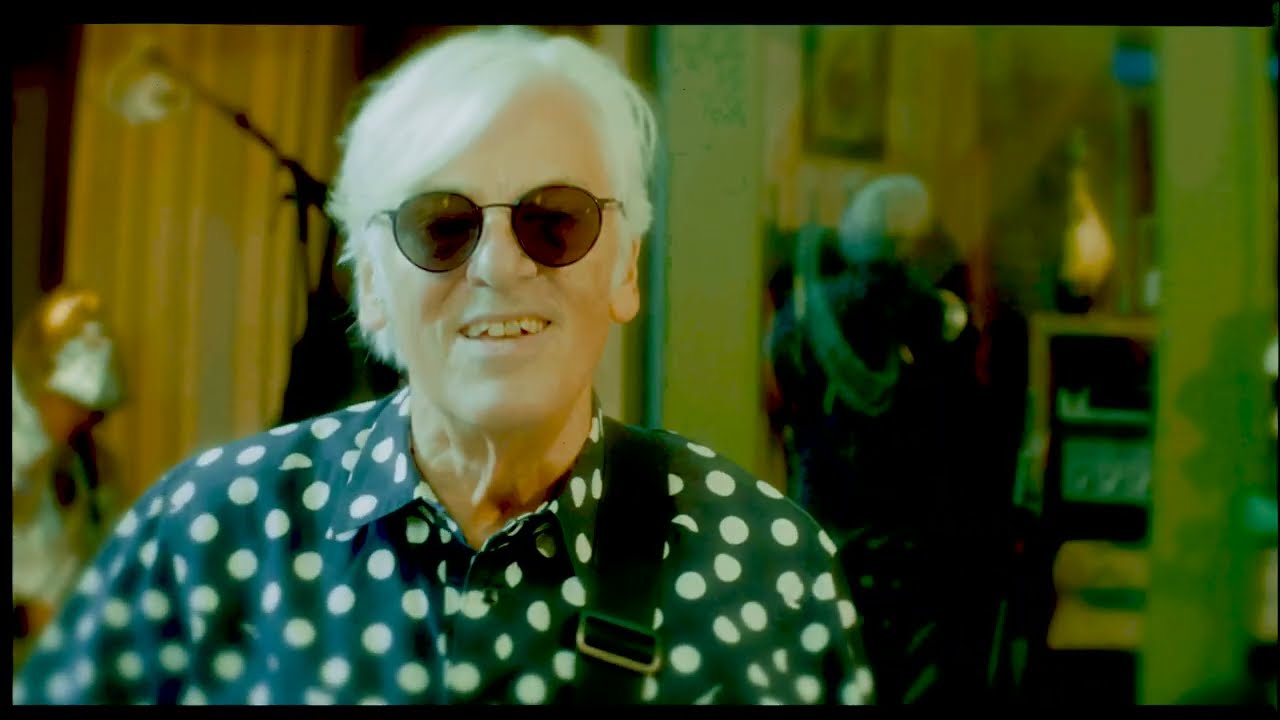
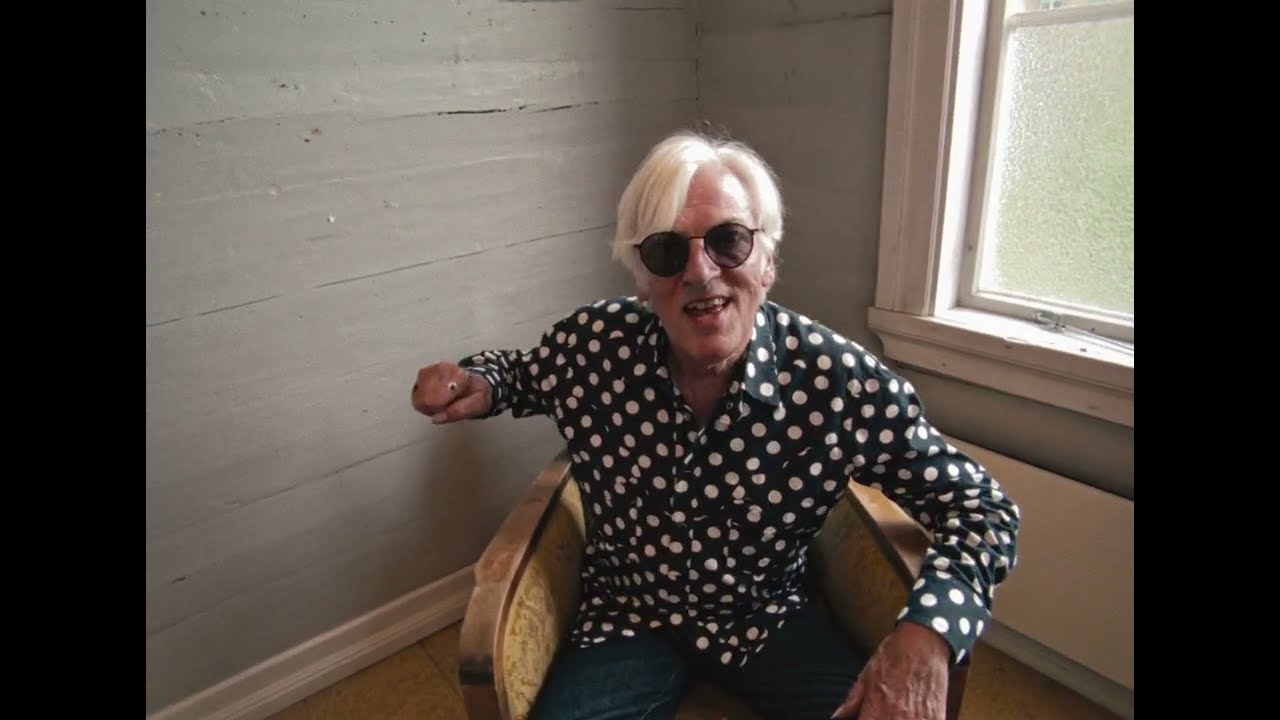
I’ve also got my TubbyCaster, which is a Telecaster [style] made for me by a man named Kelley Stoltz. He’s from California, but he was in Echo & The Bunnymen. He’s an Anglophile. He made me this rather nice polka dot ‘Tele’. It’s really light, so it’s kinder to my mature spine than the old Tele. I will be deploying these at my upcoming gigs.
Do you have a theory on what makes a songwriter?
Why some of us pick up on it, or have the ability, I don’t know, but it may be to do with listening to a lot of music when you’re a kid or a teenager. My molecular structure was changed by listening to Bob Dylan, and then all the other people that came out around that time: Jimi Hendrix, Pink Floyd, Traffic, Donovan and The Incredible String Band – talking of fingerpicking – and later on, Martin Carthy. He’s my favourite acoustic guitarist, I think, along with Bert Jansch.

What’s your relationship with that golden generation of folk players?
Actually, I rang Martin up yesterday. He just turned 85. He’s got some memory problems now [Martin was recently diagnosed with late-onset Alzheimer’s Disease]. He can’t really talk. I think he knew who I was. I don’t know. He was very friendly; he may have had no idea. Martin’s an understated genius of guitar.
He kind of appeared fully formed, Jesus, about 65 years ago. He just had these odd tunings that he puts guitars in, and he does what I would never dare to do live, which is change tunings between songs. But I do mess around with tunings at home and that is often inspiring, and I should do it more.
What’s been your experience of working with tunings?
I made up a song and we recorded it – it’s called The Green Boy – and I was very pleased with it. But I can’t for the life of me remember now what the tuning was. I should have written it down. People have written in and requested it and suggested what the tuning might be, but I just can’t get it.
There’s another one called Heliotrope, and I do remember the tuning for that, but I’d never play it live because I couldn’t get [the guitar back in tune]. I think that’s always a good excursion, though, to mess around with the tuning a bit. You’ll probably get a new song, if that’s what you want.
And, of course, there are no rules…
[nods] People may not understand what you’re doing. But it’s your guitar to tune.
- The Confuser is out now via Glowing Green Fog.
- This article first appeared in Guitarist. Subscribe and save.

