


Between 2014 and 2021, Gothenburg trio Monolord released five full-length albums and became known as a leading voice of modern doom alongside bands like Pallbearer, Yob and Windhand. Then they hit the brakes.
In an effort to grow beyond the self-imposed confines of guitar sludge, frontman Thomas Jäger recorded two solo albums rooted in ambient music and drone rock, Music for Imaginary Movies 1 and 2, and a record of introspective acoustic songs, Foliage, before returning his attention to Monolord. Not only did the side trip expand Jäger’s horizons, it allowed him to return to his main outfit recharged, refocused, and at least partially reinvented.
“Having done some albums on my own, I feel like I've become a better songwriter and I’ve learned to explore different moods and emotions,” Jäger says. “At the same time, I can be heavy in a different way, when I want to.”
Monolord’s new album Neverending illustrates Jäger’s growth through eight evocative, expressive, and brooding songs that delve deep into the canyons and caves of propulsive classic rock, undulating grunge, and reflective alt-rock. Combined with the band’s trademark sustained Sabbathian tones, Monolord have transported themselves into the fertile, psychedelic realm of emotionally resonant rockers such as Mastodon and Baroness.
“I’ve always been a sucker for melodies and hooks, and we’ve had that in Monolord, but it used to be kind of hard for us to break outside of that doom thing,” Jäger says. “It’s fun to be in the rehearsal space with a wall of amps behind you and play a single riff for five or six minutes, but when you do that on a record, it doesn’t necessarily leave the listener feeling the same vibe you had when you made it.”
Neverending should still appeal to all but the most myopic doom fans while roping in those who enjoy their darkness tinted with subtler shades of gray.
One of the heaviest songs, You Bastard, intertwines a jagged, lurching riff into a slow boiling rhythm that climaxes with a bitter-bubblegum refrain. Crystal Bridge chugs, spits, and sputters like a construction site vehicle basting Corrosion of Conformity on the stereo. A mere 90 seconds later, it levels out into a chimey, Zen garden ballad, replete with spare, reverberating chords, and sinuous licks.
Invisible glides along a harmonized, serpentine guitar line and honey-dipped vocal harmonies. For Jäger, the highlight of the album is the opening track Iodine, which incorporates drone rock riffs and layers of fever-inducing hooks.
“I think it’s the best thing we’ve ever recorded,” he says. “It doesn’t sound like anything we’ve done before, and it’s a natural development from everything we’ve been doing.”
For the solo, Jäger mined some of his favorite classic rock leads, as he did for other cuts on Neverending. Not only does he seek inspiration from artists from different genres, he enjoys molding and warping their styles until they’re unrecognizable.
“I was listening to the dual-guitar part on Hotel California a lot, when I wrote Iodine,’ he explains. “I’d sit and play things like that and Lynyrd Skynrd’s Freebird over and over, and then pick up a guitar and reinterpret it.”
![The Swedish doom/sludge band Monolord [L-R]: Bassist Mika Häkki, drummer Esben Willems, guitarist/vocalist Thomas Jäger](https://cdn.mos.cms.futurecdn.net/hrrJ9TuQLzh7pwJVX4jknZ-1200-80.jpg.webp)
In addition to diversifying his songwriting approach, Jäger took a new direction with the lyrics. Instead of relying on broad abstraction and philosophical constructs as he did in the past, he dug deep within and addressed personal themes of romantic disillusion, mortality, and mental illness.
“I’ve written about belief and superstition before, but everything about this record felt more personal, so I wanted to make the lyrics more about real things. I had some major life changes take place since the last record, and I wanted to tell stories about those any other people’s difficult experiences because life can be hard, but you can get through it.”
Many of the riffs for Neverending marinated for a while before being finalized. Jäger wrote the skeleton for Inside the Collider in 2020; other tracks have existed in various forms for several years. It wasn’t until April 2025 that Jäger finished the final demos for the album.
“When I work on old songs, I have to relearn them, and then I re-record everything and make more changes,” he says. “I panic almost when I feel like I’m not getting enough variation, so I continue to work on them even after they are done.”
He has taken a similar approach to tuning. Monolord started experimenting with C standard tuning in 2014. Seeking an even heavier guitar sound, they dropped to B standard.
As soon as I tuned to drop A and picked up the guitar, a burst of new riffs came out
They loved the deeper tones, but since they were using traditional gauge strings, they had trouble keeping the guitars in tune. “The strings got all wobbly and floppy and it took forever to set the guitars up, so maybe it was a bit sloppy.”
For their third album, 2017’s Rust, they solved the problem by using lower gauge strings (.12 to .58). More recently, Jäger has issued Love Joy .12 to .64 strings on his recently acquired gold top Gibson Les Paul custom and his favorite SG. For three new songs on Neverending, he tuned all the way down to drop A.
“As soon as I tuned to drop A and picked up the guitar, a burst of new riffs came out,” he says. “It felt new and exciting. You don't even have to have gain on the distortion pedal. The vibrations alone make it sound distorted.
“I also still like tuning to B standard because you can do overdubs with clean guitars in standard tuning by putting a capo on the seventh fret, and it sounds really amazing. I did that with acoustic and electric guitars to get some cool overdubs. But I definitely want to do more with drop A in the future.”
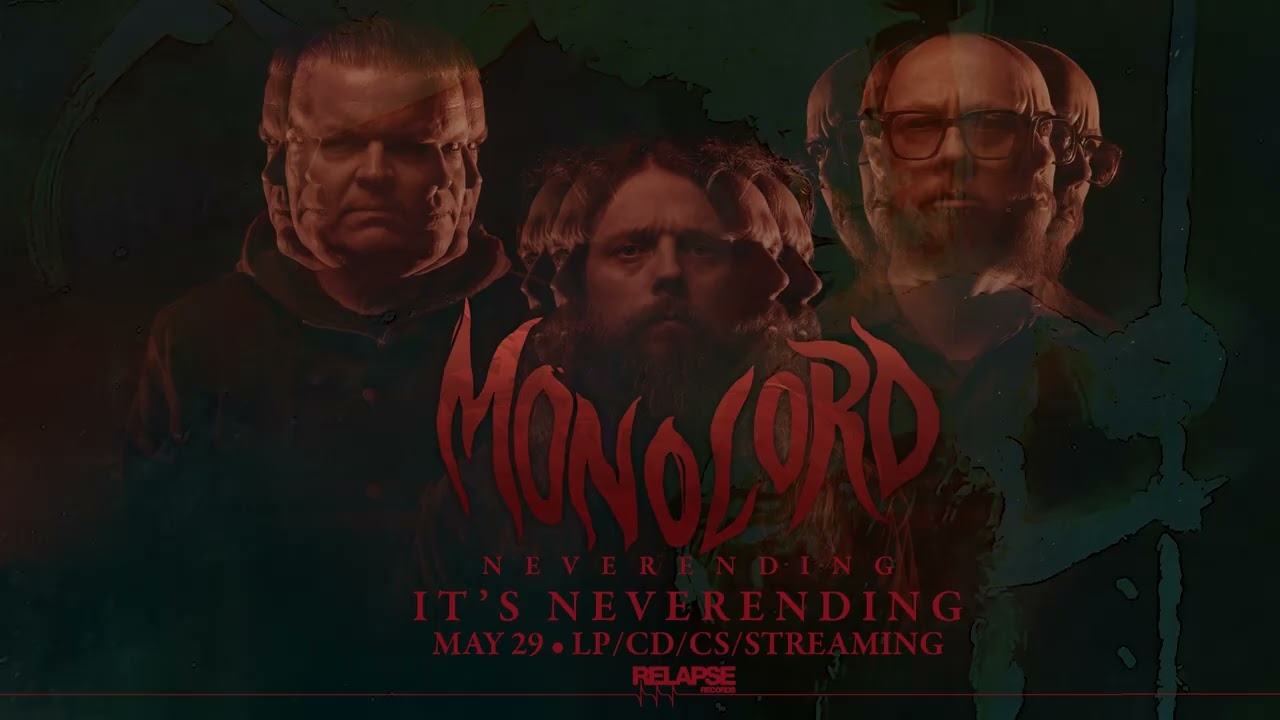
While Monolord self-produced their first five albums, they decided to continue their evolution as a band by hiring a big-name producer to record Neverending. Bassist Mika Häkki, a big Tool fan, was excited when Jäger suggested Sylvia Massy, who produced Tool’s Opiate and Undertow.
The frontman likes Tool as well, but that’s not why Massy was his first choice. “She did the first Bigelf EP, Closer to Doom, which is one of my favorite records of all time,” he says. “I was 16 when it came out, and her name got stuck in my head. It was only way later that I realized she had worked with so many big people [including Johnny Cash, Prince, and System of a Down].”
Massy asked Jäger to send her everything he had written, no matter what stage or production it was in. In April 2025, after Massy had listened to and taken notes on around 60 files, Monolord flew to her studio, Sylvia's Oddio Shop, in Ashland, Oregon. At first, Jäger was nervous to meet Massy, but as soon as they started talking about music and production, his jitters disappeared, replaced by excitement.
“She was very involved, but at the same time, she was very laid back, very chill, so it was a great experience,” he says. “It was so easy to record with her, it was almost like we were recording by ourselves.”
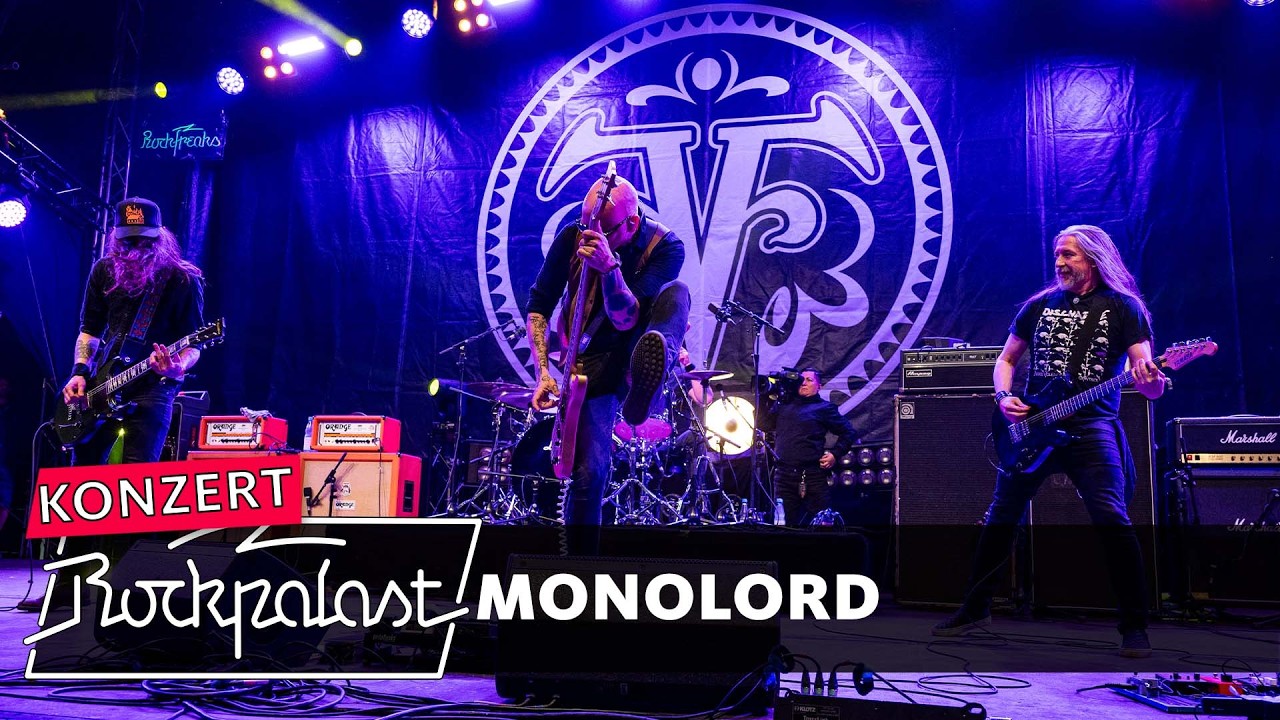
Massy helped the band construct 11 full songs by combining bits from Jäger’s shorter compositions with the more fleshed out tracks. Then, to create a wide range of warm, fuzzy, and overdriven tones, Massey built a rig composed of numerous amps and pedals.
She had Jäger record multiple takes through an Orange OR80 vintage an OR120 modern amp, a Laney Klipp, and a Mesa/Mark VII set to “a Malcolm Young kind of crunchiness.” They recorded additional tracks and overdubs with a Wizard Modern Classic, a 5150 combo, a small Valo, and ZT Lunchbox amps.
For extra distortion, Jäger blended a Boss FZ2 with a Lichtlärm Audio Medusa and used a Pepers Pedals Humongous Fuzz on Mode III for the songs in drop A. He augmented some of the leads with the FZ2 and a Dunlop Cry Baby Mini-Wah played in an open position. “It’s really noisy, which is fun,” he says. “I like that explosive rush of sound with lots of mids.”
In my head, I imagined the record to sound more like modern metal, so when I first heard the mix, I was a bit confused
By the time they were wrapping up the session, Monolord had recorded so many takes with different setups that they weren’t quite sure how the finished album would sound. Since he used a variety of high-gain amps and pedals, Jäger figured the songs would be razor-edged and raw.
“In my head, I imagined the record to sound more like modern metal, so when I first heard the mix, I was a bit confused,” he says. “I was like, ‘Hmm, this isn’t edgy or sharp, and it sounds like a metal record made in the ’70s. I’m not sure I like this.’”
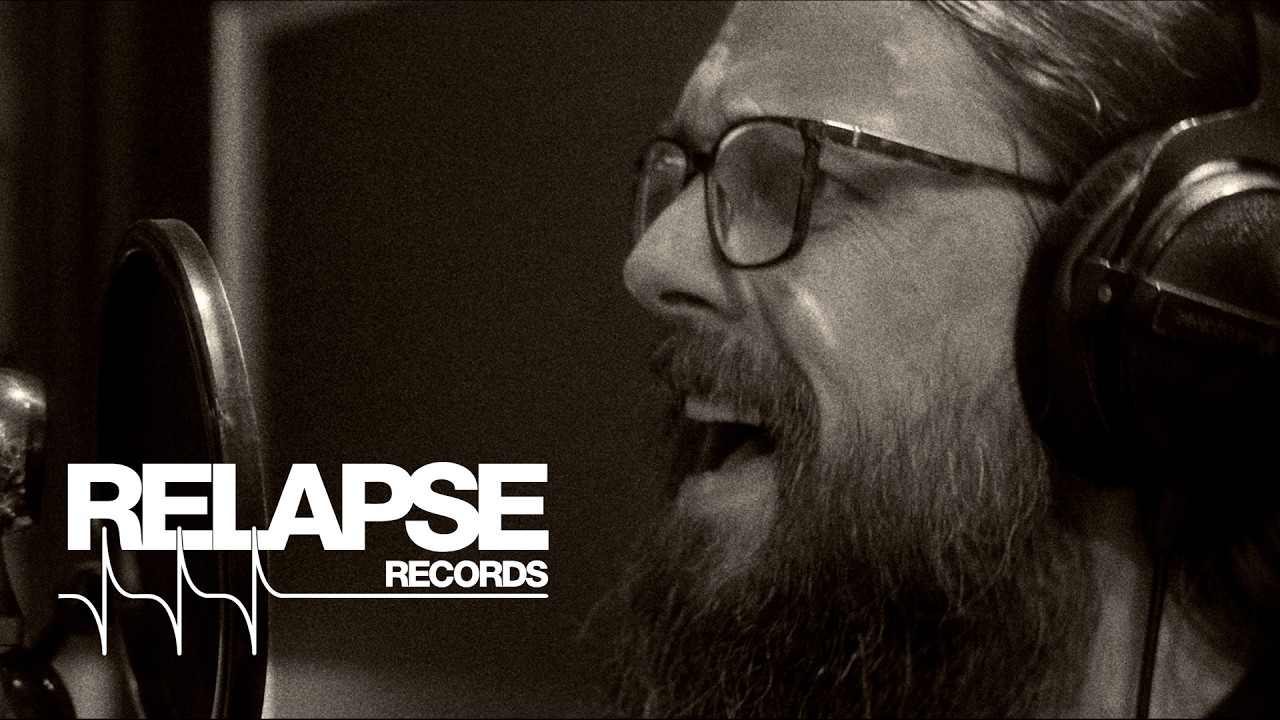
With repeat listening however, the guitarist picked up on the tonal variation and production techniques that separate Neverending from most heavy recordings. He heard how the textures overlapped to provide atmosphere, and the way the intensity of the guitars built and dipped as Massy added or subtracted layers.
We made sure we were completely prepared when we went in, but we wanted to do some extra arrangements and we didn’t expect to record as many takes as we did
“It was amazing,” he says. “As soon as I had that little bit of distance, I could hear all the tracks together along with the different overdubs, and I could tell Sylvia knew exactly what she was doing. Now I get why she wanted me to record so many guitars.”
The only obstacle Monolord encountered making Neverending was self-imposed out of necessity. They knew the record would cost far more to make than anything they had previously done, so they kept a tight schedule that left little downtime. The deadline caused anxiety, but it kept the band focused and motivated.
“We made sure we were completely prepared when we went in, but we wanted to do some extra arrangements and we didn’t expect to record as many takes as we did,” Jäger recalls. “In the end, we were worried that we wouldn’t have enough time to finish it. Fortunately, everything worked out.”
- Neverending is out now via Relapse.
- This article first appeared in Guitar World. Subscribe and save.

