


Heavy metal has evolved a great deal since four young musicians in Birmingham, England, saw a crowd gather across the street from their rehearsal room, lining up for an opportunity to get terrified by 1963 Italian horror film Black Sabbath.
Since then, the movement has expanded into countless sub-genres, each offering its own unique take on the sound. And while it feels like recent years have seen the pendulum swing toward more futuristic and progressive interpretations of sonic heaviness, there are still bands that look firmly to the past for inspiration.
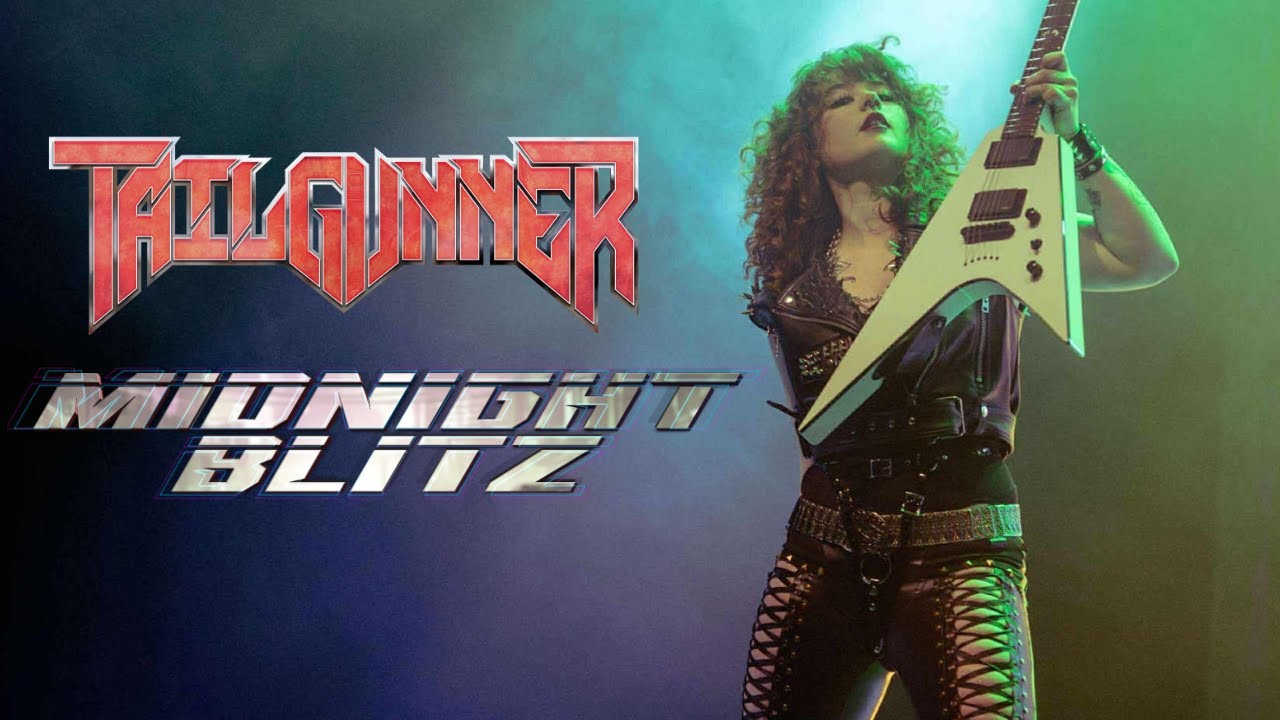
Tailgunner’s second album, Midnight Blitz, is a love letter to the New Wave of British Heavy Metal movement of the ’80s, as well as elements of the European power metal and American hard rock scenes from the same decade.
For Rhea Thompson and Zach Salvini, who share lead and rhythm guitar duties, this band is their chance to show how vintage shred heroes like Yngwie Malmsteen and Marty Friedman are still very much relevant to younger generations of guitarists.
In Tailgunner, they’re paying tribute to a style of music they believe never went out of fashion – partly due to the fact it never tried to be in fashion.
They’ve also been given a seal of approval from ex-Judas Priest legend K.K. Downing, who produced Midnight Blitz after being impressed by their performances supporting his band, KK’s Priest, on tour.
Naturally, having one of the most important guitarists in metal history on board is something that meant a lot to the young up-and-comers, with the veteran being able to provide endless pearls of wisdom.
“One thing I learned from K.K. is to challenge everything,” Salvini says. “We gave him our demos and he challenged every element of it and was very analytical. He’d throw curveballs our way on things like song structures and parts. Often as an artist, you can be deadset in your ways. You’ll write a demo and then refuse to be flexible or consider any alternatives. It was great working with someone who was so open-minded and didn’t rule out any possibilities.”
For Thompson, the opportunity to sit next to one of her biggest heroes and hear his creative suggestions was very much a once-in-a-lifetime experience.
He encouraged us to use more dive-bombs, squeals and random noises. It was a pretty crazy experience given that we grew up listening to Judas Priest
Rhea Thompson on working with K.K. Downing
“He’d suggest little changes to the songs that really brought them to life,” she says. “He encouraged us to use more dive-bombs, squeals and random noises. It was a pretty crazy experience given that we grew up listening to Judas Priest. He’s been so lovely to us. We were really lucky to have him involved.”
You’re going for a very classic metal approach at a time when a lot of younger bands are trying to sound more techy and hypermodern…
Rhea Thompson: It’s funny you mention that, because it’s become a bit of an in-joke between us. We’ll play festivals and watch other groups telling everyone that they’re the ‘proper’ metal band on the bill, but they’re all using eight-string guitars.
We have a modern production, but we’re very old-school in terms of influences. A lot of my solos are inspired by Yngwie Malmsteen’s Rising Force album, especially with things like the octave jumps between the arpeggio shapes.
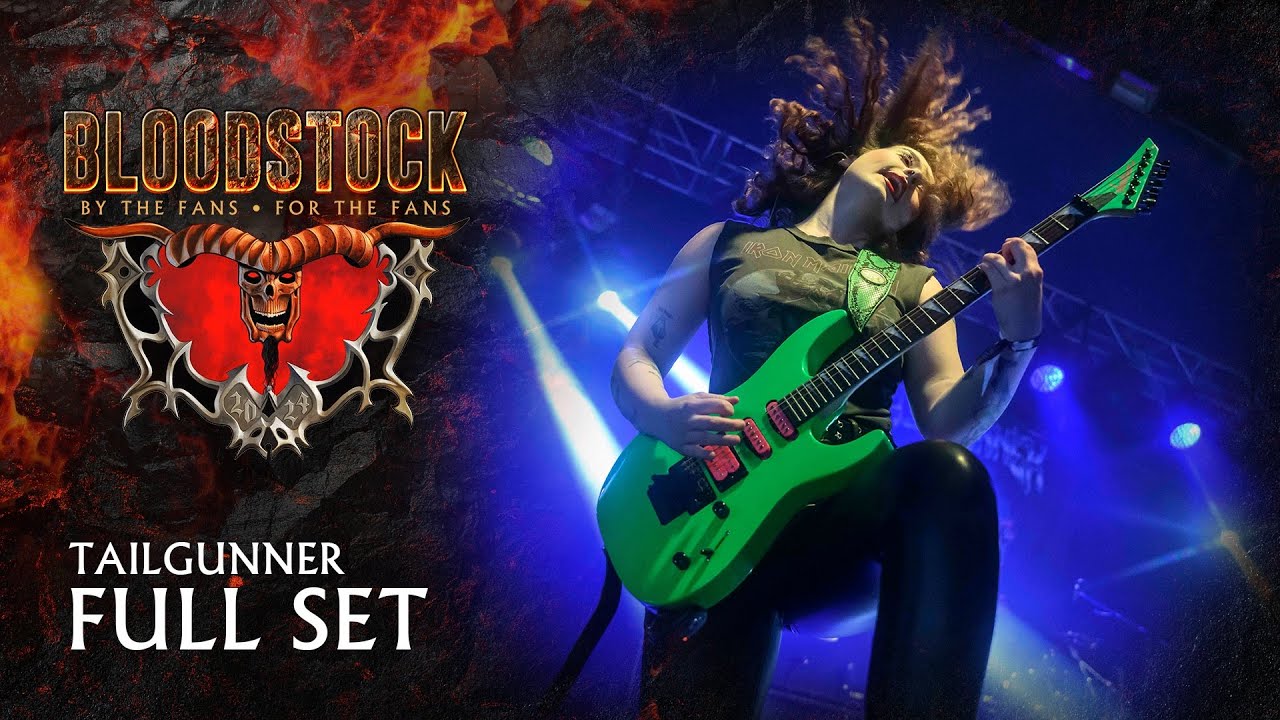
Zach Salvini: We live in the now, so we choose to treat our music in a more modern way. But it’s definitely written with a vintage feel. And like Rhea was saying, there’s something really special about those old Yngwie albums and even some of his later stuff. I was learning his song Vengeance [from 1995’s Magnum Opus] the other day, and I’d forgotten how good some of the mid‑’90s tracks are.
What other players shaped you into the musicians you are today?
Thompson: My biggest influence growing up was Slash, because Guns N’ Roses were my favorite band. I remember learning all of his solos and parts when I was young. Then I started to delve into the Yngwie-influenced neoclassical side, which is where all those arpeggios come from.
Salvini: For me, it was Angus Young to start with. Those AC/DC riffs sounded so cool when I was young, and still do. Then, like Rhea, I started listening to faster players. Jason Becker is probably my favorite guitarist of all time, along with Marty Friedman. It’s also impossible not to love the twin leads on classic Iron Maiden and Judas Priest records.
Where on the album would you say these influences are most prevalent?
Thompson: On the title track, my solo is the more neoclassical of the two, especially with the Yngwie ascending diminished sweeping lick. I’d say it’s the hardest solo I’ve ever come up with. I wanted to write something that really pushed me as a player. And then there’s the harmonized sweeping runs on the closing track, Eulogy, which were fun to play but a challenge to get tight and clean.
Salvini: It’s a five-string sweep idea. Originally it was just going to be one guitar, but K.K. suggested adding the harmony. It’s awesome to play live because it looks impressive when we’re standing together front and center. And that diminished shape Rhea plays on the title track is such a classic.
It's a very easy scale to harmonize with, because you can look at the neck in groups of three and play the same shape anywhere divisible by that number. On the title track, my solo begins with some tapped arpeggios in E minor that are reminiscent of what Kirk Hammett did on One as well as Randy Rhoads’ double-taps on Crazy Train.
You take a lot of inspiration from twin-guitar bands. How do you go about balancing everything out?
Salvini: We have quite similar skills, but we’re still able to balance each other well. You can hear how the solos contrast on a song like Midnight Blitz, each one has a different sense of melody. We want people to be able to tell us apart, because that’s an attractive prospect as a band. You want people to get excited about what each solo and player brings, almost as if they’re pitching us against each other.
Thompson: Having slightly different flavors makes it more interesting to listen to. I think two similar-sounding solos built out of neoclassical runs wouldn’t be as exciting. So if one of us does that and the other does something else, people get to enjoy different sides of the same coin.
![Tailgunner [L-R]: Bones, Rhea Thompson, Craig Cairns, Zach Salvini and Eddie Mariotti](https://cdn.mos.cms.futurecdn.net/9efNJrexXv7Gm4D5VwJVie-1200-80.jpg.webp)
So what kind of exercises were paramount in developing your technical skills?
I think it was Shawn Lane who said playing something and attempting it at full speed is actually good practice. It will sound sloppy to start off with, but the trick is to continue until it gets cleaner
Zach Salvini
Thompson: I started around nine years old, learning things I couldn’t play, but I persevered until I could play them well. I didn’t sit down and practice any specific drills for hours and hours. I mainly learned Avenged Sevenfold solos, which is how I learned how to sweep pick.
Obviously I started off pretty sloppy, but I got better as the months went by. A lot of my playing comes from Synyster Gates. My favorite solo of his would probably be from the song Beast and the Harlot. I also really love the arpeggio section from Bat Country, which is alternate-picked rather than sweep-picked. I’ve noticed a lot of people play it slightly wrong.
Salvini: I think it was Shawn Lane who said playing something and attempting it at full speed is actually good practice. It will sound sloppy to start off with, but the trick is to continue until it gets cleaner. Another thing that helped was working on my up-picking against a metronome.
Sometimes I might even be watching television and I’ll just sit there trying to up-pick as fast as possible. Through doing that, I’ve trained my muscles for the motion, and it’s important because it accounts for half of your alternate picking.
Talk us through the gear we are hearing.
Thompson: I use Jackson guitars. They seem to work best for me, and a lot of it comes down to the flat neck profile. We use the amp simulators built into the [Neural DSP] Quad Cortex [Digital Amp Modeling and Multi-Effects Floorboard] and run them direct. You can see Marshall cabs behind us when we play live, but they’re just dummies.
We use the amp simulators built into the Quad Cortex. You can see Marshall cabs behind us when we play live, but they’re just dummies
Rhea Thompson
Salvini: I recorded the album with a mixture of guitars. There’s a white Jackson that’s my favorite, and I also have a white Aria guitar with active pickups that worked better for some solos.
The Quad Cortex made everything so quick and easy. You can set it up and instantly have great-sounding tones. The patch I use is based on the EVH 5150 with a Tube Screamer in front of it. I guess it’s a bog-standard, go-to metal kind of sound.
Are you both using the 5150 emulator on the Quad Cortex?
Thompson: My sound is also based on the 5150, but I changed the EQ slightly to create a bit more contrast. I would say my sound is a bit more harsh, with more high end than Zach’s. It fills out our sound better in terms of how the guitars sit.
Salvini: Mine is pretty scooped. The IR is a Mesa cab from 2005 that I got from [Sylosis guitarist] Josh Middleton. The best thing about this kind of technology is how reliable it is. It’s always the same. What I hear in my room is exactly what I give to the front of house. It’s guaranteed – and I like having that level of certainty.
- This article first appeared in Guitar World. Subscribe and save.

