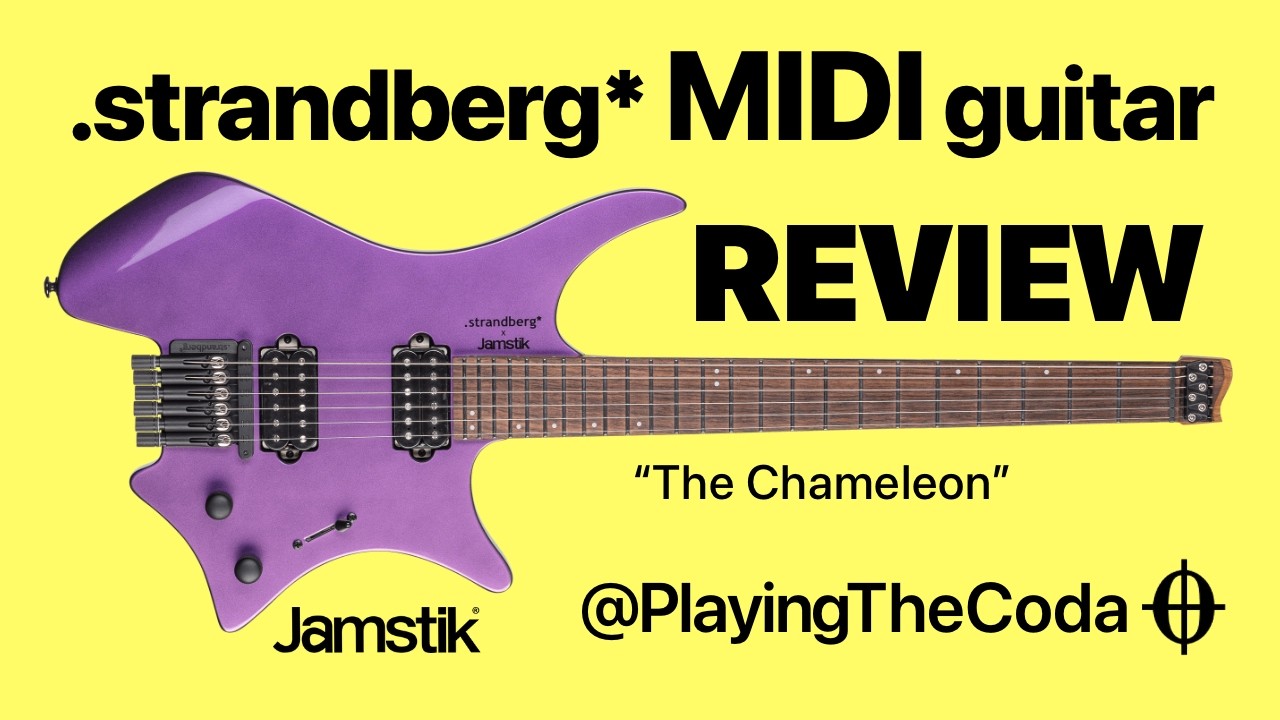
Guitar World Verdict
MIDI guitars have been part of the industry for decades, but this, to bastardize a famous phrase, feels like one small step for guitars, and one giant leap for creative-kind. In an age where AI is threatening to steal the joy and the process out of music creation, is this the sci-fi-esque weapon with which to fight back? It might just be.
Reasons to buy
- +
Powerful, responsive MIDI pickup.
- +
The guitar itself plays like a dream.
- +
Easy to set up.
- +
Intuitive pickup controls.
- +
Alien spaceship-like finish.
Reasons to avoid
- -
Price might turn people off.
- -
Not all computers have USB-C ports, so an adapter or MIDI interface might be needed.
You can trust Guitar World Our expert reviewers spend hours testing and comparing guitar products so you can choose the best for you. Find out more about how we test.
What is it?
MIDI guitars are no now phenomena. From Adrian Belew’s madcap Parker Fly to the Boss GK-3 pickup, manufacturers have been looking to expand the capabilities of a guitar, from a creative standpoint, for decades.
Zivix, which owns Jamstik, is a newcomer to the market in that sense, but its tech has been making waves for its controllability, with tweakable settings a key driver of its success. Now, Jamstik has woven its MIDI guitar tech, which turns the guitar into a MIDI controller to stand as a potentially very powerful studio tool, into Strandberg’s futuristic, ergonomically designed guitar.
At its heart, then, lies the Zivix Jamstik MIDI module and hexaphonic pickup, which is found nestling between the treble pickup and bridge. That gives players full MIDI functionality to control synths and VSTs with their guitar. Not only does that save players the mind-numbing task of clicking a MIDI part into the scroll in a DAW, but it also aims to streamline the entire writing process and let players think with their fingers, rather than needing Cory Wong-esque encyclopedic knowledge of the notes across the fretboard.
So, yes, the MIDI guitar concept is old hat, but the tech behind Jamstik is anything but.
“We had a breakthrough with our MIDI tech in around 2020, and everyone was a little skeptical,” explains Meredith Gaslin, Jamstik/Zvix's Director of Marketing. “Guitar manufacturer-wise, people were saying, ‘Roland’s done it. Fishman's done it. Why is yours better?’ and we're like, ‘Because we're putting the processors right in the guitar. We have the capability to actually do MIDI MPE, we've written new algorithms.’ The tech is better now. This isn’t a 40-year-old design.”

When it couldn’t find a partner willing to let Jamstik stuff its tech into its guitars, Jamstik went solo, producing Chinese-made, Jamstik-branded electric guitars, including a headless model. But now the Jamstik brand can carry the Strandberg name as a badge of honor.
“Once we proved ourselves in the market, people started wanting the tech in ‘real guitars,’” Gaslin says. There were requests for mod kits, à la the Boss GK-3, so people could embrace the tech with their own instruments, but it isn’t that simple.
“We want the pickup calibrated and placed accurately from the factory,” Gaslin confirms. “We want the processors built into the guitar so there's no room for user error during installation. We want it to be plug-and-play, so when we met Strandberg at NAMM a couple of years back, we said it would be fun to collab, and now it’s finally happened. It's the best of both worlds that they have one of our favorite guitars, we have multiple Strandberg players in our small office, and their guitars now have our tech.”
“It started with a discussion between Ola Strandberg and Jamstik; there was a lot of crossing paths with us both wanting to explore ways of enhancing creativity for modern guitarists,” says Strandberg CMO, Johan Sahlin. “And it really has materialized the way we wanted to. From a Strandberg perspective, much of the reason we're doing things is to help people maximize their creative potential. And I think the collaboration with Jamstik adds a dimension to it with amazing technology.”
The template is a Strandberg Boden Essential, the Swede’s first sub-$1K electric guitar, that scales back the specs to a more affordable price point without sacrificing the ergonomic playability benefits with which Strandberg has made its name. That breakthrough for Strandberg, cutting under that financial threshold for the first time, provided “the final piece of the puzzle” for its Jamstik collaboration.
“We knew if we put our tech in a [premium] Boden, we'd price out a lot of people who would really love to have this technology,” Gaslin states, and understandably so. The only compromise is the lack of fanned frets, which would have been an extra hurdle, alienating a portion of the market and increasing the price of the recalibration required to get the Jamstik pickup singing.

So, while the weird-looking-but-genuinely-genius trapezoidal EndurNeck carries over, there are slightly atypical specs elsewhere, including a meranti body for tonal neutrality, Strandberg custom OEM neck-and-bridge humbuckers, and white plastic inlays.
But some tasty choices remain, like its bolt-on roasted maple neck, 20" radius rosewood fingerboard, which serves up 24 stainless steel frets. The recipe, then, is appetizing. But what is it really like?
Specs

- Price: $2,199/£1,799
- Type: Electric MIDI guitar
- BODY: Meranti
- NECK: Roasted maple
- FINGERBOARD: Rosewood
- FRETS: 24
- PICKUPS: Strandberg custom OEM neck and bridge humbuckers
- CONTROLS: 5-Way Pickup Selector, Volume, Tone
- HARDWARE: Zivix Jamstik MIDI module and hexaphonic pickup, Strandberg Arc 6-string Straight Hardtail Bridge and String Locks
- LEFT-HANDED: No
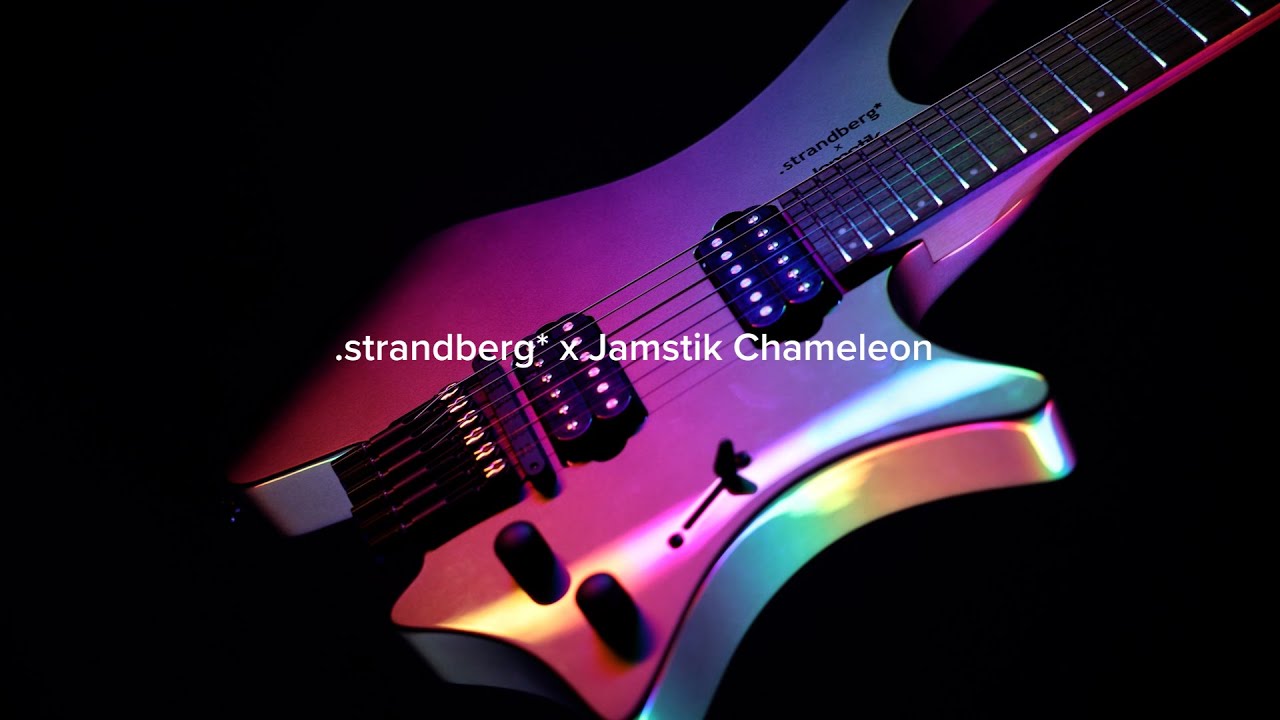
- FINISH: Chameleon Burst
- CASE: Strandberg Essential gig bag
- CONTACT: Strandberg
Build quality

Build quality rating: ★★★★½
Even for someone who is a staunch traditionalist when it comes to finishes – give me a wood-grain-flaunting natural finish over Bursts and cosmic stardust nonsense every day of the week – it’s impossible not to marvel at the finish. It’s a thing of sci-fi-coded beauty; a color-changing alien spacecraft molded into the shape of, rather fittingly, the most space-age guitar on the market.
Under that stupendous finish is essentially a pimped Strandberg Essential, and it plays as well as any other Strandberg. The neck, for my money, feels natural in the hands, and every contour is made for comfort rather than aesthetics.
The cutaway at the base of a Strandberg is essential (pun intended) for playing comfort; a player’s leg fits snugly in that space if playing classical-style, and so that hasn’t been touched. But the control port for the hex pickup, which features an on/off button and a USB-C port, is placed in that area too in a way that makes me feel like it was always destined to be there.

Still, the backplate is not much larger than it is on the N2 Boden Standard; the space utilized is really intuitive. This isn’t some crude, aftermarket, Frankensteinian mod job; it’s purposeful and really elegantly executed.
But it doesn’t fit entirely like a glove. “Some of the nuances of it are a little complex,” Gaslin says. “Like the custom-molded backplate, which is flame-resistant because there's a lithium-ion battery in there. We had to make modifications like that.”
One thing I feel, is with the MIDI pickup nestling between the bridge pickup and the Arc hardtail bridge itself, it struggle to recognize my playing if my hand moved closer to – and even over – the fretboard. Those fears are quickly quashed; no matter where I move my hand, the pickup follows me with very impressive precision. There’s some choice science at play here.
“Placing the hex pickup closer to the bridge improves MIDI tracking performance because there is less string displacement and fewer harmonic overtones in that area of the string,” Gaslin explains. “That results in a cleaner signal for pitch-to-MIDI conversion and reduces bleed between the individual hex pickup channels.”

Usability

Usability rating: ★★★★☆
Inside the gig bag that the guitar ships in is a handy little leaflet for getting set up, as well as a few choice tools. Following Jamstik’s guidance to the letter, it’s pretty quick and easy to get making noise, but taking the time to ensure the pickup height is tip-top pays dividends.
The hex pickup needs to be a little over 1mm away from the strings at its tallest point, beneath the third and fourth strings. Handily, a 1mm guitar pick is provided as a feeler-gauge, with two screws, as is usual, flanking the pickup to raise/lower its height. That said, it really is plug-and-play, and getting it to speak to my DAW (Reaper in this instance) was as easy as setting up any other MIDI controller.
For a better connection, you’ll want to plug the provided USB-C cable directly into the computer. However, not all computers have a USB-C port, so an adapter cable (which you’ll have to buy elsewhere), can be a great help. However, it also ships with a five-pin MIDI/TRS cable for use with traditional MIDI-equipped hardware.
For one of my first recording tests with the Jamstik, I'm able to try something I’ve never done with a guitar before: record guitar and MIDI simultaneously. And it handles it with ease. Initially, the MIDI tracking is a little behind, but fine-tuning the sensitivity and the maximum/minimum velocity options in the Jamstik Creator tool fixes that.
I'm able to try something I’ve never done with a guitar before: record guitar and MIDI simultaneously. And it handles it with ease.
With the sensitivity too high, my fingers brushing against the strings as I jump from one fret to the next is picked up. Of course, the joy of MIDI is that these things can be fixed post-recording, but taking a moment to adjust the settings makes life easier in the long run. Getting it to the point where it tracks with pinpoint accuracy doesn't take much doing.
Changing the block/buffer size in Reaper (or any DAW) also helps address latency issues, like an overly zealous security guard, but there are minor tracking issues. These, I find, are plugin dependent, and adjusting the sensitivity as I go is a must.

SubMission Audio’s Dijn Bass II is hypersensitive, picking overtones up as notes, with drum plugins (GGD Invasion, Odeholm Audio) much the same. So sensitivity is best dialed back. Conversely, the BBC’s Symphony Orchestra plugin performs better when cranked.
Lastly, I’ll say that while playing most instruments on the guitar feels intuitive enough, such as tracking basic string lines, as well as choir, synths, and bass, using my guitar to play in drum parts feels very weird – there are some instruments it just makes sense to bash in with a MIDI keyboard. That’s no fault of the Jamstik, though, and really, having the option to do both is incredibly empowering.
Sounds
Sounds rating: ★★★★½

One of the first things I do when plugging in is controlling the BBC Symphony Orchestra plugin by Spitfire Audio, first with a piano sound. And yes, what comes out of my speakers sounds like a piano tonally, but also like a guitar with a piano’s tone. My phrasing and the way I play each note, particularly with the bends, screams 'guitarist', and it doesn’t sound like a pianist is playing those notes. At all.
In the Jamstik Creator app, there is a setting to turn note bending off, which lets me still play as I normally would without the weird consequences.
“I would say a mindset shift is important, depending on what plugin you’re using,” Gaslin nods. “It's nice to have that perspective going into it. But when you get something like a cool synth bass, you want to play it on a string like, so I think it's that much more intuitive than doing it on a MIDI keyboard. I like that resonance.”
With my brain rewired, it’s easy to see why this can stand as an all-powerful studio tool, which is, several months after its launch, where Strandberg and Jamstik are seeing its most prominent use.
The guitar is designed to become the driver of whatever plugins I want
“It is primarily like a workhorse in the studio,” Gaslin nods. “But I've had artists say that they went to a session as a guitarist, but they got a production credit because they were able to play synth parts, and people were like, ‘Wait...what?!’”
So, the guitar is designed to become the driver of whatever plugins I want, but Gaslin champions the sounds within the Jamstik Creator tool – which works as standalone software and a VST3 plugin within a DAW – for one key reason.
“The app was designed to be for settings, but we had an engineer who was like, ‘Hey, I learned how to do this in college,’ so we put sound design features in there,” she details. “And let's make sure that all of the sounds are crafted perfectly for the guitar format, because there are VSTS and plugins that you'll open up, and maybe they're mapped with a keyboard in mind.”
From my experience, she has a point here. Some plugins are limited in the scope of the notes they can play, but the Jamstik sounds don’t have octave limitations in that way; not all the sounds were to my liking. Some, like the baritone synth, ambient piano, and Magical Arp, were really impressive and instantly had my creative cogs turning. Others, personally, are good for a cheap laugh and nothing more. But I don’t see that as make-or-break. Honestly, those features are just an added bonus.
The guitar is as limitless as the plugins I throw at it and what my imagination can conjure. It really is a superpower for ideas and a very exciting way to streamline my writing process and take the boring point-and-click admin out of it. Especially because I can have the jack going into my interface to record guitar and MIDI simultaneously, using different sounds for each.
This kind of quirk feels like it was plucked gleefully from that sci-fi world. It’s incredible.
I remember watching Back to the Future as a kid and getting excited about the prospect of riding a hoverboard soon. That hasn’t materialized, but this kind of quirk feels like it was plucked gleefully from that sci-fi world. It’s incredible.
Granted, it can only comfortably be down-tuned to C standard – and the provided manual warns me of much – so it isn’t without its limits. But the transpose and octave +/- feature is a decent-enough workaround.
But let’s not forget that, MIDI pickup aside, this is still a full-functioning electric guitar. In that respect, it boasts the same Strandberg 6-string Humbuckers, a Hot bridge, and Vintage model in the neck, and for someone who usually only likes own-brand ‘buckers on a guitar if I have a view to modding them, these are mightily impressive.

They handle high-gains pretty well, so long as noise gates are applied to round out any extraneous messiness, and on crunch and clean tones, they really excel. It might not handle grossly low tunings, but for rock, jazz, soul, blues, pop, and maybe some not-too-brutal metal, they make for a more-than-respectable showing. The only shame is the lack of a coil-split, with that feature reserved for more premium models.
This guitar can easily be seen as serving a gimmick, but it really is much more than that. As a guitar, it's superb; as a MIDI controller, it's uncanny. Not quite flawless, sure, but a market leader nevertheless.

Verdict

It’s important to note that, while it is ostensibly plug-and-play, there is some minor fine-tuning to do once you pull this guitar out of its gig bag to adjust for your playing style, but doing so makes the playing process 10x more enjoyable.
The biggest issues I have with the guitar, or at least the process of tracking MIDI, are the limitations of the plugins I pair it with. The price is undoubtedly a sticking point, but this is a high-end marriage: one of the best electric guitars on the market (even if this is its most affordable model in that sense) with one of the most advanced MIDI pickups on the market.
The price is justified. I don’t feel like the price is unwarranted when I’m diving headfirst into a world of sounds I’ve never had the joy of getting from a slab of wood and six strings before.
As Gaslin says, I don’t see myself taking this to the stage all that often – but it would certainly do a job. It thrives in the studio, at the heart of my creative process. The guitar plays incredibly well on its own, and, despite some niggles, the MIDI-playing process is an absolute delight.
Guitar World verdict: MIDI guitars have been part of the industry for decades, but this, to bastardize a famous phrase, feels like one small step for guitars, and one giant leap for creative-kind. In an age where AI is threatening to steal the joy and the process out of music creation, is this the sci-fi-esque weapon with which to fight back? It might just be.
Test |
Results |
Score |
|---|---|---|
Build quality |
The Strandberg Essential is the perfect platform for Jamstik integration, and it's done brilliantly. But the price will alienate some. |
★★★★½ |
Usability |
Really easy to setup and fine-tune, it's let down by some plugins struggling to keep up. |
★★★★☆ |
Sounds |
The Jamstik-provided sound banks are a mixed bag, but really, this guitar is only limited by your plugin collection. |
★★★★½ |
Overall |
The concept has more than lived up to expectation. The price and some minor issues see it fall just short of full marks. |
★★★★½ |
Also try
Hands-on videos
Strandberg
3-Handed Guitar