

They may never have topped the charts, but they won fans in the Beatles, David Bowie, Barbra Streisand, Todd Rundgren and Lowell George. One thing’s for sure: San Francisco-via-Manila sisters June and Jean Millington were always destined to break the mold.
They co-founded one of the world’s first rock bands composed entirely of women and signed a multi-record deal with a major label – the Frank Sinatra-founded, Warner Records subsidiary Reprise Records – bringing their own unique brand of technical prowess and art-rock, blues-inflected, unmistakably rock-through-and-through sound to crowds in the States, Europe and beyond.
And it all started from what June calls “a handmade, small guitar from the southern Philippines,” which the pair’s mom got for them. “When we got here to the United States, hootenanny [an informal party or folk music concert, often featuring open-mic performances] was all the rage. Jean and I played a lot of those.”
As June describes it, guitar music also served another role: “[It was] our pathway into having friends and joining society here in America.
“Guys got into music or rock and roll for sex, drugs, and rock ’n’ roll. We just wanted to make a friend. We loved playing music. I mean, we're Filipina. Filipinos are incredibly, incredibly musical, and it’s in our DNA for sure.”
A casual “Hey, you want to start a band?” from a drummer at another high school quickly snowballed into Jean and June’s mom taking them to a music store to get proper equipment – despite their dad’s initial hesitancy.
“My mom didn’t say anything, but she took me and Jean to a music store, and that’s when it all changed,” June recalls fondly. “She bought Jean an electric bass, an amp, me an electric guitar, and an amp. I had a small electric guitar I bought in a pawn shop with my dad, from Sears or something like that. But now, we got the real gear. I think we were copying the Beatles. We wanted their equipment.”
Fast-forward to the early ’70s, and what would become Fanny – composed of June on guitar, Jean on bass, keyboardist Nickey Barclay, and drummer Alice de Buhr – would end up recording at the Beatles’ very own Apple Studios in London, with their legendary engineer Geoff Emerick.
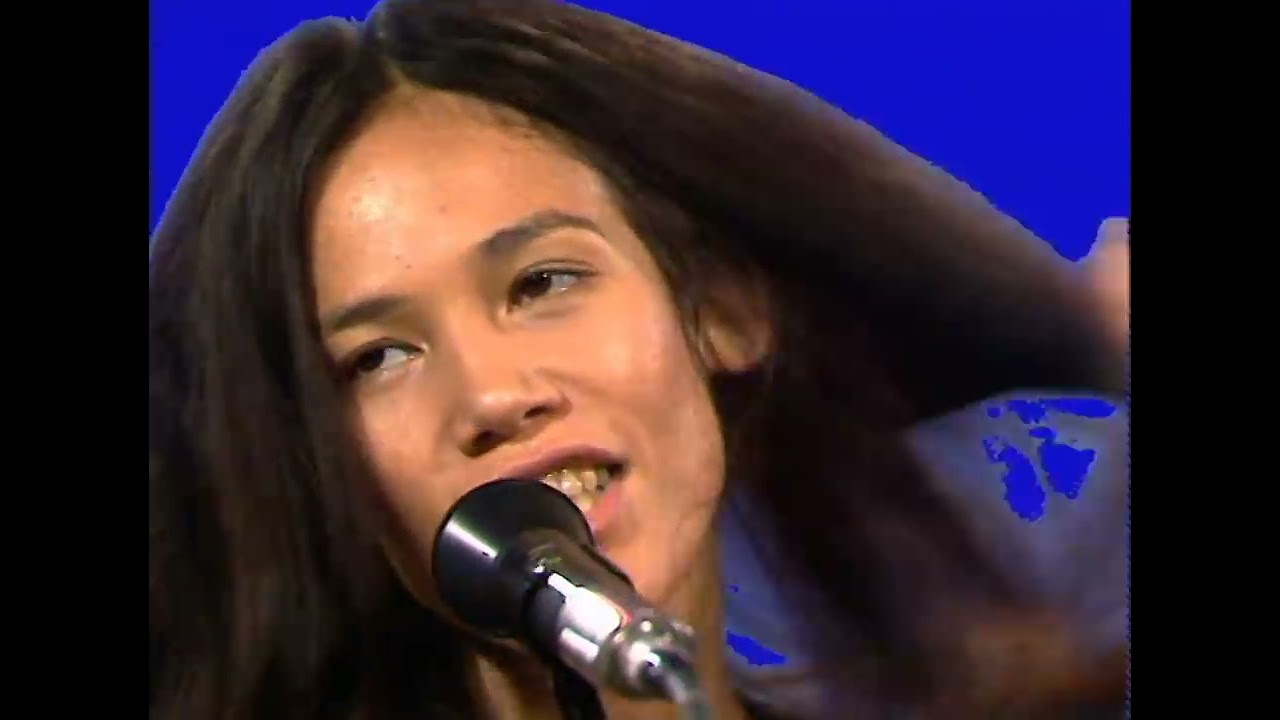
“We got down to work,” she continues matter-of-factly. “And although we were recording every day, when we had the time, we also flew over to Germany to record Beat-Club [a West German program that aired between 1965 and December 1972]. We did the BBC, we were playing gigs around London… Every single day was an intense schedule.

“We did it because, well, number one, we were young. I don’t think we got that much sleep, but we had worked so hard to get to that point.”
Active between 1969 and 1975, the band toured relentlessly, released five studio albums, and was admired by the crème de la crème of the industry. Yet, as sisters and co-founders, June and Jean Millington, tell Guitar World, it was a journey marked as much by misogyny as by sisterhood and musical innovation – decades ahead of its time.
“Do you remember the sneers we got from the boys?” June reminds her sister.
“For the longest time, we had to first prove that we could actually play,” Jean responds. “For the first 10 minutes people would not believe me. Then they understood that we actually play. But that went on for a long time.”
“Nuance is what we had,” the lead guitarist asserts. “Every gig we did was a success. We never failed. That was not an option because we knew we were holding up for future generations.”

In 1965, you started the Svelts, and the choice of who would play bass famously came down to a coin toss. Looking back, how significant was this small decision on your sound?
June: When you hear Jean’s bass parts, they’re totally amazing and electric. Bass is not something you should take up if you're not going to be serious about it, because it’s a very powerful instrument, and you have to simplify everything down, yet be complicated.
Jean: You tailor your parts. I did. And the other thing is, a lot of bass players don't sing. I was the lead singer of a lot of material, so to play bass and sing at the same time, you really have to split your brain. I mean, it’s so hard.
And how did the Svelts transform into Fanny?
June: Wild Honey [the band preceding Fanny] is actually the band that signed the deal with Reprise [the record label], and after we signed the deal, Addie [Lee] – she was the lead guitarist, I was rhythm and singer – she left the band, and I had to learn how to play lead in a year.
I didn’t survive the terrible misogyny. I had to leave the band to learn how to become a real person. I didn’t know how to grow up
June Millington
Jean: I have to say that for June, seeing her make the transition to being the lead guitar player within a year was really incredible. She sat in her room every day, playing with cassettes and learning how to play the guitar. Quite a phenomenal achievement!
June: Richard [Perry, the record producer who signed Fanny] told us he was getting us a deal in late ’68 when we went down to the Troubadour [the legendary LA venue], and we got to Fanny Hill, our house, in May of ’69. We were girls, we were going to move into that house and just start playing. We cleaned that whole house, and I wrote to my mom, saying, ‘Richard Perry is coming over tomorrow, and we’re having our first rehearsal together.’
What gear were you using at that time?
June: I think I had gotten my [Gibson ES-]355 by then. I exchanged whatever guitar I was playing with a guitar player in a band from San Jose. The 355, let's face it, is the original guitar sound of Fanny. I had a Fender amp. Jean, what bass did you have then? Because your final bass was under a chair at some recording studio…
Jean: I kicked something underneath, and it turned out to be my bass, the Precision I’ve had all this time. The Jazz Bass; that’s what I played for a long time, but when I got to the P-bass, I really just melded with that sound.

And did you have any pedals?
June: No… I mean, Jimi Hendrix was using a wah, but all that stuff [pedals] wasn’t even invented yet. We didn’t even have tuners. We just created our own sounds. And by the way, that 355 was a stereo guitar, and I am deaf in one ear. That’s why I’m always on the left side of the stage. I even tried to play it through two amps.
Then Richard [Perry] came back from London because it was 1970, and we were in the studio, and he had a tape of the Beatles, and it wasn't finished yet, but it had George Harrison playing the [Let It Be] solo through a Leslie speaker. And I freaked out. I couldn’t believe it.
It wasn’t done, but it was so powerful, and I went right out and told our roadies we had to create my rig to include playing through a Leslie. I had a pedal, and I could turn it on, and I could vary the speed. So I did have two amps on stage. I had my Fender, and I had that Leslie, and nobody else was doing that at the time. That Leslie was heavy, but we carried it everywhere.
We shouldn’t have read the reviews. There was always so much condescension. We literally stopped listening to what people were saying because it wasn't helping
June Millington
I had friends who were creating what we call the classic rock sound now, and those were Lowell George and Jeffrey [‘Skunk’] Baxter. They were literally creating those sounds, and I would hang out with them, or I’d go with Lowell, and he would check out everything. So we were in the right place at the right time. Moving to LA in ’69 was really incredible for a young band to get into the mix.
How did you maneuver being in such a male-dominated industry, especially at the time and at such a young age?
June: First of all, we stopped listening to people. We shouldn’t have read the reviews, because there was always so much condescension, but we literally stopped listening to what people were saying about us because it wasn't helping things.
I actually didn’t survive the terrible misogyny that was coming at us. It was so big and so strong that I finally broke, and I had to leave the band to learn how to become a real person. That was my intuitive feeling. I didn’t know how to grow up.
It was hard to leave Jean, and it was hard to leave the band. It was almost impossible. But my mom was afraid I was going to die because I couldn’t eat, and I couldn’t sleep. I think it was grief. We should have had at least four hits by the time Fanny Hill [1972] came out, and then we did that album with Todd [Rundgren, who produced 1973’s Mothers Pride].

So we did those four great albums, and we didn’t have a top 30 hit… top 40, but not top 30, and that doesn’t get us into the history books. What gets us into the history books is that we actually existed, and we were really good, and people can’t deny that now, but they ignored us for so long.
I stayed in the band longer than I should have because I was so wrecked. But that only shows how much Fanny really meant to me. People didn’t see that aspect. [Instead] it was like, “Oh, what does it feel like to be a girl and play bass? What do you eat? What's the makeup you use?” I mean, are you kidding me?
You were also working as session musicians and even recorded with Barbara Streisand at one point. How did that happen?
Jean: Richard produced Barbra Streisand, so that’s how we got the gig. Two songs were rock tunes. We learned them, and then she came in and sang over them. And the thing about Barbra Streisand, every time she sang, it was different. She was such an incredible vocalist. But she was very respectful of us. We had a good time together.
By the time we met the Beatles, they were thrilled to meet us. They liked us in part because we were women who could play, and we knew what we could do well
June Millington
You've mentioned working with Richard, who obviously played a big role in your career. But you also recorded with Beatles engineer Geoff Emerick and Todd Rundgren. In what ways did the two influence your sound?
June: Well, Richard was developing his production chops when we got signed. We were learning how to record and figuring out how this whole thing was going to work. We would go into different studios in the middle of the night, when it was cheap, and we would record demos and work on songs. We did that for a year.
He was learning how to become a great producer while we were learning how to record and become a great band in the studio. To become studio savvy, you really gotta work on it. And also, in those days, I think it was still eight-tracks, so if we wanted to sing a backup part, we would have to learn how to position ourselves around one microphone to get the sound we wanted.
By the time we met the Beatles, I think they were thrilled to meet us. We didn’t meet them en masse at the same time, but it was clear that they really liked us, and they liked us in part because we were women who could play, and we knew what we could do well.
We recorded [1972’s Fanny Hill] at the studio at Apple [the studio that formed part of the British multimedia company Apple Corps Limited that the members of the Beatles established], and their engineer, Geoff Emerick, was ecstatic when he realized A) We could play; and B) We knew how to record.

So we were very skilled by 1971 – between 1965 when we started the Svelts, and December ’71 when we got to Apple in London – and Geoff Emerick realized, “Wow, these girls are really doing it.” He was so happy. He just broke out in a huge smile.
He was the only engineer I've ever seen who literally was so into it that he would run from station to station – setting up a mic for Alice [de Buhr, Fanny’s drummer], for example, to capture the cymbals and the toms. And then he would run to my station and do whatever he had to do. He’s the best engineer I’ve ever worked with.
Now, with Todd Rundgren, we recorded with him because we liked Hello It’s Me [the Rundgren-penned song that was released by his group, Nazz]. We loved that recording. I don’t know that that was actually the right decision, but we chose him, and we ended up with Mothers Pride. We all met at a place where we really wanted to show our art.
That was January ’73, and after we finished recording that album, we went straight on the road with Chicago for three weeks, and then the album came out, and it was just gig after gig after gig.
Fanny is finally broken up, then the phone rings, telling Jean she had a hit and had to come back to LA because they could now make some money on the road
June Millington
I left in October of that year, and we did a whole European tour that summer. Like I said, we never failed, but it was never enough. That's where it broke me. We were at the top of our game, and it was not enough.
David Bowie publicly championed Fanny. How did you end up meeting him?
June: Well, we met him in Liverpool – we played in Liverpool the same night, different gigs. We didn’t even know that he was in town.
Jean: In fact, he stayed in the same hotel.
June: I didn’t even really know who David Bowie was, although apparently he had sent us his first record as a fan and said, “I love you, and here's my first record.”
When we got to the hotel that night after the gig, the concierge said, “You have a note here from Mr. David Bowie. He would like to invite you to a party in his penthouse.” So we said, “Sure.” We got on the elevator up to the penthouse, it opened, and it was like a movie.
There was a party going on, and it was a really nice party. There were a lot of people there, but it wasn’t raucous. There weren’t people yelling and shouting and screaming and drinking too much. It was very convivial. And that's how we met David.

In 1975, you had Butter Boy, which hit No. 29, and that was toward the end of the band’s lifetime. How did it feel to finally have that hit just as you were about to go your separate ways?
June: Jean was sitting in my living room. The phone rang, and we picked it up, and it was a call for Jean from LA. I had just asked Jean, “So what’s happening with the band?” She said, “Oh, we have finally broken up. That’s it.”
Fanny is finally broken up, and then the phone rings. It was like a movie – telling her that she had a hit and she had to come back to LA because they could now make some money by going on the road. And about two weeks later, she called me up and asked me to play on that tour. So it was very interesting that it came back together. We had a great time playing, and it led to a lot of things, but it was almost comical.
You’ve obviously mentioned a lot of challenges that you faced. So, on the flipside, what were some of the biggest highlights?
That poor manager said, “Would you play some more?” Jean looked down at him and said, “Well, you said five minutes!” I would hate to be that guy!
June Millington
June: Really, the most successful gig was the night we played the Troubadour [in Fall 1968], because no-one believed in us. The manager said to Jean, “You can only play for a few minutes.” So we played three songs, and at the end of those three songs, we never had an audience reaction like that before or since, because the entire audience jumped up on their tables.
They were banging their feet on the tables, going, “More and more and more,” clapping, screaming, going crazy. And that poor manager had to run up to Jean, and he said, “Yeah, would you play some more?” Jean looked down at him and said, “Well, you said five minutes….” I would hate to be that guy!
So it was really incredible. I looked over at Addie, who, at the time, was our lead player, and we didn't need to say a word – well, we couldn’t have said a word because the crowd was so noisy. But that, to me, was the apex of our career because of the audience reaction.
Now, if audiences would have kept doing that, and the radio stations had followed that feeling… That, to me, is the tragedy. They were just too ignorant, too much misogyny.

In 2018, you reunited and recorded Fanny Walked the Earth. What was it like to play as Fanny after so long?
June: For us the really big thing was that we felt like we were 17 again. We felt like we were playing in a club. It was basically that same orb of us on stage, our own world, our own way of playing.
You never know where the miracle is going to come from – the fact that the three of us [Jean, June, and Brie Howard-Darling, one of Fanny’s early-years drummers] got together to play again in our late 60s and early 70s.
There was only one Fanny, and it will never be replicated. We were our own creation. We created ourselves. We were not created by a company, a man, a group of men – nothing. We created ourselves, and went down to LA and kept creating ourselves, and in that way we succeeded, because we have something that people are freaking out over even now.
- June Millington's new record, Home to My Soul, is out now. In 2018, the newly reunited Fanny – rebranded as Fanny Walked the Earth – released a self-titled album, available on streaming services.

