




The music industry might have pegged Linda Perry as a one-hit wonder for a time, since she was the mastermind behind 4 Non Blondes’ 1993 hit single, What’s Up? – but she’s far from a one-trick pony.
After making the then-controversial decision to quit the band just as they were taking off, Perry went on to pen hit singles for Christina Aguilera, Pink, and Gwen Stefani, to name a few.
But at her core, she’s a guitarist through and through, albeit a thinking one. “What’s important is just exploring,” she tells Guitar World. And judging by her latest album, Let It Die Here – her first LP in 25 years – she’s been doing a whole lot of exploring. The record, which follows a documentary of the same name, features 17 tracks that run the proverbial gamut.
“Seeing the documentary was real for me,” he says. “I was struggling being a songwriter and producer; I kind of lost myself in it. I think a lot of people can probably relate to that.”
While working on songs like Let It Die Here and Mourning, and re-recording Beautiful, the late-90s hit she penned for Christina Aguilera, Perry found herself again, with the help of her guitar.
“I always tell people, ‘If you don’t know how to play, just put it in an open tuning, and I promise you’ll be able to play something,’” she says. “I usually write on acoustic guitar or piano, where I don’t have to think about it.”
She continues: “Weirdly, a song can be pre-recorded in my mind somewhere; I just know it. Then I sit down and the song shows up. But I have hundreds of guitars. I’ll whip them out when I hear a specific sound, and go, ‘Okay, I’ve got that sound.’”
At 61, Perry has no plans to stop. At some point more solo records will come, and maybe she’ll write a few more hits for others too. But with Let It Die Here done and dusted, she’s concentrating on the reformed 4 Non Blondes’ long-awaited second record – which she proclaims “is fucking awesome.”
The name of the game is always progress. “What I’m probably most proud of is that I never think I’m good enough,” she says. “But that’s also my damage; I was raised that way; you know, not being good enough. That little dark gift my mother gave me actually became a pot of gold.”
What does the guitar mean to you?
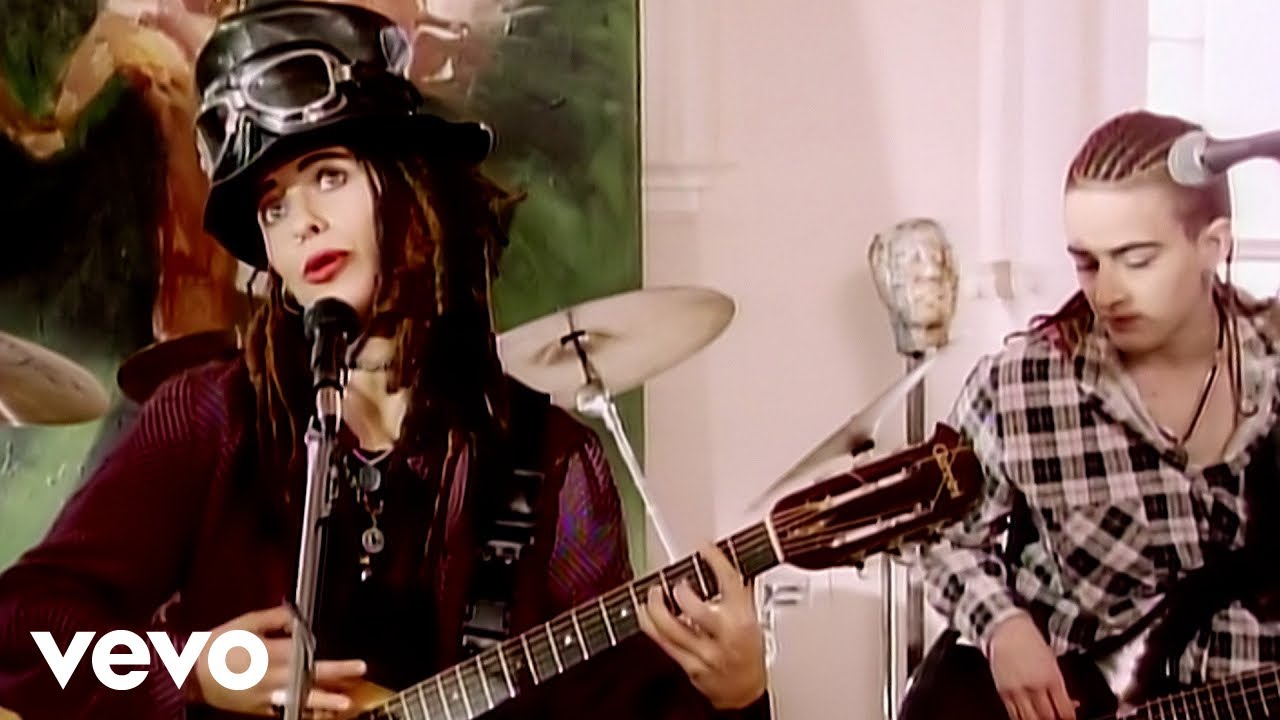
I pretty much write on guitar, but I'll do piano stuff too. The guitar is definitely the main instrument I’ll grab – it’s right there and always available. The guitar becomes my security blanket in a sense. I know I can fuck around on it, do something cool, and try to explore.
Piano is that way too; but with guitar I just whack everything, put it in a weird tuning, and do stuff. I’ll have no idea what tuning I’m in, but it’ll sound good to my ear. You can put a capo wherever and there are so many things you can do with it that are simple.
How did your journey with guitar begin?
When I was younger I was always trying to get into guitar. My dad would always promise he would get me one, but he never did. Then my mom came back with one of those $15 nylon-string guitars. I was like, “Okay, great!”
I was able to quickly jump on that and learn how to play just by experimenting. As I got older I picked it up really quickly; and even though we didn’t have a lot of money, I joined a guitar class at school.
What was that like?
I just kind of sat there and the teacher was like, “Do you have a guitar?” I was like, “No, but I really wanna be here!” This kid – I really wish I remembered his name, but he was cool and had long brown hair and was skinny, kinda like a blonde Ramone – was like, “I have an extra guitar she can use. I’ll bring it tomorrow.”

I was like, “Oh, my God, thank you!” when he brought it. But I didn’t know how to read music or what the teacher was teaching, so I just kind of listened. There were songs we had to learn; I’d listen and weirdly pick it up.
The teacher said one day, “Are you understanding the lessons?” I was like, “I think so.” He said, “But you’re not reading the music – how are you doing it?” I told him, “I’m doing it by ear.” He was like, “Okay then.” From then on I’d just figure out the song, come out when it was time, and play it for the class.
Looking at the guitars you have now, can you pick out a notable favorite?
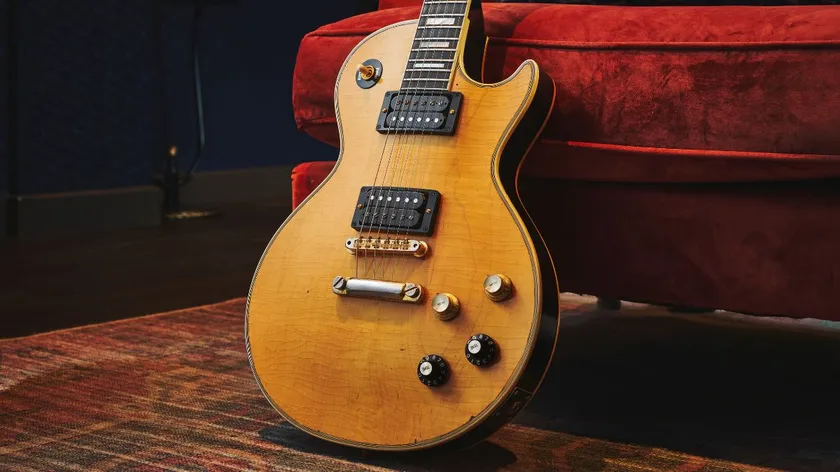
I have a music store, and I have so many guitars. I have a 1953 Gibson Les Paul Gold Top that’s all-original. I bought it in the ‘90s for $2,200. Now I could probably sell it for a fucking lot of money!
Actually, Slash wanted it! Slash came to my studio one day. He offered me a lot of money for it, but I was like, “I’m not selling it!” He said, “If you ever do, please promise me I’ll be the first you call.” I said, “Absolutely!”

What’s your general methodology when it comes to guitar and amp tones?
I'm very grateful to be able to say that, if I go into a guitar store and I plug into an amp and like the sound, the guitar and amp have to come home with me. If they sound very specific… there’s just something about a Gibson ES-335 going through a Supro amp. Some vintage sounds are very specific.
If you’re not playing guitar yourself, what do you look for in a guitarist?
I hated the recording. of What’s Up? so I brought the band into the The Plant studio and said, ‘We gotta re-record this. I cannot allow this to happen’
Well, I’m playing when I’m recording. It’s usually me or my guitar player, Nick Mayberry, who’s really amazing. He plays on a lot of my recordings. He played on Let It Die Here, and so did Eli Pearl.
What I’m looking for is style – someone who doesn’t sound like they’re just wanking off, or uses a generic tone. I’m more musically attracted to what people do sonically, and who have a cool sound of their own.
Looking at Let It Die Here, what’s a good example of what you’re talking about?
There a transition song on the album called Mourning, with this really epic, crazy part. I told Eli, “Dude, just whip out every influence of ‘80s power rock ‘n’ roll you can think of!” It came out so amazing!

I think the best thing a producer can do for an artist is to just let them be free. Don’t give them any references; let them see what they can do on their own. And then peel them back or set them even more free!
Notably, you’ve re-recorded Beautiful, a track that was a big hit for Christina Aguilera in 1999.
Yeah – I did pretty much everything. I had my drummer come in, but I played bass, piano, guitar, Mellotron, and all that stuff. Then I wanted an extra guitar, another style, so I called up Nick Mayberry. He added a very cool, whimsical part to it.
To me, it feels and sounds like my song. It’s basically what I would have recorded back then if I’d had more production skills. I’ve gotten a lot better at producing and as a musician since I recorded Beautiful the first time with Christina.
Looking back at that classic 4 Non Blondes tune, do you ever get bored playing What’s Up?
That song is always gonna have its moment somewhere. Even after I die it’s gonna continue going – it’s just that type of song. It’s relatable because the government or someone are always fucking something up, you know?
The song is simple, relatable, and easy to sing. I’m really grateful that it came to me. So when people are like, “Aren’t you sick of that song?” I’m like, “No, never!” That song is everything.
I needed to write a record that people could just jump on right away and start singing
Do you remember recording it?
Absolutely. When the original recording happened it was terrible. The drum sound was thin and high-pitched, the guitars were too compressed, and the solos and bass tone… there was just weird shit going on! It was just very conservative and soft. My acoustic was like thin and tinny, and I hated the recording.
So I brought the band into the The Plant studio in Sausalito, California, and I said, “We gotta re-record this. This is terrible. I cannot allow this to happen.”
I’d never done anything like this before, but I had the engineer at The Plant, who was assisting me, and would ask questions. He was just like, “Listen, you can do whatever you want.”
And as soon as he gave me permission I said, “Can I move the microphones and do stuff?” He was like, “You can do whatever you want!” So I asked Dawn [Richardson, drummer] “Can you bring your snare down? It sounds really high.” She’s like, “Yeah!”

Roger Rocha was playing a black Les Paul through his Marshall. I had a Martin acoustic, and Christa Hillhouse had her Excalibur bass and an SVT amp. That was pretty much it – we recorded it and picked our take. Then the producer showed up, and I was pissed off. I was like, “What are you doing here?”
He was like, “Well, we’re mastering tomorrow, so this has to be done tonight.” So we sat there, I sang the song down three times, added some background vocals, mixed it, and the song was done and sent in. That’s the version everybody hears, and that blew up. It’s that version we did then.
The word is that 4 Non Blondes are finally releasing the long-awaited second record. What can you tell us about it?
It sounds like an awesome ‘90s record. We didn’t record it; we just started playing it live. The whole concept for me was that I needed to write a record that people could just jump on right away and start singing.
Suddenly the songs started showing up, and they had this very cool live vibe, and people just started joining in and singing because they were easy and relatable. So we’re in the studio finishing the record now. We’re having so much fun. We have all the guitars and amps out and all over the place!
- Let It Die Here is on sale now. Check the 4 Non Blondes website for news about the upcoming album.

