Exclusive lessons, interviews, presales and features from the GW archive
Curated Newsletters
Handpicked guitar news, lessons and gear highlights
Early Access
Our biggest stories will go to Backstage Pass holders first
Achievements
Unlock badges as you learn and explore
Join the Conversation
Connect with fellow GW fans across the globe
Tailored For You
Lessons, gear and stories picked for you
Sign up to Guitar World Backstage Pass
For the quickest way to join, enter your email below. We’ll send a confirmation email and sign you up to Guitar World newsletters with the latest news, gear reviews, lessons and exclusive offers.
Join Backstage Pass for quick access. Enter your email below and we'll send confirmation, and sign you up to our newsletter.
By submitting your information, you confirm you are aged 16 or over,
have read our
Privacy Policy
and agree to the
Terms & Conditions. Geographical rules apply.
All the latest guitar news, interviews, lessons, reviews, deals and more, direct to your inbox!
You are now subscribed
Your newsletter sign-up was successful
Join the club
Get full access to premium articles, exclusive features and a growing list of member rewards.
An account already exists for this email address, please log in.
“We’d get a note from the tour manager, ‘Prince is here and would love to play with you.’ It was like, ‘What? Here, take my guitar, please!’” Vicki Peterson on a gift from the Bangles’ most famous fan – and their garage approach to an ’80s pop classic
The heat was on. The label expected. And so, in 1986, the Bangles did what the Bangles did best – they put together a set of songs that had the whole world walking differently
There were a whole lot of pharaohs walking the earth in 1986. Even Princess Di and the Statue of Liberty were striking poses. The craze was all thanks to one of the year’s defining songs – the Bangles’ Walk Like an Egyptian – and its MTV video.
“Those moves still follow us,” says guitarist Vicki Peterson. “But fun as it is, I remember thinking the label would never have the balls to release it as a single, because it's just too weird!”
But really, at a time when Madonna and Phil Collins ruled the charts, the Bangles were kind of weird themselves. Four friends who were “obsessed with the Beatles, jangly guitars and harmony singing,” their 1984 debut All Over the Place had landed as a charming throwback.
“It had a glorified garage band sound,” Peterson says. “With Different Light, we embraced sonic techniques and production values that were more of the moment. Also, I think there was our own ambition plus pressure from the label to get more commercial success. So they were pleased when Prince offered us Manic Monday, because that was a stake they could put in the ground.”
The Purple One was a fan. “He would come to our shows and sit in,” Peterson says. “We’d get a note from the tour manager – ‘Prince is here and would love to play with you.’ It was like, ‘What? Here, take my guitar, please!’”
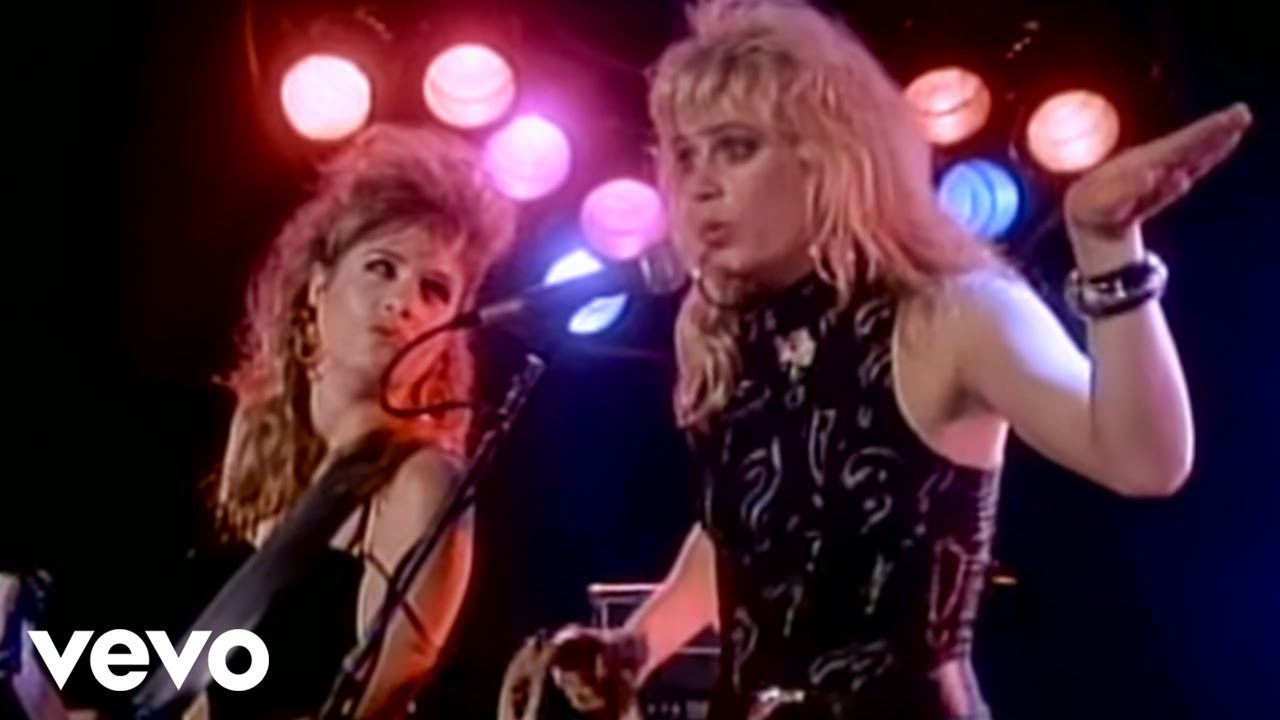
The Bangles - Walk Like an Egyptian (Official Video) - YouTube
That led to a demo of Manic Monday arriving at the studio.
“It was very well mapped out,” Peterson says, recalling that Prince suggested they just add their vocals over his tracks. “Normally, people were happy to take his tracks, because he’s Prince. But we wanted to do the song our own way.”
Get The Pick Newsletter
All the latest guitar news, interviews, lessons, reviews, deals and more, direct to your inbox!
It was the right move. Consider the organic push and pull of Debbi Peterson’s drums and Michael Steele’s bass, Peterson’s layered fuzz guitars or that powdered-wig harpsichord hook… It provided a perfect bed for their lush harmonies. “Luckily, Prince liked what we did,” Peterson says. “He came to a rehearsal, listened, gave us the thumbs up and walked out. All in his enigmatic style.”
Working 12-hour days at Sunset Sound, with producer David Kahne, the band adopted an approach typical of the time. Peterson says, “Our normal modus operandi had been tracking live in the room, all four of us, sounding like a rock band. But here, we’d go back, then systematically replace sounds one by one – snare drum, bass, all my guitars. It was sort of ridiculous, really.”
(Image credit: Jim Steinfeldt/Michael Ochs Archives/Getty Images)
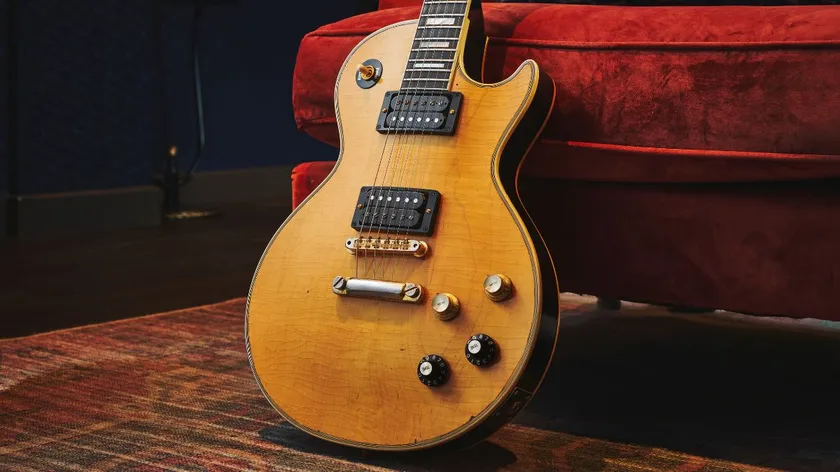
For guitars, Peterson kept it simple, using her “Frankenstein Strat, with a ’65 neck on a ’67 body,” and a ’73 Les Paul Custom, plugged into a Fender Deluxe or Fender Super. “My pedalboard would eventually evolve into insanity,” she says, “but then, my favorite box was the Ibanez Tube Screamer. It still is.”
Though Peterson says the sessions were mostly fun, she’s still bugged by how Kahne pitted them against each other in “sing-offs.” Especially on Walk Like an Egyptian. She says, “For whatever reason, he didn't think Debbi’s voice sounded good on it, and he kicked her out. That didn’t go over well. And it became pretty obvious that David preferred Susanna’s voice over the rest of us, so more songs got shifted to her.”
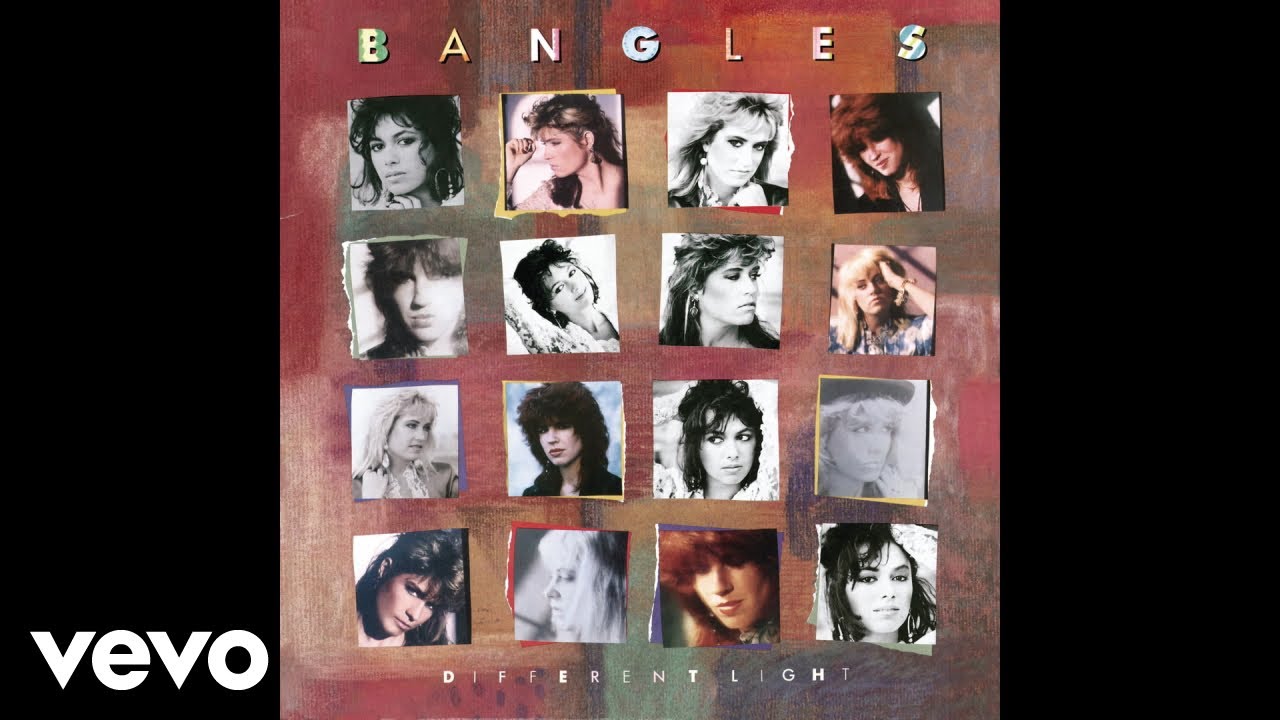
The Bangles - In a Different Light (Official Audio) - YouTube
The album’s four singles (If She Knew What She Wants and September Gurls were also covers) grabbed so much airplay (Peterson says “constant touring hadn't left much time to write originals”), that listening now to the garage-meets-Motown blitz of In a Different Light and the beatnik bop of Return Post can almost sound like hearing a lost Bangles album.
Forty years on, Peterson has mixed feelings about Different Light. “It’s like a middle child,” she says. “Obviously, it’s very important because of what it did for our career. But maybe I value it less because the singles were covers.
“As a songwriter, that always gets me a little bit. After the first record, I remember thinking, I don’t know how anyone ever makes a second record, because it was incredibly draining. I’m proud of us for being tenacious and really going for it.”
Bill DeMain is a correspondent for BBC Glasgow, a regular contributor to MOJO, Classic Rock and Mental Floss, and the author of six books, including the best-selling 'Sgt. Pepper at 50.' He is also an acclaimed musician and songwriter who's written for artists including Marshall Crenshaw, Teddy Thompson and Kim Richey. His songs have appeared in TV shows such as 'Private Practice' and 'Sons of Anarchy.' In 2013, he started Walkin' Nashville, a music history tour that's been the #1-rated activity on Trip Advisor. An avid bird-watcher, he also makes bird cards and prints.
You must confirm your public display name before commenting
Please logout and then login again, you will then be prompted to enter your display name.




![A B/W live shot of the Bangles performing for a music video [l-r]: Vicki Peterson, Susanna Hoffs and Michael Steele](https://cdn.mos.cms.futurecdn.net/HaGPwJUm5wdQLiNtbqXueS-1920-80.jpg.webp)