


As the child of hardworking transplants, perseverance was in Ben Mink’s DNA. “The work ethic rubs off,” he says, “but the last thing my parents wanted for me was to become a musician – it’s not really conducive to a life of security.”
But since he “just wanted to see the world,” he dropped out of school and fell into session work in the early ’70s. “Truthfully, I didn’t know if I had the courage – or the goods – to make a go at it,” Mink admits. “But I kept getting calls, so I just went with it.”
His first session took place in 1971. He hasn’t stopped since, working with Chuck Berry, Led Zeppelin, Rush, k.d. lang, Heart, Roy Orbison and others. “It was a gradual uphill learning process, and very gratifying despite some difficult times.
“One could see there was money and solidity in being a session player. You didn’t have to slog it out on the road. You stood a much better chance of surviving if you were in one place.”
Now 75, Mink is still at it – including a project he’s not at liberty to discuss. “Looking back, I’m absolutely amazed that I was able to pay the rent,” he laughs. “I had no map other than a love of music. How did I sustain that throughout the years, have a wonderful family, and stand here to tell you about it?”
What was it like coming up in the Toronto music scene in the late ’60s and early ’70s?
The scene was absolutely incredible – it probably deserves an article in itself. There were so many influences available to harness. The folk craze was in full force and Robbie Robertson was the primary exponent of the searing Fender Telecaster lead sound. I completely fell under that spell.
You backed up Chuck Berry early on.
In 1969 the most happening rock club in Toronto was the Rock Pile. Each week they had two or three acts come through. I was in the house band, Mary Lou Horner; we hung around, jammed, or provided backup. It was mind-blowing.
Chuck Berry often toured without a band but his songs were known to almost every musician. We were expected to simply follow his visuals and play along – no rehearsals. There were two guitarists in our band, but that night he only needed one, so we flipped a coin.

Unfortunately I lost the toss. But as a consolation prize I was given the task of collecting Chuck’s iconic 335 guitar, which was locked in the office at the front of the club, and deliver it to him just before he hit the stage.
It was one of the most surreal experiences of my life, nervously making a beeline through the crowd to hand over that iconic axe. He smiled, thanked me, nodded, and hit the stage. I recall him being private, professional, and short on conversation. His eyes were windows into the legend and the mind that arguably invented ’50s rock – an impact I still can’t fully grasp.
And you opened for Led Zeppelin when you were 18?
It was February 2, 1969. I was a huge Yardbirds fan and I’d learned all their electric guitar parts, so I was well familiar with Jimmy Page and Jeff Beck. I was still part of the house band at the Rock Pile, and a buddy and I begged the club owner to bring them in. We personally had ad stickers made to get people in there, because very few knew who they were.
Backstage on the afternoon of the show, I recall Robert Plant in the dressing room playing with a fluorescent yo-yo, John Bonham tweaking his kick drum, John Paul Jones on his back adjusting the Hammond B3 rotary speaker, and Jimmy Page playing his Danelectro guitar without an amp.

They were all quite friendly. It was a pivotal night for me, especially after seeing Jimmy use a violin bow on Dazed and Confused during soundcheck. I later borrowed the idea, and I resolved then and there to get back into violin more seriously – and to amplify it. My music direction changed that night. Electric guitar had dovetailed into violin.
In 1982 you started working with Rush, providing electric violin for Losing It.
I was playing in a progressive rock band called FM. Rush liked our band and asked us to open some shows and we all became friends. I was playing modified hybrid instruments – a five-string electric violin and a five-string solidbody mandolin, complete with whammy bar. It was essentially a high-pitched electric guitar tuned in fifths. A few months later, Rush asked me to guest on Losing It.
My hacked-up electric violin had plastic farm animals glued to it. Along comes k.d. wearing a cowboy shirt with the same farm animals sewn on!
What was the session like?
They sent me a rough cassette of the track, and I shaped some ideas and headed to Morin Heights Studio near Montreal. The session itself was like a Three Stooges episode... maybe Four Stooges actually! A lot of espresso, Canadian Club whisky and debauchery!
Extracurricular activities included creating a faux wedding band (the “Ziv” Orchestra) with Alex Lifeson on fiddle and myself on guitar, and jamming Tom Sawyer for about an hour with Alex shredding on the violin while Geddy Lee recorded his vocals. Just insane!
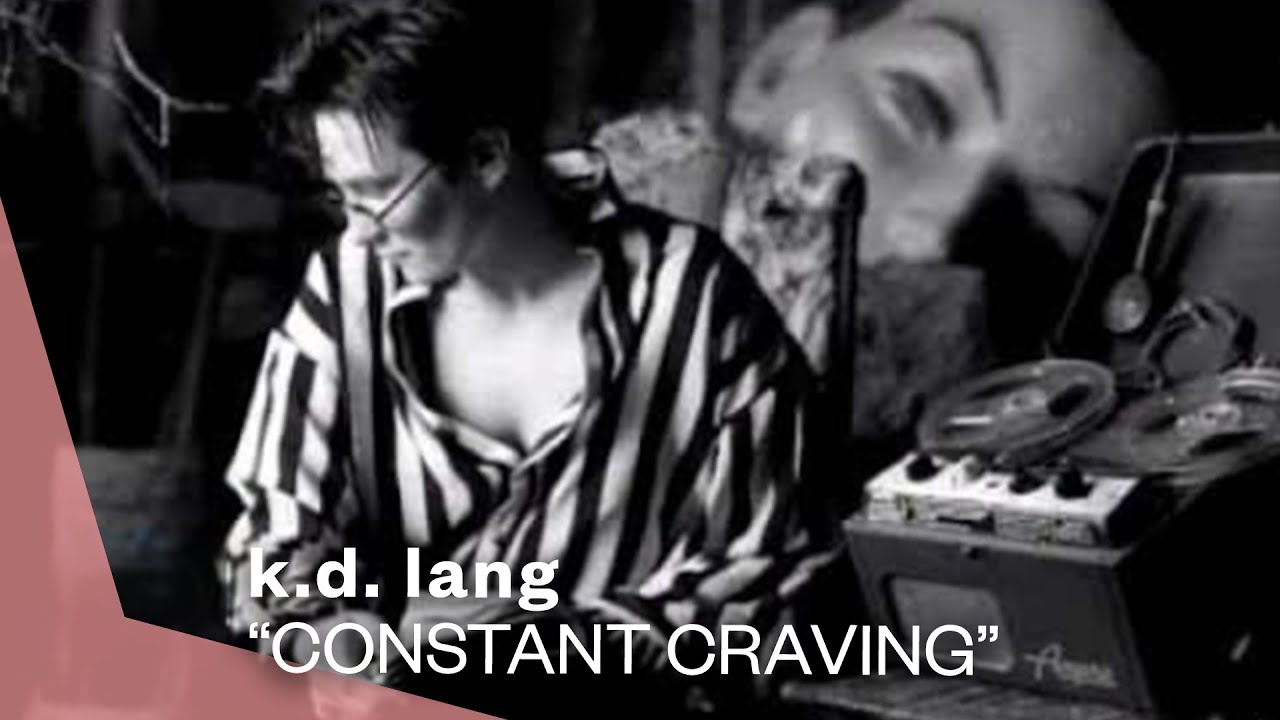
How did you get the gig with k.d. Lang in the late ’80s?
There was no formal audition. It was another moment of “you just know.” We met in Japan at Expo 1985. I was backstage with my hacked-up electric violin, which had small plastic farm animals glued to it. Along comes k.d. wearing a cowboy shirt with the same farm animals sewn on! Needless to say, we instantly connected.
She asked me to sit in with her band the next night. In retrospect, I suppose that could have been considered the audition – but we could see it was working. That night, k.d. mentioned she was looking for material for her Angel with a Lariat album.
A song came to mind which I’d written as a teenager called Turn Me ’Round. Strangely enough, about a week later in Toronto, my niece accidentally found the original song sketch among my old high school notes. I took it as a sign to send it to k.d. That marked the beginning of our creative partnership.
What was your rig like then?
In the studio I often used Washburn vintage parlor guitars; very easy to record because of their contained low frequencies, and k.d. loves them as well. I also used a Frankenstein Stratocaster that I’d constructed during the recording of Torch and Twang. My primary electric for the Ingenue album was a National Supro. It was used on Constant Craving and a few other tunes.
How did you get the call to play on Geddy Lee’s My Favorite Headache record?
I was always in touch with Geddy. He was an incredibly close and supportive friend during my years with k.d. We were in my home studio, and we realized we’d never played one-on-one together, so we grabbed a couple of guitars to noodle around with. We were both amazed at how similar our approaches were. We decided to try to do some writing together, and it eventually led to the full album.
What gear did you use?
At Geddy’s place I used a Gibson Les Paul, a Fender Stratocaster, and a Gibson 12-string acoustic strung with only six strings. We experimented with a Marshall Plexiglass amp and the software equivalent. We often used the plugin because it was easiest to set up in our home studios. I also used my 1958 Les Paul Special TV model when we worked in my Vancouver room.
He was absolutely great to work with – very professional, accommodating, and funny. He was Elton!
Could you help but have Alex Lifeson’s sound in the back of your mind?
I was fully aware of the huge Rush legacy, but I didn’t really think about it. I was just trying to capture great moments. It was all a natural creative process. Pretty much anything Geddy sings is going to sound like Rush because he’s an inimitable vocalist.
It was very hilarious working with him. We’d done a few non-Rush projects together in the past, but this was serious biz, despite the hilarity. Geddy is a natural musician, and he adapts easily to most musical styles, not just Rush. He intuitively makes whatever he’s working on into his own thing.

You worked with Rush again on Faithless from Snakes & Arrows.
Geddy had some MIDI string sketches prepared for Faithless and asked if I’d consider supplementing the trackss. I multi-tracked a number of under-layers and some upper dynamics.
Elsewhere, you worked with Heart, James Hetfield and Elton John.
I became involved with Heart when I was asked to produce Ann Wilson’s album, Hope and Glory, and Nancy was guesting on a few tunes. Working with them was a dream. They’re both enormously talented, witty, and simply great to hang out with.
We decided to cover Elton John’s Where to Now St. Peter, and Ann thought it would be great to get Elton to sing a duet with her. We recorded it from the Caesar’s Palace stage.
He was absolutely great to work with – very professional, accommodating, and funny. He was Elton! I believe I used my old Kay Kraft guitar, with a bottle cap transducer running through a small Vega tube amp.

I’d written and recorded a bonus track with Heart called Beautiful, Broken. Ann and Nancy revisited it and sent it to James Hetfield, who contributed vocals and additional lyrics. It became the title track of their album, Beautiful Broken.
How did you wind up with Roy Orbison?
I was asked to work on a remix of the song You’re the One from his King of Hearts album with k.d. lang and Greg Penny. I will never forget being in the studio, pushing the solo button on Roy’s vocal track and getting chills.
You’re one of the few people to share a songwriting credit with Keith Richards and Mick Jagger, since the chorus of Anybody Seen My Baby is similar to Constant Craving.
I know how much it means for Rush to get back out there and play, for themselves and for their fans
In 1997 I got a call from my lawyer, who told me to sit down. She’d just gotten off the phone with the Stones’ manager. They had a new single coming out in a few days – Anybody Seen My Baby, and Keith Richards’ daughter noticed the similarities between the two songs.
Their legal reps didn’t want any difficulties, so they kindly suggested a co-authorship with k.d. and myself. I’d been a Stones fan since I was 13, and I knew all of Keith Richards’ guitar solos. I used to joke: “One day the Rolling Stones will cover one of our songs!” So for something like this to happen was beyond the beyond!
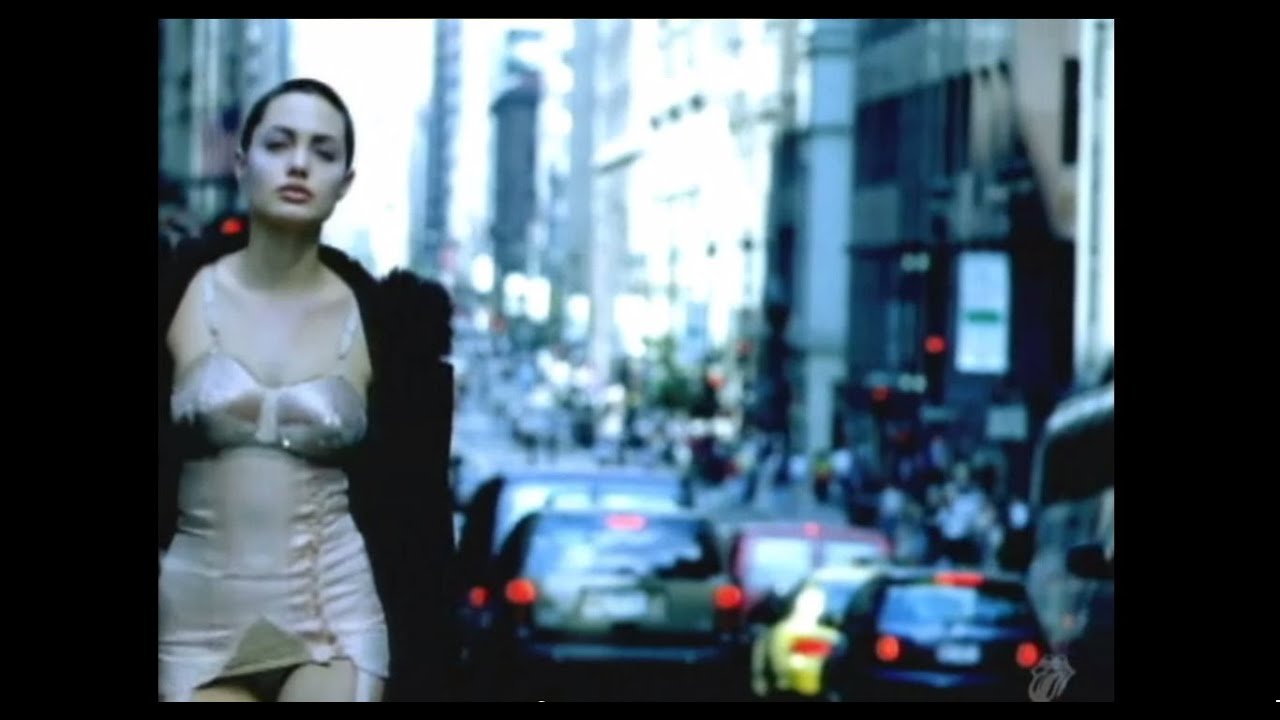
They were very kind and gentlemanly about the whole event, and I’m deeply honored and still incredulous. What a thing to happen!
Have you been in touch with Rush since their reunion?
Yes, we’re often in touch. I was thrilled for them. I know how much it means for Geddy and Alex to get back out there and play, for themselves and for their fans. They represent such powerful, positive energy. They’re remarkable people and give so much.
What’s next?
I have a couple of projects on the go at the moment but I’m not able to share details. I’ve also been making experimental ambient music with my daughter – such a blast. And I’ll most likely be auctioning and selling some of my instruments and gear later this year.
- Keep up to date with Mink’s projects via his website.

