


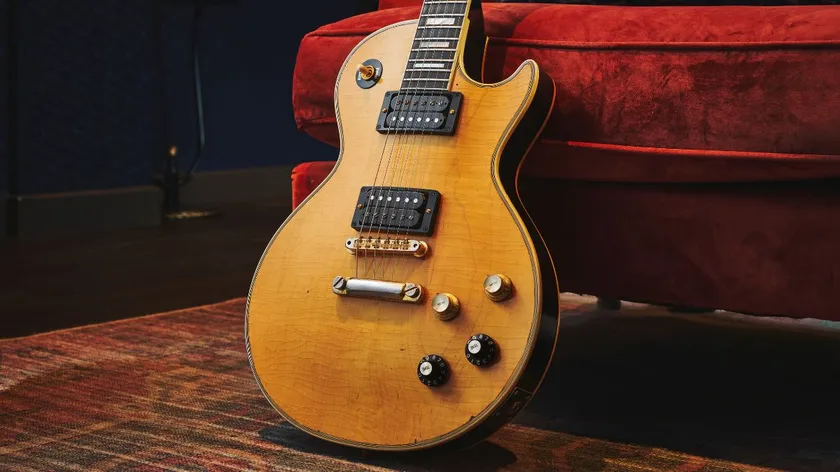


He may only be approaching his late-20s, but at this stage of his career, blues singer-guitarist Christone ‘Kingfish’ Ingram can no longer say he’s the new kid on the block.
He’s a Grammy-winning artist who has earned the respect of his elders and peers, with his own Kingfish Telecaster Deluxe signature through a Fender Twin, along with invites to open for artists such as The Rolling Stones, Slash and Joe Bonamassa.
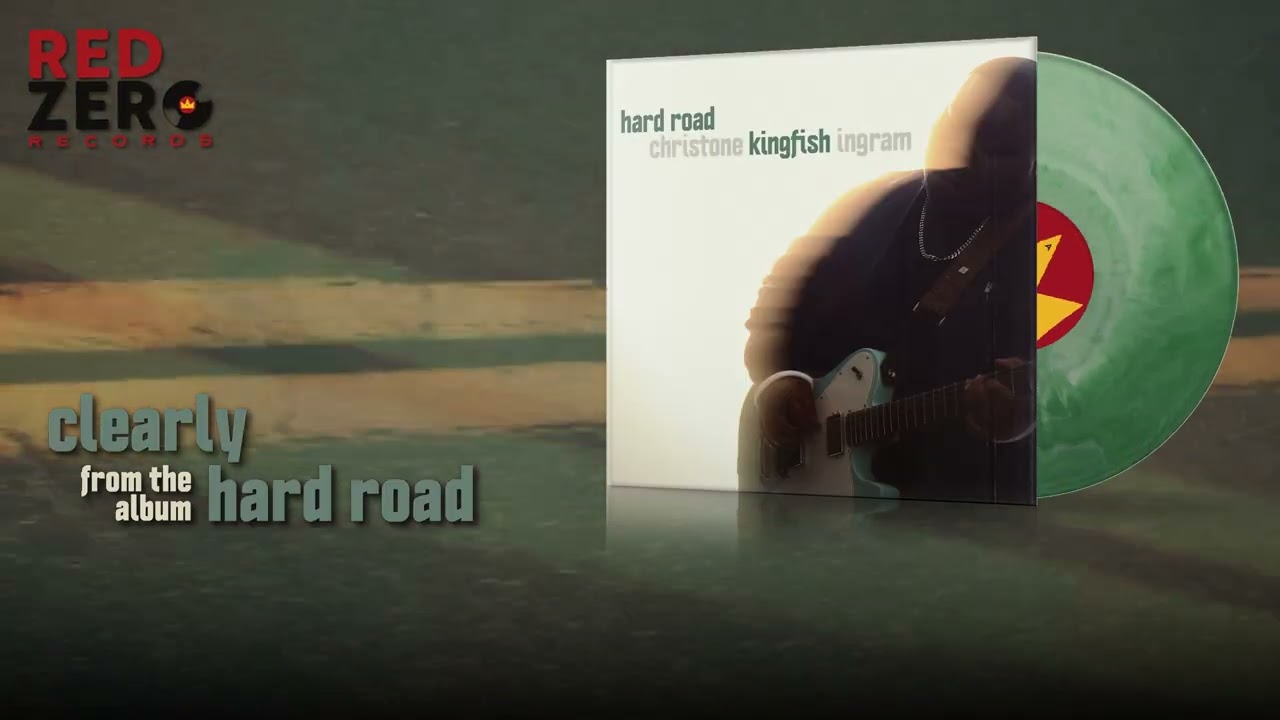
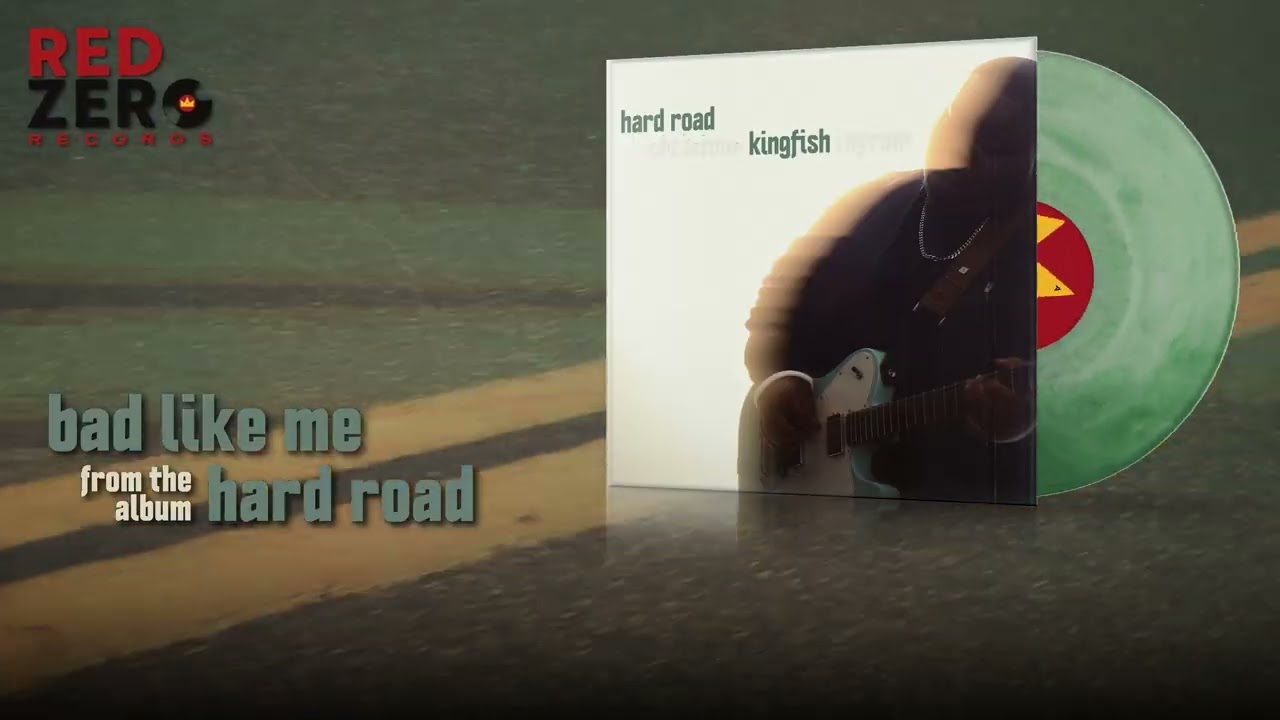
Last year saw the release of his third studio album, Hard Road, which features more nuance than ever before. It’s still a blues-rock record all in all, although Ingram has broadened his horizons by moving away from heavier tones in favour of cleaner and more soulful musings.
There’s more variety to the new music than anything you’ve recorded to date.
I wanted to focus on my artistic growth; that’s all I wanted to showcase on this record. My sound hasn’t changed too much, there are still some heavy tones in places, but I did think about my sound just before we started recording.
Certain songs needed a cleaner approach, so I decided to experiment and try out some things I haven’t done in the past.
So where exactly did these songs come from?
I’ll explore new directions and navigate through whatever might be happening in my personal life. This album is like a documentation of my last four years. Some of the songs were written during the sessions for [Grammy-winning previous studio album] 662 but ended up conveying how I’ve felt in the time since, too.
I’ve also been working with a few external writers. There was one song I did all by myself [Clearly], where I was in the studio alone one night. I’m proud of how it all came out.

What gear are we hearing on this album?
I used my signature Tele a lot, as well as an ES-335 on some songs. The semi-hollow wasn’t mine; it was an early 2000s model that the studio had. The album was mainly recorded with my live rig, so you can probably hear pedals like my Marshall ShredMaster on there. The main amp was a regular Fender Twin. I even plugged straight into the board for some of the rhythms. That was about it.
The opening track, Truth, benefits from some funky single-note lines, a screaming wah solo and some of your catchiest vocals to date.
That was all done on a Strat – it was the purple Custom Shop one seen on the cover of my 662 album. Singing is definitely another area I’m trying to grow in. I’ve always felt my voice is just as good as my guitar playing, so this record was about trying to push both at the same time.
Bad Like Me has some chord shapes that move up and down chromatically, as well as some jazzy ideas at the end of the solo. It’s not a million miles away from the kind of thing Stevie Wonder would write.
Yeah! That was a fun thing to do because it was so out-of-the-box. It helped me come up with things I haven’t done before vocally. There are some cool changes in there.
I think the jazz influence comes from doing a lot of listening – and not just listening to guitar players but other instruments as well. [Pianist] Oscar Peterson is one of my favourite jazz musicians, and the same goes for [pianist] Art Tatum and [saxophonist] Charlie Parker.
Which guitar players have influenced this side of you?
People like Charlie Christian demonstrated how much you can achieve with simple bebop lines, which led to me trying to implement them into rock and blues. Josh Smith is amazing at that stuff; he’s someone who I really look up to. The way he plays is how I want to sound one day in the future because it’s a mixture of blues and fusion.
![Kingfish f/Big K.R.I.T. - Another Life Goes By (Mississippi Mix) [Official Video] - YouTube](https://img.youtube.com/vi/HndFAqVPiu4/maxresdefault.jpg)
The self-penned track Clearly features some beautiful jazz voicings. It could be the jazziest song you’ve ever written.
There’s definitely some major 7s in there. I had that groove in my mind for a long time. I was struggling with it for a while, but one night in the studio, it just all came out really easily.
Nothin’ But Your Love is a ballad in Ab major. When you play on a song like that, are you thinking more in Ab major or F minor in terms of where you place your fingers?
I will be thinking more in terms of Ab major, trying to paint a picture in my mind and tell the story. I might use some swells or go for a more mellow attack. It’s the opposite to what I normally do. I’m more used to playing like that nowadays, though it wasn’t always like that because blues tends to be more minor. When you play in major, you really have to dig deep.
This music is indicative of how confident you must be feeling at this stage of your career.
It’s like riding a wave. I have three Grammy-nominated records – and one of them was a winner – as well as all these other blues awards, so I’m just trying to keep on doing what I’m doing.
You’ve been championed by Eric Gales, having played on his 2017 Middle Of The Road album, as well as his latest release, A Tribute To LJK.
Yeah, I played on the track Help Yourself on the Middle Of The Road record, and then Rockin Horse Ride on his latest one. When I was expanding my sound, I remember being influenced by Eric’s brother Manuel, who we all knew as Little Jimmy King.
Then hearing Eric is what made me want to push the blues-rock envelope. Here was this Black dude from Memphis, which isn’t too far from where I was in Mississippi, with this hip-hop persona but also playing fiery blues riffs with all the soul you’d get from people like B.B. King. That’s what did it for me.
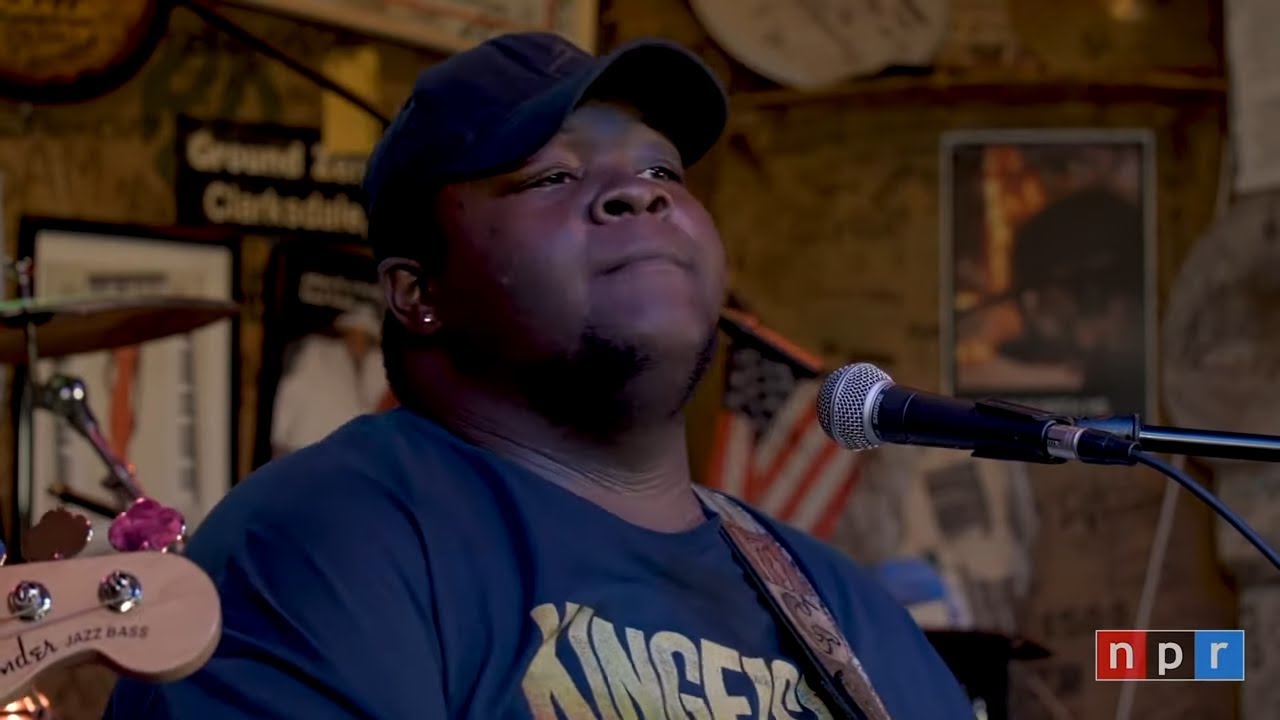
A lot of people would say he’s the best blues guitarist alive today. What did you end up learning from him musically?
Mr Gales was my introduction to the whole Eric Johnson pentatonic approach. That’s something I took from him, looking at that scale and playing it in different positions
Mr Gales was my introduction to the whole Eric Johnson pentatonic approach. That’s something I took from him, looking at that scale and playing it in different positions all over the neck ascending or descending in groups of four, five or six. It’s a very melodic and rhythmic kind of sound.
That’s what got me caught up on my speed, though we all know he can play soulful as well. I’m still learning this stuff, but I was able to cheat my way in thanks to watching how Eric Gales was doing it. It doesn’t matter if you pick every note or use legato or economy picking – if it sounds good, go with it.”
Buddy Guy, who has spoken very highly of you, also appears on Eric’s latest album. He’s one of the last living original blues legends.
Yeah, of that crop of blues musicians, I would say Mr Guy is the last link. He’s the one who started this whole style of blues-rock playing that felt kinda wild and crazy. I feel like he was the one who pushed the envelope while all the other guys were playing with more restraint.
He was the one who said, ‘Hey, I’m going to knock this out the park and past the wall!’ And that’s exactly what he did. His bends never seem to end. I sound like shit when I try that, but Mr Guy always makes it sound good.

You’re very comfortable with the pentatonic scale. What helped you break out of the classic box shapes?
If you just listen to blues, it might show. I enjoy anything from MonoNeon to Ghost-Note and Snarky Puppy. If I hear something I like, I will try to implement that into my own sound. You have to keep trying to find different ways to make the blues sound interesting.
That means playing it in different positions, rather than sticking in the first couple of boxes or changing your tone for certain songs. I also think it’s important to add extra notes in places or even take certain notes away. Sometimes I double-pick certain notes to really bring out their quality. It’s all about doing stuff like that.
If you could have a lesson from any guitar player, living or dead, who would it be and what would you ask?
I would choose Prince because he was a great example of shredding and being melodic at the same time. I’d ask him about his approach to the solos because he always seemed to play the right thing. I often wonder if he was thinking in terms of scales or just feeling it right there and then.
There’s that classic Purple Rain performance at the Super Bowl in 2007, but maybe the one people talk about the most is his While My Guitar Gently Weeps solo at the 2004 Rock and Roll Hall Of Fame Induction.
Hell, yeah. He killed it big-time on that. He was an incredible lead guitar player, but he could do it all, to be honest. He could write songs, play keys and bass, as well as sing. He was such a versatile musician in that sense.
My favourite Prince songs are ones like I Wanna Be Your Lover, Erotic City and Kiss. That funky pocket playing ended up being a huge influence on me. I think it came from him being influenced by players like Catfish Collins and other people who played with James Brown.
Finally, where do you want to go next as a guitar player?
I’m really working on playing over the chord changes and bringing out more of my jazz influences. That’s my main homework right now.
- Hard Road is out now via Red Zero.
- This article first appeared in Guitarist. Subscribe and save.

