


![Joe Bonamassa [left] wears shades takes a solo on vintage Gibson Les Paul; B.B. King [right] wears a cream suit and takes a solo on a red Gibson ES-355 at the 1969 Newport Jazz Festival](https://cdn.mos.cms.futurecdn.net/fcHMzdytCgLhP6ivPZHUih-1920-80.jpg.webp)
The double-CD and three-LP release in honour of BB King’s 100th birthday, BB King’s Blues Summit 100, was a labour of love for Joe Bonamassa. To say that the album features a who’s who of blues guitarists young and old is really only the tip of a very large iceberg.
Indeed, when Joe announced the project to the blues guitar world, it expanded exponentially, such was the clamour it created.
Artists including Marcus King, Christone ‘Kingfish’ Ingram, Larkin Poe, Jimmie Vaughan, Warren Haynes, Dion, Aloe Blacc, Kirk Fletcher and not forgetting Eric Clapton were eager to lend their hands – and guitar playing – to a selection of songs that B.B. had made famous throughout his long career. And what a joyous celebration of one man’s contribution to music and popular culture it is.
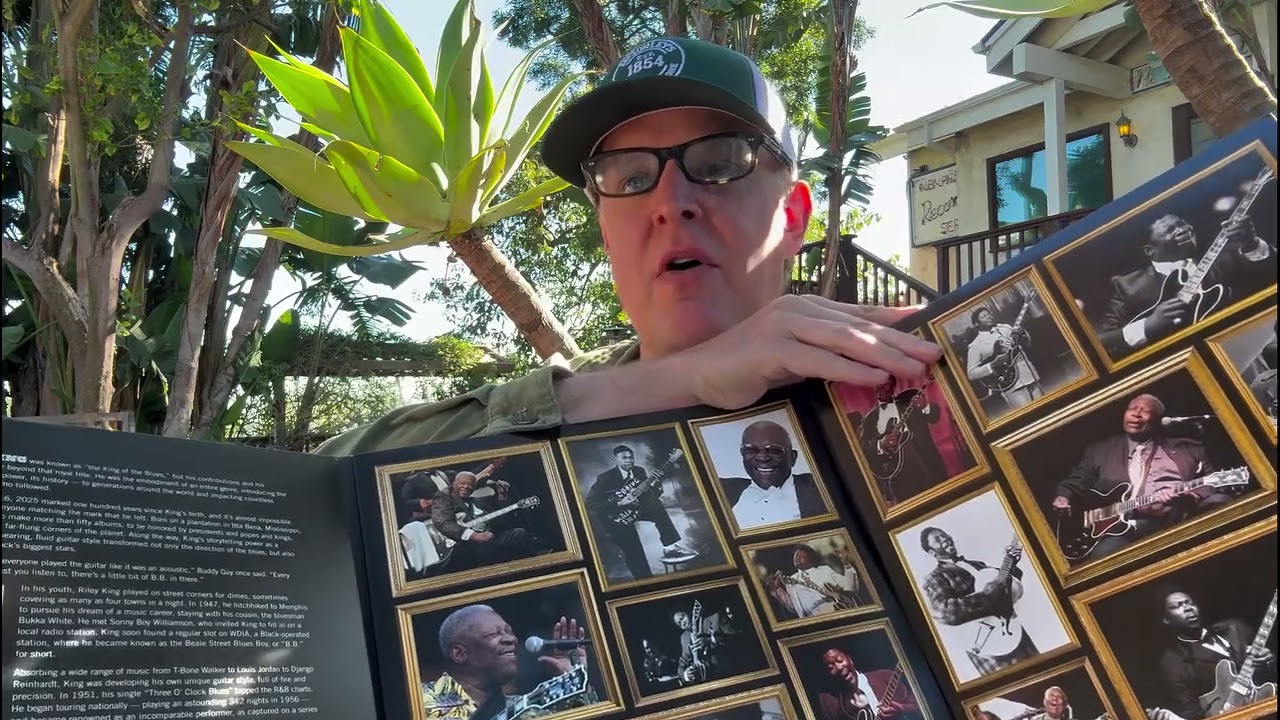
Joe met B.B. King 36 years ago, but the meeting holds such significance, to him it seems like it was only yesterday.
“I met him at the Lilac Festival in Rochester, New York, May 24 1990,” he tells us. “My band was booked to open up for him. I was a kid and he took an interest in my career, or just my playing. This was all pre‑internet, so it wasn’t like he had watched my videos on YouTube or Instagram. Back then you had to discover things as they were happening. We just started a friendship.”
Did B.B. offer you advice on how to develop your playing style in those early days?
No, but you couldn’t help but watch him and learn. He was always very encouraging, like, ‘Just keep doing what you’re doing and don’t change.’ I can’t think of another guitar player that with a single note is that identifiable, you know what I mean? Maybe Albert King, but Albert King really would require a two- or three-note phrase.
But B.B. King could just play one note, and it’s like you know who he is, and those are the players you can’t help but pay attention to and understand and learn from.
Did you continue to play with him often?
Technically, the last run I did with him was about 10 years before he died. That was the last time. That was the last tour. We did a couple of shows in Europe, at the Ahoy Arena in Rotterdam, and the last time I saw him was right before he came off the road in 2014 at the Canyon Club in LA and he literally picked up our conversation from where we’d left off.
He was just like, ‘Are you still dating that girl?’ He knew everything. He was so hip, and then he came off the road maybe a few months later.
Have you got any favourite B.B. King anecdotes?
Well, he showed me how to drag songs from a computer into an iPod when he was 80 years old! I didn’t know how to do that and he’s like, ‘Here, son, this is how you do it.’ How sad is that? I was 28 or something and he was 80. But he was a consummate professional.
I remember one time in Charleston, West Virginia, there was a big snowstorm, and the governor of West Virginia called specifically to ask B.B. King to postpone the show and he wouldn’t do it. He goes, ‘I told them I’m going to be here in March and I’m here.’ They’re like, ‘But Mr. King, it’s unsafe.’ He said, ‘Well, I made it!’ So that was him, man.
Did BB’s work ethic of always being on the road influence you?
Yeah, he was always touring. I mean, he would do those summer runs and then go right back on the road in theatres and he was very much a road dog and he loved it a lot. I mean, he always said, ‘I want to die on the road, doing what I love,’ you know? But he didn’t know any other life. You’re talking about somebody who started working that much in the early ’50s and never stopped for anything.
Thinking about B.B.’s use of ‘Lucille’ Gibson ES-355s, were you inspired to include that model in your collection?
I have a couple of 355s. They tend to be stereo, but I actually have a couple of mono ones, which are great because you get an ebony fingerboard, mono, no Varitone – it’s like the coolest 335 you’ve ever played.
It was the late ’70s when the first Lucille came off the line. Some of them were red, and they were like 1978 to 1979, and he was the one that said, ‘I don’t want the f-hole, make it more of a solid thing.’ And that was one of Gibson’s longest-running signature models, other than the Les Paul, which is a signature model guitar.
Did B.B. like to play loud on stage?
When I first started opening for him, he was using a Twin Reverb and a lot of times we would supply the backline. He liked my 1970 or ’72 Twin Reverb. It had mismatched speakers in it, but it was a great Twin. He liked it because it was loud and punchy.
Then as the years went on, he ended up graduating to the Lab Series L5, which is basically like a solid-state 100-watt Twin. So he played loud. It wasn’t quiet on stage; he cranked.
He had a big sound. All of the Kings had big sounds. Albert had a big sound, Freddie had a big sound – and they played loud, which was great.

How did you go about assembling the players that you’ve got on the new tribute album?
It escalated. We had a wishlist and we originally cut 20 or 22 songs and we thought that would be enough. Then as it escalated and things got more involved we ended up having to cut another dozen. We had cut 34 and we’re using 32.
Some of the collaborations you’re like, ‘Why did you have Michael McDonald, Derek [Trucks] and Susan [Tedeschi], do the one song?’ Well, it’s because they all called that song. So you get these happy accidents, you know?
![B.B. King - The Thrill Is Gone [Crossroads 2010] (Official Live Video) - YouTube](https://img.youtube.com/vi/SgXSomPE_FY/maxresdefault.jpg)
Was the process of matching artists to tracks fairly straightforward?
He had a big sound. All of the Kings had big sounds. Albert had a big sound, Freddie had a big sound – and they played loud
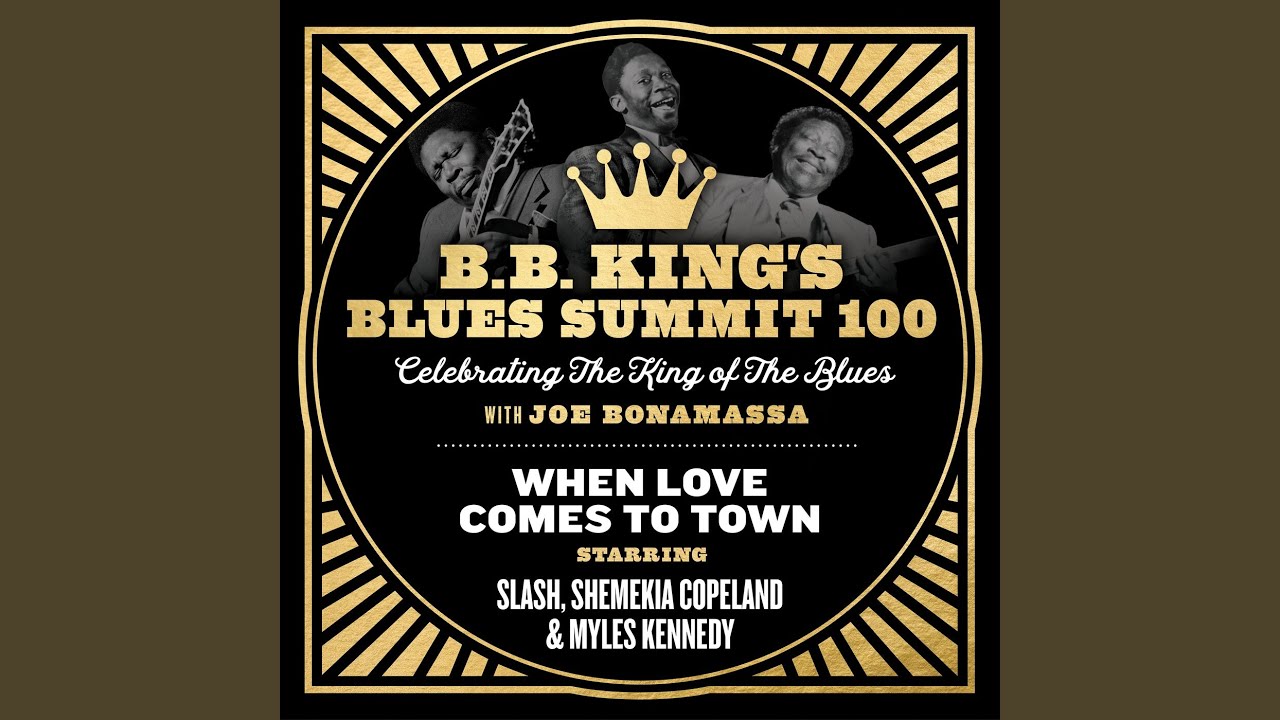
We had to do When Love Comes To Town. I mean, it’s one of B.B.’s biggest songs. But you’re like, ‘Well, who’s going to sing it?’ You’ve got to split the vocal. So I came up with this idea of asking Myles Kennedy to sing it, Slash to play guitar, and Shemekia Copeland to do the B.B. bits. And it came out great.
Once you start getting into these things, you get Chris Buck with Pat Monahan [of Train] and it was just like, ‘Oh, Chris, you want to play on the record? We got a spot for you on this song…’ Then the crown jewel was having Chaka Khan and Eric Clapton on The Thrill Is Gone. Paul Rogers wanted to sing Night Life, and he wanted a very specific version; he wanted to sing the Blues Is King version. No problem. Got you covered.
To be honest with you, a lot of times we had this list of songs – because you’ve got to do these songs, you can’t leave them out – and a lot of times I was just going to these artists, I’m like, ‘Hey, man, I’m sorry. I know it’s a big thing. What key do you want it in?’ And they’re like, ‘Okay, I’ll do it.’
We had heard Marcus King sing Don’t Answer The Door before, so we knew he was game for that. And Keb’ Mo’ did I’ll Survive and he did a great job. So some of this stuff plugged in fast, and then some of the stuff we ended up waiting around and retooling, but it got done.
So basically it was your band laying down the tracks with the guests recording their parts in different studios?
Yeah, this thing would not have been possible if we had done it Quincy Jones We Are The World style. It’d be physically impossible. As it was, from start to finish, with artwork and everything, it took eight months, which is like warp speed.
My favourite track has always been The Thrill Is Gone. I know it’s cliché, but, to me, it was the perfect blues song and it was a hit
We were tasked as a band to go in and just cut tracks. Sometimes we had to change keys. And we were doing it on the road. I mean, we recorded most of it in Los Angeles, some of it in Buffalo, New York, some of it in Atlanta, and I think one song in Nashville. We just had to be flexible.
What’s your favourite B.B. King track these days?
My favourite track has always been The Thrill Is Gone. I know it’s cliché, but, to me, it was the perfect blues song and it was a hit. And B.B. got a lot of shit when it came out because [producer] Bill Szymczyk put strings on it and they thought it was too sophisticated and that they had sold out. He was so ahead of his time. You know, strings and blues? That was revolutionary.
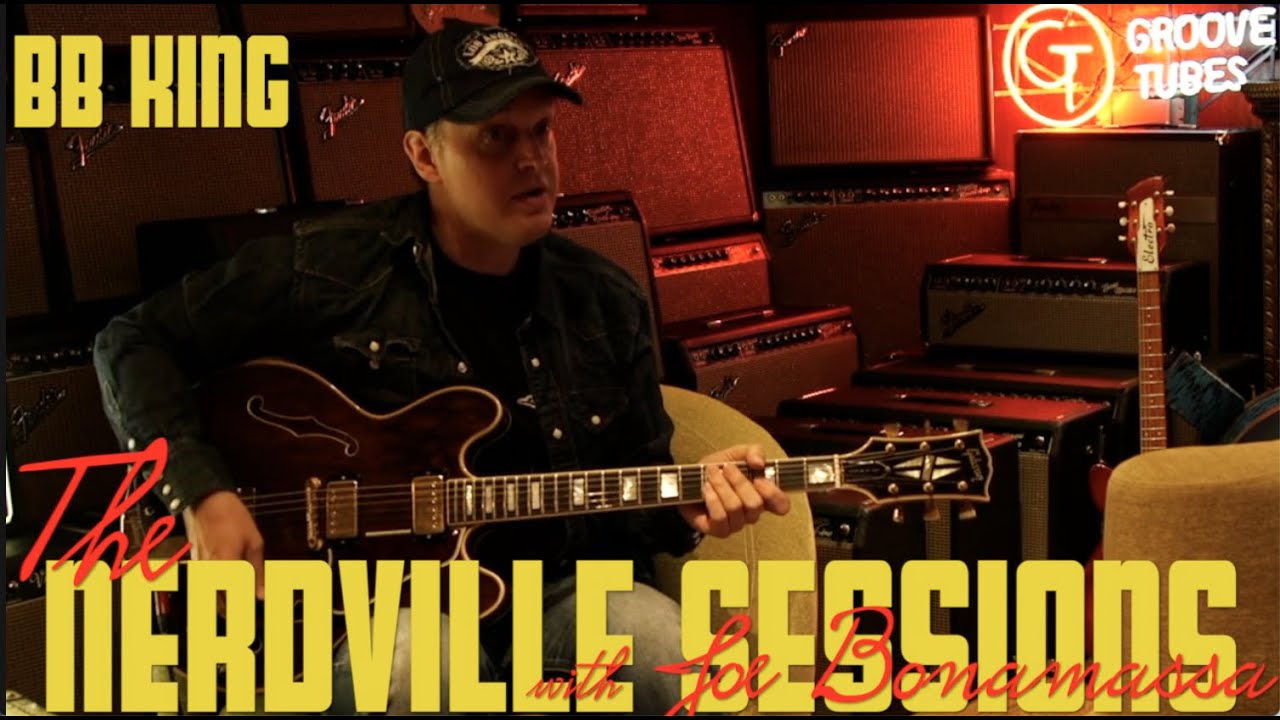
With The Thrill Is Gone having been taken by Clapton, how did you end up contributing Playin’ With My Friends to the album?
I always said I’m going to take what’s left over because this is a guest-star record. There are probably five songs that I sang and did bits on, but finally I just said to [co-producer] Josh [Smith], ‘I’m sick and tired of this shit. Let me do mine right at the end when there’s a leftover. I feel like I’m cutting the whole album.’
Which guitar did you use for your contribution?
It’s all 335. They do that thing, you know? But B.B. had a lot of different sounds throughout his career because we covered stuff from the ’50s all the way through to his modern work. I mean, you could tell when he was using the ES-5 in the ’50s. Even some of the songs, you go, ‘Man, I think that’s the Esquire,’ because it’s really Fender-y.
By ’64, his sound was more like what you would have expected it to sound like – usually a 335 or some sort of archtop. But we didn’t want to do sound-alikes, either. We wanted to make them our own.
- BB King's Blues Summit 100 is out now via KTBA Records.
- This article first appeared in Guitarist. Subscribe and save.

