Exclusive lessons, interviews, presales and features from the GW archive
Curated Newsletters
Handpicked guitar news, lessons and gear highlights
Early Access
Our biggest stories will go to Backstage Pass holders first
Achievements
Unlock badges as you learn and explore
Join the Conversation
Connect with fellow GW fans across the globe
Tailored For You
Lessons, gear and stories picked for you
Sign up to Guitar World Backstage Pass
For the quickest way to join, enter your email below. We’ll send a confirmation email and sign you up to Guitar World newsletters with the latest news, gear reviews, lessons and exclusive offers.
Join Backstage Pass for quick access. Enter your email below and we'll send confirmation, and sign you up to our newsletter.
By submitting your information, you confirm you are aged 16 or over,
have read our
Privacy Policy
and agree to the
Terms & Conditions. Geographical rules apply.
All the latest guitar news, interviews, lessons, reviews, deals and more, direct to your inbox!
You are now subscribed
Your newsletter sign-up was successful
Join the club
Get full access to premium articles, exclusive features and a growing list of member rewards.
An account already exists for this email address, please log in.
“The night he died, I was at Buddy Guy’s club waiting for Buddy, Stevie and Clapton. Then we were told they’d all gone down”: Larry McCray on rubbing shoulders with blues royalty and playing through Joe Bonamassa’s epic rig
Living blues legend Larry McCray is keeping on keeping on and keeping the blues alive, and on his latest LP, Heartbreak City, he's taking his guitar to places his voice can't reach
Now in his mid-60s, Larry McCray’s career has taken him all the way from new kid on the block to elder statesman of the blues.
With mentors such as Albert King, Buddy Guy and Albert Collins, McCray was schooled in the art of pentatonic conversation like few others and learned how to make his guitar speak as profoundly as any human voice.
This year the Michigan-based musician is back with new album, Heartbreak City, which was produced by Joe Bonamassa and Josh Smith and features a host of special guests including the producers themselves, along with Kirk Fletcher and Double Trouble keyboardist Reese Wynans.
This is a very uplifting record that crosses over into lots of areas of the blues.
That’s the intention. Whenever I’m asked what kind of music I play, I usually say I play ‘feel-good music’. I like to sing songs that are soothing in any kind of situation. I always felt that blues was broader than how it was depicted. Whenever I meet people who don’t have the same appreciation for it, I realise they haven’t discovered the right presentation of it.
The opening track, Try To Be A Good Man, kicks everything with some Albert King-inspired lines that really wail.
He was one of my biggest mentors. I loved Albert King. He would notice if you were trying to be good. You always had to show a bit of respect to Albert because that’s just what he was like.
Get The Pick Newsletter
All the latest guitar news, interviews, lessons, reviews, deals and more, direct to your inbox!
He’d come around saying stuff like, ‘Hey boy, what you playing? Quit doing all that skipping and gimme something from the gut!’ like an antagonistic coach [laughs]. I’m lucky I got to meet people like him, BB and Koko Taylor. They made me fall in love with music in the first place. I used to be the youngest of all these players and now I’m the fuckin’ oldest!
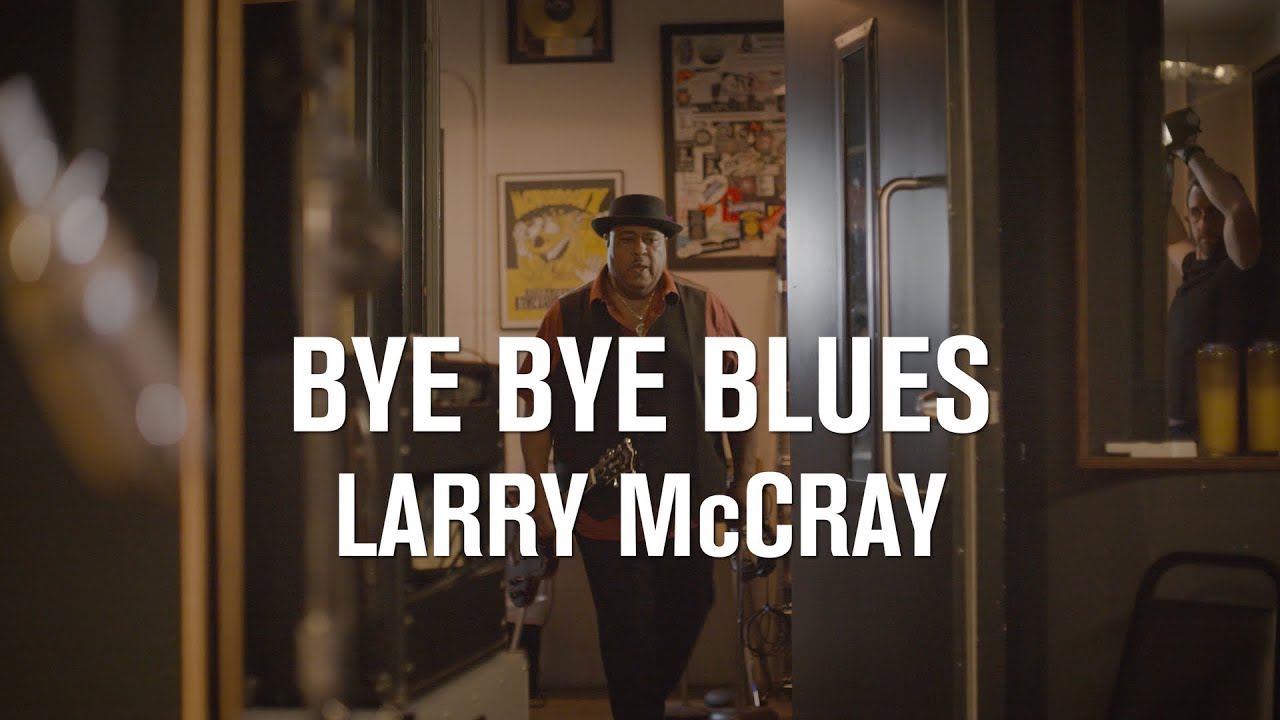
Larry McCray - "Bye Bye Blues" - Official Music Video - YouTube
The title track is a G minor blues that runs seven-and-a-half minutes long. What’s the secret to holding people’s attention like that?
It’s because I’ve listened to a lot over the years and incorporate other elements into my sound. Being a teenager in the ’70s, I was a big funk fan, listening to Larry Graham and Louis Johnson.
Then I left Arkansas and moved to Michigan and got exposed to heavy metal. I ended up becoming a big Def Leppard and Judas Priest fan. My criticism of blues at the time was that everybody was going for the post-war or Delta acoustic sound. Nobody was trying to take things to the next level, which is something I’ve always strived for.
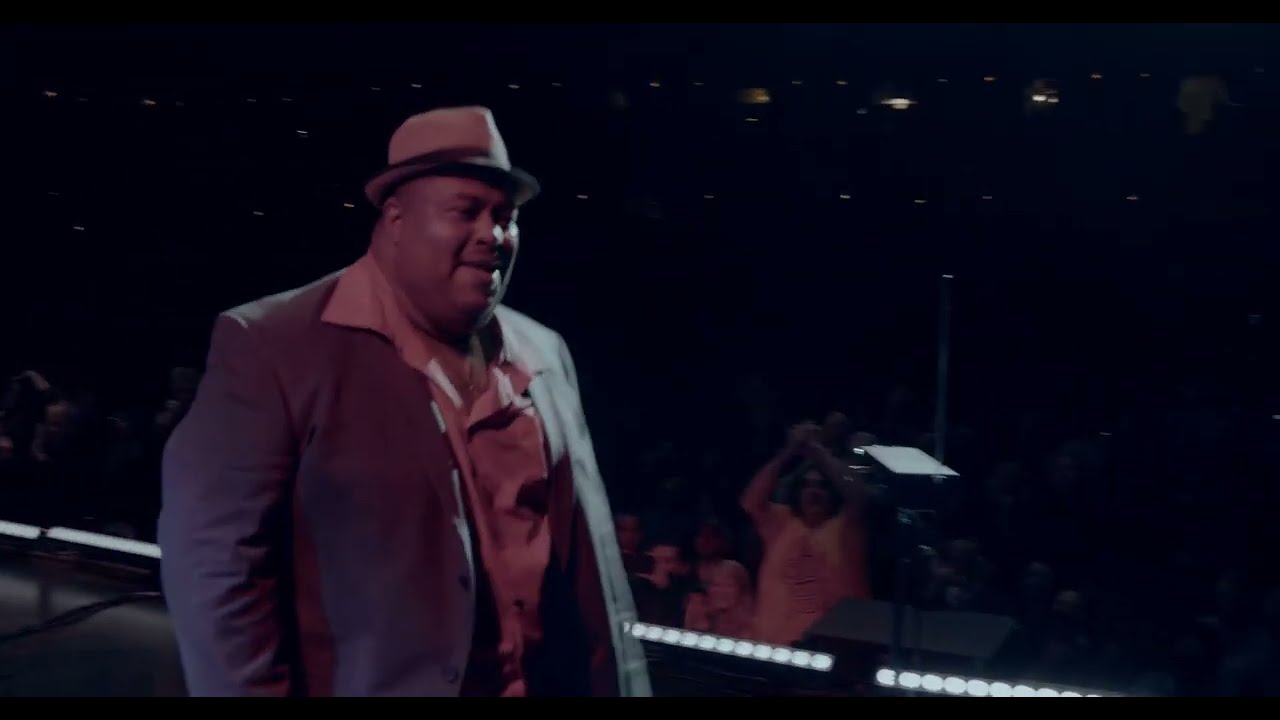
Larry McCray - "Arkansas" - Official Music Video - YouTube
You’re holding a Guild electric on the cover. Is that what we’re hearing?
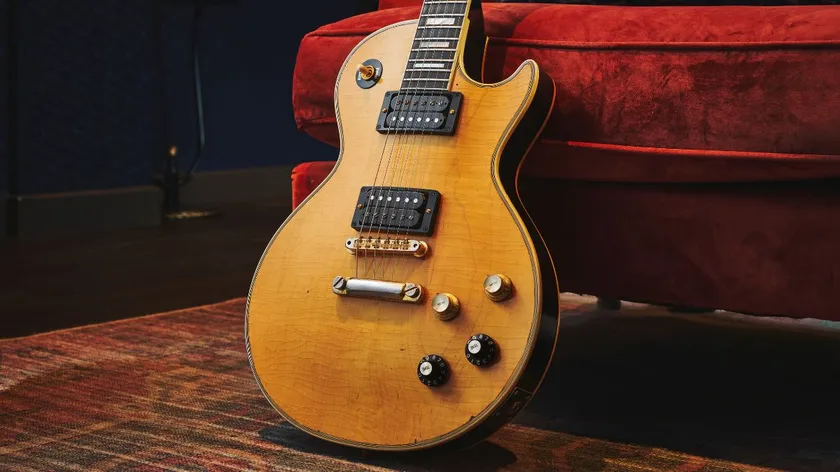
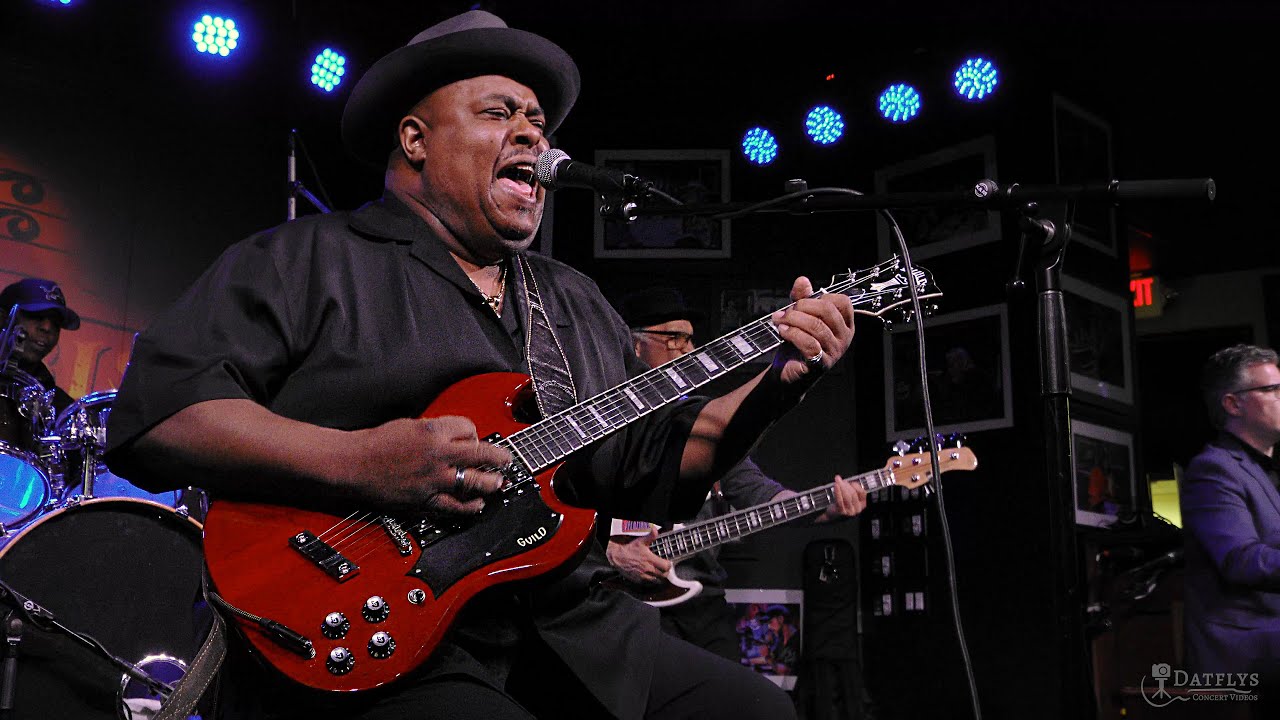
That’s the one. It’s a Polara S-100 reissue with push-pull switches to split the coils. It’s a great-playing guitar, man. I wrote them a letter this morning trying to see if they would endorse me.
Because I love guitars like the Bluesbird, which is a bit like a Les Paul, and the X-175, which is reminiscent of the ES-175. The tones you hear are incredible.
I think Guild guitars sound in between a Fender and a Gibson. They are brighter than Gibsons, but still have the low-end punch of a humbucker. I’ve played Gibson my whole career – now I want something different.
And what were you plugging into?
I played through Joe’s rig. He has a nice collection of Dumble amplifiers. It was a little combo that was about the size of a Princeton, with a really warm tone. I plugged into Joe’s MXR FET Driver and a Klon clone. I have a real Klon, but I don’t take it anywhere because it’s worth so much. Effects are great, but the more you have, the more things can go wrong.
Larry McCray "Heartbreak City" Official Music Video - YouTube
It’s amazing how lyrical your solos can be, almost most like a voice at times.
I use vocals for inspiration. I’m a baritone singer; I can only go so high, so I use my guitar to visit places I can’t with my voice. It’s like I’m singing through the guitar. I forced myself to learn all five pentatonic positions. Most people only tend to play in the 1st and 2nd [positions].
The best key to learn in is A minor: you can start with a G note on the 3rd fret and then climb into the 1st position, moving up the neck horizontally. You can mix minor with major for a blend.
You can transfer this knowledge to any key and find melodies naturally. We all know how the pentatonic scale sounds. It’s such a big part of the guitar, so it’s important to know how to play it across the neck.
Larry McCray 2025 04 17 "Full Show" Boca Raton, Florida - The Funky Biscuit 4K w/ Guest Frank Bang - YouTube
Beyond that, what’s the secret to a good blues solo?
When I start playing, it’s usually with a slow bluesy lick. The second time I come around, I might throw in something a little jazzy. The third time, I might be all-out rocking and then the final pass is bringing it all back home.
It’s good to change it up. Try not to think in the same vein, whether it’s how you attack the notes, what notes you play or the rhythm. You have to tell your truth. As long as you’re speaking your truth and playing from the heart, people will listen.
As long as you’re speaking your truth and playing from the heart, people will listen
This is your second time working with Joe. What have you learned from him?
I learned I’ll never be able to play like him and it’s best to stick to what I know. Joe is a one-in-a-million kind of player. He’s a special talent, and the same goes for Josh Smith, who wrote Bright Side and the title track. Even though I can’t play like Joe, I still use him for inspiration.
I have good dexterity for moments that call for me to play fast and step outside of the box. It was fun jamming together on the track I Know What I’ve Done. It reminds you to stay humble and be as good as you can be. Music isn’t a competition against other players. It’s a competition against yourself.
It really is an all-star cast on this album, especially with Reese Wynans involved.
I know I’m getting older because I sound like my dad! I’m just happy there are people interested enough to preserve it
I loved talking to Reese about his time with Stevie [Ray Vaughan], who I never got to hang with. The night he died, I was at Buddy Guy’s Legends club [in Chicago] waiting for Buddy, Stevie and Clapton because there was a rumour they were about to come and jam. All these musicians were waiting to see them.
Then we were told they’d all gone down. You’ll never see a house full of people get so quiet, it was pin-drop silence, and eventually we found out Buddy and Eric were okay. It was a terrible thing. I’ll never forget that day.
You’ve seen this kind of music rise and fall numerous times over the years. Where does the blues stand in 2025?
There are some great people trying to keep the blues alive. My biggest criticism is that the format seems to have changed. When we were coming up, there was always a structure; you’d know where the changes are. Nowadays, young people just change when they want to.
I know I’m getting older because I sound like my dad! I’m just happy there are people interested enough to preserve it. I love Christone ‘Kingfish’ Ingram. I have a 25-year-old son who’s a better singer and guitarist than me, so I have high hopes for him. And there’s another great young man in Arkansas called Josh Parks. He’s one to watch.
Amit has been writing for titles like Total Guitar, MusicRadar and Guitar World for over a decade and counts Richie Kotzen, Guthrie Govan and Jeff Beck among his primary influences as a guitar player. He's worked for magazines like Kerrang!, Metal Hammer, Classic Rock, Prog, Record Collector, Planet Rock, Rhythm and Bass Player, as well as newspapers like Metro and The Independent, interviewing everyone from Ozzy Osbourne and Lemmy to Slash and Jimmy Page, and once even traded solos with a member of Slayer on a track released internationally. As a session guitarist, he's played alongside members of Judas Priest and Uriah Heep in London ensemble Metalworks, as well as handled lead guitars for legends like Glen Matlock (Sex Pistols, The Faces) and Stu Hamm (Steve Vai, Joe Satriani, G3).
You must confirm your public display name before commenting
Please logout and then login again, you will then be prompted to enter your display name.