




When does a side-project become the main event? As we set up the photoshoot for Adrian Smith and Richie Kotzen at Bristol’s O2 Academy, it seems a pertinent question to contemplate.
Back in February 2020 these two star players traded riffs for the first time on the Turks and Caicos Islands – of course, a few days later and the pandemic would have scuppered the project before it even began.
However, six years on and Smith/Kotzen have a brace of acclaimed albums under their belt, from 2021’s self-titled debut to last year’s Black Light/White Noise (by comparison, Smith’s mothership, Iron Maiden, haven’t recorded since 2021’s Senjutsu).
Having completed soundcheck and now settling on a leather couch, the pair display a complementary chemistry: Kotzen is happy to hold court, while Smith prefers to sit back, hat pulled low, and chip in as necessary.
But as they explain, it’s their opposing guitar styles that has made Smith/Kotzen such an enjoyable enterprise, with both musicians happy to be nudged from their comfort zones.
How does the second album progress from your debut?
Adrian Smith: We actually recorded it in two parts. We did about six songs, then I went on tour with Maiden and Richie went off with his band. Then we came back together the following year.
So it gave us the opportunity to let the dust settle and think, ‘What do we have here?’ I think it’s a more focused album, more ‘up’, more cohesive. You know, we’re developing a writing and playing relationship. It’s more of the same – but a progression.
When did you realise that you clicked as a partnership?
I’ve sat down with other guitarists and you just end up playing blues licks all day and not writing anything. But Richie and I went to work straight away
Adrian Smith
Adrian: “The first time we got together at Richie’s studio. I’ve sat down with other guitarists and you just end up playing blues licks all day and not writing anything. But Richie and I went to work straight away. I had the riff and he came up with the chorus for Running. That was it – “Bang!” – in a couple of hours. We did jam, too, and came up with Scars.”
Richie Kotzen: To me, the creative process is the most important aspect. Even more so than playing, if I had to choose. That’s why I kept at playing the guitar because I wanted to make original music.
Out of everything, I get most satisfaction from an idea coming out of the speakers and going, “Yeah, that’s what I was hearing in my head.” So that’s the part we connect on, the core of what this is. Because anybody can go jam some covers.
Have the songs evolved as you play them live?
Adrian: Yeah, to see that song breathing and living in front of an audience…
Richie and I are very different. I’ve been playing in Iron Maiden for such a long time, and the solos are part of the song. Almost without exception
Adrian Smith
Richie: The songs take on this whole other life. And I’ve never done this, but it’d be interesting to write a bunch of music, have the band learn it, then take it on the road and play it for a year – then record it.
Adrian: The trouble is, if you do anything now, it’s on the internet the next day.
Richie: That’s true. The creepy, evil internet!
How do you approach the solos in this band?
Adrian: Richie and I are very different. I’ve been playing in Iron Maiden for such a long time, and the solos are part of the song. Almost without exception, they’re 16 bars and that’s it. There’s no extended solos. And most of the solos I play with Maiden [live] are the same as on the record because that’s what people want to hear, especially with old stuff like The Trooper.
But the way Richie plays is much more improvisational and it’s encouraged me to be more like that in S/K. Trying to keep up with this guy, y’know? And I’m getting more confident about branching out. I’ve only got three solos in the whole set that I play the same every night. The rest is off the top of my head.

Richie: That’s the way I’ve been doing it since I started recording myself. Like, ‘Well, I don’t know what I’m gonna do, but let’s see what happens.’ I’ll do a take and typically I’ll hear a melody in my head. Then I’ll go off from that, record it and say, ‘Okay, I liked the way I started and ended, but I got lost in the middle. Let me see if I can pull this off.’ So I’m kinda constructing in real-time.
On the other side of the coin, there are solos, like, at the end of a song, where I’ll just go for it. That’s a lot of fun. I grew up playing with guys that would jam and improvise, so that’s relatively easy for me.
I know a lot of guys that sit at home and write out the solo: ‘Okay, I’m gonna play this, let me practise it seven times then I’ll go to the studio…’. I’ve never done that. Maybe I should. But it’s a different approach.

It helps that you have a killer rhythm section…
Richie: They’re fantastic. Julia Lage is the bass player and Bruno Valverde is playing drums, and they just really lock in and make it so easy for us. Especially on the solos where we’re improvising. You need a support mechanism. And that was a great thing that I learned from my short time with Stanley Clarke’s band.
We had a band called Vertú in 1999, which seems like a thousand years ago. But I learnt that when someone’s soloing, everybody else is there to support. You don’t go, ‘Look what I can do!’ when someone else has the floor. When the four of us play together, we have that same mentality. So the solo at the end of Running, Adrian can go for as long as he wants and the foundation is always gonna be there.
What particular guitars have you brought with you on the road, Adrian?
Adrian: This is my Jackson San Dimas signature model. It’s a slightly later one because it’s got the adjustable truss rod that you can get at more easily. It’s a great working guitar. Stays in tune. Sounds great. It’s light, easy to play, big frets. That’s a Seymour Duncan JB at the bridge.
It’s a slim neck. I don’t really like chunky necks. That’s why I don’t like old, old Les Pauls. This has a kind of flat profile. When I first hooked up with Jackson, I took an old Strat to the factory and they copied the neck dimensions because it was so comfortable.
I also use this Les Paul Classic. When I was a kid, I had a black Les Paul copy. It was my first guitar and I loved it, and I modded it and put in Gibson pickups. I just maxed it out as much as I could. But, eventually, I sold it. I wish I still had it.

But this one, I bought in New York. It’s not an old guitar. I think it might be a reissue. I use it for a few songs and it’s got the mojo factor. I suppose you play it a certain way, get more sustain, so you can maybe play a little less if you want and get away with it.
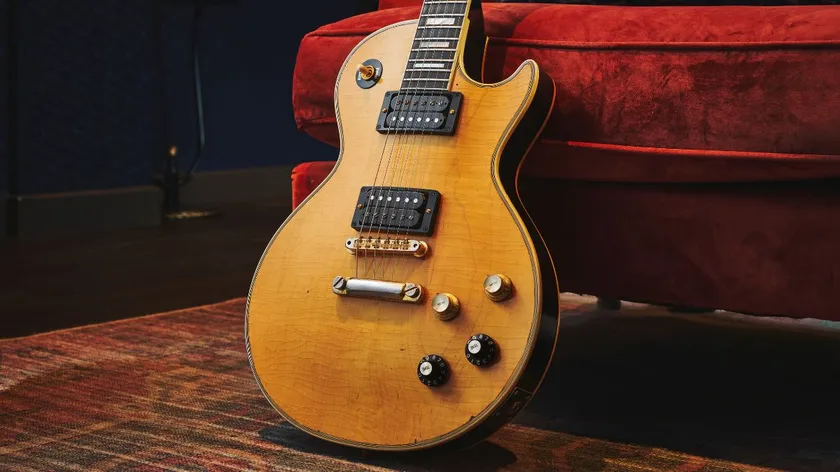
And then, this Les Paul Custom, Gibson gave me a few years ago. It’s my favourite guitar, looks-wise. Just absolutely beautiful. But it’s got slightly smaller frets. My hands were slipping, so I’m going to put bigger frets on, then it’ll be back in action. The tuning can be volatile because it’s not got the locking nuts. But it’s a lovely guitar.
Talk us through your guitar rack, Richie.
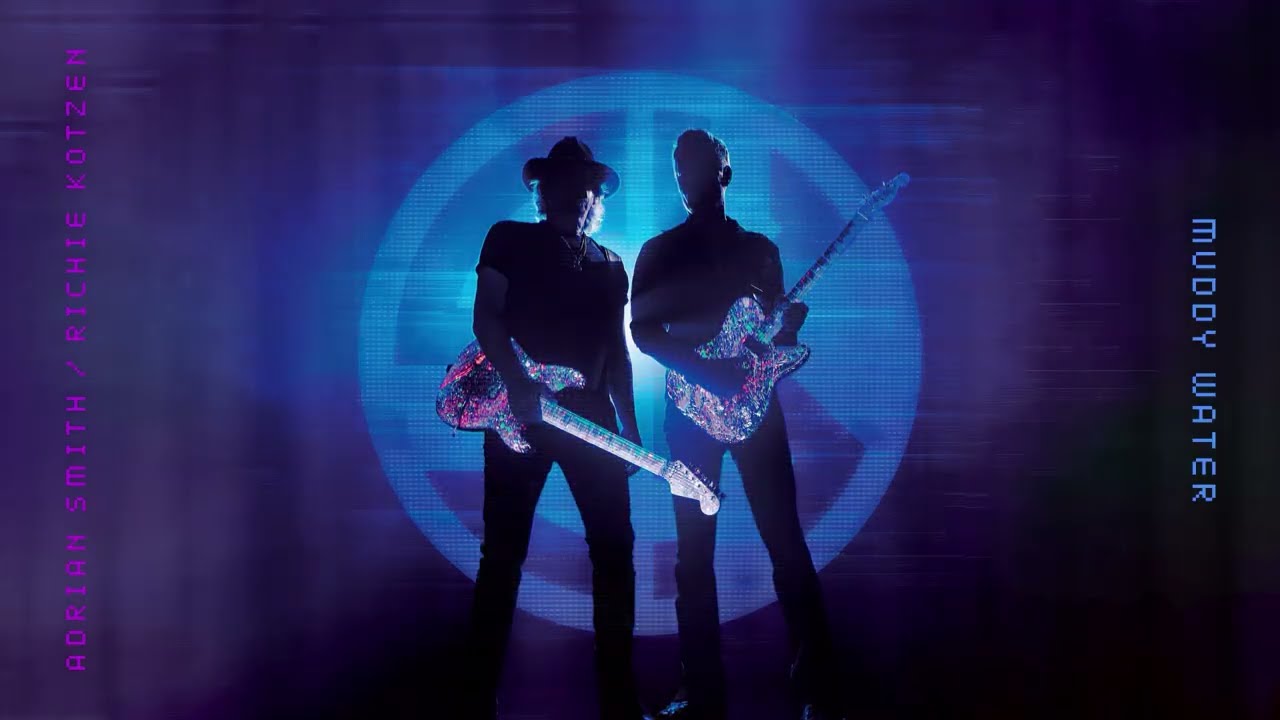
Richie: This is my signature Fender Telecaster. My ‘main’ Telecaster is at home, and the reason is because that guitar stays tuned at 440 [standard tuning] – whereas with S/K we tune down a half-step.
So this is the dedicated Telecaster for everything Smith/Kotzen, and it’s completely stock, off the rack, with the exception that I take sandpaper to the neck – I just like the way that feels. The pickups are a DiMarzio Chopper T with a regular replacement Tele single coil. And that’s not a tone dial – it’s a series/parallel knob.

I only have two guitars on this tour – and the other one is my signature Strat, in this one-off custom baby-blue colour. They used a really nice piece of maple for the neck. It almost looks like birdseye and it’s not quite as chunky as the Telecaster. And, you know, I love the gold hardware and DiMarzio pickups. I play both guitars almost equally in the set, but I finish the show with Running on the Strat.
I’ll tell you something: all the decisions with my gear were made very early on, very deliberately, because my focus has always been, “What am I going to write,” y’know? I don’t like to exhaust too many resources mentally on gear because I like to reserve that for my creative process.

And all the S/K guitars are dropped a semitone?
Adrian: Yeah. Tuning down was more for the vocals. It’s just the way Richie and I started working together. We immediately dropped. I mean, he’s got more range than me, but it helps me. So this white Jackson, for example, it’s the equivalent of a standard tuning drop D, but this would be a C#. So you get that heavy kind of barring situation. The one-fingered bandit, I call it.
The way a guitar interacts with a physical amp is such a big part of the excitement of rock ’n’ roll. What’s your take on that?
Adrian: With S/K, we’re pretty old-school. We both use amplifiers. I mean, a lot of bands now just don’t use backline: it’s all processed and they’ve got in-ears. We’ve got the wedges and half-stacks and we just go for it. And there’s so much choice of amps these days.
Back when the electric guitar came to the fore – the ’60s and ’70s – there wasn’t much around. You really had to work to get a sound. Having said that, a lot of it is in here [holds up hands] and in here [points to head] and what you feel. You’ve just got to have something that enables you to express that.

Richie: It doesn’t have to be loud to be good. A lot of times, being loud can be a problem.
Adrian: And if I go to see a band, I don’t like ’em to be too loud.
Richie: I want them to be good.
Adrian: Exactly!
What was your go-to amp for the album, Richie?
Richie: In the studio, I had my four-input Marshall Super Lead 1959 Handwired. Adrian was using it as well. I plugged into the top-right input, which is the ‘normal’ channel. And then the cabinet is obviously in another room with microphones on it.
I’ve got a lot of Marshall heads. I have one from 1967, a Super Bass. I bought it when I was in my early 20s at a guitar show in Texas. And back then, I paid, like, $1,100 – now I see ’em go for 12 grand. But I haven’t recorded with that in years because it was blowing fuses.

On the road, I’m using reproductions, like this 1959 HW. When I plug into it, I know what I’m in for. It’s not a guessing game. Again, my concern isn’t gear. It never was. It’s like, ‘Let’s get to it, let’s make music.’ This is the most responsive head I’ve ever played through. If I hit it hard, it barks. And it takes pedals really well.
I don’t use a lot of wah in Smith/Kotzen, so my signature Tech 21 [RK5 Fly Rig] pedal is not with me on the road. But I have my Fly Rig, and this one is modified with more switches for my Leslie simulators.
Then there’s the SansAmp, which is how I get a bit of rock ’n’ roll grit in the sound and not have it absurdly loud. And just as I said that, my tinnitus just kicked off, like it knows that I’m talking about it [laughs].

How about your backline, Adrian?
Adrian: A lot of my equipment is in England and we record in America. And I lost a bit of gear in the LA fire last year as well. So I do some stuff at home with a JVM. But mainly I used Richie’s amp because it’s so easy. It’s so fast: you’ve got an idea, plug in and ‘bash’. Maybe I put a Tube Screamer with that amp [on the road, Adrian is using a Marshall JVM210 with 1960A and 1960B cabinets].
So what’s next for Smith/Kotzen?
Richie: Well, we’ve got more shows and we’re very excited about how well received the album was. It’s a great creative outlet and something that I think both of us would like to see carry on, right?
Adrian: Yeah, I’m having a great time on the road. I love taking these songs on stage. I’m up there and I’m lost in a world where I get to play solos and rhythm, sing, do harmonies – there’s so much going on. It’s so fulfilling.
- Black Light/White Noise is out now via BMG.
- This article first appeared in Guitarist. Subscribe and save.

