


They were among the pioneers who sparked the fire under the thrash metal scene in the early Eighties, and now it looks like Exodus will be among the genre’s last original men standing.
Megadeth’s Dave Mustaine made it clear there’ll be no more studio albums, and Slayer – with whom Exodus guitarist and songwriter Gary Holt has played for a decade – are done making albums and will do only one-off gigs. In contrast, Exodus aren’t just releasing new music; they’re on a tear, writing and touring obsessively, cranking out new music not as a means to an end, but as their sole objective – their very raison d'être.
“I have to keep doing this,” Holt says from the office of his rural California home, glancing out the window where a bunch of wild turkeys just scampered across his back lawn. “I’ll be in the studio eight hours during the day, then go back to the house, have dinner, pick up the guitar and write more. It’s what I love to do.”
That kind of passion and dedication has always separated Exodus from the pack, even when navigating lineup snafus, drug problems and shifting trends. From the violent urgency of their first album, 1985’s Bonded by Blood, to the aggression, diversity and scalpel-sharp musicianship of their brand-new release, Goliath, Exodus have never compromised, coasted or half-assed it.
“We could never write something just to meet a deadline,” says second guitarist Lee Altus, who joined in 2005, replacing Rick Hunolt. “Everybody always does their best. Sometimes magic happens, sometimes it doesn’t, but it’s never for lack of trying our hardest.”
Holt and Altus started writing new music in late 2023. Then, in the summer and fall of 2025, Exodus rented a vacation home and worked there with producer Mark Lewis. It was similar to the way they recorded 2021’s Personal Non Grata.
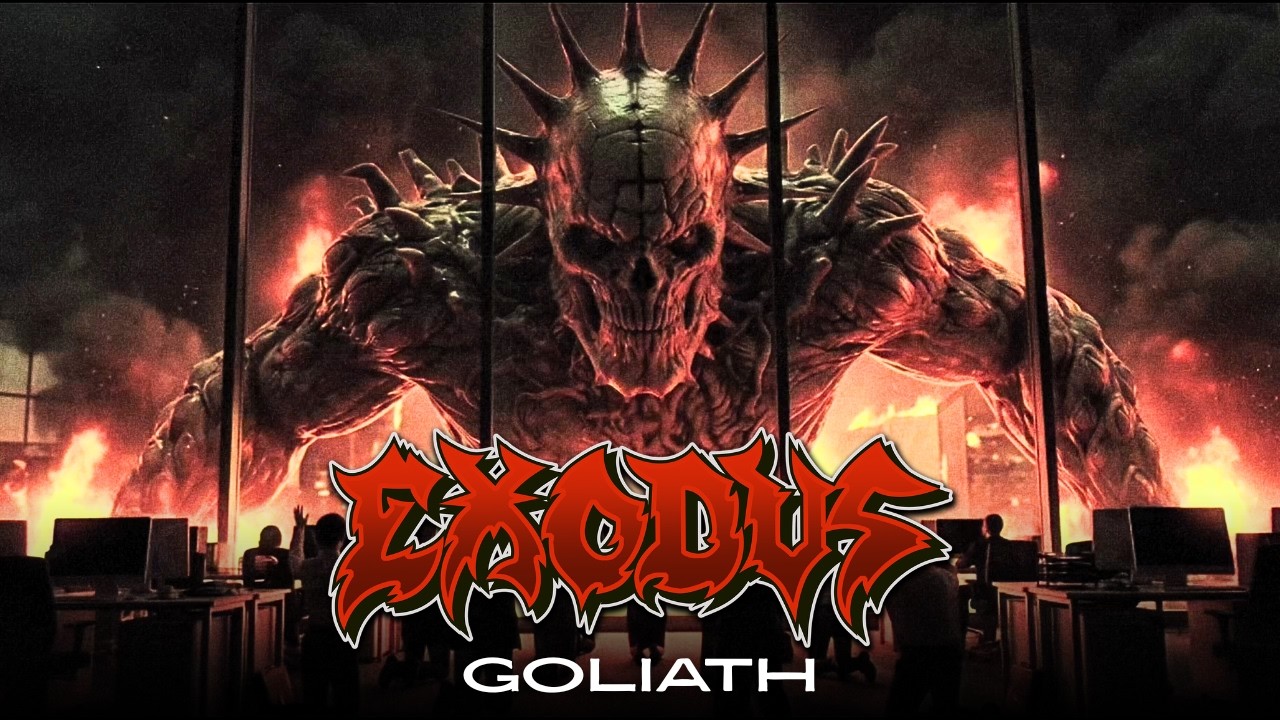
“I had four or five songs done going in, and we did the rest there,” Holt says. “It’s like how Queen and Deep Purple recorded. They sequestered themselves and started working together. We like doing that because we enjoy each other’s company. We have a great time hanging out. We call it Camp Crunch.”
Many bands that try to work in such a casual environment are easily distracted. That wasn’t a problem for Exodus, who powered through one song after another, captivated by their own sonic firestorms, driven by a passion for playing together and the challenge to continually evolve.
“I still love doing fast stuff, but I also love trying new things,” Holt says. “We want to do music that excites us. But if every song is just full throttle, it blurs together. You need moments where it breathes or gets weird.”

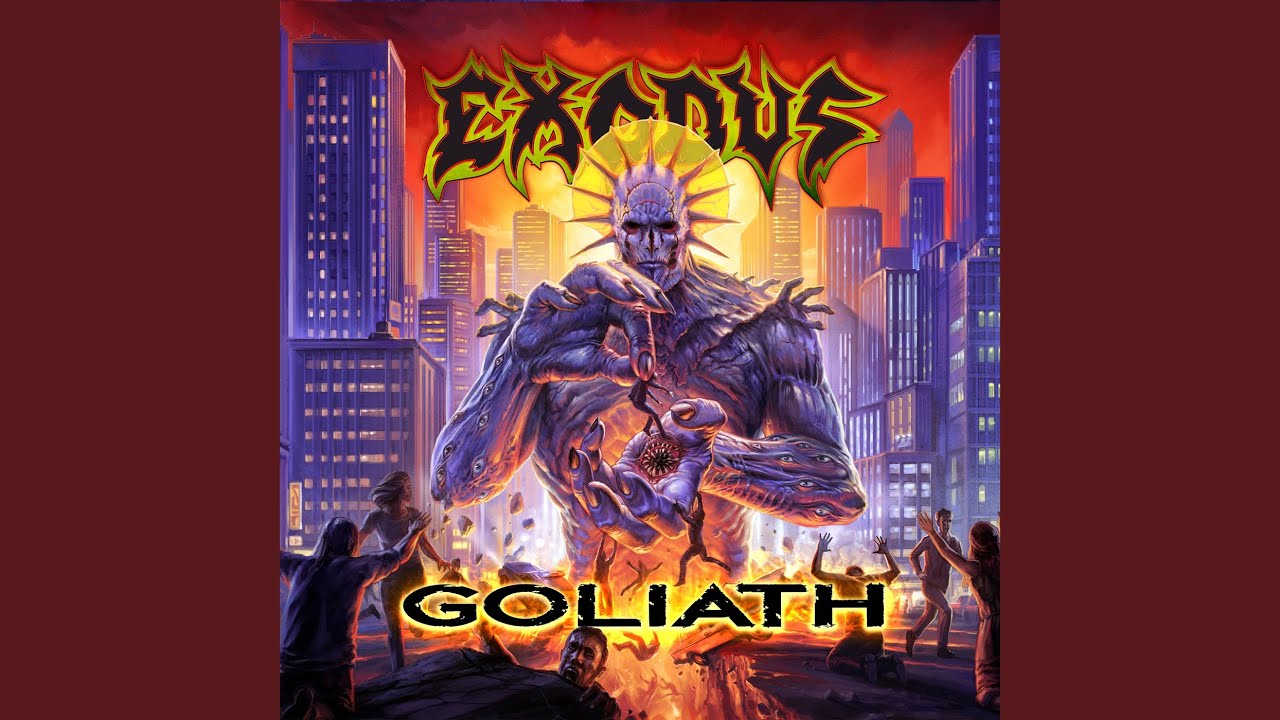
Goliath ticks all the boxes. A dense, sprawling record that alternates between Bay Area savagery and slower, doomier passages, the album captures Exodus at their most inspired, unleashing new songs that showcase their talents as songwriters and players, illuminating a beast that has never lost its hunger or edge.
Tracks like Hostis Humani Generis and 2 Minutes Hate prove Exodus slam as hard as ever, while 3111, The Changing Me and Violence Works reveal a band as forward -thinking as it is powerful, drawing from a well of ominous textures, infectious hooks and quirky licks.
It’s a career-defining statement, but definitely not the final blow. When they were done mixing and mastering Goliath, Exodus had eight fully recorded tracks left that will appear on their next record.
“We will not go silently into the world of legacy acts who don't make records or don't make records that count,” Holt says. “We’re an album band. We’re not going to suddenly start releasing two songs at a time and then tour on that. And we’re not going anywhere. I’m going to do this until the day I die.”

You recorded 18 songs during your sessions with Mark Lewis. Did you choose the cream of the crop for Goliath?
Gary Holt: We chose the songs that made the strongest record right now. The other stuff isn’t weak. The songs are just as good. They just belong on the next one.
Lee Altus: The hardest part was deciding which songs would make this album and which to save. You don’t want to front-load one album and make the other one feel like leftovers. We argued – in a good way. Everybody had opinions about which songs belonged where, and that reinforced for me that we all believed in the songs and the material was strong.
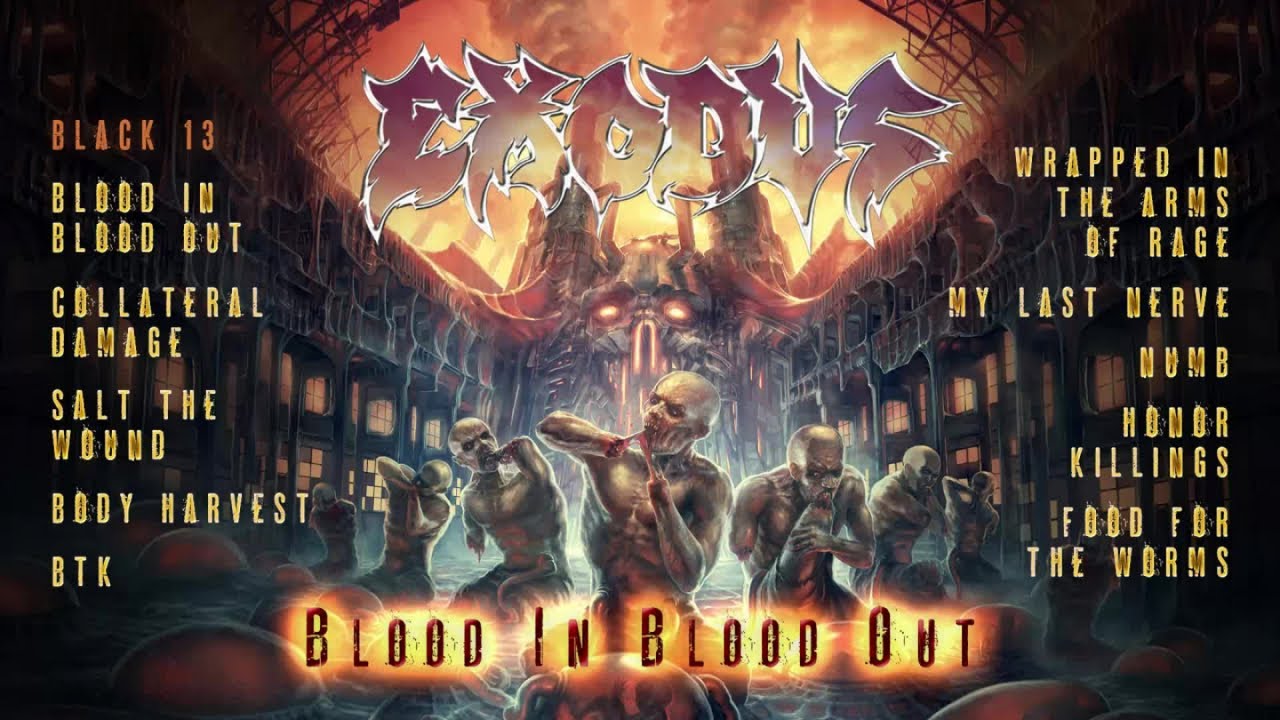
Did you write together?
Holt: No, Lee didn’t stay in the rental. He worked on his songs at home. I wouldn’t even listen to his songs until they were done. At one point he goes, “What, you haven’t listened yet?” And I’m like, “No, I’m working on other stuff. You have carte blanche. I trust you. Go for it!”
Altus: That trust is huge. When I send something to Gary, I’m not worried if he’ll want me to redo something or whether it fits. Once it’s done, it sounds like Exodus. I was a huge Exodus fan before I joined the band and he and I share many of the same influences.
Do you have different approaches to songwriting?
Altus: I always say Gary writes like he makes moonshine, and I write like I make wine. Gary pumps out riffs nonstop. He amazes me. I reject riff after riff. It takes me a long time to find one I’m happy with. Sometimes, I’m too picky. Gary will say, “When are you going to be done with this song?” And I’m like, “It’s not good enough yet.” Every time, I’m terrified, and then eventually I calm down and start writing again.
Holt: I just think Lee’s stuff ferments longer, but he brings an amazing sense of melody that adds another voice to the music. On this album, The Changing Me was all him and it’s killer. And so was 3111.
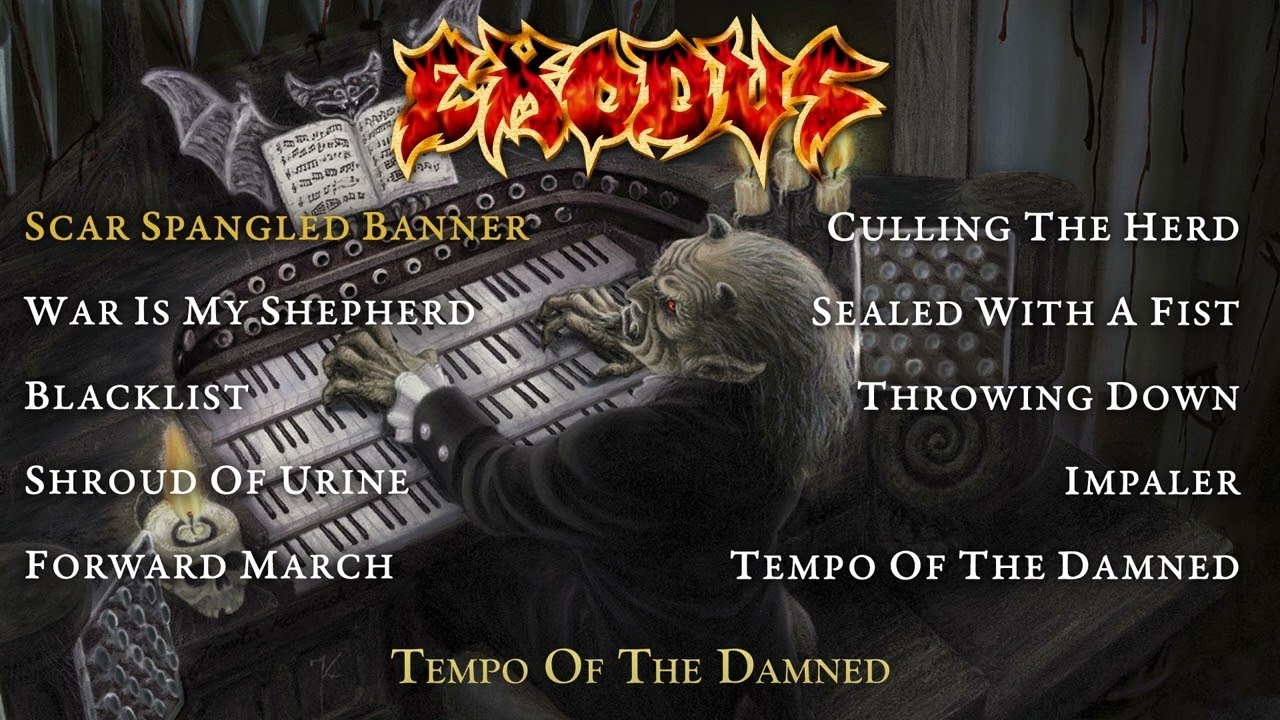
3111 starts with an ominous intro before turning into full-on thrash. How did that come together?
Altus: I was sitting around jamming and I came up with this slow, eerie part that reminded me of Black Sabbath. I went with it, but then I didn’t know where it was going to go. It could have been its own song. I kept working on it, and it developed into its own thing almost on its own. It showed me what it wanted to be.
Goliath is murky and doomy and uncoils like a prehistoric snake as it progresses through a cavern of intertwining licks and gut-churning bends.
Holt: I wrote the opening riff, the verse riff and Jack’s bassline in 1999. We were spun out on meth at the time. I’d go to the rehearsal room, crank everything insanely loud and just jam on it. It was originally in drop A. We always called it The Creepy Song. I tried to finish it on every album since [2004’s] Tempo of the Damned. But every time I picked it up, I couldn’t separate it from that drug-addled mindset, and I’d get stuck.
What unlocked it?
Holt: Maybe I was finally far enough away from who I was back then. Maybe I stopped overthinking it. I sat down with a laptop in the trailer I have on my property, and I pulled up the right [Toontrack] EZdrummer beat. After all that time, it just flowed – chorus, harmonies, everything. I finished it in one afternoon.
I sent the demo to Tom, and the first thing he said was, “You did it!” That was the most triumphant feeling. It’s my favorite song on the album. It’s dark, sinister and sorrowful – beautiful and depressing at the same time.

It’s augmented by mournful strings that play over a fast, precise guitar part.
Holt: While we were tracking, I kept hearing violins in the middle section. We brought in a local violinist just to see if the idea worked. It wasn’t usable, so we sent it to our friend Katie Jacoby, who toured with the Who. I told her, “Give me maximum sadness.” She sent back 18 tracks of strings and they were perfect. It sounded like something [composer] Michael Kamen would’ve done. It elevated the song beyond anything I expected.
When you released Bonded by Blood in 1985, could you have imagined hiring a violinist for the Who to play on your record?
Holt: I don’t know. We used horns [on our cover of the Rolling Stones’ Bitch for Force
of Habit in 1992]. Anything’s possible.
Lee, you played an EBow on that song.
Altus: I’m an EBow freak. People think it’s keyboards, but it’s guitar. I ran it clean – no overdrive. Just pure sustain. You can distort it, but I wanted sweetness and melody – something creeping around in the background.
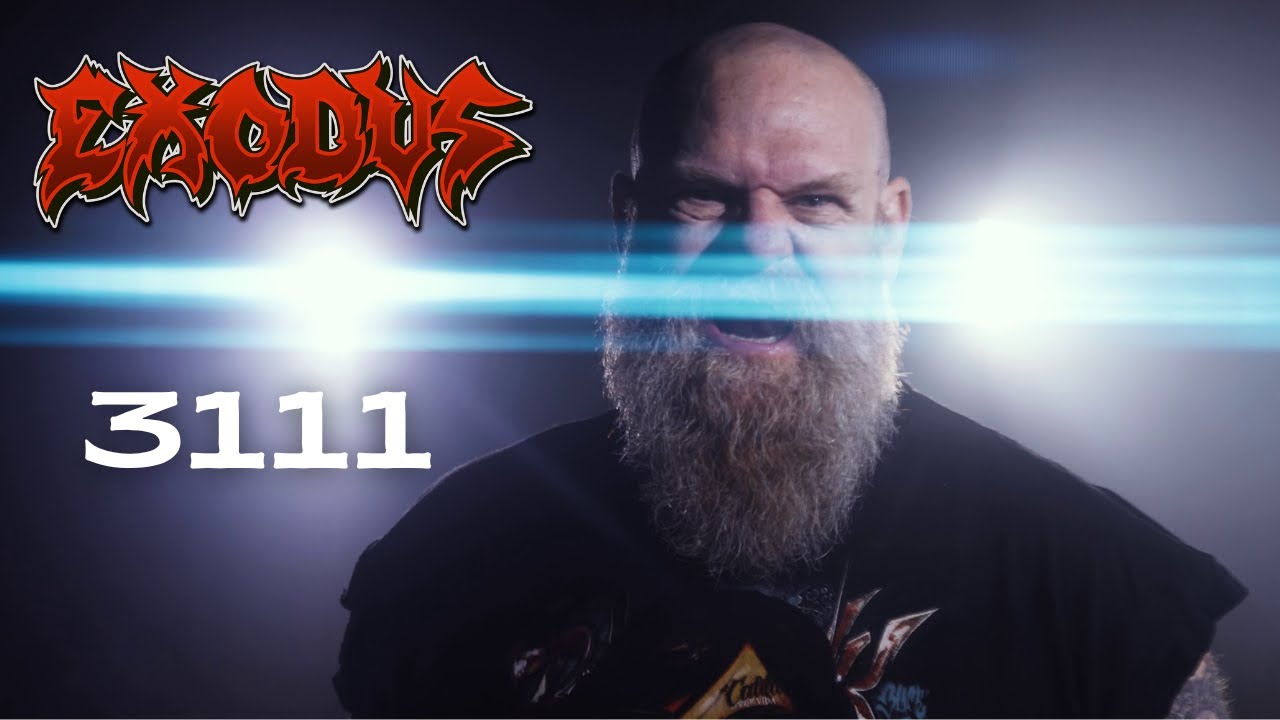
There’s a strong, melodic backbone throughout the album, even when it’s punishing.
Molotov cocktail riffs are easy. Anybody can do that. The stuff that stays with you is what matters
Gary Holt
Altus: I’ve always gravitated toward melody, no matter how heavy the music is. That’s what grabs me. If it doesn’t have that, it doesn’t stick.
Holt: Molotov cocktail riffs are easy. Anybody can do that. The stuff that stays with you is what matters.
Exodus are pioneers of thrash, but do you sit around listening to metal or follow the scene?
Holt: All I listen to is Adele. If you ask me what my five favorite musicians are right now, they’re all Adele. She’s one of the greatest voices ever, and if you listen to her records, outside of the hits, there’s world-class piano playing. Most of it is just her and the piano, and I love listening to piano.
Altus: Good music is good music. I’m not sitting around listening to metal all the time either. One of my all-time favorite bands is ABBA. I grew up on Deep Purple, Black Sabbath, Thin Lizzy, Judas Priest, Scorpions, Iron Maiden. That stuff is still what I go back to, but I love lots of other things.

Do you think the experimentation in your sound and your willingness to step outside the box comes from your appreciation of genres outside metal?
Holt: Maybe. I don’t sit there listening to Adele thinking, I’m going to put pop music into thrash metal. But I’ve always liked pop. I was listening to Madonna on the Exodus tour in the Eighties with Venom. Prince is my hero. There’s probably more Prince influence in Exodus than anyone would ever notice.
Listen to Violence Works. Until the riff comes in, it sounds like we've lost our minds and have done a disco song. To me, Promise You sounds like Blackfoot meets Discharge. There's never a rhyme or reason to why it all happens. We just follow the riff.
Goliath exhibits a hungry band going for the throat while striving to be innovative. Was something in particular driving you?
Holt: We just wanted to make songs we liked. We didn’t go in thinking about how to top Persona Non Grata, and we never go in and say, “Okay, what’s next?” We go in thinking, “Does this excite us right now?” If it doesn’t, there’s no point.
Altus: Also, we’re not young anymore. We’ve lost a lot of heroes and we’re aware anything could happen at any time. That’s just the reality. You just give it everything you’ve got left in the tank and put it into the record. There’s no reason not to.
Your lead styles are distinct yet complementary.
Altus: I like a little bit more of a sweet tone, so I use a bit more chorus and delay. Gary likes it a little bit drier and in your face. He always jokes that he’s got three licks and he milks them back and forth. But Gary comes out and shreds. I’m more about melody. That’s why it works; you don’t want two guitar players sounding the same.
He’s the whammy-bar guy. I come from more of a classical background so I think my solos might be a little more melodic than Gary’s. We used to joke and call him "Gary Bar" because he was so good with the whammy. He’s the Jimi Hendrix of metal.
Holt: I did strangled-cat whammy solos on 3111 and Hosti Humani Generis. When I realized they were back-to-back in the running order, I went back and redid one so they wouldn’t feel the same.
When I was learning Slayer songs, there were plenty of parts where I thought, “That’s a very Exodus-y riff.” I guess we’ve always influenced each other
Do you think playing for Slayer rubbed off on Goliath?
Holt: I’ve probably absorbed some of that subconsciously. But when I was learning Slayer songs, there were plenty of parts where I thought, “That’s a very Exodus-y riff.” I guess we’ve always influenced each other. It just happened organically and we both went with it without thinking anything of it.
Could you picture Slayer recording together again?
Holt: No. Slayer's done recording and touring. But everybody’s enjoying each other's company and having fun at these occasional shows. And the world's a big place. Slayer can pop up in a lot of different places for many years and never be in the same spot twice. That’s all up to [vocalist and bassist] Tom Araya and Kerry King. I don’t make those calls. But when they call, I show up.
Gary, You’ve talked about writing on GarageBand. That’s kinda primitive.
Holt: I love GarageBand. It’s easy and I know what I’m doing, so it’s great for demos. I’ve got my own plugins and I’ll use one EZ Drummer beat through the whole song and never change it. Sometimes it freaks Tom out because it’s six minutes at 230 bpm. I’m like, “Relax – this part’s halftime.” I’m just too lazy to program the changes. I’ll let you know where they go.”
Altus: I was also kind of a dinosaur. Until this album, I wrote everything on a four-track. People kept telling me, “Never mind the 21st century – you need to move into the 20th.” I loved my four-track, but I was constantly bouncing, and by the time I sent the demos the quality was terrible. This time, I tried going digital. I used Cakewalk and learned the basics pretty fast. I thought, “If I had this earlier, I probably would have written another 10 albums by now.”
What was your amp setup like in the studio?
Holt: We tried a bunch of amps, then we rolled in my touring Marshall Jubilee, plugged it in, and that was it. For rhythms, it was just like Persona Non Grata. I used a 1984 Yamaha SPG-3000 – perfect intonation, killer guitar.
For leads, my ESP Custom Shop Eclipse, and for whammy stuff, the old Jackson Strat from the Toxic Waltz days. For the harmony section of Goliath, I played my Brian May BMG Super with Tri-Sonic pickups, which sounded awesome.
![Exodus - Strike of the Beast [Live Wacken 2008 DVD] HD - YouTube](https://img.youtube.com/vi/He6DJatWIZ4/maxresdefault.jpg)
You’re both endorsed by ESP.
Holt: They’re awesome. They made me a couple of Vs that I use all the time. They’ll build me anything. I send them ideas. I’ll say, “Okay, I want a cop badge on the body of this one and I want all the inlays to be bullet shells that I'm going to send you.” At first, they didn't think they could import them into Japan – even spent shells. But I said, “No, they have to be the ones I send you.” I selected shells that were .50 caliber down to .22. And they made it work.
Altus: I was with Jackson to begin with, but I switched to ESPs in the Nineties and I’ve been with them ever since. I have two ESPs. I love them because they’re great for metal but they’re versatile. Some of the ESP Eclipses I play are better than Gibson Les Pauls.
James [Hetfield] sent me a couple of his ESP Snakebytes to try, and they play great, too. He was like, “Why don’t you make your own model?” I'm like, “How am I going to top this one?” Somebody else did it for me.
Lee, you play with a Quad Cortex modeler onstage.
Altus: I was going through Marshall amps to Diezel amps to my Mesa Boogie. But now I’m using the Mesa tones on the Quad full time. We A/B’d it against real amps, and live, you can’t tell the difference. The convenience wins, especially when you’re flying to South America and don’t know what backline you’re getting.
Holt: I still tour with my amps when I can, but I use the Quad as a preamp on fly dates. I feed it into the effects return of rental amps.
Exodus still tour quite a bit, which bands have to do since no one’s going multi-platinum anymore. But as musicians age, playing wild, high-energy shows isn’t as easy as it used to be.
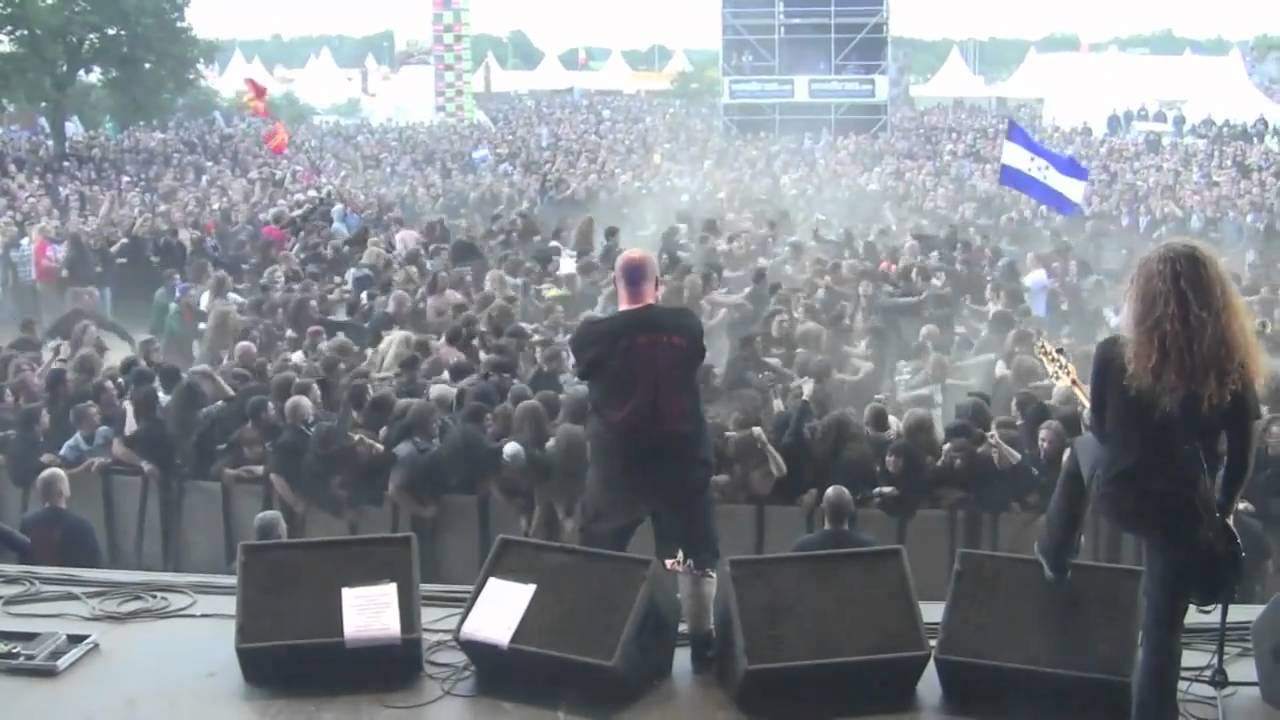
Holt: Physically, this kind of music isn’t easy anymore. I blew my neck out headbanging at the Blue Ridge Rock Fest a few years ago. I couldn’t turn my head for six months. But I still do it. I have a chip on my shoulder that drives me.
What inspires that chip, and does it make you bitter?
Holt: I’m well-adjusted and super-happy in life. But Exodus as a band, we’re like, “Why does Testament get this and some other band gets that? We stomp all those bands live.” The bigger the chip on the shoulder gets, the harder we push ourselves. It’s a positive force. It’s why we still kill it onstage. It’s why we still bang our heads the way we do. It’s bad for me, but I almost can’t help it.
Have you had neck surgery like Dave Mustaine, Tom Araya and others?
Holt: I had clinical-grade whiplash from the Blue Ridge show; I thought I blew a disc. They gave me an MRI and said it looked like I’d been in a car crash. But no surgery. I dodged a bullet. The problem was, we hadn’t done a show for six months and then I went out there and acted like I always do.
After 40 years, what keeps this exciting?
Altus: Those little moments in the studio when someone finally gets it and everyone high-fives. The fact that we still care – that’s the win.
Holt: If we’re lucky, other people like it too. But first, we have to love it. I still love playing shows. I just don’t like hurting my neck.
With Slayer and Megadeth retired from recording, would you like to think of Exodus as Big Four studio survivors, along with Metallica, Anthrax and maybe Testament?
Holt: I’ve never concerned myself with the Big Four. I always felt like we’re the holders of the torch anyway. People ask, “Do you feel upset you were left out?” And my answer is always the same. I know where I was when this was invented. And I know where other people weren’t. That's enough for me. I don’t need someone else to rewrite history because I was part of it.
- Goliath is out now via Napalm
- This article first appeared in Guitar World. Subscribe and save.

