


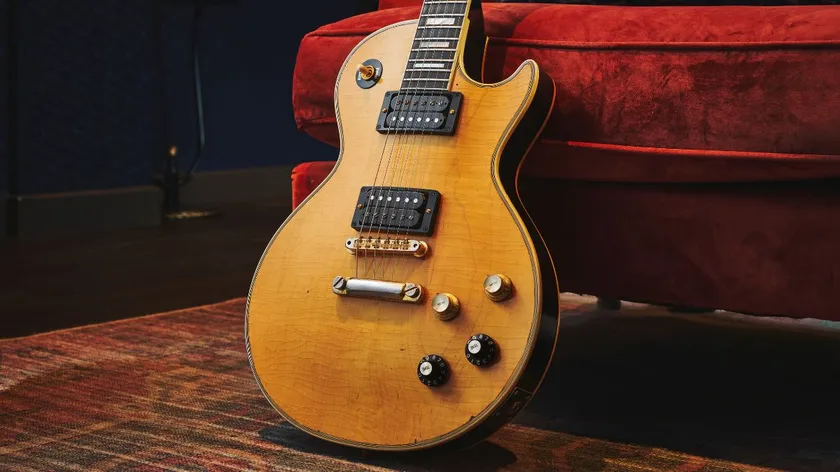


For about 11 months, I had no guitar and no amp. To non-musicians, that might sound inconvenient. To me, it felt like having part of my nervous system removed.
The situation was born out of some unfortunate personal circumstances – due to a death in my then-partner’s family, I sold my Ibanez JPM Petrucci signature and a full amp rig for way less than they were worth to buy plane tickets. Then I found my other JPM had disappeared in my absence.
Living without my guitar made one thing abundantly clear to me: music isn’t just something I do – it’s how I make sense of the world. So when the chain breaks, the loss doesn’t land like a normal career setback. It’s your livelihood and your life.
This mix of professional and personal identity is something most musicians experience. I’ve long had back issues and used to joke with one of my bands that if it ever got so bad I couldn’t walk, they’d have to strap me into a bed like Hannibal Lecter and wheel me onstage. But the intent was real: when music is who you are, you’ll endure almost anything to keep playing.
At the same time, it’s become harder to make a living purely as a touring and recording artist. There’s a running joke in touring circles that modern musicians are really just travelling T-shirt salespeople. We all know the economic structure has shifted, yet the way we think about the role hasn't really caught up.
When music is your identity, these structural changes feel personal. Streaming killed your album income? That feels like the world saying your art doesn’t matter. Can’t afford to tour without a day job? That feels like a failure.
But it isn’t. The musicians I know who are still standing aren’t the ones who went the hardest. They’re the ones who built a foundation for themselves so they could keep going.
My guitar-less period ended when a mate at a guitar shop let me walk out with a guitar without asking for a cent. He didn’t even know where I lived. He just trusted me.
The first gig back was in front of about 2,000 people. My rig was a Boss MT-2 Metal Zone into an old Peavey solid-state bass head. The sound engineer said, “You can’t polish a turd.” I didn’t care. Just having strings under my fingers again felt like life returning.
Ultimately, I got lucky, but not everyone does. Here are some things I wish I’d known earlier…
Know your real number
Work out what it actually costs you to play – rehearsals, travel, gear maintenance, lost shifts. Not roughly. Sit down and add it up, without rounding the figures or planning only for best-case scenarios.
Once you can see the real figure, you can plan for it and make informed decisions, instead of absorbing expenses until something snaps. If you need a job to cover that number, that's not defeat – that’s a foundation.

Build your identity wider, not smaller
When music is who you are, every setback gets emotionally amplified. A cancelled show feels like a cancelled life. Being left off an album or pushed out of a band can feel like a verdict on your existence, rather than a rough season.
Learning to hold on to your identity as a person and musician and separate that from the external validation is something most of us never get taught. However, even the most devoted player will hit a season where the gigs dry up, or they face a physical setback.
If music is the only thing holding you together, that season will feel like the end. If it’s the center of a life that has other supports around it, you’ll ride it out – and you’ll come back stronger.

Plan for the quiet seasons before they arrive
Tours end. Bands break up. Bodies say no. If you’ve built your entire life around gigging and nothing else, those gaps can feel like freefall. Having something ready – whether that’s teaching, session work, writing, a trade, or anything that keeps the lights on and your head straight – means the quiet patches become opportunities for recharging, not crisis points.

Don’t wait to protect what’s most important
Your relationships matter. Isolation distorts everything, and the people at home are carrying weight you don't always see. Your health matters, because if your body goes down, the music goes with it. Your finances matter, because constant panic about money will poison the thing you love faster than anything else.
The important thing to note is that you don’t need to be in crisis before you’re allowed to step back, set a boundary, or ask for help. Early is better than broken.
Learn the difference between devotion and self-erasure
Musicians are wired to push through. We treat rest like weakness and stubbornness like virtue. But there’s a difference between devotion and self-erasure.
Psychologists will tell you that this coping mechanism (of placing your personal needs lower and lower down the list) actually leads to greater disconnection with your true self. That’s not good for you as a person, and it’s certainly not going to help you as an artist…

It’s the same job
The strange comfort in all of this is that if music really is part of who you are, it doesn't vanish just because a band ends or life knocks you sideways. That’s what I came back to after those months without a guitar. I hadn’t lost music – I’d lost my access point to it for a while. The second the strings were back under my fingers, it was all still there.
Getting a job so you can eat and pay rent is not giving up. Taking a break from touring isn’t quitting. Setting boundaries isn’t weakness. It’s how you make sure you’re still playing in ten years, not just surviving next month.
If the music really lives in you, then looking after yourself isn’t separate from looking after the songs. It’s the same job.
Have you been affected by the issues raised in this article? Support for musicians is available from the following bodies...
- Help Musicians (UK): 0808 802 8008
- Support Act (Australia): 1800 959 500
- MusiCares (US): 1-800-687-4227

