





It is a curious truth of the music industry that while some artists chase fame their entire careers, others are dogged by the megastardom they never wanted. Chris Rea – who died shortly before Christmas at the age of 74 – was the most reluctant of rock legends, comparing himself to a captive monkey in one interview with this writer and bemused by the gulf between the music he really wanted to play (deep slide-blues) and the clutch of chart hits that made him one of the bankable names of the late ’80s and early ’90s.
Born in Middlesbrough on 4 March 1951, Christopher Anton Rea was the son of an Italian ice cream mogul with whom he had a strained relationship (“Dad was a distant figure,” he said, “a cross between the Pope and Mussolini”).
First obsessed with race cars, which he recalled as the sole flash of colour in the industrial north, Rea didn’t start playing his first Höfner Verithin until he was 21, inspired by contemporary slide masters Ry Cooder and Lowell George, alongside the Delta giant Charley Patton.
“I heard him accidentally, on me mam’s radio in her bedroom,” he told The Blues magazine of the latter. “My God. It was one of those unbelievable sliding-door moments, an emotion that clicked with me. I’d always thought, ‘Well, I could never be a singer with this horrible voice.’ I always hated it. But his voice sounded like mine.”
Despite that late start, Rea proved a supple, soulful player, even if he shrugged off such praise in person (“I don’t think I’m any good, really”). Yet from his earliest days as a signed artist, he felt thwarted by industry forces, hating 1978’s debut-album single, Fool (If You Think It’s Over) – “It’s the only track I never played guitar on, which tells you something about the spirit of it” – and looking enviously across the studio floor at Dire Straits when they appeared together that year on The Old Grey Whistle Test.
“I knew that was what I should be doing,” he told Classic Rock. “But it was too late. If Mark Knopfler had asked me to join that night, I would have. And I’d have gone to court with my record company. But they’d have let me starve, rather than let me go.”
Rea’s commercial boom years were musically more satisfying, broadly spanning from 1986’s On The Beach (home to the earworm title track), through 1989’s The Road To Hell (its glowering travelogue a classic rock perennial), to 1993’s Espresso Logic.
He didn’t sniff at the royalties for 1988’s inescapable Driving Home For Christmas, either (“If I don’t hear it, it means I can no longer go on holiday”), but considered his best work to have gone unheard at the band’s bluesy soundchecks (“We’re playing away, happy as pigs in shit”).
All the while, Rea cultivated his image as the anti-rock star. Visiting his home in rural Berkshire, journalists would find him slouched in a paint-flecked t-shirt, manning a chaotic music space that looked like a teenager’s bedroom – the priceless Strat he had played on The Road To Hell often just lying there among the detritus.
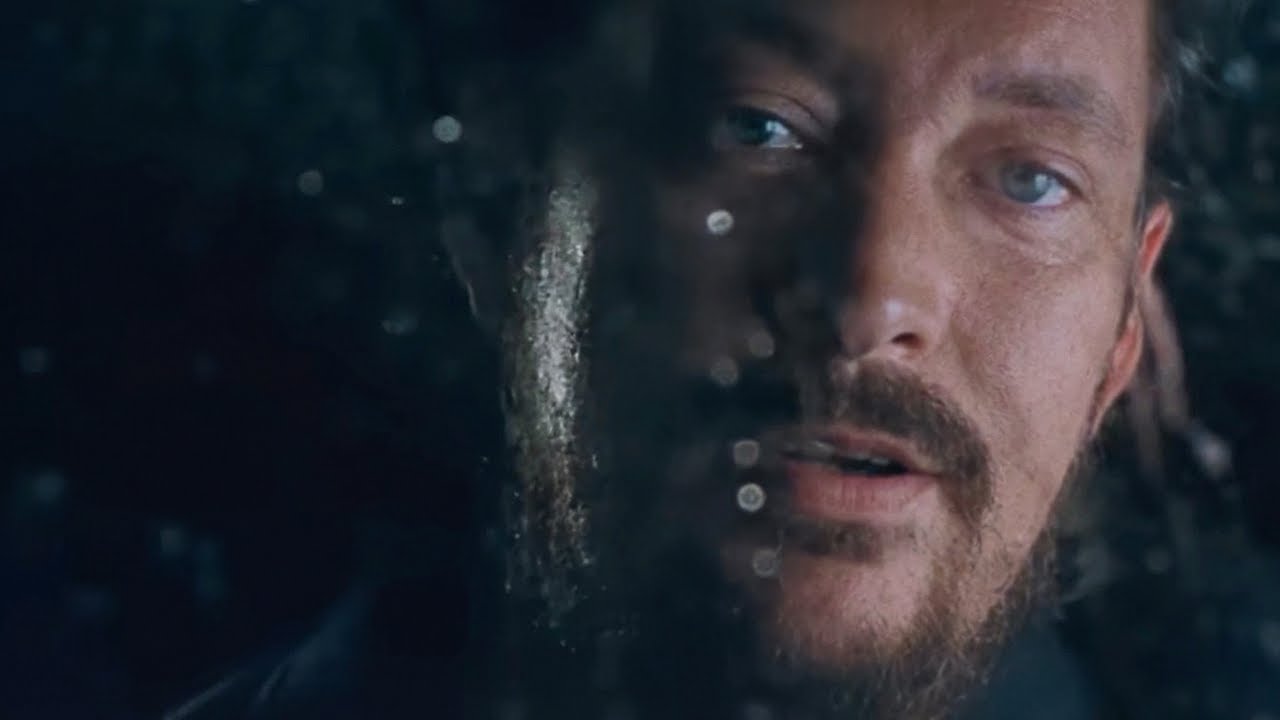
He hated photoshoots, but as an interviewee Rea was unforgettable: plain-spoken, damningly clear-eyed about the business and long past the point of fearing recriminations. With the exception of David Gilmour, he told this writer, most top-flight musicians were “c***s”. He promised me: “I will one day write the book that shows just how massive some of these egos are.”
Rea said his long-standing health issues – which included pancreatic cancer in 2001 and a major stroke in 2016 – had been the making of him, softening him from an angry, paranoid curmudgeon to a man who suddenly saw what mattered in life (“Before I was ill,” he told The Blues, “I was extremely intolerant, very aggressive”).
Yet these warning shots also lent his death on 22 December a sense of the inevitable. Regardless, and much as he’d protest, Rea will be remembered as one of the big figures of late 20th century British rock, with a catalogue that deserves far deeper drilling.
- This article first appeared in Guitarist. Subscribe and save.

