




What has Steve Howe left to prove? A legend of progressive guitar, he has put his name to some of its most expansive compositions, pushed the limits, hunted down new sounds.
But as he tells Guitar World, it was never just a question of raw musical technicality – the key was letting his imagination run wild.
What was your first guitar?
I wanted a guitar when I was 10, but it took until I was 12 before my parents gave in. We went to a shop in King’s Cross in North London, and they had guitars hanging up, including a few electrics, but I was interested in an archtop with F-holes.
For about £12, I got this foreign-made-six string archtop with F-holes that looked like a Framus but wasn’t. I struggled on that guitar for a couple of years.
What was the first song you learned to play?
Tea for Two, a simple tune with three notes. But I pretty much immediately progressed from that, because at the time it was all about instrumental bands like the Shadows with twangy guitars, which was just before the Beatles came out.
What was your first gig?
It was at school, when I was about 14. There was this kid who was a drummer, and one day he said, “Let’s put a band together and do a show!” I don’t think we rehearsed or tuned up; we just showed up and played the gig by calling out Shadows tunes like The Frightened City and Apache. Honestly, it was awful and we sounded terrible.

Ever had an embarrassing moment on stage?
One day, I had a beer and was playing the 175 and I suddenly dropped the guitar, which landed on the jack plug and broke the socket. I was horrified and heartbroken
I got my Gibson ES-175 in 1964. I cherished that guitar – it was totally gorgeous. One day, I had a beer and was playing the 175 and I suddenly dropped the guitar, which landed on the jack plug and broke the socket. I was horrified and heartbroken.
I took the guitar to be repaired. The one thing that came out of that experience was that I never got drunk again. Playing guitar and drinking – those things are stupidly incompatible. I had found out that playing guitar under the influence of alcohol was a complete and utter no-no.
What’s your favorite piece of gear?
The Line 6 Helix. While it’s not perfect, it is incredible. It’s as good as I found it gets, as there’s a couple of tricks it can’t do. It doesn’t do a lot of great wahs or Leslie cabinets, but – other than that – it’s the most compatible piece of equipment for me.
The building is burning down; what one guitar from your collection would you save?
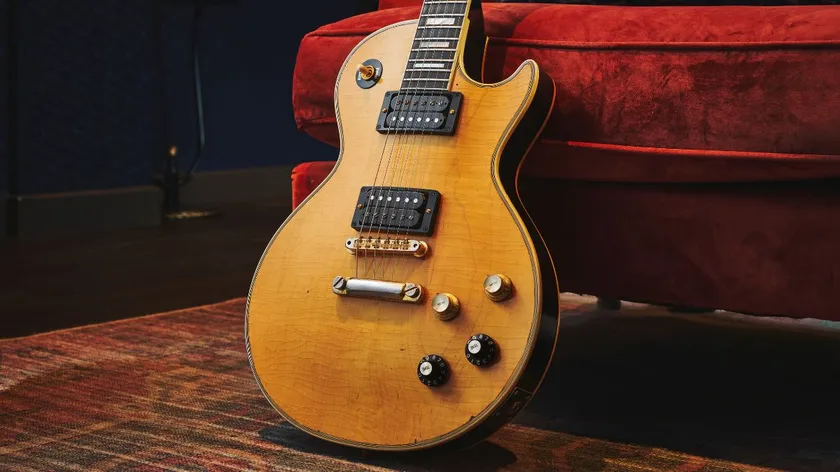
The Gibson ES-175. That’s the key guitar. I’d like to save my [Martin] 00-18s as well, but if it was just one guitar, it would have to be the ES-175.
What was the last time you practiced and what did you play?
I’ve been playing guitar for 64 years or so, and there’s going to be things I’m never going to be able to do
Yesterday, and I played my solo pieces. The way I keep my guitar playing fluid is that I play my solo pieces like Clap and Mood for a Day and the 30 others I have. I can choose any of those and just tell myself to play it perfectly straight off, even if I haven’t played it for two years.
Basically, that’s a pretty tall order. I’m telling myself, “Let’s see if I can play that right.” And while I have to still practice some of the fiddly bits of lead guitar, my stability really comes from playing those solo-performance pieces.
What aspect of the guitar would you like to be better at?
I’ve been playing guitar for 64 years or so, and there’s going to be things I’m never going to be able to do. I’ve resigned myself at this happy age [78] where I say to myself, “I do this stuff, and I like doing this stuff and it ain’t too tricky and it doesn’t drive me crazy,” but there’s a lot of things I just can’t do.
I’ve got the greatest respect for classical and jazz musicians in the way that their musicality is far greater than mine. But my imagination and inventiveness, most probably, is far greater than 90 percent of those classical and jazz musicians, because that’s what I’ve developed as a guitarist.
What advice would you give your younger self about the guitar if you could?
“Don’t drink and drop your best guitar” would be first! Besides that, it’s to learn to be organized. I was quite lucky in that I got over the stage fears and worrying about that in a couple of different ways. Initially, I found a way of touring for years and years, where my personal preparation was completely secret and completely my own.
In 2001 that changed, where to get ready for a show now became a ritual. It takes about 45 minutes or an hour, minimum, for me to get prepared. During that time, basically, you need to get out of my face. I don’t want to see you. I don’t want to see anybody; I just want to get myself ready.
I think the performance is not only about the moment, as you’ve got to be in the moment, but also about the preparation for that moment. I use techniques now that are very different from those that I used pre-2001. I enjoy that sense of organization.
- This article first appeared in Guitar World. Subscribe and save.

