




He might have joined the Haunted a full 17 years after the group formed, yet to metal guitarists, Ola Englund’s face is far more recognizable than those of his bandmates – even though bassist Jonas Björler and drummer Adrian Erlandsson were original members of Swedish death metal pioneers At the Gates.
How has Englund eclipsed the celebrity status of the rest of the Haunted? Simple. Since the early days of social media, Englund has been creating gear reviews, interview segments, on-the-scene reports, and other nuggets of infotainment that’ve turned him into a YouTube influencer. Englund has posted more than 2,300 videos on his YouTube channel.
His most popular one, Boss Metalzone – Worst Distortion Pedal Ever? has accrued more than 3.8 million views, and Visiting Dimebag’s Guitar Vault, has been watched more than 2.5 million times. Eleven of his other videos have more than a million views each.
“Doing the YouTube channel has definitely helped me get to where I am today,” says Englund, who had only played in underground bands before he started posting. “People recognized me from the channel and liked what I did. They liked my songs and riffs. A lot of them went, ‘Hey man, what's this dude about?’”
In 2007, after failing to ignite label interest with his bands Subcycde and Facing Death, Englund started the death/thrash project Feared and played their songs in his amp-testing videos. By 2010, he had developed a following and soon musicians were lending Englund their gear.
“These guys started saying, ‘It would be cool if you could borrow my amplifier and do a demo,’” Englund says from his Stockholm home shortly before shuttling off to a music convention in China to promote his Solar Guitars brand. “I’d drive around Sweden picking up and dropping off rare amps I borrowed so I could review them. I was probably one of the first guitarists that did that.”

Realizing the commercial potential of the channel, Englund quit his job as an accountant and focused exclusively on making music and videos. Then, in 2012, popular YouTuber Ben Eller recommended Englund to Six Feet Under frontman Chris Barnes. The death metal vocalist was looking for a guitarist to replace Rob Arnold; after watching Englund’s videos, Barnes brought him into the fold.
Englund toured with Six Feet Under for much of 2012 and co-wrote two songs for their 2013 album, Unborn. However, shortly after its release, he left to join the Haunted, replacing founding member Anders Björler.
“I had a great time playing with Six Feet Under, but it made more sense for me to be in the Haunted since they’re based in Sweden, too,” Englund says.
Englund’s first album with the Haunted, 2014’s Exit Wounds, marked a return to their melodic death metal sound following the more mainstream alterna-metal vibe of 2011’s Unseen. But after the record came out, the Haunted downscaled their activities while bassist and songwriter Jonas Björler and drummer Adrian Erlandsson focused on the comeback of their pioneering Swedish metal group, At the Gates.
What could have been frustrating for Englund turned into a blessing in disguise. Not only did he wind up writing three-quarters of the music for the Haunted’s thrashy 2017 album, Strength in Numbers, but he had more time to work on his YouTube channel, and by 2019, his user base had grown to more than 380,000.
“My channel never blew up in a traditional sense,” says Englund, whose site now boasts more than 900,000 subscribers. “It’s always been a steady grind, and I’ve had steady growth. I didn’t all of a sudden get that insane increase of views and then find no way to sustain that. I think that kind of crash is what makes subscribers leave. I just continue to do my thing and keep gaining viewers.”
In addition to ramping up his channel, Englund spent much of the past couple of years working with guitarist Patrik Jensen and Björler on new songs for the Haunted’s 10th album. The result, Songs of Last Resort, is a bracing slab of turbo-boosted death-thrash informed by cornerstones of metal, including Entombed, Carcass, Slayer, Testament, and Pantera.
“My biggest inspiration is probably Pantera,” Englund says. “I got into them and bands like Bolt Thrower and Testament right after I discovered metal. Dimebag was such a revelation. Soon after I fell in love with Pantera, I went out and got a black Dime Washburn. His guitar playing was like something to aspire to – not that I ever thought I could be that good. I just figured it was something great I could shoot for.”
As a guitarist, is it important to strive to play above your current pay grade?
I think so. I’ve aways liked working a lot and pushing myself. It keeps me on my toes and makes me not slack.
I’ve always liked coming up with riffs and songs, and that’s why it has been fun for me to constantly write new material for my YouTube channel
Some people live to tour and don’t enjoy being in the studio. You love recording.
I’ve always liked coming up with riffs and songs, and that’s why it has been fun for me to constantly write new material for my YouTube channel. I found out very early that all these YouTubers who played covers were getting shut down or demonetized. So I became adamant about only doing original stuff because then no one can tell me what to do or try to shut me down.
In addition to your work with the Haunted, you’ve released two solo albums and two albums based on riffs you wrote for your show, Sunday with Ola. Do you find it easy to write?
Not always. For the Haunted, doing an album is like putting together a puzzle where all the pieces are scrambled. You work on it, and at some point you get the whole wide picture. When you get to that point it’s very rewarding. But it’s sometimes frustrating until you get to that point.

Songs of Last Resort is an apocryphal title. Will this be the band’s last release?
It’s definitely not the last album. Letters of Last Resort is the last song, which is about letters that people in war would send back home. The album title is just a reference to that. Jensen took the lead on this album. He needed to write a bunch of heavy songs for some reason, and he tuned down, which is something we don’t do very often. The songs are so riff-based and evil-sounding. I did my part, but it wasn’t until Jensen was done with his songs that we felt like the album was complete.
You were born in Stockholm in 1981. Did you have a happy childhood or did adversity and conflict fuel your interest in aggressive music?
I had a very good upbringing. I come from a musical family. My dad has always played guitar and is a big fan of Chet Atkins and that chicken pickin’ style. He never pushed or pressured me to start playing, but he was very supportive. I picked up guitar when I was 13 and took lessons. The first riffs I learned were Smoke on the Water and Proud Mary. That was cool, but I was more into rock, and I wanted to play Nirvana songs.
That would explain why your first guitar was a Fender Mustang. What was your first amp?
I worked my ass off during the summer when I was 15 and used the money to buy a ’94 Mesa Boogie Rectifier with a cabinet. The thing is, I had no idea how to dial it. And no, I didn't use a boost because I didn’t know how to do that. It sounded very loud when I played it, but it wasn’t until I saw other people plug into it with guitars that had EMG pickups that I thought, ‘Wow, that sounds very different.’
That’s when I started understanding that they were pushing the pre-amp. That’s when I began reading about guitars, and I learned about how to use a Tube Screamer – you know, the Scott Ian trick – to get the guitar to really chug.
Did you ever play a seven- or eight-string?
Steve Vai played the Ibanez Universe and Meshuggah played seven-strings, so yeah, I went through that. I liked the fact that you didn’t have to tune the guitar down. It was already in B. So in 1997, I got the first production Ibanez RG7620. I actually traded my Washburn Dimebag for it. Then, in 2008, I went back to six-string since I’m a much better guitarist on six strings. It’s just one less string to worry about. And I almost always use standard D or drop-C tuning.
![The Haunted: Ola Englund [far right] with Swedish thrashers the Haunted, a band he joined after leaving Six Feet Under in 2013](https://cdn.mos.cms.futurecdn.net/8bdBtjbRAgpjz5xJnfxjV3-1200-80.jpg.webp)
Stockholm was the birthplace of some great death metal bands, including Entombed, Opeth, and Dismember. Were you part of that scene?
I was born about 10 years too late, but the scene they created was so cool. They all had the Boss HM-2. They dimed it, and that was the chainsaw sound of Stockholm death metal. I understand that type of simplicity because it came from kids in their rehearsal space. They wanted to be insanely heavy, so they turned the knobs all the way up and created the sound of a whole new scene.
Even though you were younger than the members of bands from the Gothenburg melodic death metal scene, did you feel a kinship with In Flames, At the Gates, and the Haunted?
I loved all that stuff. The name of my death metal band, Feared, was inspired by the Haunted; I always thought the Haunted was such a cool name, and I was a fan since the first time [I heard them]. I enjoy strong melodies in really heavy music, so when I joined them, it was a dream come true.
You went from being a guitarist in Feared and a struggling YouTuber to making a name for yourself in the internet guitar video community and joining Six Feet Under. Can you point to the moment that your upward trajectory started?
My big breakthrough came in 2012 when I went to NAMM for the first time. Before that, I was just doing videos, then sitting behind my desk seeing views on a screen, and I didn’t know if they were real or not. At NAMM, people recognized me and thanked me for my videos. It was really an eye-opener. I thought, ‘Wow, these are actual people, and a lot of them bought a certain amp because of me.’ That gave me confidence.
Was there a slow build from there?
Things happened right away. I was lucky I quit my job as an accountant because a month later, Chris Barnes called me about the Six Feet Under gig. I saw that as a fast ticket into the touring world. One of the first shows I did with them was at the Wacken Festival in Germany in front of 45,000 people. I was used to playing for 20 or 30 people at a pub. I went from zero to being on a tour bus.
To succeed with a YouTube channel, you have to constantly reinvent yourself. How did you up your game?
Up until 2015, I was just writing and playing music. There was no talking, just text on the screen. Then I started talking, which was insanely awkward – and it still is. But doing that definitely changed my whole channel. People got even more engaged because suddenly there's a voice behind this Swedish guy.
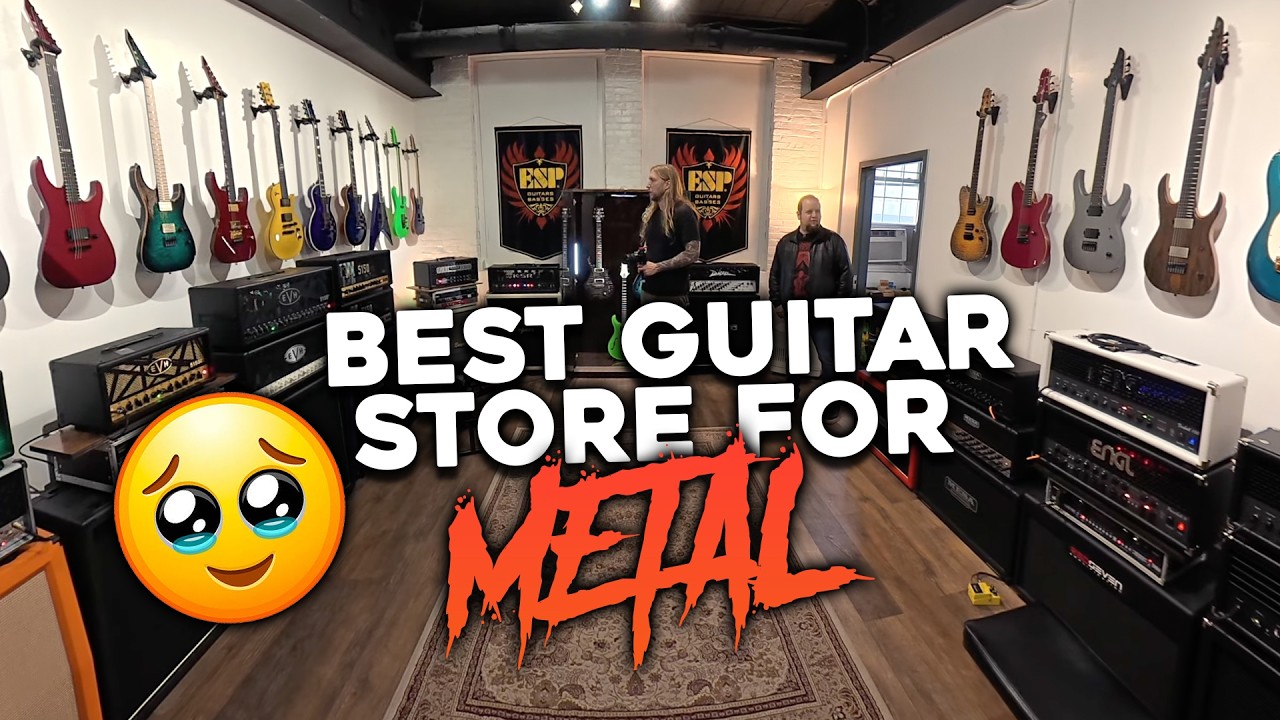
One of your popular segments has been the amp- and pedal-review series called Will It Chug? What inspired that?
I saw that everyone was doing performance demos and amplifier demos like I did. And I thought, ‘Man, if I’m going to survive this, I have to come up with some new ideas.’ I decided it would be fun to take a piece of gear and see if I can make it sound metal, and how long it would take. The first video was with an Orange amp, and they’re not necessarily made for metal. But if you put in a Tube Screamer in there, it’s going to be metal as hell.
You have a conversational, sarcastic, and sometimes self-deprecating approach in your videos.
I just cannot play these clean, super-plexi amplifiers, so I won’t make the video. It makes me feel terrible about my playing
A lot of that comes from being Swedish. We definitely appreciate sarcasm. I try to be myself because on YouTube you create your audience and their expectations, so if you're pretending to be someone else, you're going to always have to be that person.
Very early on, I decided, ‘Okay, now I’m just going to show you exactly who I am, and if you don’t like it, don’t watch.’ It makes everything simpler because I don’t have to put on a persona.
What’s a particular piece of gear you expected to love but sounded like crap?
Usually, when there’s something really bad, I don’t make the video because once I start doing a video I have to be honest, and if something breaks or sounds like ass, that will stay in the video.
Also, sometimes a piece of gear is good, but it’s not right for me. Take the Synergy Marshall JMP, for instance, which is basically a JMP in a small, Synergy pre-amp module. I cannot play anything good on that thing. But I watch all the other YouTubers out there, and they make it sound incredible. So it’s more like, ‘Okay, I think I'm the problem.’ I just cannot play these clean, super-plexi amplifiers, so I won’t make the video. It makes me feel terrible about my playing.
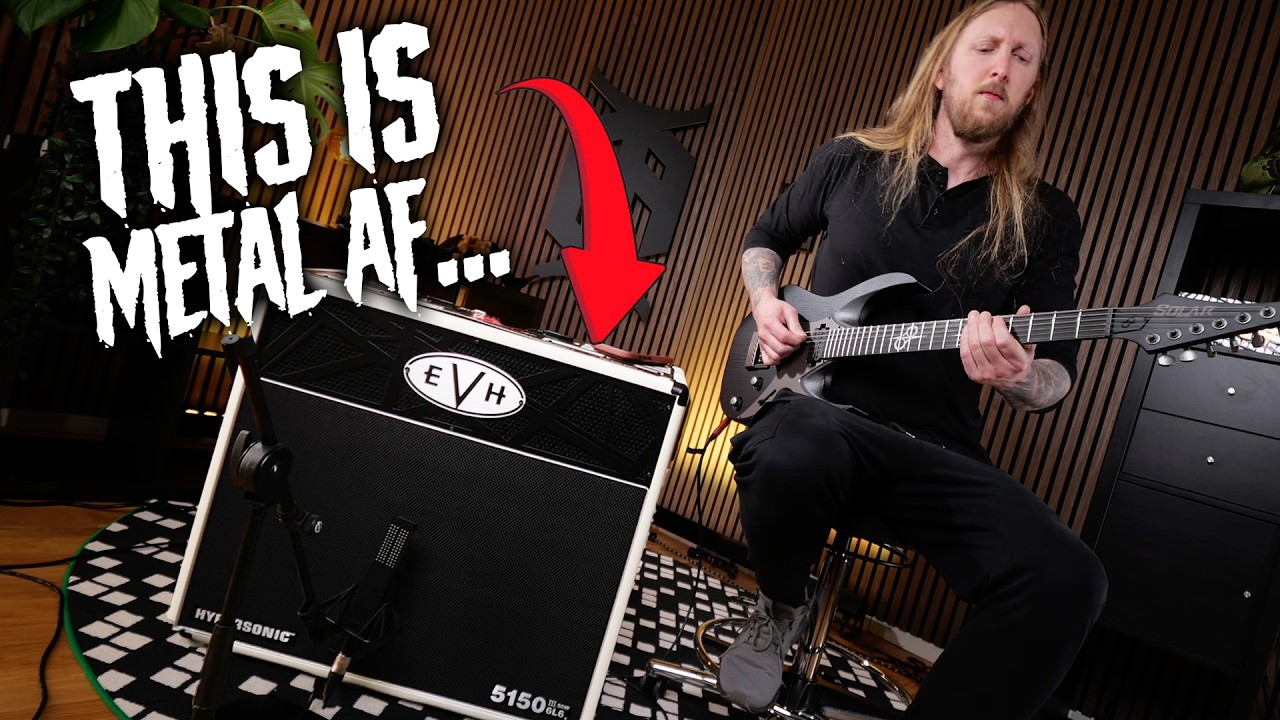
You launched Solar Guitars in 2017 after working with Washburn. Why did you decide to start your own company?
Being a social media, YouTube guy, I know the world moves so fast now and people’s attention spans are so short. I felt that Washburn’s business model was too slow
I had a successful model with Washburn. I brought them my designs, they released it and it did very well. But being a social media, YouTube guy, I know the world moves so fast now and people’s attention spans are so short. I felt that Washburn’s business model was too slow.
There was a bureaucracy behind everything – the making of the guitars, selling to dealers, and getting them to distributors. It’s such a long process before an actual customer gets to see the guitar – like, about a year – and I was so frustrated because I knew people wanted the guitars but had to wait a long time before they could get them.
After my three-year contract ended, I figured I could stay there for another three years, but I knew I could do so much better if I could find some people to do a new company with me.
The guy I worked with at Washburn had just left the company, so I gave him a call and we decided to create a model that went straight from us to the consumer because we know exactly what the audience wants. They tell me. I took my designs out of Washburn, and we formed Solar. We launched in late 2017 and had 300 guitars to sell and ship immediately. We’ve grown very fast.
Tragically, At the Gates vocalist Tomas Lindberg died from cancer in September 2025. This must have had a profound impact on you and your bandmates.
We’re already talking about a new album because there’s a hunger in this band. And there’s such a good vibe
We were very close and I have lots of good memories. The band had known about his condition for a long time, and we knew he wouldn’t be able to sing, but he was getting better. When we recorded our album, he came out to the studio and everyone thought he was fine.
He had surgery and he had a little bit of a hollow voice, but otherwise he was just the same great spirit. He’s always been happy, and we thought, well, even if he couldn’t be in At the Gates, at least he’s going to be alright. Then, in the spring, he suddenly got worse. Obviously, it was devastating to hear about him passing, but at the same time, it almost felt like we’ve been in mourning since the spring.
How will Tomas’ passing affect the Haunted?
Obviously, when they were touring, the Haunted had to alternate schedules with At the Gates. We didn’t play shows at the same time. So, from now on, maybe that will mean the Haunted will play more, and maybe we will spend more time as a band and it won’t take eight years for the next album to drop.
We’re already talking about a new album because there’s a hunger in this band. And there’s such a good vibe. I’ve already started writing songs for the next album because I feel hungry to do that. I think we’re going to have a new album sooner rather than later.
- Songs of Last Resort is out now via Century Media
- This article first appeared in Guitar World. Subscribe and save.

