


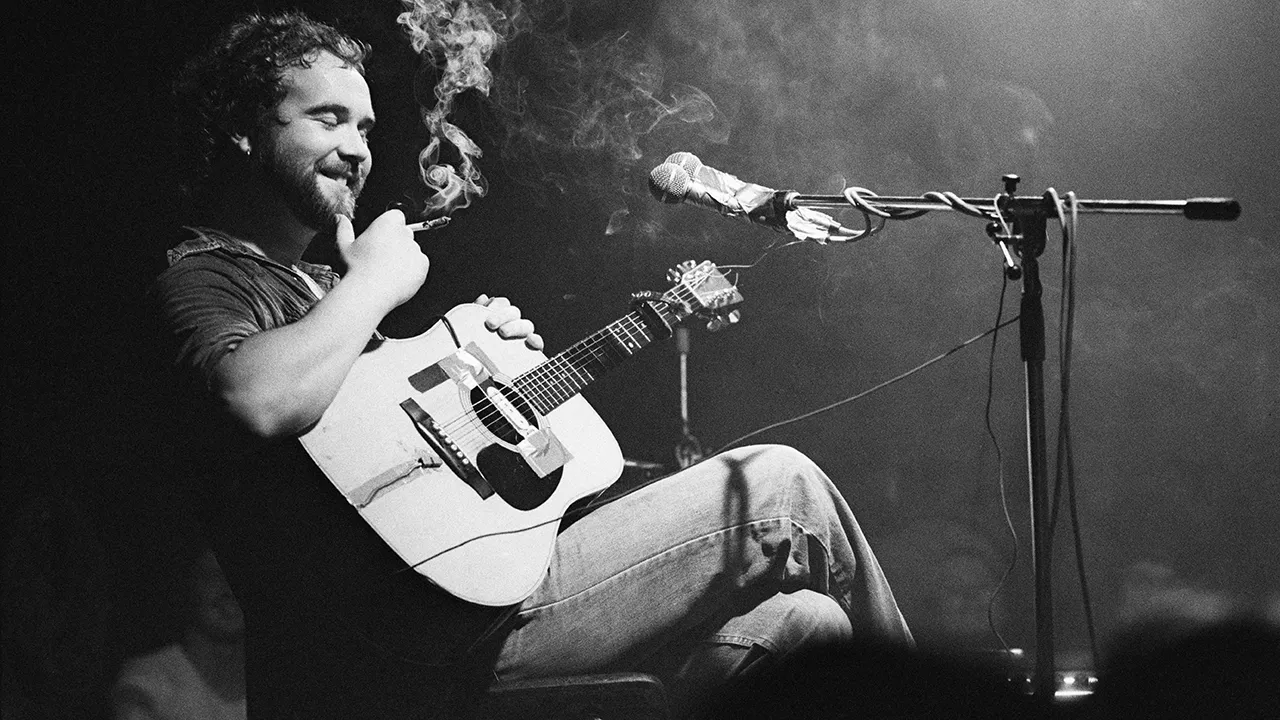
When the Mount Rushmore of the 20th century’s most innovative guitarists comes to be carved, John Martyn will not feature. The musician born Iain David McGeachy is often overlooked in discussions about players who changed the way the instrument is played. But why?
Firstly, Martyn rarely sold many records. While innovative works like Solid Air and Inside Out were critics’ darlings and attracted cult followings, they never really bothered the charts. How many players can an artist inspire when they sell fewer records than the guitar heroes of the day? Some of whom were, ironically, huge Martyn fans.
Secondly, he was too creatively slippery to become a legitimate guitar hero. He was a mercurial musician who loved to experiment with radical sounds and approaches – however successful they turned out to be. The musical identity of a Page or a Hendrix was fixed during their imperial phase; Martyn was more mutable.
At the start of his career he was inspired by both Scottish folk and saucer-eyed hippie music; his work at the time was all twinkly guitars and songs about – as he memorably put it – “the dingly-dangly-dell of life.” Then, on albums such as Bless the Weather and Solid Air, his playing became more influenced by jazz, folk rock and prog, with stranger tunings and those iconic, frayed-sounding chords.
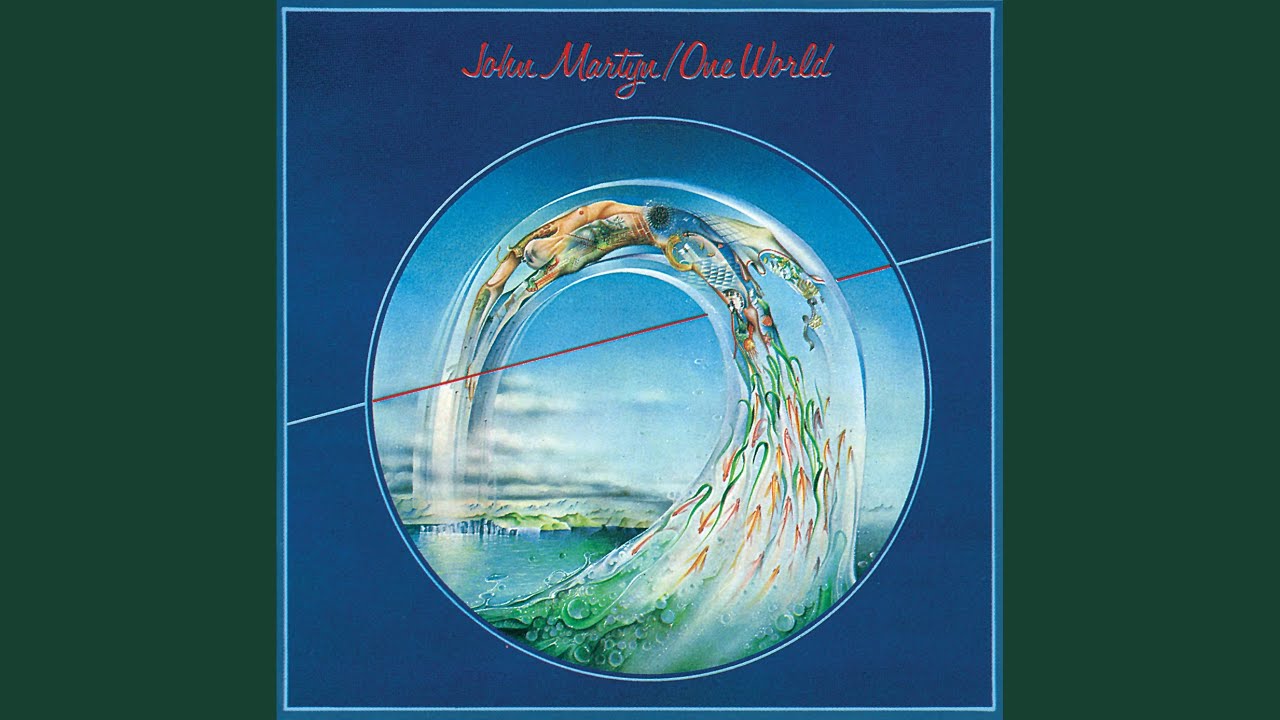
More experiments followed in the form of the transcendent One World, made in Jamaica with Lee Scratch Perry. In the 1980s (partly due, in this writer’s opinion, to the malign influence of Phil Collins) he ventured into something like easy-listening territory, before experiencing more diminishing returns in the 1990s – not that there weren’t highlights – until his death in 2009.
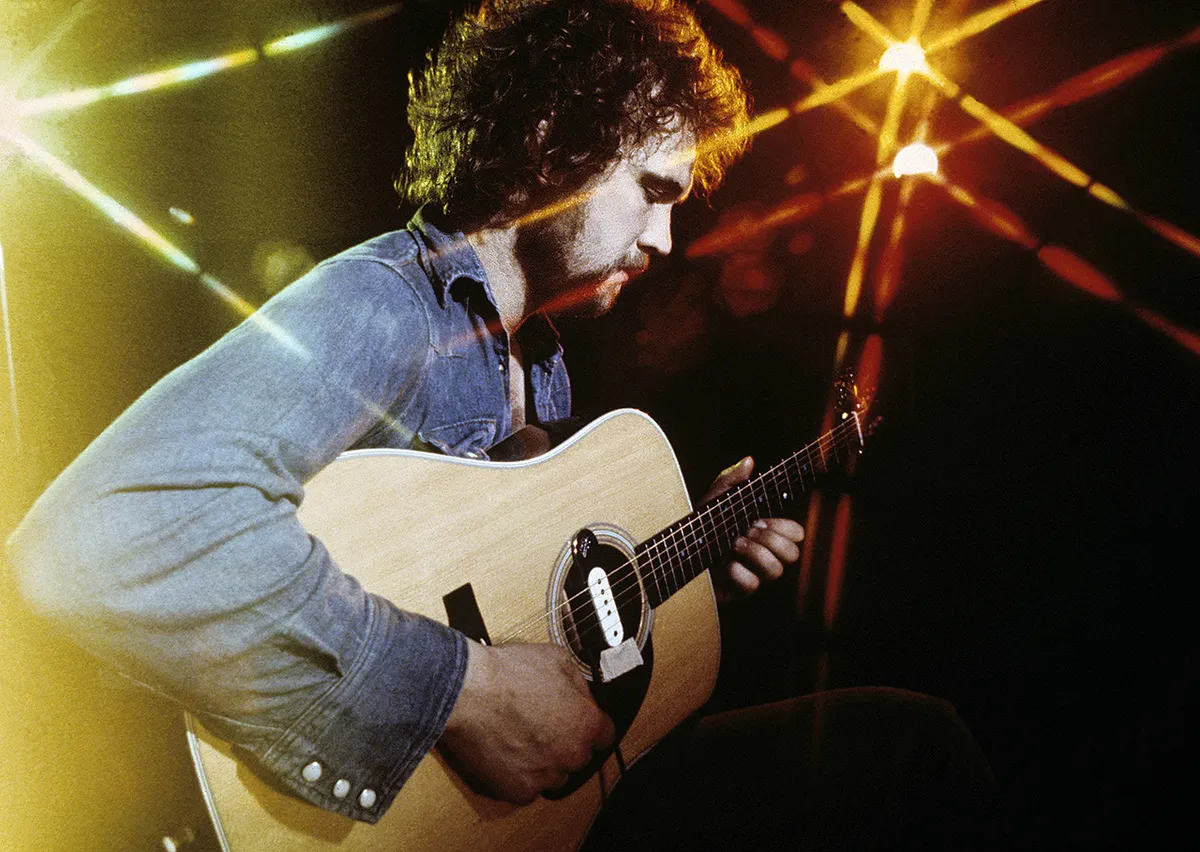
Outside of music, his conduct was considerably less inspirational. He perpetuated years of abuse against his ex-wife, for example. So while we won’t take any lessons from his personal life, there’s still merit in exploring his complex legacy, particularly how he changed the game for guitarists – many of whom don’t even realize it.
The visual guitar solo
Martyn was a notorious showoff. Those who witnessed his first gigs at the famous London folk club Les Cousins remember that he took great delight in being the fastest, the most technically proficient, the most incendiary player.
Ralph McTell, in the excellent Johnny Too Bad documentary, recalls how Martyn “came in like the new kid, full of vim and vigor and life.” The best example is Seven Black Roses, or what Martyn eventually dubbed “the visual guitar solo.”
The song starts off incongruously enough, with quicksilver fingerpicking in an open tuning. Then he starts moving the capo up the neck while still fingerpicking. The effect is like a record is being played at increasing speed. Then he starts detuning the strings with the machineheads, still fingerpicking all the while. Sure, it’s showing off, but who cares?
Seven Black Roses is wild and utterly brilliant, as demonstrated by the many live versions floating around YouTube. While it might seem like a sonic curio or a joke, the piece demonstrates that Martyn was always looking to squeeze new sounds out of the guitar, even so early into his playing career.
Echoplex 16th notes
A number of innovative players did fall under Martyn’s spell – Paul Weller, Ryley Walker, Beth Orton and Morcheeba have all named him as a guiding light. Perhaps the most famous example, though, is U2’s The Edge.
Part of his signature sound is the chiming, delay-drenched quarter notes that stack and stack, creating a pulsing undercurrent of rhythm. Listen to Martyn’s playing from the early to mid-1970s, though, and it’s easy to see who The Edge got it from. Martyn used the Echoplex on songs such as Rather Be the Devil and Outside In to create something almost frighteningly modern-sounding.
Of all Martyn’s innovations, his popularization of the Echoplex is perhaps the one for which he’ll be remembered
Marking one of Martyn’s true creative peaks, Outside In fuses jazz, folk, rock, and prog into something heady and propulsive. Front and center is the kind of delay-soaked playing that’s all over Where the Streets Have No Name or I Still Haven’t Found What I’m Looking For.
Look out of his Old Grey Whistle Test version, where he and Danny Thompson strip the maximalist studio arrangement down to just guitar, Echoplex, voice and bass, creating something a little less messy; a little more focused and muscular. Of all Martyn’s innovations, his popularization of the Echoplex is perhaps the one for which he’ll be remembered.

Pedalboard wrangling
Although large and unwieldy pedalboards are de rigeur for guitarists these days, it was more unusual in the 1970s, and even rarer for an acoustic player. As well as the Echoplex, Martyn experimented with the EHX Big Muff (which he named a song after), choruses, and phasers; he described using different pedals as his “hobby.”
It was his use of a volume pedal, though, that characterizes one of his most interesting sonic explorations, and one of his most beautiful songs. Small Hours is the phosphorescent final track from 1977’s One World, recorded after a period of particularly high turmoil (even for Martyn) leading him to move to a farm belonging to Island label boss Chris Blackwell.
His ability to stack effects places his music upstream of modern genres like dream pop, shoegaze and post-rock
The foundation of Small Hours, along with the low-voltage drum machine and distant sounds of geese, is Martyn’s gradual volume swells. It’s incredible how something so intimate can sound so eternal. Of course, he wasn’t the first to use volume swells, but he was certainly one of the first to combine them with meditative music and a delay unit.
Listen to One World or Live At Leeds and it’s easy to see how his ability to stack effects places his music upstream of more modern genres like dream pop, shoegaze and post-rock.

Esoteric tunings
Martyn was also not the first to experiment with esoteric tunings, but his combination of a style typically associated with folk and blues with jazz, and beyond, was one of the ways his music and playing was so distinctive.
The philosophy behind his tuning style is interesting: In 1990 he told Guitarist magazine that “the reason I use open tunings comes primarily from those years of playing solo. It made it much easier to get a big, warm sound.” Indeed, tracks where he plays solo are remarkable in how full they sound; he pays attention to the full harmonic range.
For many people, the definitive Martyn tuning is CFCCGD. The key factor is the third and fourth strings tuned to the same note, which achieves all sorts of resonances that are usually unavailable in standard tuning.
When you hear chords played with CFCCGD or DADDAD – another of his favorites – it’s immediately clear who they sound like. How many other guitarists have claimed a tuning as their own?
Slap-and-pop style
Much like his approach to tuning, his pop-and-slap playing technique was not revolutionary; but when combined with quirky and unique songs, it became another of his calling cards. That style, which introduced a backbeat on the 2nd and 4th beats of each bar, was taken from Davy Graham, a huge influence on Martyn’s playing.
Much in the same way that his tunings were selected for fullness and warmth, to make up for the lack of other instrumentation, Martyn’s slap-and-pop technique adds rhythm and bite. In a sense, his right thumb was his drummer.
It sounds a little ludicrous – but listen to May You Never, One Day Without You, or pretty much anything from Bless the Weather until his Phil Collins era, then imagine them without that metronomic pulse. Better still, try to play them without the thumb slap and see how they sound.
The technique sums up why Martyn is such a brilliant player. Although he took relatively humble playing elements – acoustic guitars, folk guitar style, jazz chords – he was able to alchemize them into something radically new.