

Guitar World Verdict
A worthy addition to Strymon’s burgeoning Series A line, don’t go into the La Brea expecting half a Deco – because this is so much more. An expanded palette with some clever control appointments mean this all-analog tape drive is one of the best of its kind currently on the market.
Reasons to buy
- +
The best part of the Deco, made even better.
- +
Dry switch is a clever and useful addition.
- +
Way more versatile than I expected.
Reasons to avoid
- -
Control plate can feel quite cosy at times.
You can trust Guitar World Our expert reviewers spend hours testing and comparing guitar products so you can choose the best for you. Find out more about how we test.
What is it?
Clearly not content with simply commanding the digital effects pedal space, Strymon is evidently on a mission to flex its engineering expertise in the analog world, too. In case you missed it, the mastermind behind some of the guitar world’s most celebrated digital delays, reverb pedals and more, recently embarked on its analog stompbox journey with the Fairfax Class A Output Stage Drive.
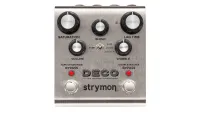
Now, it’s got another pedal to add to its burgeoning new Series A lineup, the La Brea. For me, this one was even more exciting on paper than the Fairfax. Why? Well, because it effectively takes one half of Strymon’s cult classic Deco Tape Saturation/Doubletracker pedal, gives it an all-analog makeover, and crams it into the company’s new – and super sleek – form factor.
Full disclosure: I love the Deco. It’s a bucket-list pedal for me. But I love it mostly for the tape saturation side; that thick, chewy, vintage cassette-style tone is there in abundance. It can be snipped for an always-on thickener with amazing compression, or cranked for a unique-sounding overdrive / distortion / fuzz.
As such, $400 for a Deco is off the cards for me – and, I imagine, a lot of other folk out there. But the La Brea? Now, that’s a different story. It’s the pedal all Deco fans have been asking for. Home-in on that one circuit, give me an analog take on all that harmonic richness, and I could be a very happy guitar player indeed.
So, safe to say I had a lot of hype going into this one. I was excited to see if it could deliver…
Specs
- Launch price: £199 | $199 | €229
- Type: Analog tape drive
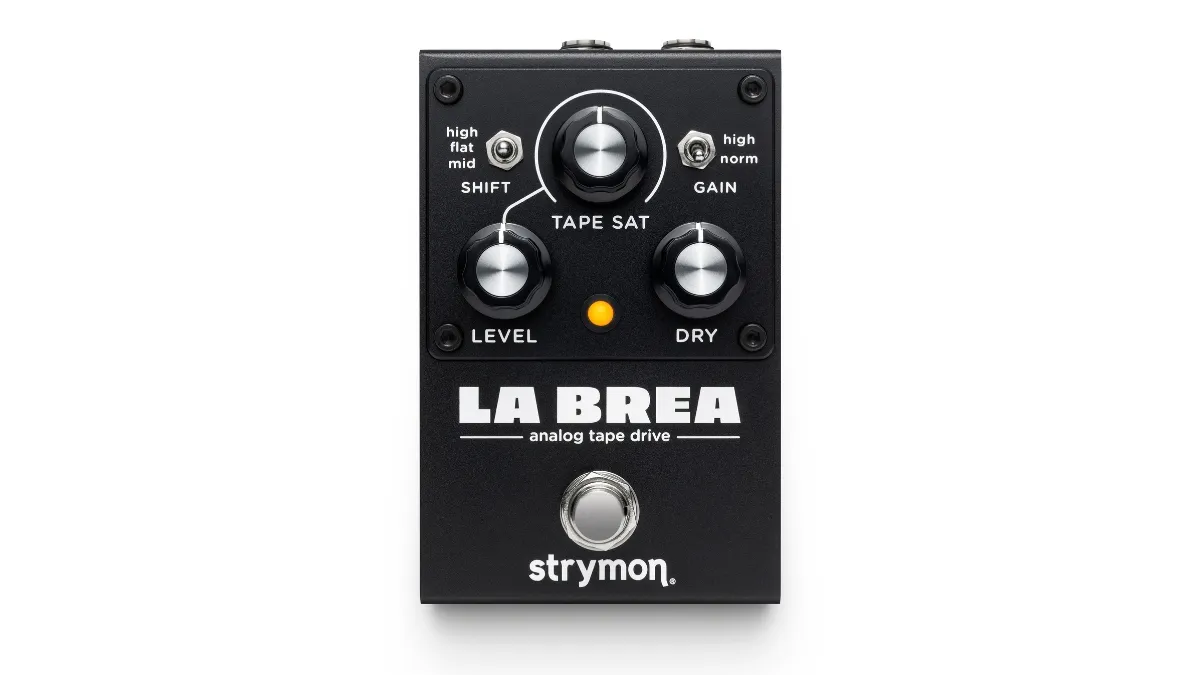
- Controls: Tape Saturation, Level, Dry, Shift (High, Flat, Mid), Gain (High, Norm)
- Connectivity: Mono in/out
- Bypass: True-Bypass
- Power: 9 volts DC center-negative, with a minimum of 500mA
- Dimensions: 4.53″ x 2.83″ x 2.33″ (11.51 cm x 7.19 cm x 5.92 cm)
- Weight: 0.29kg
- Options: N/A
- Contact: Strymon
Build quality
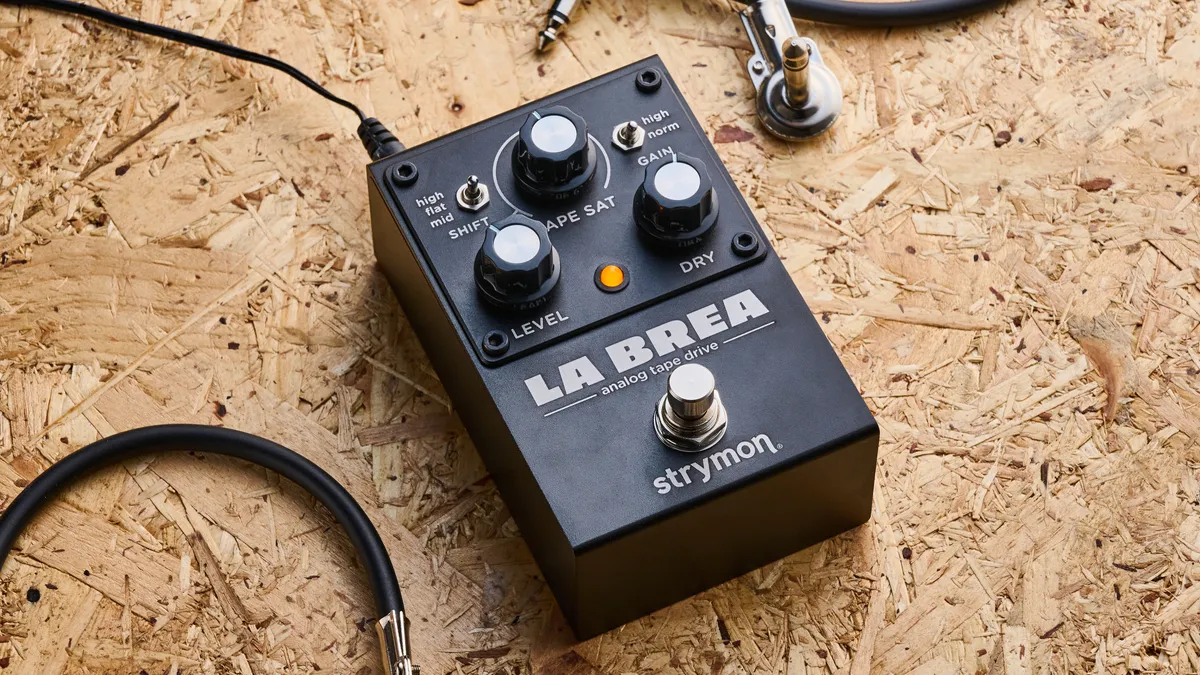
Build quality rating: ★★★★★
I gave the Fairfax top marks for its build quality, so it will come as no surprise I’m giving the La Brea an identical score. But it wasn’t by default; the La Brea is incredibly well put together.
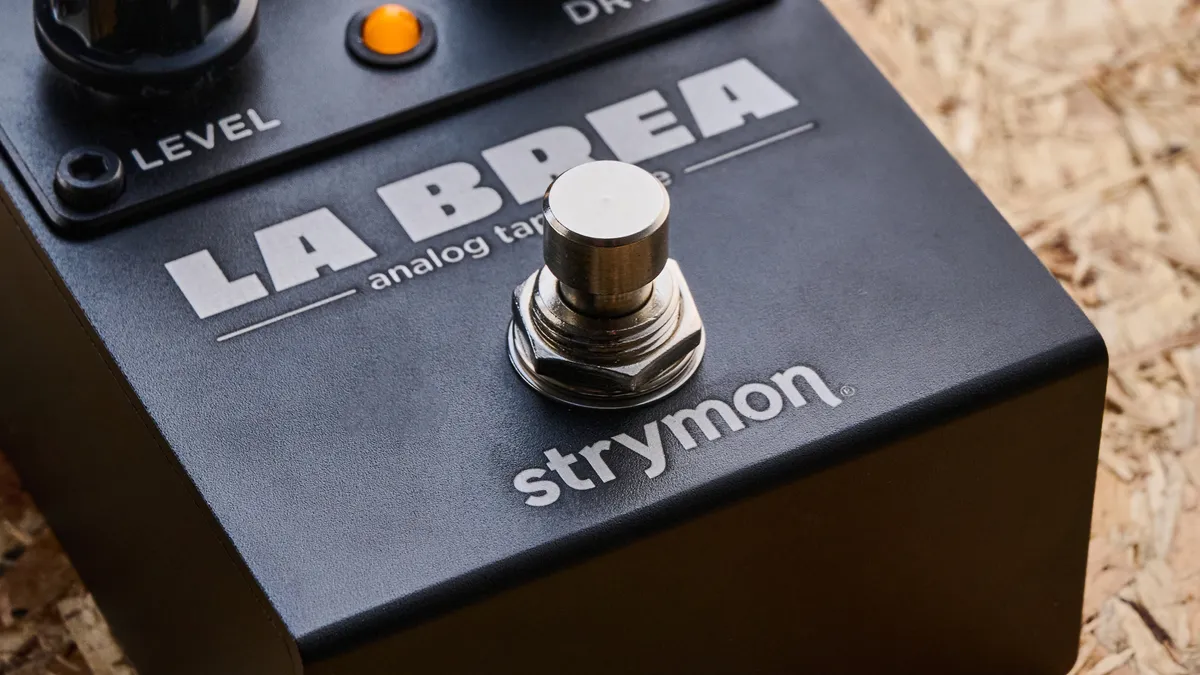
On the hood, there’s not too many moving parts. So there’s not too much that can go wrong, but Strymon has done its work diligently. The three control knobs have a firm but responsive twist, the two toggles - a nice satisfying snap. Like the Fairfax, the controls are sitting on a slightly raised metal plate, which is probably purely for aesthetics, but it’s a nice touch. I like the soft-touch footswitch, too.
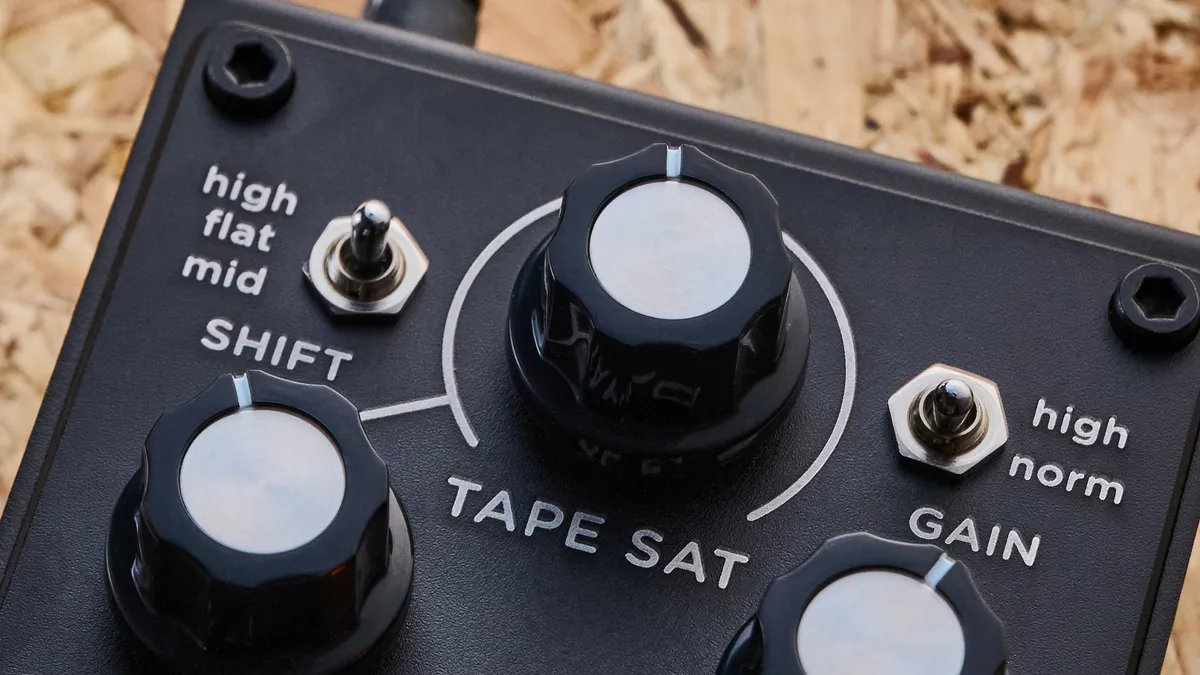
Those controls have been set into a robust metal chassis that feels surprisingly light, yet fills me with confidence that it’d have no problem sitting on my pedalboard. There’s just something about this style of pedal build that I really like. I wish all my pedals were built and styled like this; almost military-like in its precision, utilitarian in its overall vibe, and lets the tones do the talking.
I said it before, but the box-like efficiency of the build gives the La Brea a nice visual distinction from the rest of my drive pedals, and the no-nonsense contours make it a breeze to fit into a busy pedalboard. Top marks for the top-mounted input and output jacks, too.
Usability and features
Usability and features rating: ★★★★½
The Dry knob is a lovely addition that serves as the MVP of the pedal
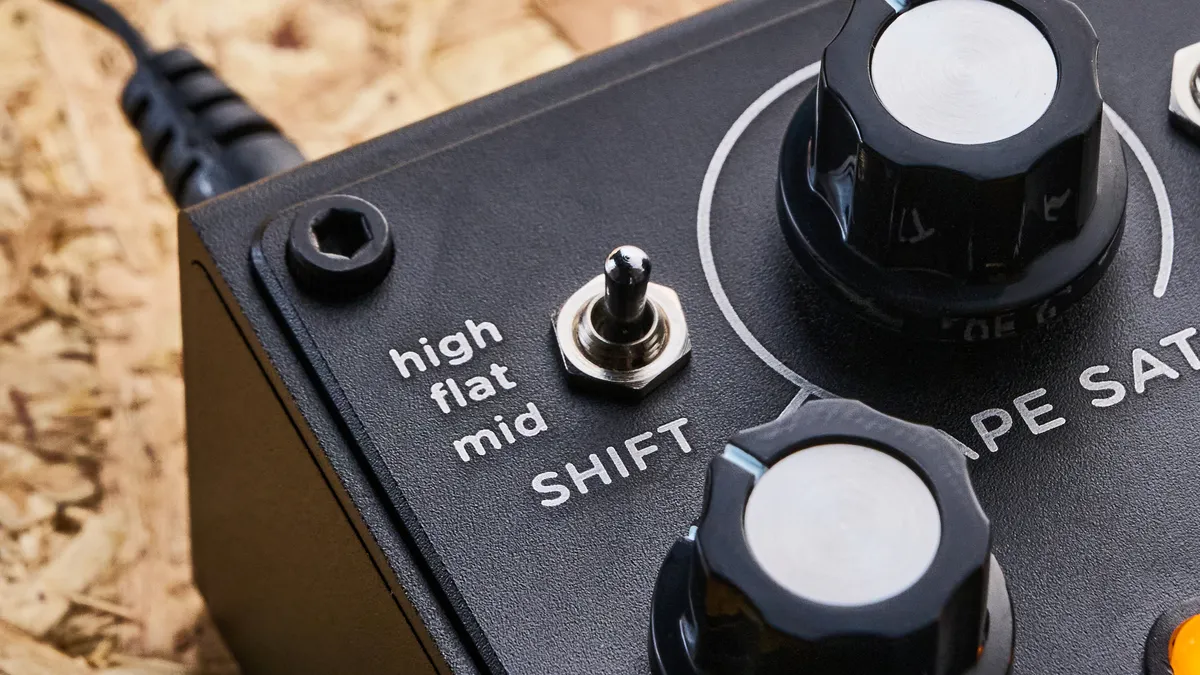
Although the control plate can feel at first a bit cosy, what with its three control knobs and two toggle switches, it becomes apparent that operating the La Brea is every bit as easy as the Fairfax. Strymon could have over complicated things here, but in keeping with its new analog ethos – and the military precision of its new chassis – it serves up everything you need to get dialed-in smoothly.
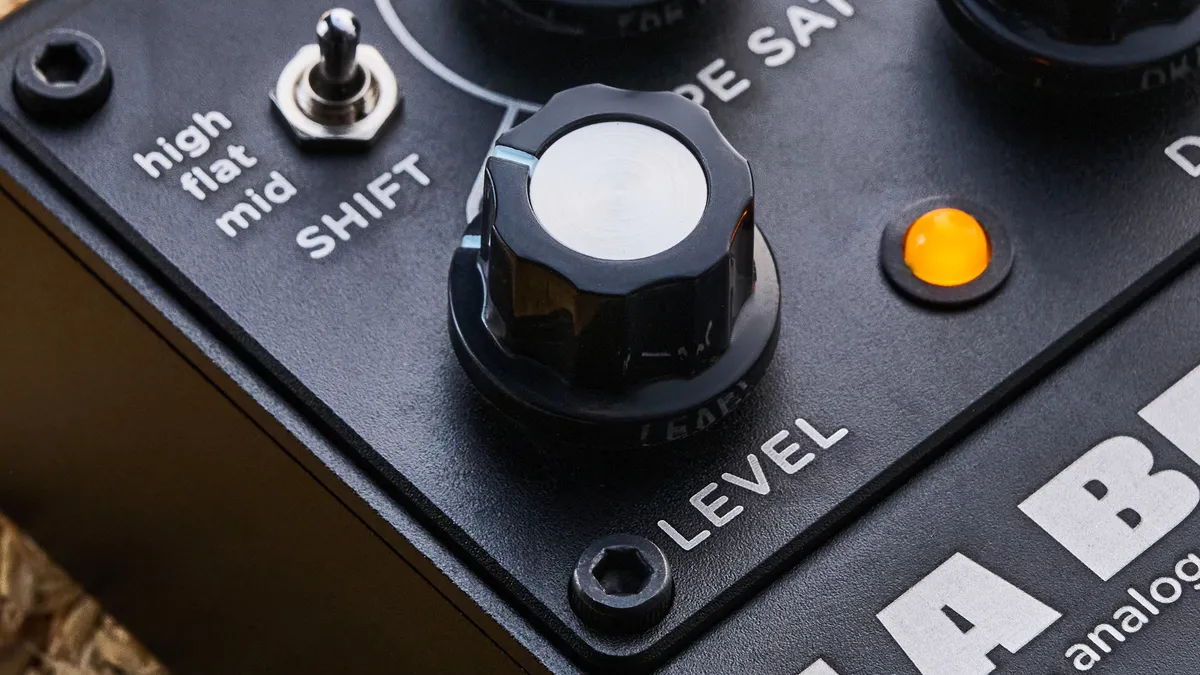
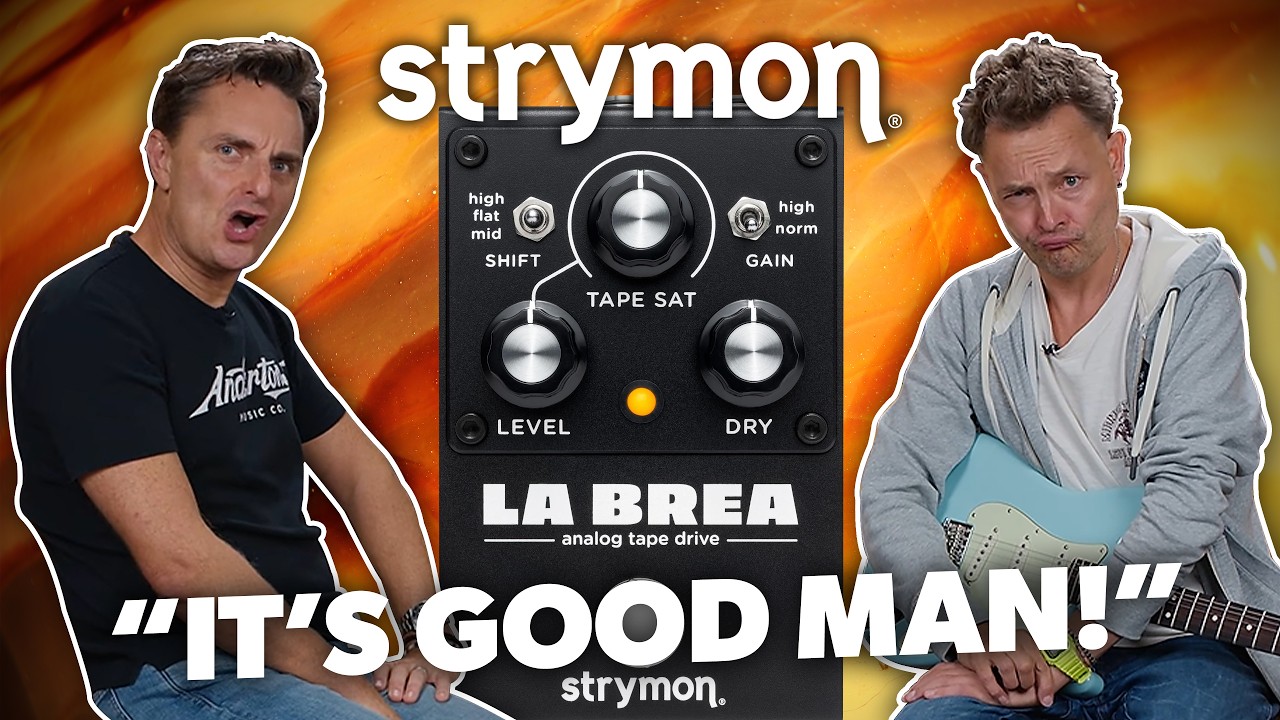
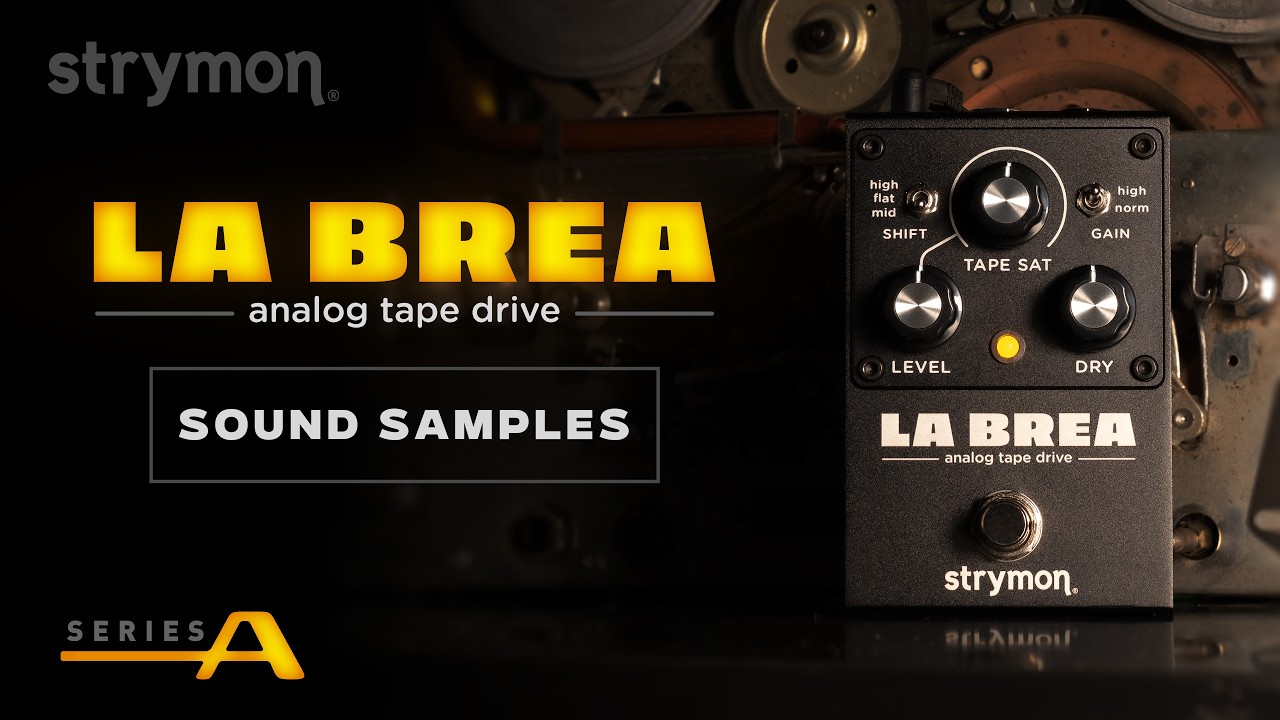
Level and Tape Saturation are self-explanatory: the former dictates overall output of the effect, the latter adds the soft-clipping, tape-style drive into the mix. Dry, meanwhile, is a lovely addition that serves as the MVP of the pedal: it lets you blend in your dry signal with the tape saturation for the desired mix, and it’s ultra responsive to tweaking your tone. More on that later…
Plus, with the addition of those toggles, the La Brea suddenly becomes even more expansive. With Gain, High and Norm offering two different levels of gain staging. As you probably guessed, those are high gain, and low-to-medium. Shift, meanwhile, adapts the frequency response.
And this goes through the whole spectrum, from added high-end chime to more dense mid-range heft. All in all, it’s a very comprehensive control set that, while not completely recreating the Deco workflow, expands and improves upon its potential with some choice refinements.
Sounds

Sounds rating: ★★★★★
It’s a small control set, but all three work well together and respond nicely to what’s going on in the circuit – and the result is a broad array of amazingly usable tones that include (and go beyond) the Deco remit.
As mentioned, Dry is a standout feature of the pedal. On the Deco, you only got Saturation, Tone and Volume controls and the Tape Saturation side. Here, you can really decide how much of your signal gets saturated, as it were, meaning the La Brea can be applied in a number of ways.
For me and my Quad Cortex mini, I usually have a JHS Morning Glory as my ‘always on’ pedal, but the La Brea is arguably better at thickening the juice of my harmonic character. It’s not amp-like, per se, but it gives a really noticeable, almost transparent warmth to your tone.

It’s not amp-like, per se, but it gives a really noticeable, almost transparent warmth to your tone.
But I also feel the potential of the La Brea is underserved as a ‘set and forget’ pedal to sit at the start of a signal chain. I ended up using my QC mini to capture a host of different settings for the La Brea, because I kept finding new ways to use it.
As per Strymon’s recommendations, you can crank the Level and dip the Dry, while diming the Tape Saturation, for some genuinely gnarly tape drive that smashes into spitty fuzz territory. Vice versa, you can knock back Level, bump the Dry, and balance Tape Saturation for a more sensible lead cut that gives you some color and oomph without getting too dirty.
Verdict

I was expecting half a Deco, but I got so much more
I was expecting half a Deco, but I got so much more. I am struggling to think of a pedal maker out there right now who can match Strymon’s recent run. The company may have made its name in the digital space, but its analog future could be equally impactful. In fact, I wouldn’t be surprised if the La Brea is held up alongside the Flint and BigSky as Strymon’s gold standard pedals.
In hindsight, half a Deco would have been a missed opportunity. The La Brea has gone beyond the design brief to deliver one of the most unique yet usable pedals I’ve come across in some time. Now it’s got the Fairfax and La Brea on its books, I can’t wait to see what Strymon does next.
Guitar World verdict: A worthy addition to Strymon’s burgeoning Series A line, don’t go into the La Brea expecting half a Deco – because this is so much more. An expanded palette with some clever control appointments mean this all-analog tape drive is one of the best of its kind currently on the market. This is up there with the BigSky and the Flint as one of Strymon’s most accomplished pedals
Test |
Results |
Score |
|---|---|---|
Build quality |
Solid metal chassis that's built incredibly well. |
★★★★★ |
Usability and features |
Cosy, but it's got all you need – and the Dry control is the MVP. |
★★★★½ |
Sounds |
Broad array of tape saturation tones that can be applied in a huge number of musical situations. |
★★★★★ |
Overall |
Another excellent analog offering from Strymon that builds on the Deco legacy. |
★★★★½ |
Also try

Hands-on videos
Andertons
Strymon
Mike Hermans