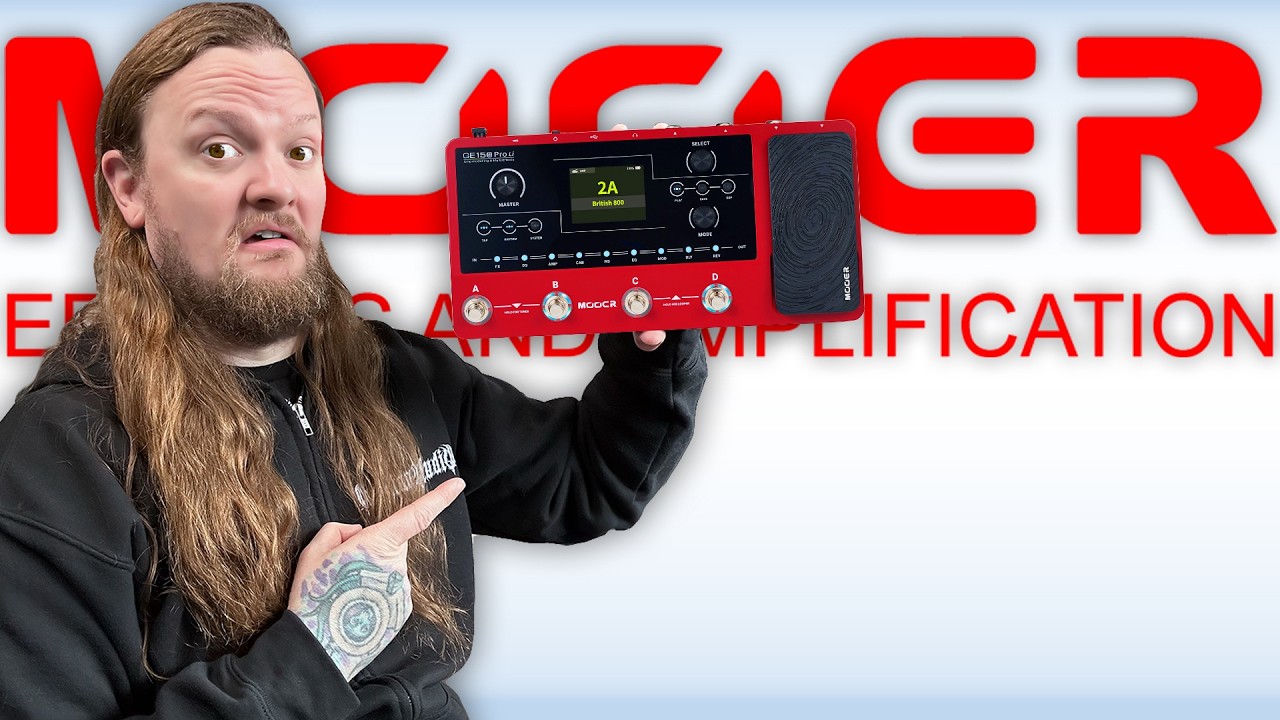
Guitar World Verdict
For under $200, I can say with confidence that it goes a long way. The amp models may not always be the most convincing, and some effects disappoint, but there’s so much to extract from this very cheap, easy-to-use, and gig-worthy floor modeler. For newer players, products like this feel like essential parts of the journey. An ideal stepping stone.
Reasons to buy
- +
Great price for what you get
- +
Mains- and battery-powered
- +
Lots of sounds on tap
Reasons to avoid
- -
No XLR or MIDI hinders its gig-friendliness
- -
Some tones feel a little generic
- -
Effects can feel low-quality
You can trust Guitar World Our expert reviewers spend hours testing and comparing guitar products so you can choose the best for you. Find out more about how we test.
What is it?
It’s true that Mooer doesn’t have the same weight of gravity to it as the likes of Neural DSP, Kemper, and Line 6 when it comes to amp modeling. But that doesn’t mean you should dismiss it.
As a penny-conscious entry point into the world of digital amp tones, Mooer’s ever-growing GE line has proven to offer a lot of bang for not all that much buck. The GE150 Pro Li, then, clocks in at a fairly eye-watering 200 presets, 55 amps, 26 cabinets, and support for third-party IRs as well as compatibility for NAM captures. That’s a lot of choice.
Following the success of the $240 GE150 Max Li and the €449 GS1000 modeler and profiler, Mooer continues to expand its all-in-one rig roster. The most noteworthy upgrade sees Mooer expanding from two to four footswitches with recent releases, and this one is no different.
The headline is that the Chinese firm touts “improved control logic” that makes preset switching mid-gig faster and more seamless. Those two improvements show Mooer pushing players to take these from bedrooms to the stage and grow its presence on the live circuit.

There’s a 2.8” LCD screen at its heart, an expression pedal with toe-tap mode for engaging it in a flash (another live-minded addition), an 80-second stereo looper, 40 built-in drum patterns, 10 metronome modes, and a USB-C port for desktop tone building, firmware updates, and an audio interface for recording.
It also has mono and stereo outputs, but it doesn’t go as far as adding an effects loop. Powering it via the mains or, for nine hours, with its built-in lithium battery adds flexibility that puts gigs back in its crosshairs. So, is it good enough to make the jump from bedroom to the stage?
Specs

- Price: $180|£165|€192
- Type: Multi-effects and amp-modelling/profiling pedal
- Features: 55 amp models, 26 cabinets, built-in effects, third-party IR compatibility, software editing, NAM profile loader, 200 preset slots, 80-second stereo looper, 40 drum patterns, 10 metronome modes, and expression pedal
- Connectivity: 1/4” input, stereo and mono outputs, USB-C, 3.5mm aux in and headphone port
- Power: DC, 9v, center negative, 1A, built-in lithium battery with 9-hour playtime
- Dimensions: 310xH35x153 mm
- Weight: 1.17kg (41.27054 oz)
- Options: GE150 Pro (white finish) is mains-powered only ($155 / £138)
- Contact: Mooer
Build quality

Build quality rating: ★★★★☆
If I’m being harsh, despite the lovely embossed swirl design on its expression pedal trying its best to suggest otherwise, it doesn’t look or feel that premium. Its housing is plastic, like pretty much everything else except its quartet of footswitches.
But it’s compact, and at 310xH35x153 mm, it will easily slip into a guitar case. That size makes it a little wider than a Quad Cortex, but still smaller and less bulky. The pinky-red finish is quite nice too; it’s good to see a splash of color in the often monochrome modeler world.
It’s fairly well equipped, with a single jack input, mono and stereo outputs, 3.5mm inputs for aux cables and headphones, a USB-C for updates and doubling as an interface, a power switch, and an input for the power adapter. It’s limited, sure, and lacks MIDI compatibility, which other affordable Mooer offerings include. But for an everything-you-need-and-not-much-more starting point, it has the necessary bases covered. Still, no XLR output does seem an oversight, considering Mooer seems to be angling for the stage here.
What I will praise is its pretty fast start-up; for my money, my Quad Cortex is a little slow here. Also, having a built-in battery with a battery percentage indicator visible on the main page for each preset is a really handy feature. And yes, preset switching is very fast and smooth.

Sure, the screen could be bigger, but the text is clear enough from a distance, especially at a glance, and the footswitches are decent quality underfoot. I also feel swerving the touch screen is a good move, given that other Mooers have felt somewhat second-class in that department.
The lights are bright enough without feeling like a distracting rave. Though it does give away its stunted price a little, what matters most is what it can do. The build quality holds up as well as I expected before getting my hands on it.
Usability

Usability rating: ★★★★☆
Without a touchscreen, the Select and Mode dials do most of the operational heavy lifting. You can think of the Select as a mouse or arrow pad: scroll through presets, then push down to select the setting you want to tweak.
Mode, meanwhile, leafs through the various blocks of each preset, which take in a Compressor slot, Overdrive/Fuzz/Boost, Amp, Cab, Noise gate, EQ, Modulation, Delay, and Reverb. All of these slots are optional, with plenty of choices and familiar names for each. I also don't encounter any latency issues, with the on-screen ‘dials’ reacting to my touch immediately.
It works and is a far more enjoyable experience building and tweaking tones on the unit itself versus other budget modelers.
Assigning the footswitch takes just a few clicks and lets you control many different block parameters
The software editor is certainly effective, with an intuitive interface that spells everything out. Assigning the footswitch takes just a few clicks and lets you control many different block parameters. Getting the change to stick, however, can be a little fiddly. And the pedal’s actual sweep feels limited.
Unfortunately, the signal chain is locked in place, so I can’t stick a flanger before the amp if I wanted to. But the order makes perfect sense, and so will be perfectly good enough for most needs.
It just falls short when it comes to that extra level of customization. It also means it can handle whatever processing I dial in. There’s no way I can run six amps, three different overdrives and delay pedals at once. Even the most full-on presets didn’t tax its processing power.

Although I sometimes find myself turning the Select dial when I should have turned the Mode, or vice versa, it is easy to navigate and tinker. It’s especially pleasing that all controls fit onto its 3x3-dial screen.
Pressing footswitches A and B engages the tuner, which is easy on the eye and has Bypass and Mute modes. Pressing footswitches C and D loads the looper. Here, the four switches control playing, recording, and clearing the loop, with D for exiting it entirely. It’s all pretty straightforward, and I felt comfortable using the pedal's functions after just a few minutes of experimenting.
Although I sometimes find myself turning the Select dial when I should have turned the Mode, or vice versa, it is easy to navigate
Admittedly, it would have been nice to have dedicated switches for both the tuner and looper, but in the spirit of streamlining its design, it’s a perfectly acceptable compromise.
The Tap Tempo button, however, is tiny and right beneath the Master Volume. That’s not wholly practical. Still, it's a nice addition.
The lack of a screen that shows everything active in a preset at a glance is a minor disappointment. An update now highlights which blocks are active in a preset, but it doesn’t show specifics like the selected amp model.
Also, the lack of lists for each block – I have to scroll through the numbered slots individually to find what I need – is another small drawback, but the desktop is at least a little better for it. It could be smoother, but I’ve encountered a whole lot worse.
Sounds
Sounds rating: ★★★★☆

Broadly speaking, the tone quality is respectable. From the crystal-clear cleans of its ‘65 Fender Deluxe, to the distortion of a Marshall JCM 900, and the odd but surprisingly entertaining Game Boy preset – a ring modulator-warped Jet City JCA100H that gives off 8-bit charm – it covers a lot of ground.
With its cleaner amps, especially Fenders like the Twin and the aforementioned ’65 Deluxe, there’s a recognizable quality under the fingers. They sound pure, putting the character on the guitar, its pickups, and the player front and center, just like the original. As for impressions of famous gear elsewhere, they often leave me guessing.
From the crystal-clear cleans of its ‘65 Fender Deluxe to the distortion of a Marshall JCM 900, it covers a lot of ground.
The JCM 900 preset included with the modeler sounds good to my ears; it’s a chug-friendly, high-gain amp. But after playing a few bars, I can't tell you what amp it's supposed to be specifically. It sounds good enough, and for filling the kind of role a JCM 900 is built to, I can’t fault it. How faithful it is to the real deal, however, feels debatable.
The same goes for the Mesa/Boogie Triple Rectifier. It sounds like a generic high-gain amp, and I would probably estimate 'American' in a blindfold test, but anything beyond that is guesswork.
The EVH 5150, though, is at least undeniable. It’s got that snarl that really makes me want to dig in and play pinch harmonics until the cows come home. So really, it’s a mixed bag. Some tones are close enough to do a job; others make it obvious you’ve got an approximation over the real deal.

Elsewhere, its effects offerings start to highlight further shortcomings. The Pitch Shifter is littered with harsh artifacts that really get in the way of my enjoyment of the effect. Attempts to assign the effect to the expression pedal stomp to make a faux Whammy pedal prove unsuccessful too. It just doesn't want to play ball, which is sadly the case with a good few effects parameters.
The Delay is good to a point, but even the analog mode has a digital sheen. That said, the Phaser is satisfying on clean and ultra-high-gain tones, especially at slower settings, and its Noise Killer is very reliable. It doesn’t need cranking to clean up signal hiss, either.
The delay is good to a point, but even the analog mode has a digital sheen
Then there’s its built-in drum machine, which is a nice touch for novice players looking for something to jam along to and unlock their creativity. Its simple-but-effective beats come with tweakable tempos, and you can adjust the guitar output and drum volumes. But I don’t expect more advanced players to be particularly moved by it, beyond treating it as a more interesting metronome for practice.
For the money, it’s hard to argue with what you get. In fact, it’s pretty astounding how much is crammed in, and the quality of what you get is generally solid. But I also feel that the tones I got out of my first modeling amp – a Peavey Vypyr combo bought about 15 years ago – could go toe-to-toe with this. This is especially true with the effects, because more often than not, they nestle in that very digital, clearly-a-cheap-version-of-something territory.
Still, when you compare the price to the product, it’s very impressive.

Verdict

On price, portability, versatility, and ease of use, Mooer ticks a lot of boxes without fetching a silly price
As someone who learned the foundation of a lot of gear via a modeling amp early in my playing days, the Mooer feels like the modern equivalent that a young me would have really gotten on with. On price, portability, versatility, and ease of use, Mooer ticks a lot of boxes without fetching a silly price.
However, in the wake of cost-cutting measures, I feel this pretty red modeler has hit a ceiling that makes it ideal for less experienced players rather than seasoned giggers looking to ditch their tube amps at long last.
That doesn’t make it bad, and for an entry-level modeler, it could absolutely handle smaller gigs, and one that can inspire plenty of ideas and teach players a lot about tone building in the process.
For under $200, I can say with confidence that it goes a long way. The amp models may not always be the most convincing, and some effects disappoint, but there’s so much to extract from this very cheap, easy-to-use, and gig-worthy floor modeler. For newer players, products like this feel like essential parts of the journey. An ideal stepping stone.
Test |
Results |
Score |
|---|---|---|
Build quality |
It's very plasticy, but that doesn't hinder its ruggedness, and it's quite pretty, too |
★★★★☆ |
Usability |
Most features are well laid out, and the desktop app helps greatly |
★★★★☆ |
Sounds |
Some amp models feel a little generic, and some effects are poor quality. Otherwise, it impresses |
★★★★☆ |
Overall |
With lots of features for very little money, and tones that are gig-worthy, it's a fanastic beginner's modeler |
★★★★☆ |
Also try
Hands-on videos
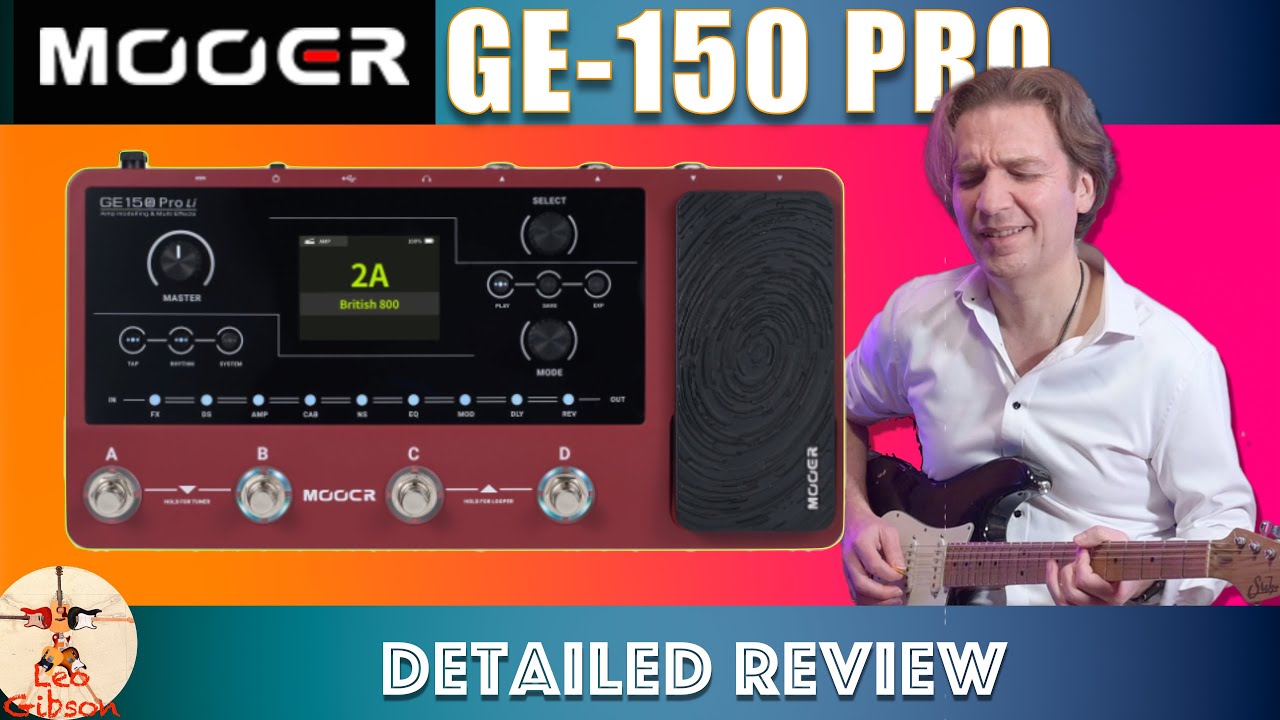
Leo Gibson
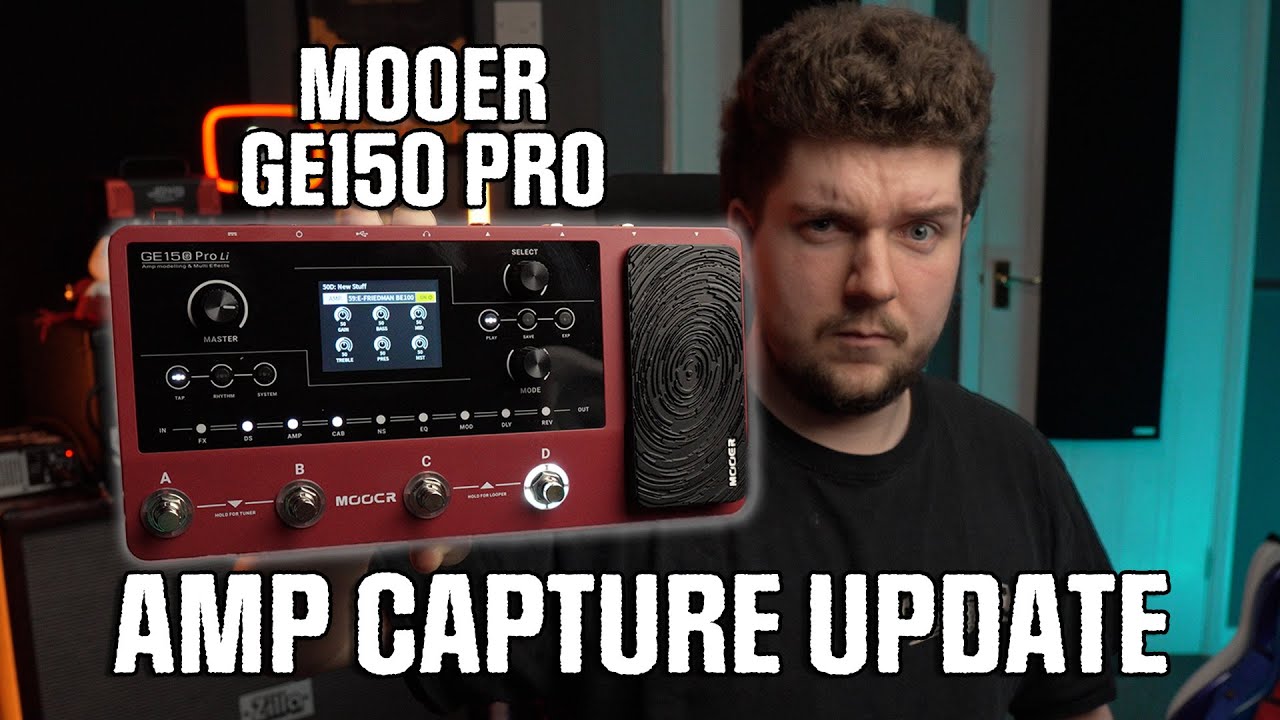
Kai Down
Taylor Danley