Guitar World Verdict
There's no doubt the Quad Cortex mini is an expensive piece of kit, but the phrase "you get what you pay for" has never been more applicable. This is an incredibly powerful, incredibly versatile pedal that crams gold-standard modeler experiences and sounds into the smallest form factor possible. An entire Quad Cortex in a pedal that measures less than 10 inches long? A remarkable feat of guitar gear engineering.
Reasons to buy
- +
Full Quad Cortex processing experience but under half the size.
- +
Market-leading digital amp and effects tones.
- +
Neural Capture V1 and V2, and Capture creation, baked in.
- +
Full compatibility with Neural DSP X plugins, as of CorOS 4.1.0 widens its capabilities even further.
- +
More than enough I/Os.
- +
Good option for pedalboard rigs alongside other stompboxes.
Reasons to avoid
- -
Takes a while to get to grips with the streamlined UI – but it's still one of the better modeler experiences out there.
- -
The footswitch layout is a curious choice.
You can trust Guitar World Our expert reviewers spend hours testing and comparing guitar products so you can choose the best for you. Find out more about how we test.
What is it?
Since it changed the game with the launch of the Quad Cortex back in 2020, Neural DSP has been one of the leading names in the world of amp modeling/recreation. In fact, a strong argument could be made for it becoming the leading name. It’s faced stiff competition from Line 6, Fractal, IK Multimedia, Fender and more, sure, but Neural DSP’s approach to UI – coupled with its market-leading modeling tech – has positioned it very much as the company to catch in the amp modeler arms race right now.
Going into 2026, it had most bases of the market covered, too. The fully fledged Quad Cortex has, to many, become the gold standard for the full-sized floorboard. The Nano Cortex, a tiny powerhouse that offers a screen-less, Capture-led experience, packs a mean punch in the premium small-scale digital corner.
But, between the two, there seemed to be something of a gap. A middle-ground, as it were, that could do more of the organic ‘Quad thing’ in a package that was slightly more comprehensive than the uber-streamlined ‘Nano’. It was the pedal that most players wanted next: something powerful, something small, and something with a screen, yet something that was still appropriate for stage, studio, rack and desktops.
Neural DSP’s answer? Well, simply to put the entire Quad Cortex experience – yes, the whole thing – into a pedal that’s less than 10 inches in length. Enter the Quad Cortex mini – arguably one of the most hyped, most anticipated modeler launches in recent memory.

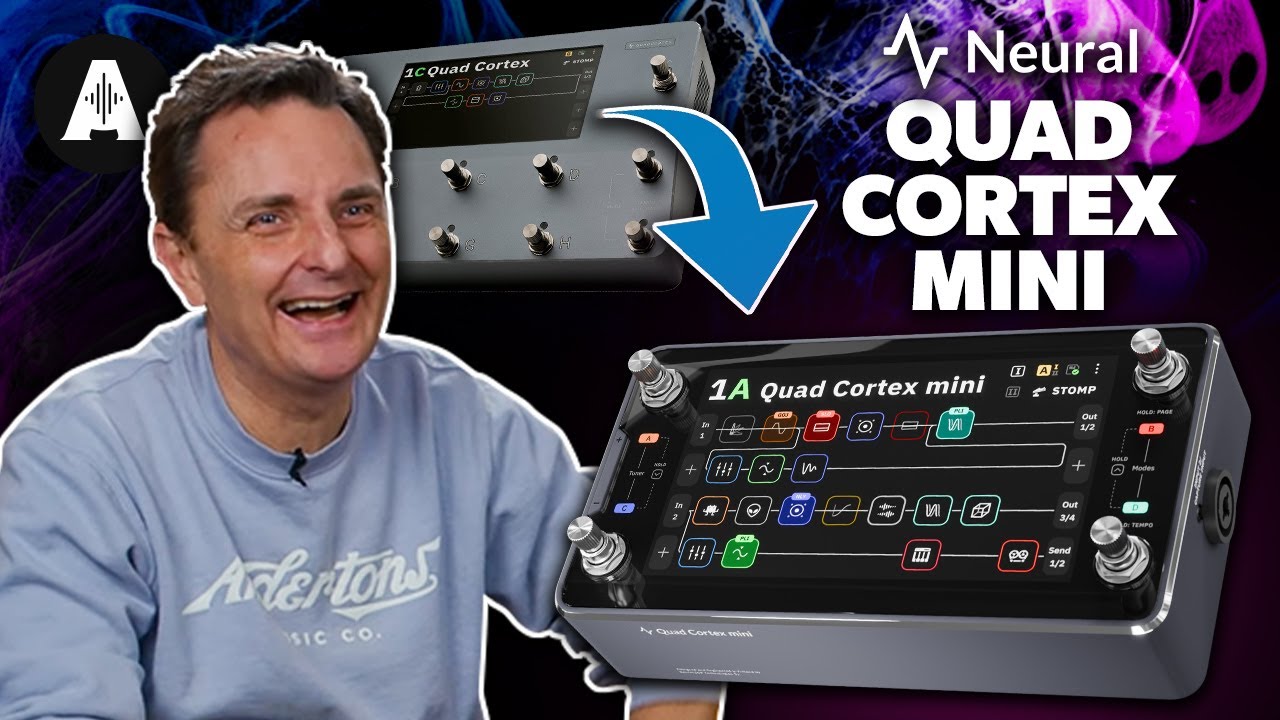
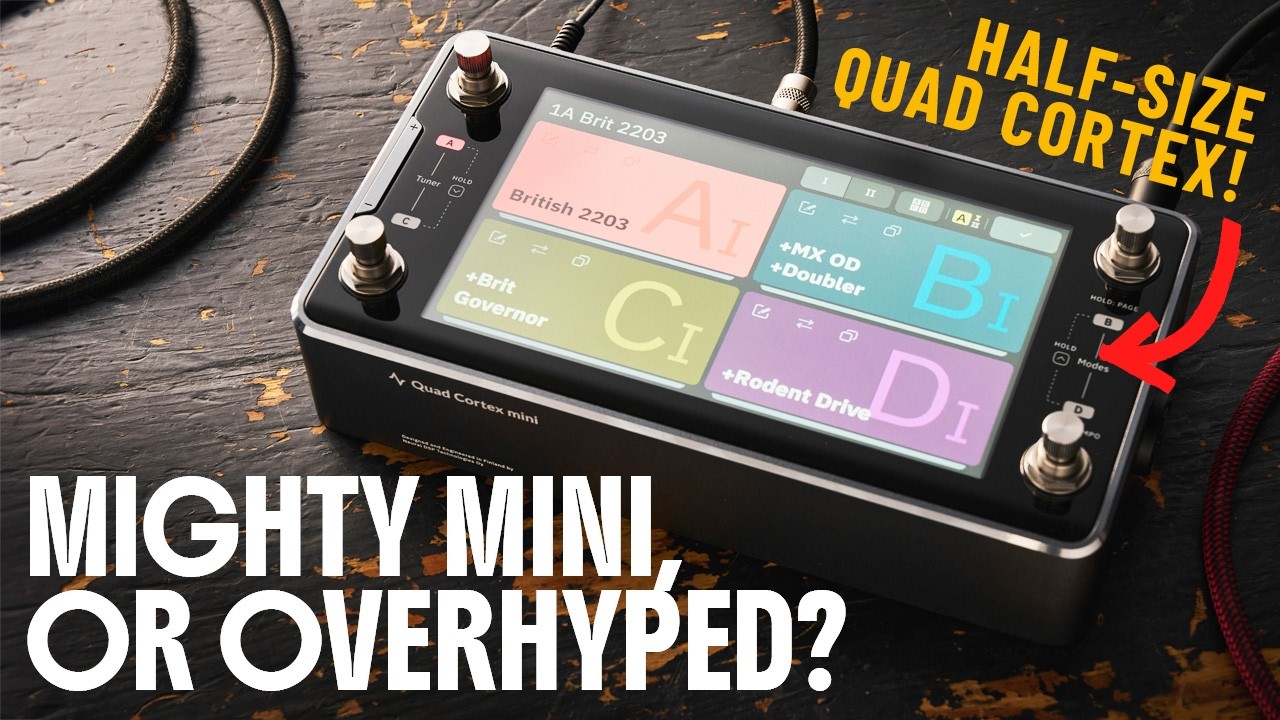
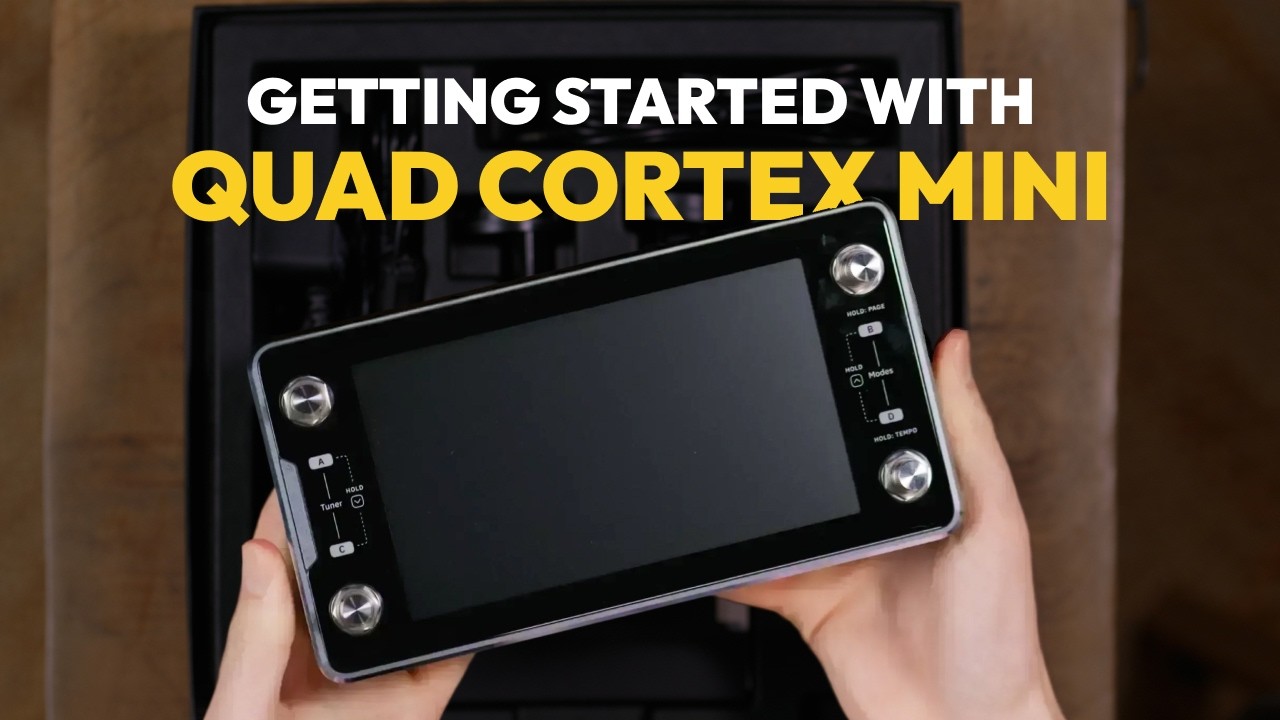
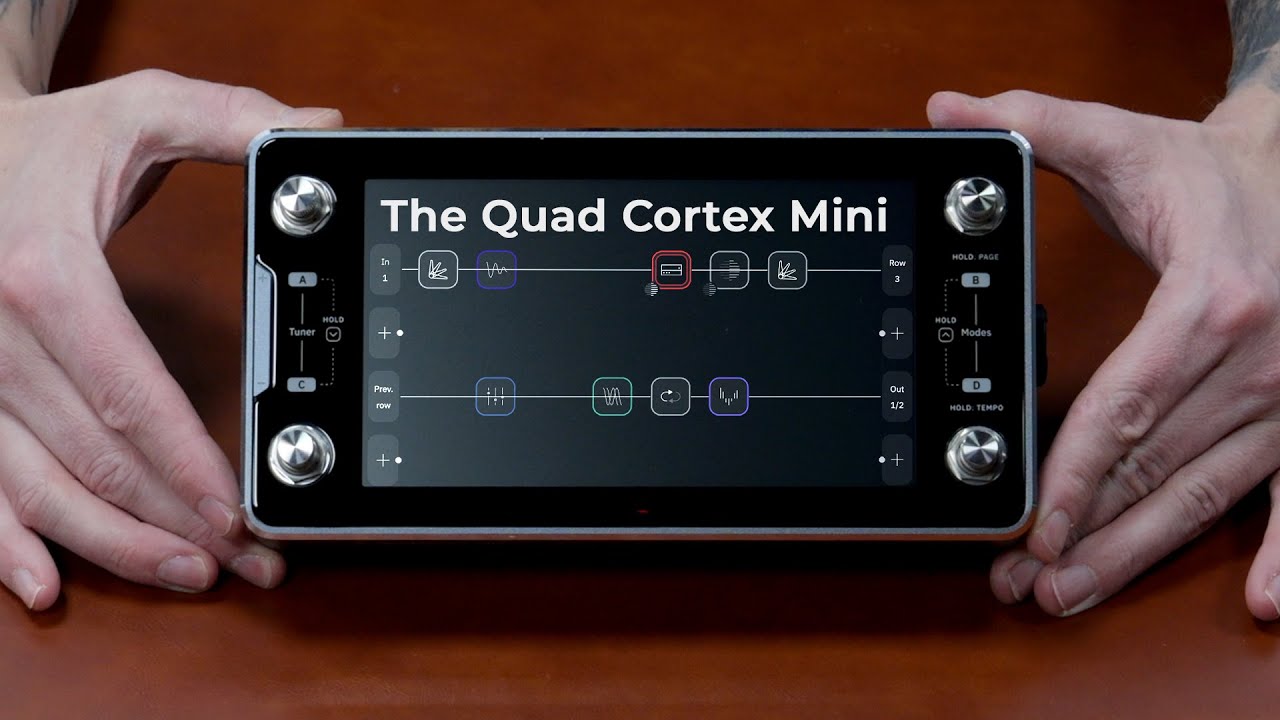
Lots of people have already said it, but the Quad Cortex mini is the iPhone of the modeling world. It’s a very apt observation, and one Neural DSP probably wouldn’t disagree with. The beating heart of this pedal is the seven-inch touchscreen – the same size screen found on the larger Quad Cortex – which takes up about 99% of the pedal’s topography.
It’s flanked by four footswitches, one in each corner, and an output bar on the left side that sets the volume level. On the rear, there’s MIDI, XLRs, stereo I/Os, a USB-C jack, headphone out, and an effects loop, and under the hood, it boasts the same processing power as the Quad Cortex.
It is, in other words, a shrunken version of the Quad Cortex. And that’s reflected in the price. At $1,399, it’s about $400 shy of the full Quad Cortex and about $850 more expensive than the Nano. That it’s closer to the QC isn’t that much of a surprise, but the four-figure price tag may rain on a few players' parades.
Whatever the case, everyone expected Neural DSP’s next drop to put the final nail in the coffin for the competition. Is that what the Quad Cortex mini is? Is there any way back in the race for Neural’s rivals, or does the Finnish firm now have all angles in the modeler market locked down?
Specs

- Launch price: $1,399 | £1,129 | €1,299
- Type: Amp modeler, multi-effects and Capture device
- Controls: 7" touchscreen, x4 footswitches
- Features: 90+ amps, 100+ effects, 1000+ IRs, 2000+ Captures, Neural Capture V1 and V2, 16-channel USB-C audio interface, Community Capture library
- Connectivity: MIDI, USB-C, XLR stereo I/O, stereo ¼” I/O, MIDI, Capture Out, Headphone out
- Power: 12V DC 1.2A
- Dimensions: 228 x 118 x 65cm / 8.9” x 4.6” x 2.5”
- Weight: 1.5kg (3.3lbs)
- Contact: Neural DSP
Neural DSP CorOS 4.1.0 update
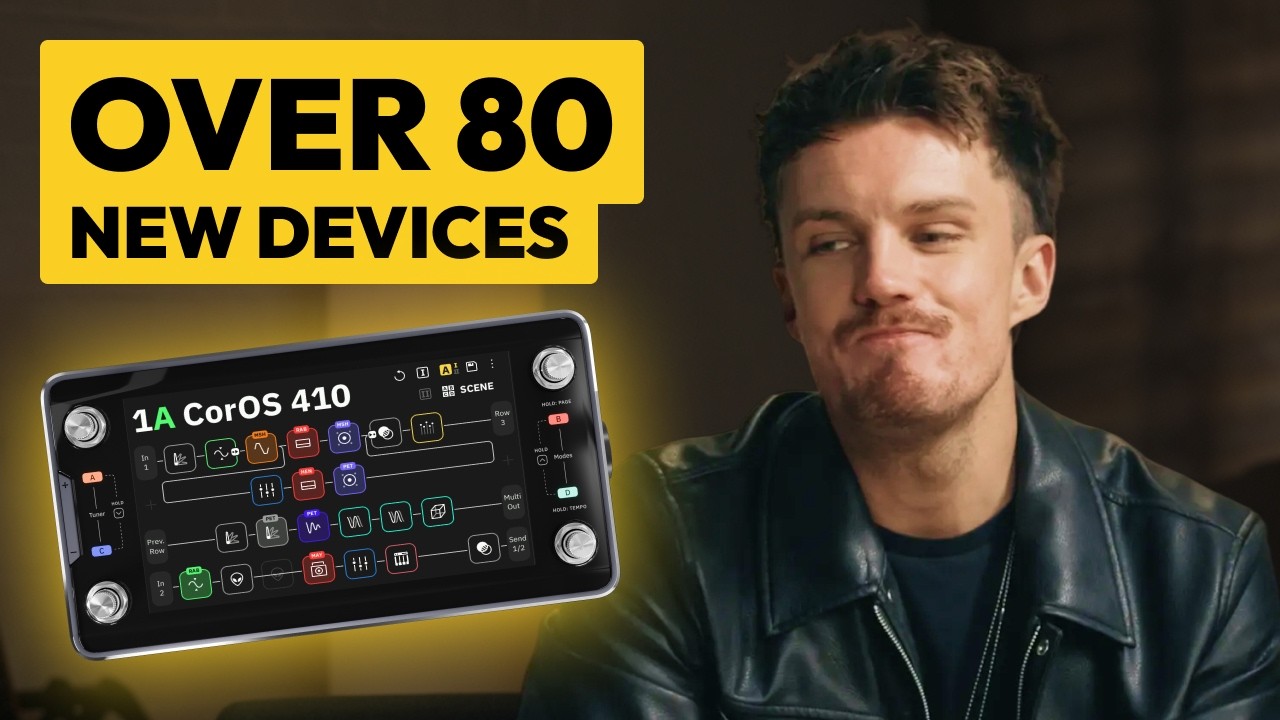
The Quad Cortex mini has already come a long way since its release. It wasn’t that long ago we were singing the praises of the Capture V2 it rolled out. But thanks to the CorOS 4.1.0 update in late August, 2026 – which Neural DSP says is its most significant overhaul yet – the leading mini-modeler has reached another level.
Chief among the new features is, at long last, full compatibility with Neural DSP’s X update plugins (yes, that includes Archetype: John Mayer), new operational modes via Device Presets, a bunch of new effects and more.
It’s a reminder that, despite the furor surrounding developments elsewhere in the digital amp market (we’re looking at you, TONE3000), Neural DSP is committed to retaining its crown and keeping its place at the top of the modeler mountain. I'll break down the headline improvements for most users:
Usability
Neural DSP has debuted Device Presets with its free CorOS 4.1.0 update for both Quad Cortex models, which effectively lets you recall specific effects settings across presets. That means every device (reverb, delay, compressor) now comes with factory presets, and the space to create and save your own. A tangible improvement for consistency and ease of use in creating presets with your favoured settings faster.
It might not sound like much at first, but the practical benefits are huge. Take, for instance, when I recently had to create a gigs’ worth of presets for each song on our setlist. The process of manually inputting in my settings was pretty tedious. Now, you can set and forget a device preset, and recall it at whim.

That means I now have two presets for the Green 808 device – edge of break-up and cranked – and my go-to compressor settings I can drop in without tweaking. One of those ‘solutions to a problem you didn’t know you had’, but a great addition nonetheless.
Another boost to the Quad mini's usability is Dual Footswitch Assignments in Stomp mode, to allow second functions for the four switches and not just bypass. This is especially important for the mini with its streamlined switching, allowing players to do more with the four switches they have. So, you can activate a reverb effect with one footswitch and engage a 'freeze' infinite sustain on that reverb with another footswitch.
Because of these improvements, I've decided to raise the usability score in the main review below to 4½ stars from the original 4/5.
Now, there’s a one-stop model that blows every other Dumble pedal amp I’ve played out of the water
Sounds
The CorOS 4.1.0 firmware has also widened and deepened the Quad Cortex's tonal scope for players. Thanks to the full rollout of Archetype X plugin capability, the sheer volume of cutting-edge amps and effects available direct from the modeler is, quite frankly, absurd. The latest additions are Archetype John Mayer, Tim Henson, Misha Mansoor and Rabea Massaad plugins. These include effects, amp and cab models that are exclusive to those plugins, now accessible to Quad Cortex users who purchase the software.
I think the amps and effects from Mayer’s plugin are especially significant. Neural DSP’s Dumble Capture from V2 was a good stop-gap, but nothing beats the fully fledged Steel String Singer model that comes here. I got tired of traipsing through 30-odd Dumble Captures. Now, there’s a one-stop model that blows every other Dumble pedal amp I’ve played out of the water.

But there’s more experimental digital sounds elsewhere. Archetype Rabea is one of Neural DSP’s most feature-packed plugins to date, with its firm-first Overlord synth module (which puts the standard Mono Synth device to shame) and Aeons reverb.
We could be here all day going through each individual plugin, but the fact they’re now available with the QC mini is serious business. It should have arrived years ago, if I'm being honest, but we’re just happy it’s finally here. And the WI-FI connectivity of the Quad means syncing the additions with your Neural account and the hardware is straightforward and easily accessible when building signal chains for presets.
Of course, you have to buy these plugins, so you can only tap into this potential if you fork out on top for the $1,399 that the QC mini already costs. A considerable outlay, and one that should be noted: the tones are great, but they don’t come cheap.

But, for those who don’t want to fork out for a plugin, eight new standard devices have been introduced to this update for guitar and bass: Multivoicer harmonizer, Glitch granular delay, Ring Modulator, Arpeggio Delay, Crystal Delay, Vintage Digital Reverb, Douglas Shining Comp (based on the Hyper Luminal compressor by Darkglass Electronics) and Plugin Parametric-4 EQ. And as Neural has proved in the past, more will come with future firmware updates.
All in all, this is an update that really improves the quality of life usability of the Quad Cortex for many players, while adding new free effects – and significant plugin additions for those who want to invest further.
Build quality

Build quality rating: ★★★★½
it “It’s quite a lot of glass, isn’t it?” If I had a buck for every time I heard someone say that about the QC mini, I’d have a fair amount of pocket money already. And it’s a valid question. It is a lot of glass in relative terms. That Neural DSP saw everyone asking for a smaller screen-equipped modeler, and decided to just make a pedal that was a screen, is very on-brand. Few companies could have pulled it off in such a stylish and effective manner, and while the glass covering might make many players wince at possible mishaps, we’ve been reliably informed that it simply will not break.
So, while the average reader may look at the Quad Cortex mini and think it’s just one misplaced foot-stomp away from a gnarly shatter, Neural DSP wants you to be assured that that simply will not happen. Unless you plan on taking a power drill or a butcher's knife to the screen (do not do either of those things) then you can rest easy knowing your Quad Cortex mini will not break.
And while I didn’t go quite ‘Ola Englund levels’ of enthusiasm to test these claims – the YouTuber used his as a trampoline – I found the Quad Cortex mini to be very robust indeed. Socks, slippers, shoes, boots; soft switching, hard stomps… it might not look like a rugged, rough-and-tumble, gig-ready piece of kit, but I’d be comfortable taking onto the stage, no problem.
I spoke to (Neural brand ambassador) John Connearn about this at NAMM 2026, and he stressed that Neural DSP would’ve tested the Quad Cortex mini to the Nth degree before launching, and would have tested every possible parameter and eventuality to ensure that it was borderline unbreakable. Apparently, even the stress of having the footswitches direct-mounted to the glass screen isn’t an issue. You can step on those suckers all you like, they apparently won’t break.
In fact, John even challenged me to break it – and while I didn’t quite go that far, I certainly didn’t pull my punches in the testing phase. So, as of right now, I have no reason to worry about the glass. That said, I wouldn’t personally use mine as a trampoline. It’s probably good to advise against over-excessive stomping. And just like any other modeler (and indeed piece of gear) – a drop test is really not advisable.

Like the Nano and Quad before it, the Quad Cortex mini is built around what looks to be an aviation-grade, matte grey metal that looks sleek but robust. I’ve gigged the Nano Cortex in pubs, clubs, arenas and even a stadium, and never once have I had an issue with durability, and the Quad Cortex looks to be no different. And, while I’ve yet to actually gig it, I wouldn’t be fazed by taking it on stage – even with that glaring screen.
Of course, it needs to stand the test of time, and Neural DSP’s claims need to be put through the wringer for a prolonged period of time. And that can only come with patience and real-world stage testing – which I fully intend to do in the foreseeable future. That said, the early signs are promising, and while no one should accept the claims of a brand at face value for anything they’re selling, I’m inclined to believe Neural DSP when it comes to the glass.
Neural DSP has proven it can push the boundaries of digital sound tech advancements. There’s no reason why it can’t also do that for physical pedal design, too.
Usability

Usability rating: ★★★★½
Neural DSP’s campaign around the Quad Cortex mini has pained to stress that no compromises have been made in the making of the pedal. But is that really the case?
Neural DSP’s campaign around the Quad Cortex mini has pained to stress that no compromises have been made in the making of the pedal. “No compromise, just smaller,” reads one of its most recent Instagram posts. But is that really the case? When you try and put a pedal that can do so much into something so darn small – with only a limited number of footswitches and physical controls – can you really get away with zero compromise?
Well, no matter what Neural DSP says, it seems there have been some compromises. And that’s not a bad thing, at least not in my book. It’s just a different operating experience. Given the route Neural has gone down with the QC mini, no one should go into this expecting it to be as easy to operate as its larger sibling. I mean, it’s only four footswitches and a massive touchscreen. Something has got to give.
And it’s here we find the ‘give’. To the untrained mind, the QC mini is, at least at first, quite hard to wrap your head around. The need to leverage multi-switch functions can be challenging at first, and there is a bit of a learning curve in order to get to grips with it.
Pressing switches A & C together opens the tuner. Pressing B & D changes between Stomp, Scene and Preset mode (unless you’re using the looper, in which case B & D closes this block). Depending on what mode you’re in, the footswitches can either trigger effects, bank between presets or flick between scenes. Because there are now fewer footswitches, you also need to press and hold switch B to bank to the next set of effects or scenes. You then need to toggle back. Remember which mode you’re in, though: don’t end up switching presets by accident, instead of triggering your overdrive.
And that’s barely scratching the surface. The streamlined approach means that, while tonally there is nothing to fault here, the UI represents something of a barrier to entry, and any prospective owner should be prepared to learn, memorize and practice a series of switch shortcuts, commands and functions. One misstep is all it could take to derail a performance.

I’ve been gigging with the Nano Cortex for well over a year now, and I had absolutely no hesitation with throwing it straight into my rig. I’d have no hesitation gigging with the QC mini, either – especially since it also now has a locking power supply – but I'd be more conscious about it. Not because I don’t trust it to sound good, or I’m scared it’d break, but because the margin for error is slightly higher.
I’m still not 100% sold on the ‘footswitches in the corner’ layout
That said, Neural DSP has struck gold with some of its UI tweaks here. There’s a new ’Etch-a-Sketch’ style approach to tweaking amps and effects with the rotary footswitches, which is really intuitive. You can still do the ‘tap and drag’ thing on the screen, or you can navigate between parameters and tweak them on the fly using the bottom two footswitches. This does help speed things up quite considerably, and something that I imagine plenty of players would like to be introduced on the larger Quad Cortex.
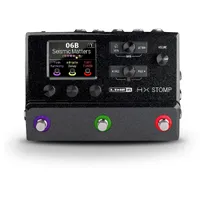
I’m still not 100% sold on the ‘footswitches in the corner’ layout, especially since I was expecting Neural to go down the ‘HX Stomp’ route with a more conventional ‘pedalboard’-style layout. In other words, three or four footswitches in a row along the bottom, with a slightly smaller screen above.
They don’t necessarily get in the way of each other – although the fact the pedal isn’t slanted like the Quad Cortex does mean you have to arch and reach over to get to the top switches – but visually, and in some cases, practically, it makes more sense in my mind to have them in a row.
Like I mentioned above, I don’t think there is necessarily anything that's a dealbreaker for most players with the decisions made here. All said and done, I’d rather a pedal deliver the full Quad Cortex experience and make sacrifices with its operation, as opposed to something that’s perhaps ‘easier’ to use but that takes away from the Neural DSP experience.
Because make no mistake: you get everything you could ever need from a modeler here. Not only do you get those stellar amp tones – modeled using Neural DSP’s TINA robot – you also get access to the company’s Capture portfolio, as well as access to a dizzying array of player-made Capture sounds. And, thanks to the recently updated V2 platform, these Captures sound better than ever. You also get plugin compatibility, the ability to Capture your own gear, USB audio interface functionality and more. Navigating all of this through the touchscreen is effortless.
No compromises? Not exactly. But most modelers and pedals these days have their own nuanced functions and features. Having to learn a new set of commands is nothing new. Heck, in the digital era of ubiquitous screens and smart tech, I think the QC mini is very much a sign of the times, and merely an extension of the trends we’re seeing in other walks of life.
Sounds

Sounds rating: ★★★★★
Of all the modelers out there, Neural DSP is perhaps the truest ‘plug-and-play’ option, with some genuinely mind-blowing amps and effects dialed in straight from the box
Can we give a 6-star rating here? This section almost writes itself. It will come as no surprise to hear, especially because this is a fully-fledged Quad Cortex in a smaller package, one that's evolved further through years of firmware improvements, but the QC mini sounds truly exceptional. Of all the modelers out there, Neural DSP is perhaps the truest ‘plug-and-play’ option, with some genuinely mind-blowing amps and effects dialed in straight from the box. Very little effort is required to get an astonishing tone that you’d have absolutely no problem with whatsoever.
The factory presets do an amazing job of demonstrating the tonal potential of the QC mini. Straight away, you’re faced with Fender-style setups, Marshall-aping presets and high-gain EVH-inspired tones, all of which sound immensely authentic. I won’t go into too much depth about the high-gain sounds – the QC’s proficiency in the prog and metal worlds are a testament to how good those tones are – but the thing Neural DSP does particularly well, to my mind, is the ‘clean thing’.
For modelers, there's a real challenge in recreating an authentic, clean, edge-of-breakup sound that responds sensitively to dynamics, pick attack, feel and other, more intangible playing styles that could rival a genuine tube amp. Neural DSP does this better than absolutely anyone else out there right now.
The Fender models on offer are all top quality, but the one I kept going back to was the Captain 50 – a model of a Morgan SW50 amp, which itself was based on a Dumble. That intangible ‘bite’ of a pick release was so present, so authentic-feeling, that I feared for the future of the tube amps in my possession. When something so small sounds so good and so genuine, you know you’re playing through a remarkable piece of kit.

I also found plenty of joy with the Vox models, and the Roland JC-120 amp block that worked as a perfect platform for the built-in effects. Rarely did I find myself tweaking the stock EQ settings, either.
Coming from a background with the Nano Cortex, the ability to get creative with signal chains was also liberating, and because this has exactly the same power as the usual Quad Cortex, you can get some crazy signal chains loaded in.
And then there’s the matter of Capture V2. Included as part of a recent wholesale firmware upgrade, Capture V2 promises more authentic amp, drive, compression and fuzz pounds through improved tracking of “expressive behaviours” – think sag, bloom, dynamic clean up – and more precise control modeling for parameter changes.
I think the QC mini sounds as good as you could possibly hope to get from such a pedal of this style
I touched on this in my Nano Cortex review but effectively, V2 is simply the latest demonstration of Neural DSP’s cutting-edge Capture technology, and representative of yet another huge stride towards digital tonal utopia. With the flexibility of the colossal processing power here – coupled with authenticity of the V2 repsonses, and the sheer brilliance of the amp and effects models – I think the QC mini sounds as good as you could possibly hope to get from such a pedal of this style.
It’s not cheap by any means, but this is a case where you get what you pay for – and if you’re someone who prioritizes size and portability, then there’s nothing out there that performs quite like the Quad Cortex mini.
I went into this fully expecting to incorporate the QC mini into my wider 'board, and to pair it with a few of my favorite pedals. That turned out to be a rather pointless exercise, simply because I didn't need anything else. Though the mini's form factor makes that easier now, for me, and like so many other players, this is probably all I'd require for my gigs.
Verdict

When the Quad Cortex mini first revealed itself to the world, I’d be lying if I didn’t quickly spare a thought to the competition
When the Quad Cortex mini first revealed itself to the world, I’d be lying if I didn’t quickly spare a thought to the competition. Neural DSP already felt pretty far ahead of the game compared to most other brands for me, and the arrival of a compact touchscreen modeler – one that could possibly take control of the market’s middle-ground – looked for all the world that it would spell the end for the amp modeler arms race once and for all.
It’s not quite as black and white as that, though. The price for such a small pedal can’t really be ignored – and will likely deter many players – and the compromises that have been made in the usability department might be one sacrifice too many for some guitarists to stomach. Sure, there are potential workarounds – MIDI, for example – but that's another compromise for a $1,399 pedal.
However, while it has a few shortcomings, we cannot ignore its feature set or processing power. This is arguably the most powerful pedal per-square-inch on the market today, and that culminates into something that could have a transformative effect on your tone and rig.
I’ve said it before, but the Nano Cortex revolutionized my approach to tone. If the Quad Cortex mini had come out at that time, I think my head would have exploded. So, at least for now, I don’t think anyone can argue against Neural DSP’s superiority as of this moment. The competition has even more catching up to do now.
But where does the company go from here? Before the inevitable sequel, there must be a market for a scaled-back version of the Quad Cortex – one that sits around the $800 price bracket that many thought a smaller modeler would sit in. Maybe even something smaller? What about something with an expression pedal built in? There are so many possibilities. And while Neural DSP continues to set the benchmark for modelers, the competition follows in step.
We’re heading into an interesting period for compact modelers, especially. What do IK Multimedia and Line 6 have up their sleeves? Does Fender or Kemper have an answer? For now, the game belongs to Neural DSP.
Guitar World verdict: There's no doubt the Quad Cortex mini is an expensive piece of kit, but the phrase "you get what you pay for" has never been more applicable. This is an incredibly powerful, incredibly versatile pedal that crams gold-standard modeler experience and sounds into the smallest form factor possible.
Test |
Results |
Score |
|---|---|---|
Build quality |
A lot of glass, but it feels robust enough for stage and studio. |
★★★★½ |
Usability |
Sacrifices have been made to get the pedal so small, and that has an impact on UI, but the rotary controls prove their worth again and the August 2026 CorOS 4.1.0 firmware update adds genuine improvements. |
★★★★½ |
Sounds |
Neural DSP has perfected the art of digital amp and effect tones right now. |
★★★★★ |
Overall |
A truly powerful pedal with a premium price tag, but you get what you pay for here. |
★★★★½ |
Also try
Hands-on videos
Neural DSP
Ola Englund
Andertons